huffpost Press
What California’s Dem-On-Dem Races Reveal About The Future Of Democrats
Images
1 / 9

2 / 9
3 / 9
4 / 9

5 / 9

6 / 9

7 / 9

8 / 9

9 / 9
As Democrats revel in their epic slate of wins in this year’s midterms, many are already hailing the results as a sign that the progressive wing of the party is finally in the ascendant. But in deep-blue California, neither progressives nor moderates walked away with a clean sweep in the Democrat-on-Democrat races.

California is unique in the nation not just because it is the most populous state but also because of its top-two primary system, in which the two candidates that receive the most support in the primary — regardless of party — advance to the general election. As a result, eight House contests in the state wound up being races between two Democrats this fall. Similarly, the Los Angeles mayoral race was an intraparty showdown, though it is technically nonpartisan.

The results highlighted the spectrum of political views in the state — and showcase the enduring tensions the Democratic Party will have to grapple with in the coming years, say political experts and strategists.

“In California, both ideological liberals — including democratic socialists — and very moderate, possibly even moderate-to-conservative, Democrats won races for all levels of government,” said Thomas Holyoke, a political scientist at California State University, Fresno. “This is a reflection of what happened nationally, with very liberal Democrats winning in places like Michigan but more conservative Democrats winning in Kansas and Iowa.”

The outcomes suggest that the future of the party is “open-ended,” per Holyoke. “Two potentially different approaches. Not clear yet which side will prevail,” he told HuffPost.

Multiple matchups spoke to the momentum that progressives and anti-establishment candidates picked up this year.

In the Los Angeles area, democratic socialists Nithya Raman and Angela Gonzales-Torres unseated incumbents in the mayoral and 34th Congressional District races, respectively. Raman, a city councilmember who ran with an emphasis on affordable housing, ousted incumbent Mayor Karen Bass, who faced significant backlash over her handling of the 2025 Los Angeles fires.

Gonzales-Torres, a housing advocate, similarly defeated incumbent Democratic Rep. Jimmy Gomez, who is under investigation by the House Ethics Committee for allegations of sexual misconduct. Gomez has said his actions were consensual and not a breach of ethics rules. Gonzales-Torres ran against Gomez from his left, backing positions like abolishing Immigration and Customs Enforcement and a federal billionaire wealth tax.

In the 14th Congressional District, just east of San Francisco, progressive incumbent Rep. Aisha Wahab rebuffed Bay Area Rapid Transit Board President Melissa Hernandez, a more moderate contender. And self-described anti-establishment candidate Eric Jones, a former venture capitalist, unseated 14-term Rep. Mike Thompson, in the 4th District. (Jones, who was backed by Our Revolution, has shied away from labeling himself as a progressive and reached out to voters on the left and the right to compete against Thompson.) Heavily self-funded, Jones argued that he was not beholden to corporate interests like his competitor.

Jane Kim, an attorney and former San Francisco supervisor endorsed by Sen. Bernie Sanders (I-Vt.), beat state Sen. Ben Allen, who was backed by Sens. Adam Schiff (D-Calif.) and Alex Padilla (D-Calif.), in the race for California insurance commissioner.

“People want change. Especially here in California, they’re tired of ... AIPAC money, corporate money, consultant talk,” Jorge Contreras, the state director for the California Working Families Party, told HuffPost.

But other contests also underscored the grip that established politicians still have in the state.

“Voters know they wanted a Democrat. What type of Democrat depends on the district,” said Sacramento-based strategist Steven Maviglio, who worked on incoming Lt. Gov. Fiona Ma’s campaign this cycle.

In the Sacramento area, longtime Rep. Doris Matsui (D), who has deep ties with establishment lawmakers, hung on to her seat in California’s 7th District despite what turned out to be a fierce challenge from the left: Progressive City Council Member Mai Vang had called for a new generation to take over the district’s leadership. Matsui, who has held the seat for roughly two decades, pitched herself to voters by emphasizing the expertise and seniority she brought to the position.

The more moderate candidate also won the House race for retiring former Speaker Nancy Pelosi’s seat in California’s 11th District, where state Sen. Scott Wiener defeated San Francisco Supervisor Connie Chan by emphasizing his experience on housing and public transit policies. Wiener also backed certain progressive policies, but took positions to Chan’s right on issues like an arms embargo for Israel and a proposed one-time billionaire tax in the state. He’s likely to be perceived as liberal nationally, despite being seen as the more moderate business-friendly option in his district, given the state’s leftward skew.

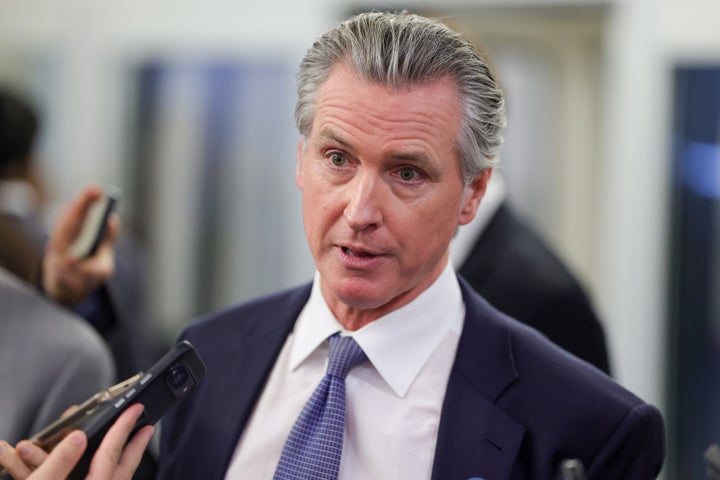
The defeat of the wealth tax itself marked a victory for the state’s establishment leaders as well. That measure, known as Proposition 40, was vocally opposed by Gov. Gavin Newsom (D), who claimed that it could cause billionaires to flee the state. Prop 40 did not ultimately secure the support it needed to advance, dealing a blow to progressive efforts to use the levy to cover funding shortfalls for health care.

In Democrat-on-Democrat contests for open seats in the state legislature, both wings of the party also notched victories, with moderates backed by Big Tech money winning two of them and progressives winning two, per Cal Matters’ Kate Wolffe.

Multiple experts chalked up the outcomes to specific factors in each of these contests, such as spending, voter demographics, and candidate quality, rather than solely issues of ideology.

“I think it’s entirely situational,” said University of San Francisco political scientist Keally McBride, who noted the results sent an “ambivalent” message about which Democrats came out ahead.

For example, points out University of California, Berkeley, political scientist Henry Brady, some of the progressive wins were in heavily left-leaning areas, like Los Angeles. Matsui’s district also includes a high number of conservative voters, notes Democratic strategist Darry Sragow, a dynamic that likely boosted a more centrist candidate.

And seven of the eight Democrat-versus-Democrat House races featured incumbents — five of whom won their seats again. In places where the incumbent lost, there were other factors weighing against them, says Brady, who specifically cited the sexual misconduct allegations against Gomez in California’s 34th. “Incumbency mattered if unsullied,” he said.

There was spending. “This set of midterm elections was both the most expensive ever in U.S. history and also the most diverse set of voters ever in a midterm,” said David McCuan, a Sonoma State University political scientist.

According to CNBC, political advertisers spent a collective $12.06 billion on the 2026 midterms, making it the most expensive midterms ever and the first time a midterm cycle has outspent a presidential cycle. It’s not yet clear what the total spend was in California, but a Politico report found that spending from dozens of billionaires alone — many of whom were eager to defeat the one-time wealth tax — was upward of $600 million.

In Jones’ bid against Thompson, Sragow estimates the challenger outspent the incumbent by a factor of 3 to 1. In the case of Matsui’s race, he notes that she outspent her challenger by a factor of 4 to 1.

The gains by both flanks of the party signal the ongoing differences Democrats will have to navigate in the new term and beyond — with big implications on the policies they pursue and the tasks ahead.

“Is the policy agenda up for grabs? Probably yes, but it will be tempered by the nature of the Democratic coalition that is center-left,” Brady said.

“When your victory is so broad, there’s going to be tension within the party because the tent is so big,” Maviglio said. “The challenge for the speaker of the Assembly and also the speaker of the House is to focus all those different philosophies to make progress.”

By entering your email and clicking Sign Up, you're agreeing to let us send you customized marketing messages about us and our advertising partners. You are also agreeing to our Terms of Service and Privacy Policy.
Comments
You must be logged in to comment.