foxnews Press
Trump holds the nuclear cards to play against China and Russia on arms control
Images
1 / 20
2 / 20
3 / 20

4 / 20

5 / 20

6 / 20

7 / 20

8 / 20

9 / 20
10 / 20

11 / 20

12 / 20

13 / 20

14 / 20

15 / 20

16 / 20

17 / 20

18 / 20
19 / 20

20 / 20
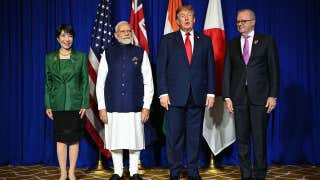
A panel of foreign policy experts breaks down President Donald Trump's historic trilateral summit with Presidents Xi Jinping and Vladimir Putin in China.

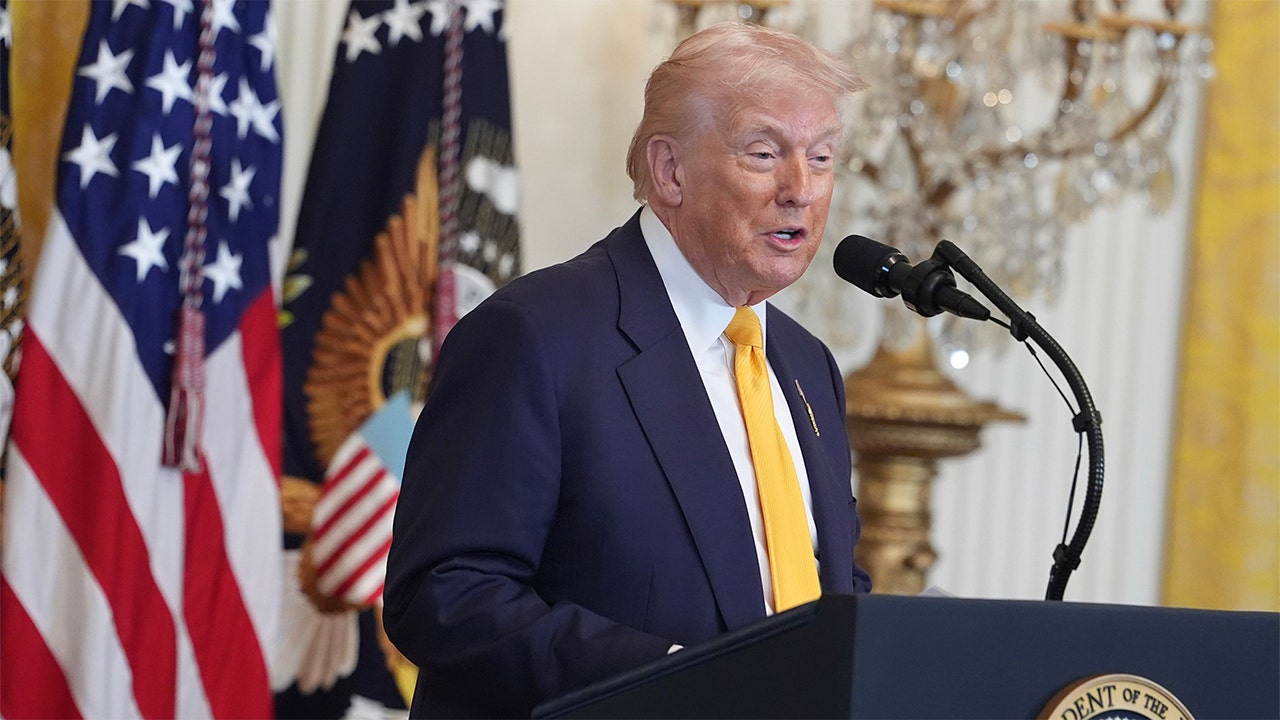
Nuclear weapons aren’t usually a topic at APEC, but trilateral arms control has been on the mind of President Donald J. Trump since at least last spring. And after launching Operation Epic Fury to end Iran’s path to a nuclear weapon, no one can doubt Trump is serious about the nuclear menace.

What better moment than this historic trilateral meeting between Trump, Chinese President Xi Jinping and Russian President Vladimir Putin?

Turns out China is also a growing nuclear problem. Driven by Xi Jinping’s ambitions, China has doubled its arsenal from 300 nuclear warheads in 2020 to over 600 today. American policymakers have little visibility into China’s intentions. And of course, the last nuclear arms control treaty with Russia, called New START, expired on Feb. 5.

TRUMP KICKS OFF HIGH-STAKES ASIA TRIP WITH XI, PUTIN MEETINGS LOOMING ON WORLD STAGE

Trump raised trilateral arms control during his May trip to Beijing, and again during Xi’s visit to Washington. "The President advocated for trilateral arms control negotiations" among the three countries, the White House statement said on Sept. 24.

No U.S. president has ever tried to coax China into nuclear arms control. It’s a monumental task, but perhaps the moment is now.

THREE MANILA MOMENTS THAT GIVE TRUMP MOMENTUM GOING INTO TALKS WITH CHINA

The Pentagon estimates China’s arsenal will reach 1,000 warheads by 2030 and continue to 1,500. Last year, China paraded its new JL-3 submarine-launched ballistic missile with a range of 5,400 miles, meaning Chinese submarines can launch nuclear weapons from littoral waters to hit U.S. targets. Don’t forget China’s H-6N bomber with its air-launched nuclear cruise missiles, and of course, China’s fractional orbital bombardment system, which in theory can put a nuclear hypersonic warhead into low Earth orbit. Then there is North Korea, which has developed its nuclear arsenal with help from both Russia and China.

You can see why Trump wants to "discuss the reduction of nuclear weapons in the world," which President Trump believes are very dangerous, White House spokesperson Olivia Wales said.

RUSSIA’S QUIETER NUCLEAR SUBMARINES THREATEN NATO, FORMER COMMANDER WARNS

Those dictators crave the optics. Maybe Trump can leverage the limelight. The trilateral summit won’t produce a treaty, but it might start a conversation. Here’s why.

Over the past year, America’s geopolitical power has increased. The U.S.-China trade deficit is at its lowest level in 20 years. America is ahead in AI "superintelligence." Russia, on the other hand, is becoming an economic vassal state to China and a target of Ukraine’s long-range drone strikes on energy and military targets. In China, President Xi Jinping has carried out so many leadership purges that the powerful Central Military Commission is down to just two of its seven members.

WE SHOULD USE REAGAN AS A GUIDE IN HANDLING OUR MODERN ARMS RACE WITH CHINA

Despite the midterms, President Trump has momentum due in part to his military buildup. Don’t forget President Ronald Reagan notched big successes such as the 1987 Intermediate-Range Nuclear Forces, or INF, Treaty, which eliminated an entire class of U.S. and Soviet nuclear weapons after control of Congress switched to the Democrats.

And whatever Xi and Putin have to say in Shenzhen, America’s modernized triad remains the single most powerful bargaining chip for any future arms control. Here are the three key programs.

TRUMP TURNS TO EMERGING TECH GIANT IN MULTI-BILLION BID TO RAMP UP US SUBMARINE PRODUCTION

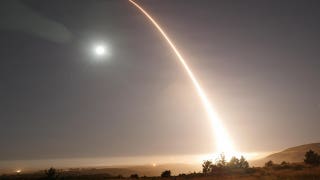
Sentinel nuclear missile. Look for the first test flight of the new Sentinel intercontinental ballistic missile, or ICBM, in 2027. The LGM-35 Sentinel missile will replace the 1970s-era Minuteman III missiles as the land-based missile leg of the triad. In wartime, ICBMs can hit targets about 30 minutes after launch. Sentinel completed a stacking test in September, with all missile components loaded into the cavernous launch silo at Vandenberg Space Force Base on the California coast. Over time, about 400 Sentinel missiles will be deployed in new silos across the missile fields of Montana, North Dakota and Wyoming.

B-21 Raider stealth bomber. Today, a fleet of 76 B-52s and just 20 B-2 Spirit stealth bombers — of Midnight Hammer fame — comprises the air-delivered leg of the triad. The B-21 Raider is a sleek, gray stealth bomber that will join the triad soon. On Nov. 13, the B-21 completed its first weapons release on the test range, and plans call for accelerated production.

CLICK HERE FOR MORE FOX NEWS OPINION

Columbia-class submarine. I saw the bow section of the 520-foot hull of the USS District of Columbia at the shipyard, and this new ballistic missile submarine is huge. The shipyards doubled their work output over the summer, bringing this lead submarine back on track for delivery in 2028, according to Rear Adm. Rob Gaucher, the U.S. Navy’s direct report program manager for undersea warfare. Eventually, 12 Columbia-class submarines will take over the sea-based mission of the nuclear deterrent and provide an assured second-strike capability by carrying 16 Trident II missiles apiece, each of which can be armed with up to 12 nuclear warheads.

CLICK HERE TO DOWNLOAD THE FOX NEWS APP

Whether or not China and Russia see the light on arms reductions, a fully modernized nuclear triad will ensure America can deter nuclear war from any direction.

CLICK HERE TO READ MORE FROM REBECCA GRANT

Dr. Rebecca Grant is vice president of the Lexington Institute.

Get the recap of top opinion commentary and original content throughout the week.

By entering your email and clicking the Subscribe button, you agree to the Fox News
        Privacy Policy
       and
        Terms of Use
      , and
      agree to receive content and promotional communications from Fox News. You understand that you can
      opt-out at any time.

Subscribed

You've successfully subscribed to this newsletter!
Comments
You must be logged in to comment.