aljazeera Press
ICJ to rule on Rohingya genocide case: What to expect
Images
1 / 14
2 / 14
3 / 14
4 / 14

5 / 14

6 / 14

7 / 14

8 / 14

9 / 14

10 / 14

11 / 14

12 / 14

13 / 14

14 / 14
The ICJ rules on The Gambia’s genocide case against Myanmar. Here’s what’s at stake for the Rohingya.

Save

Share

On Thursday, November 19, the International Court of Justice (ICJ) in The Hague will deliver its verdict in a landmark case brought by The Gambia, accusing Myanmar of genocide against the Rohingya ethnic minority.

The ruling, which will be final and cannot be appealed, comes seven years after The Gambia filed its case with the backing of the Organisation of Islamic Cooperation (OIC), and more than nine years after a military crackdown in Myanmar’s Rakhine State forced more than 740,000 Rohingya to flee to neighbouring Bangladesh.

The Rohingya are a mostly Muslim ethnic minority who have lived for centuries in Rakhine State, western Myanmar.

Successive governments, from military rule under General Ne Win (1962 to 1988), to the civilian-led administration of Aung San Suu Kyi (2016 to 2021), have consistently treated them as illegal immigrants from Bangladesh, while a 1982 citizenship law left most of them stateless.

They have faced repeated waves of violence and displacement, but the crisis came to a head in August 2017.

When fighters from the Arakan Rohingya Salvation Army (ARSA) – a rebel group – attacked police posts, the military launched what it called “clearance operations” across northern Rakhine.

Survivors described massacres, rapes and entire villages burned to the ground, and more than 740,000 Rohingya fled to Bangladesh within months.

In November 2019, The Gambia took Myanmar to the ICJ, arguing that it had breached the 1948 Genocide Convention.

At the time, Myanmar was led by Aung San Suu Kyi’s civilian government, but the military, under commander-in-chief Senior General Min Aung Hlaing, controlled the security forces which carried out the crackdown.

Min Aung Hlaing’s military government then came to power in a 2021 coup and has defended the case at the ICJ.

Myanmar denies the charge, saying its forces were responding to armed attacks.

Unlike in a criminal trial, the ICJ does not judge individuals. It asks whether Myanmar as a state is responsible for genocide, and what it must do to make amends.

Today, about 520,000 Rohingya remain in Myanmar, many living under severe restrictions, while about 1.2 million are refugees in Bangladesh.

They are widely dispersed, with most still unable to return to their homes.

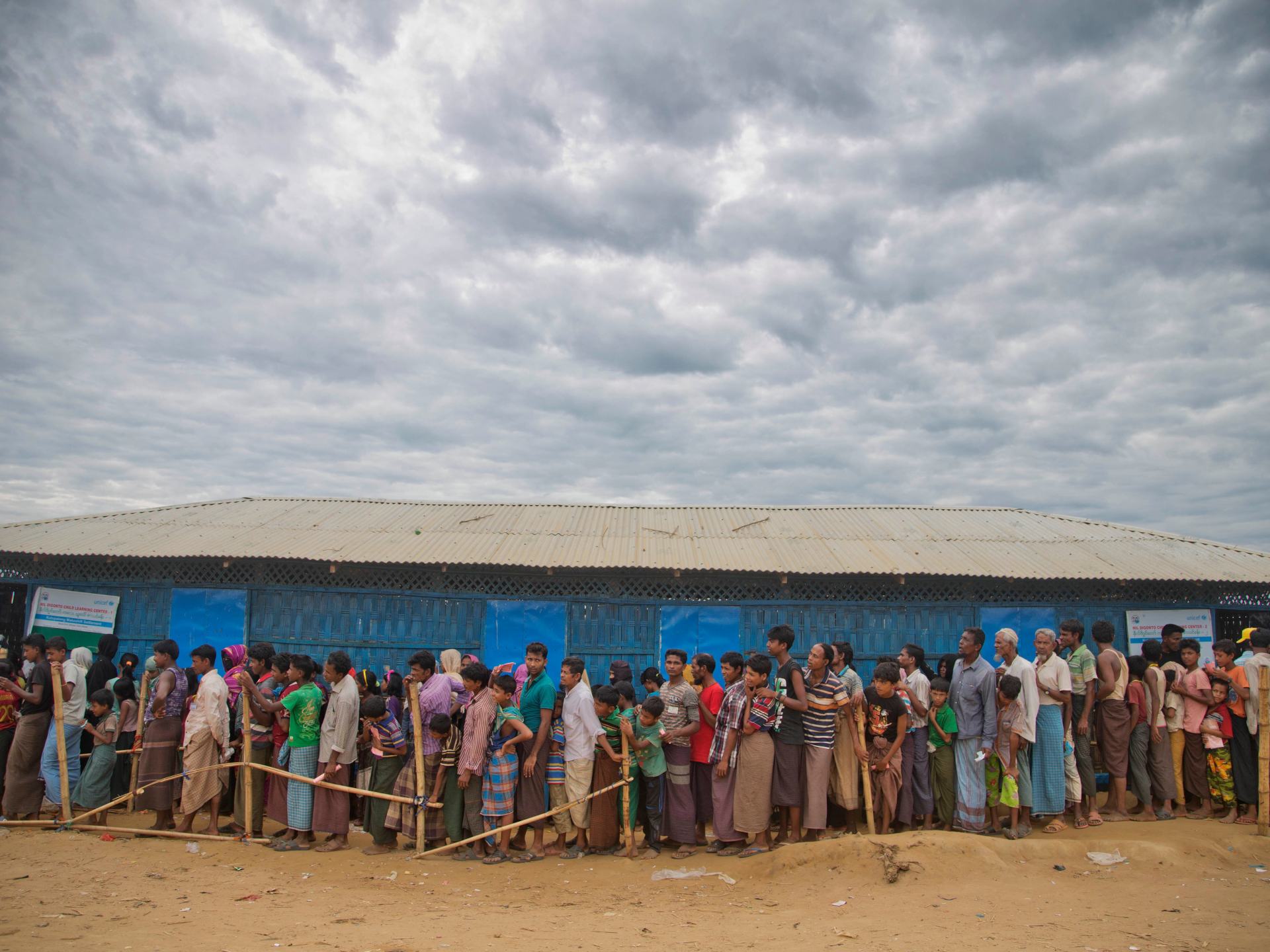
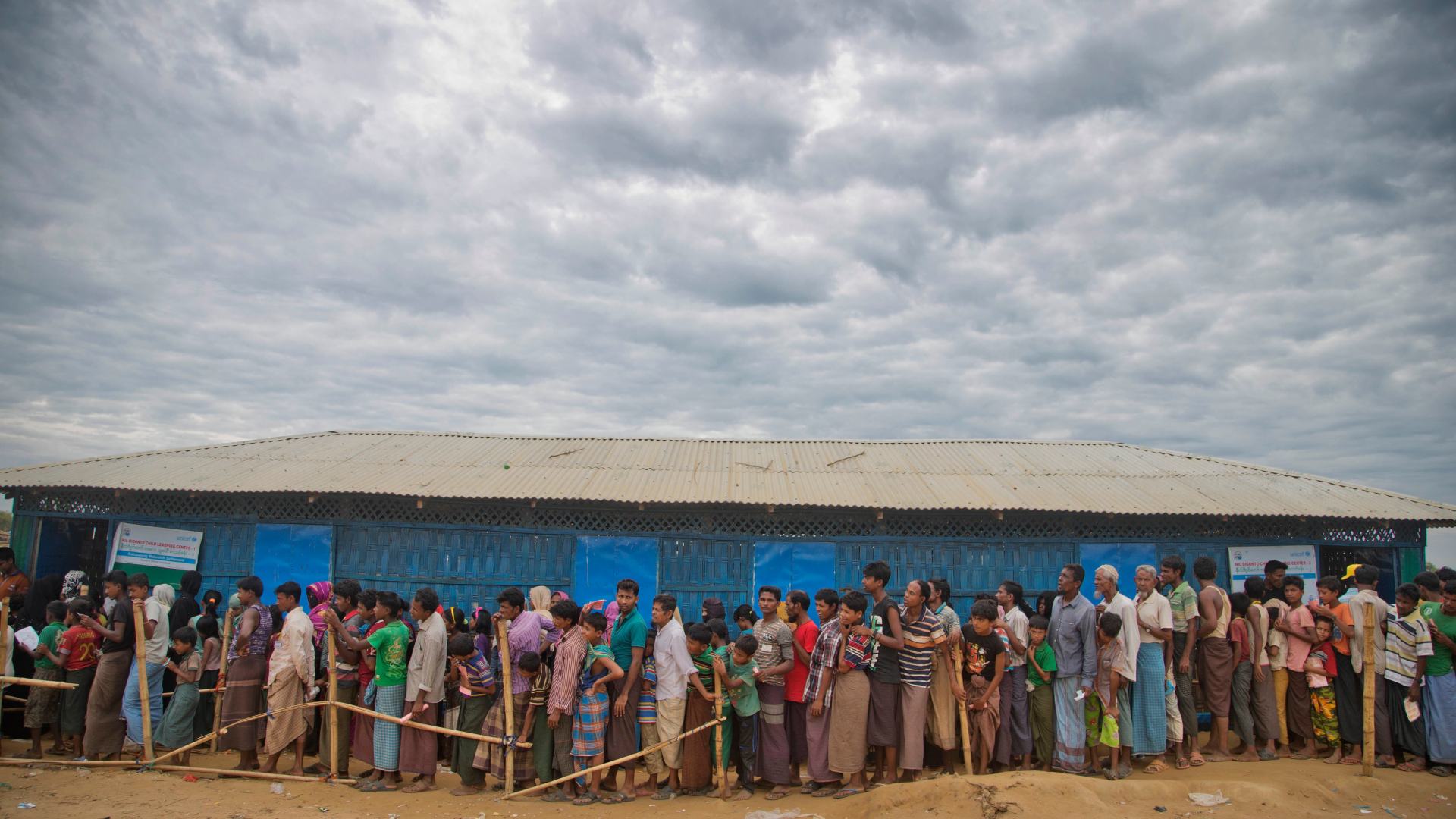
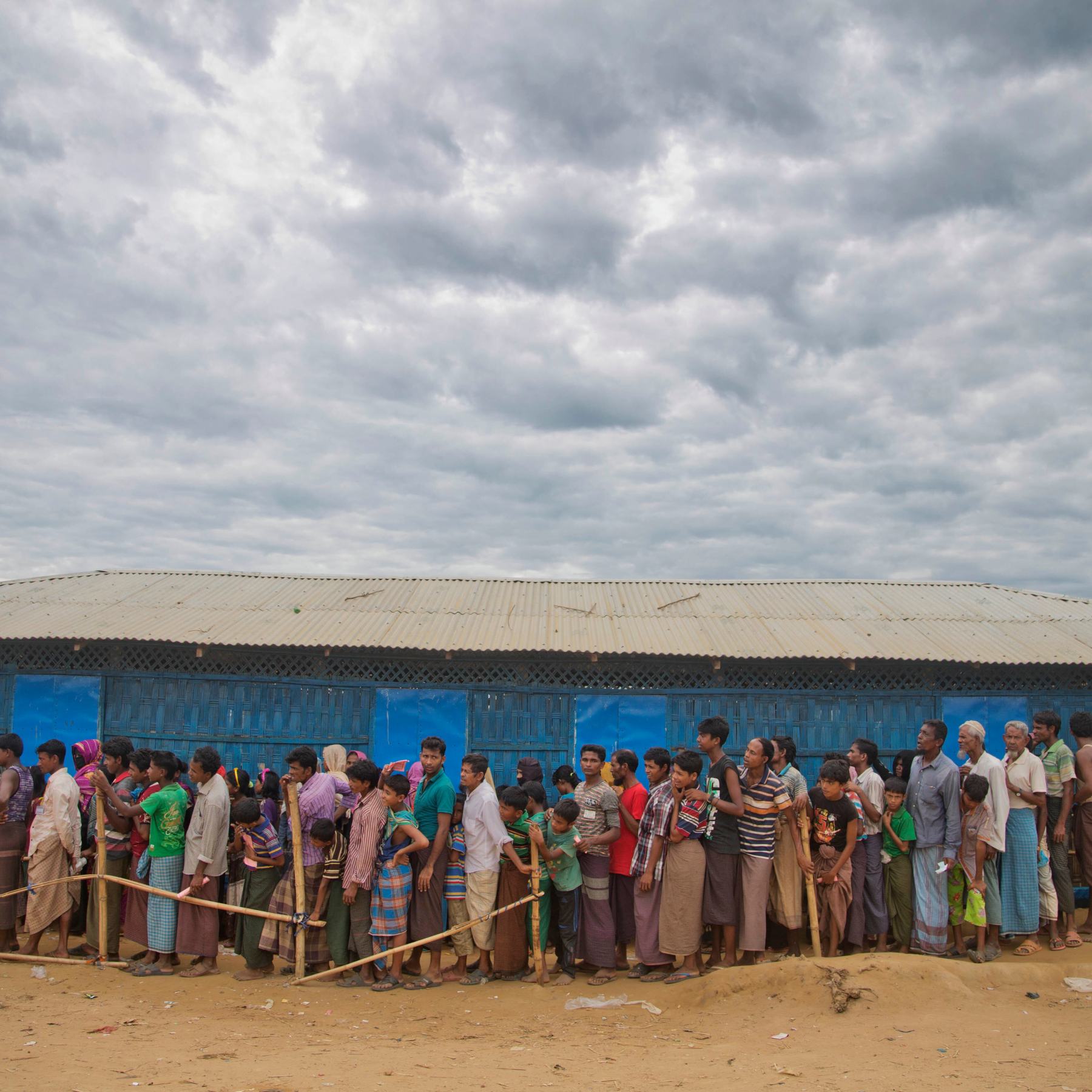
Nearly nine years after the 2017 exodus, about 1.2 million Rohingya are still living in Bangladesh, mostly in the crowded refugee camps of Cox’s Bazar.

Bangladesh, which wants them to return to Myanmar, restricts their movement and limits their access to formal work, leaving families heavily dependent on aid.

That aid has been severely curtailed over the years.

United Nations Secretary-General Antonio Guterres has warned of deepening insecurity and fewer long-term solutions, made worse by cuts to life-saving aid.

Shortly after US President Donald Trump commenced his second term in the White House in 2025, his administration froze or cut much of the country’s foreign aid, disrupting aid programmes in Bangladesh. Other countries have also cut foreign aid spending as costs elsewhere have risen in recent years.

A UNHCR study found that these cuts have weakened services for refugees such as registration, legal aid, healthcare, education and child protection, exposing refugees to greater risks of trafficking, forced labour and child marriage.

For the roughly 520,000 Rohingya still in Myanmar since the 2017 crackdown, conditions have worsened since the country’s 2021 military coup.

The Arakan Army, a rebel group fighting for autonomy for Rakhine, now controls most of Rakhine State. It has been accused of seizing land, arbitrary killings and torture, while the military has forcibly conscripted Rohingya men to fight against it.

In August 2024, hundreds of Rohingya fleeing fighting in Maungdaw were reportedly killed by drone and artillery strikes while crossing the Naf River into Bangladesh.

Su Mon, Asia Pacific senior analyst at ACLED, said: “These conditions prevent any safe, voluntary, or dignified return of Rohingya refugees. All communities in Rakhine State face severe food insecurity, lack of aid, an economic collapse, and relentless conflict.”

With little hope at home or in the camps, thousands have been boarding boats to Malaysia and Indonesia each year.

The UNHCR estimates 3,135 people have died or gone missing at sea since 2022, while 2025 was the deadliest year on record, with 900 lives lost.

The Gambia, a small Muslim-majority country in West Africa, has no direct connection to the violence in Myanmar. It brought the case on behalf of the 57-member Organisation of Islamic Cooperation (OIC), of which it is an active member.

Some observers also link The Gambia’s position to its own history. As the Rohingya crisis unfolded, the country was investigating killings and abductions committed under former leader Yahya Jammeh, who ruled for 22 years until 2017.

The Gambia accuses Myanmar’s military of killing Rohingya, causing physical and mental harm, imposing conditions designed to destroy the group and preventing births during its so-called “clearance operations” in northern Rakhine.

It also described widespread sexual violence, which it alleges is a central part of this campaign.

Myanmar says its operations targeted Arakan Rohingya Salvation Army (ARSA) fighters and their supporters, accusing The Gambia of downplaying the threat they posed.

The key question the court has examined is whether Myanmar intended to destroy the Rohingya as a group, a requirement for proving genocide.

The Gambia points to the brutality of the attacks, official tolerance of hate speech and the failure to investigate abuses as evidence of that intent.

Myanmar says there is no direct evidence of such intent and that The Gambia has failed to prove it.

The Gambia is asking the court to order Myanmar to prosecute those responsible and to ensure the Rohingya can safely return home. Other demands include restoring their property, recognising their right to identify as Rohingya and providing compensation where property cannot be returned.

Myanmar disputes The Gambia’s right to seek reparations on behalf of Rohingya victims.

The court’s ruling is final and cannot be appealed, and Myanmar is legally bound to follow it. But the ICJ has no way to enforce its decisions.

If Myanmar ignores the ruling, The Gambia can ask the UN Security Council to act. The council has never used this power and any of its five permanent members could block action with a veto. China and Russia have shielded Myanmar there before.

Other countries and the UN General Assembly can also apply political pressure on Myanmar to comply.

The court could also stop short of a genocide finding. In 2007, it ruled that Serbia had not committed genocide in Bosnia, but had failed to prevent the Srebrenica massacre.

The ICJ has rarely found a state responsible for genocide, largely because proving intent to destroy a group is very difficult.

In 2007, the court ruled that Serbia was not directly responsible for committing genocide in Bosnia. However, it found that Serbia had failed to prevent the 1995 Srebrenica massacre, in which more than 8,000 Bosniak Muslim men and boys were killed.

How judges apply this high legal threshold in the Myanmar case will be closely watched, particularly for what it could mean for South Africa’s genocide case against Israel over Gaza.

Currently, there are four other genocide cases before the court:
Comments
You must be logged in to comment.