buzzfeed Press
I Built A Thanksgiving Hosting Plan That Starts At Dinnertime, And You Can Grab The Free Planner
Images
1 / 11
2 / 11

3 / 11
4 / 11
5 / 11
6 / 11
7 / 11
8 / 11
9 / 11
10 / 11
11 / 11
Your turkey needs to rest. Your guests need jobs! (And you deserve to sit down and eat, too.)

Writer (and lover) of all things food, from taste tests of your favorite grocery store staples to how-tos on trending recipes.

Choose a realistic serving time and clearly communicate it to your guests. It's a matter of preference, but I personally like asking people to arrive 60–90 minutes before you plan to eat; if dinner is at 4:00 p.m., which is the example I'm using in this post, people should show up between 2:30–3:00 p.m. Ninety minutes may seem like a lot of time to present-day you, but it's really just enough time for future-you to finish cooking, get everything hot, make sure your guests are comfortable, and get dinner on the table.

From this point on, everything you'll plan is just working backward, so this is the one variable you've gotta nail down and never touch again. Set it and forget it. We'll also make sure every little step has enough breathing room so one misstep doesn't derail your entire system.

Be practical, not ambitious. Olympic gymnasts aren't getting on the mat and just trying any old thing for the highest score possible — they're presenting a carefully planned routine based on their strengths and limitations. Menu planning is no different.

For your Thanksgiving menu, you're working with these core limitations:

• The number of guests — Having too much or too little food each creates its own problems. To save time and stress, plan the number of dishes and the number of portions each dish makes for the number of people you're hosting, not some imaginary universe where everyone goes home with leftovers for a week. You're a host, not a private chef.

• Dietary restrictions — Learn about these well in advance, ideally when you're sending out invites. You don't have to make an individual spread for each person with restrictions, but you should make a solid effort to ensure that everyone has at least 3–4 non-boring dishes they can eat.

• Kitchen size and appliance space — Unless you have two giant fridges, a double range, and a kitchen island the size of a twin bed, you'll need to consider the size of the space you're working in, and the appliances within it. Take your first draft of a Thanksgiving menu and walk through where the ingredients will go, where it's going to cook, and where it's going to live before dinner is served. There's a high probability you'll realize that you're going to run out of space, and that's OK! Modify as needed, and carry on.

• Available time and helpers — A menu with five dishes that all need hands-on time before serving just isn't going to work, especially as one cook. Depending on the amount of time you have (both in preparation and day-of) and how many cooks you'll have in the kitchen, I always encourage a healthy mix of make-ahead dishes, mostly unattended cooking, and a limited number of last-minute tasks.

• Budget — Thanksgiving isn't worth going broke over! Set a budget before you plan your dishes, estimate the costs, and tweak the menu as needed.

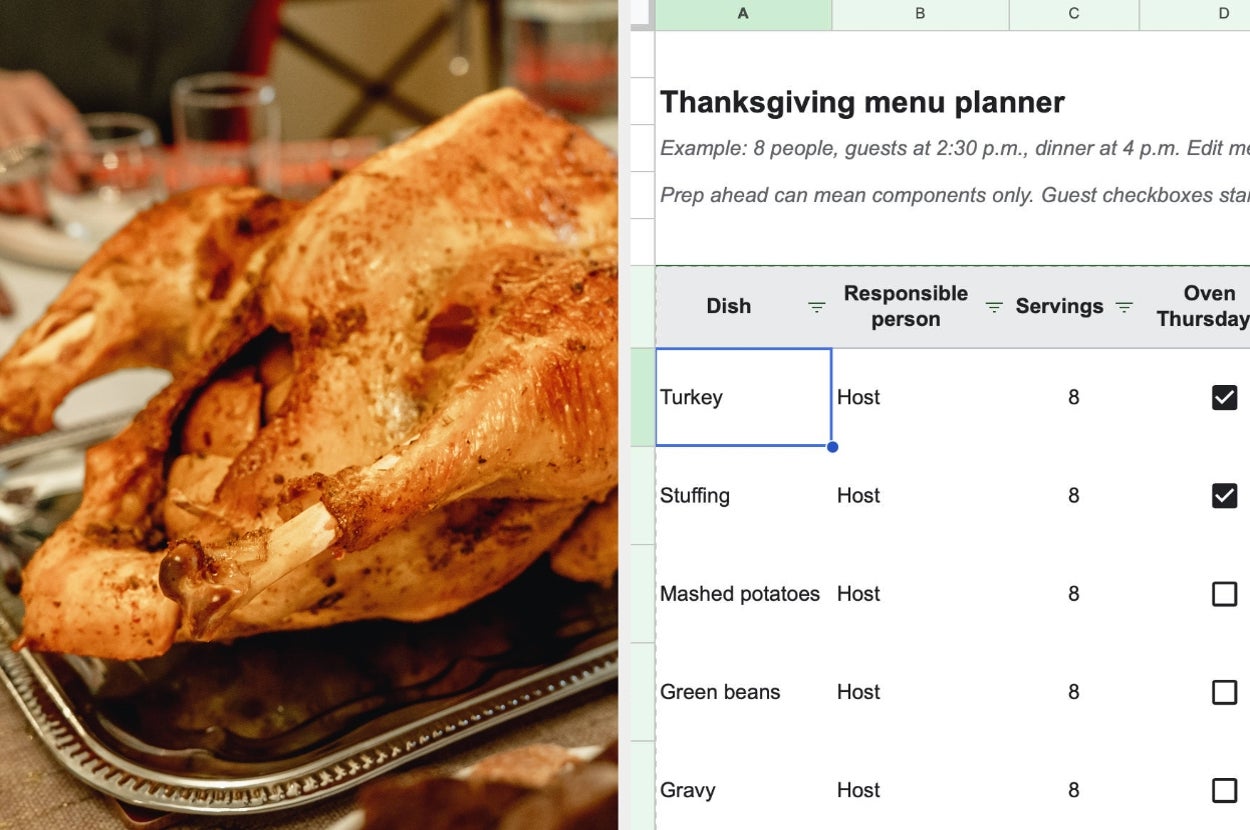
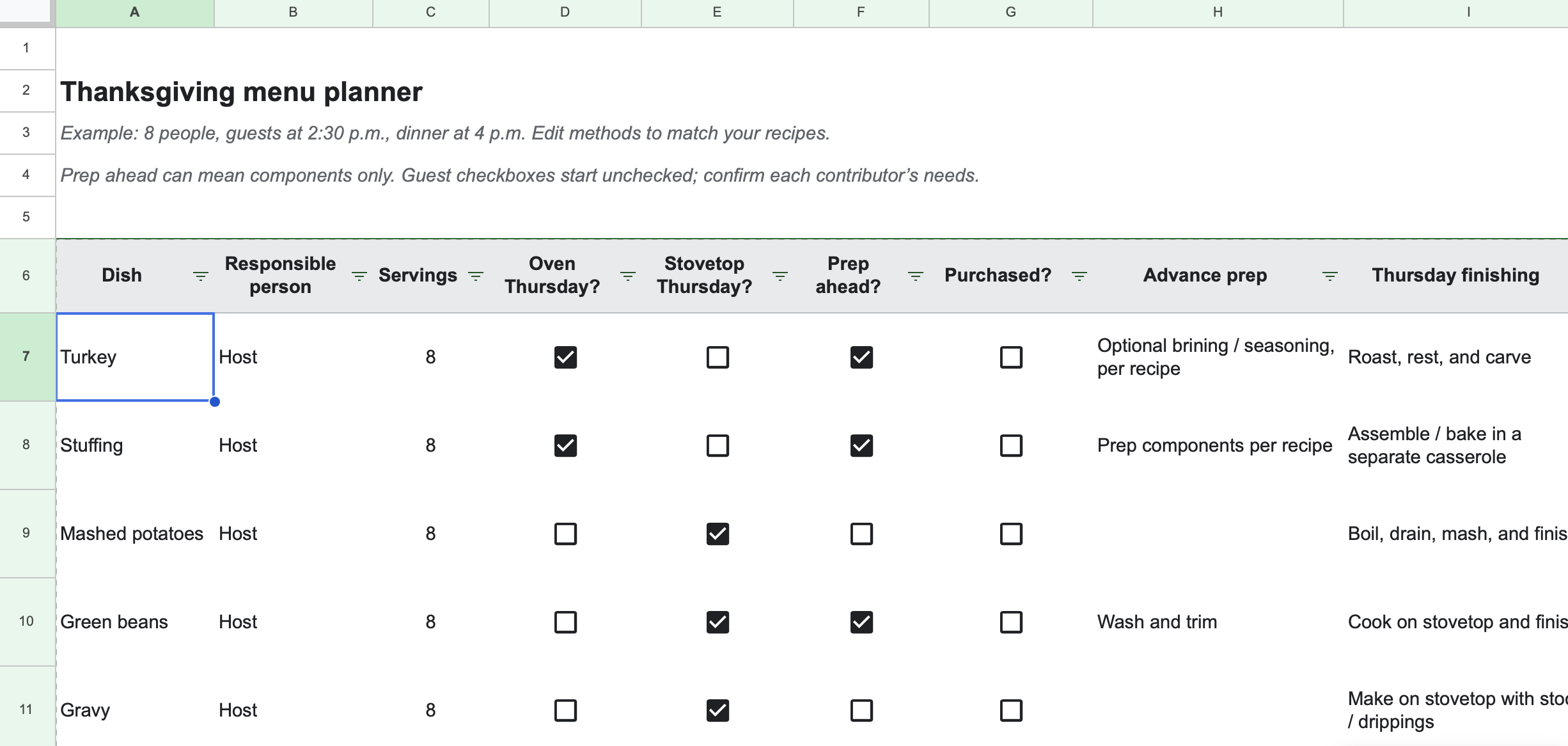
For demonstration's sake, let's say this is my menu this year:

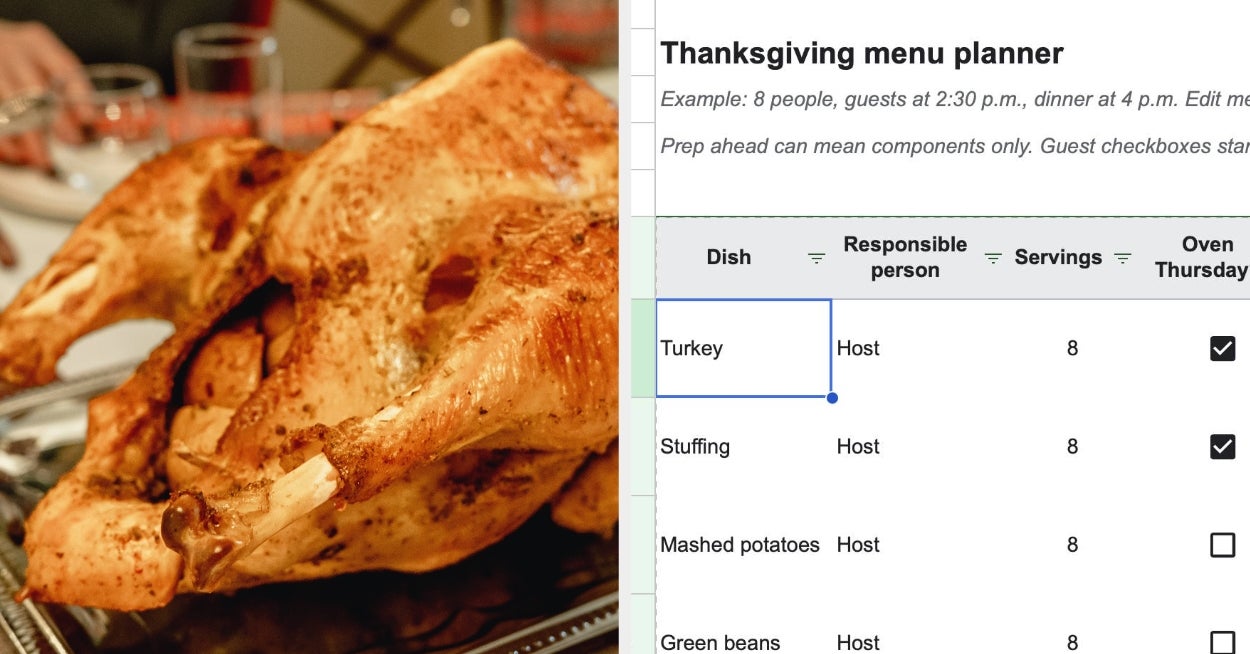
As a spreadsheet person, I use a Google Sheet to organize all my menu choices. That way, I can easily identify pertinent information for each dish, like whether I need to reserve oven space, whether I can prep it ahead, and what needs to be done before serving it. It also has another tab for tracking cookware, so you don't end up with a finished turkey with nothing to serve it on, and it allows you to add contributions from guests, too. Pretty neat! You can download it here.

Once your menu is set, plan your grocery shopping adventure by making one big grocery list with everything you'll need across all your recipes — and be sure to check against things you might already have in your kitchen, like butter, cooking oils, and spices and seasonings.

In the good ol' days, this would take a long time to do manually. Now, I feel like this is kind of a no-brainer task to give to your AI tool of choice, but you do you! If you'd rather do it by hand, you're welcome to. Either way, be sure to account for the items that might not be on your spreadsheet or recipe list, like drinks, ice, foil and parchment paper, and leftover containers.

I'm confident that you can knock out most of your items roughly 4–5 days ahead of Thanksgiving, with a shorter trip planned a day or two before for anything last-minute.

As a chronic procrastinator myself, I know you're going to roll your eyes into the back of your head and start arguing with yourself when this moment comes, and you desperately want to push it back. But trust me: Any task you finish now is one less thing competing for your attention on Thursday, when you'll be spread so thin anyway.

Any dish that can be made in advance, even reasonably well, is fair game. In my example menu, maybe I'm:

• Preparing my mashed potatoes to reheat later with more cream and butter

• Making my from-scratch cranberry sauce

• Cutting up bread and dicing veggies for stuffing (or just making the darn thing to heat just before dinner!)

Remind yourself that you don't have to finish an entire dish to do your future self a big favor. Even just measuring ingredients or getting some onions and celery chopped means one less thing to contend with when someone's bothering you in your kitchen searching for your wine glasses. You can even start setting the table! (Actually, you should almost definitely start setting the table.)

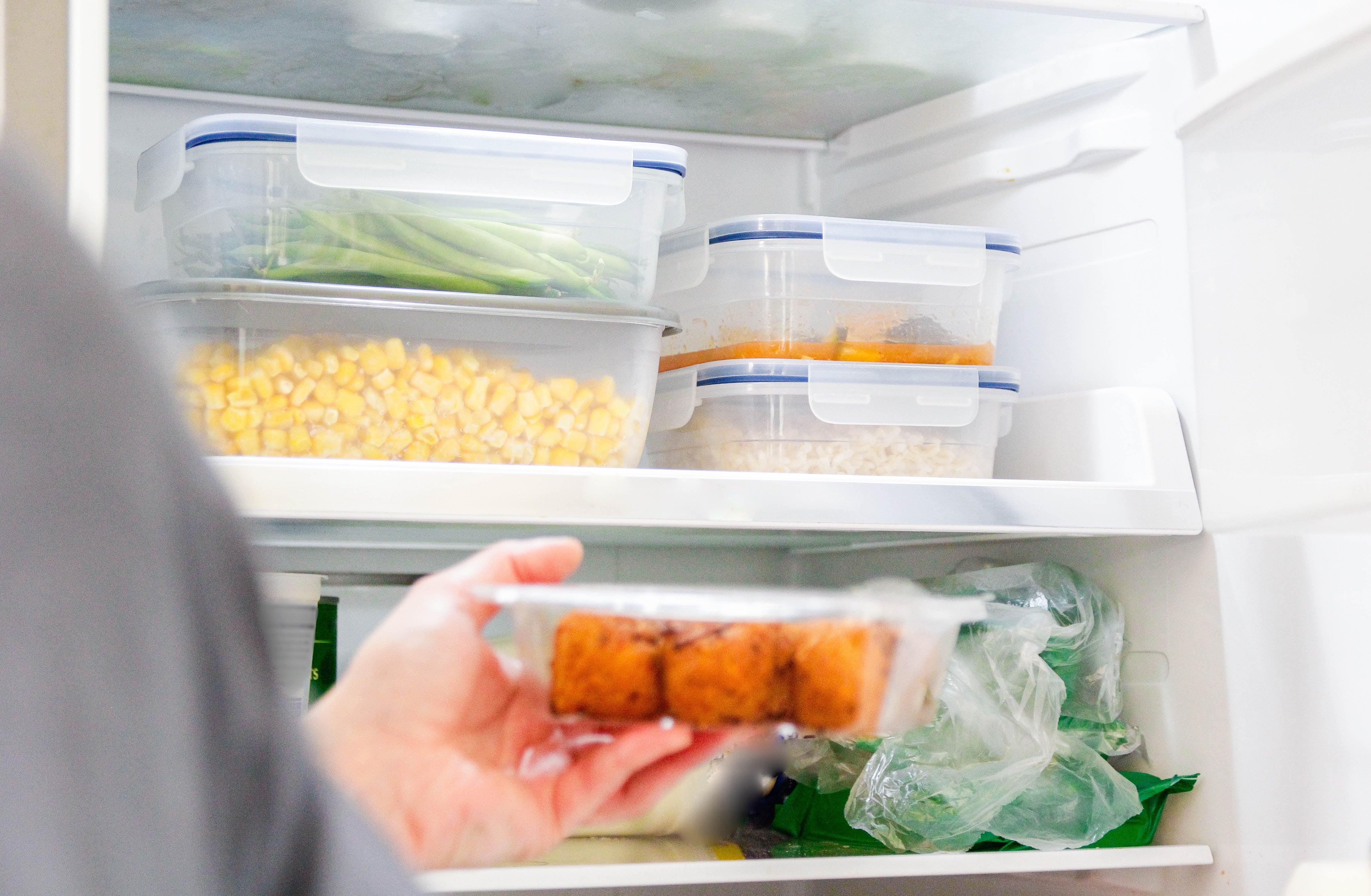
As you go, follow your recipes' storage instructions and label anything headed into the fridge with what it is and what still needs to happen on Thursday; having some masking tape and a Sharpie on hand is really smart for this exact reason. Make sure to also add any remaining cooking or reheating instructions to your spreadsheet or planner.

Even the most well-planned menu has the potential to derail into utter chaos when you inevitably need three dishes in the oven all at the same time — and at three different temperatures.

Check each recipe, including guest contributions, for:

Then, you'll work backward from dinner to give each dish a slot, accounting for preheating, temperature changes, and the turkey's resting and carving time. (Lucky for you, your turkey can stay hot if loosely tented with foil for pretty close to an hour, so you'll have some time post-turkey to finish baking other items.)

It's really easy for me to type this out to you, but much trickier in practice. Give yourself time to work it out, and consult the internet when needed; often you can be flexible with cook times and temperatures, within reason, with some small adjustments.

The last step: Write down your plan or print it out so you can follow it to a T on Thursday without having to switch between eight different recipe tabs on your teeny-tiny phone screen.

Good morning! Big decisions are done. Now, it's time to check your schedule and tackle all the remaining prep.

1. It's turkey time. Follow your recipe when the time comes, set your timers, and have your thermometer at the ready. Remember that your schedule is only an estimate, and that doneness, according to your thermometer, determines when it should come out.

2. Finish any remaining setup. For me, it's emptying my dishwasher ASAP, clearing all my counters to remove anything unnecessary, and making sure all of my serving dishes and utensils are somewhere immediately accessible. If you're decorating or putting out flowers — a nice touch, though not totally necessary — this is your moment, if you haven't already.

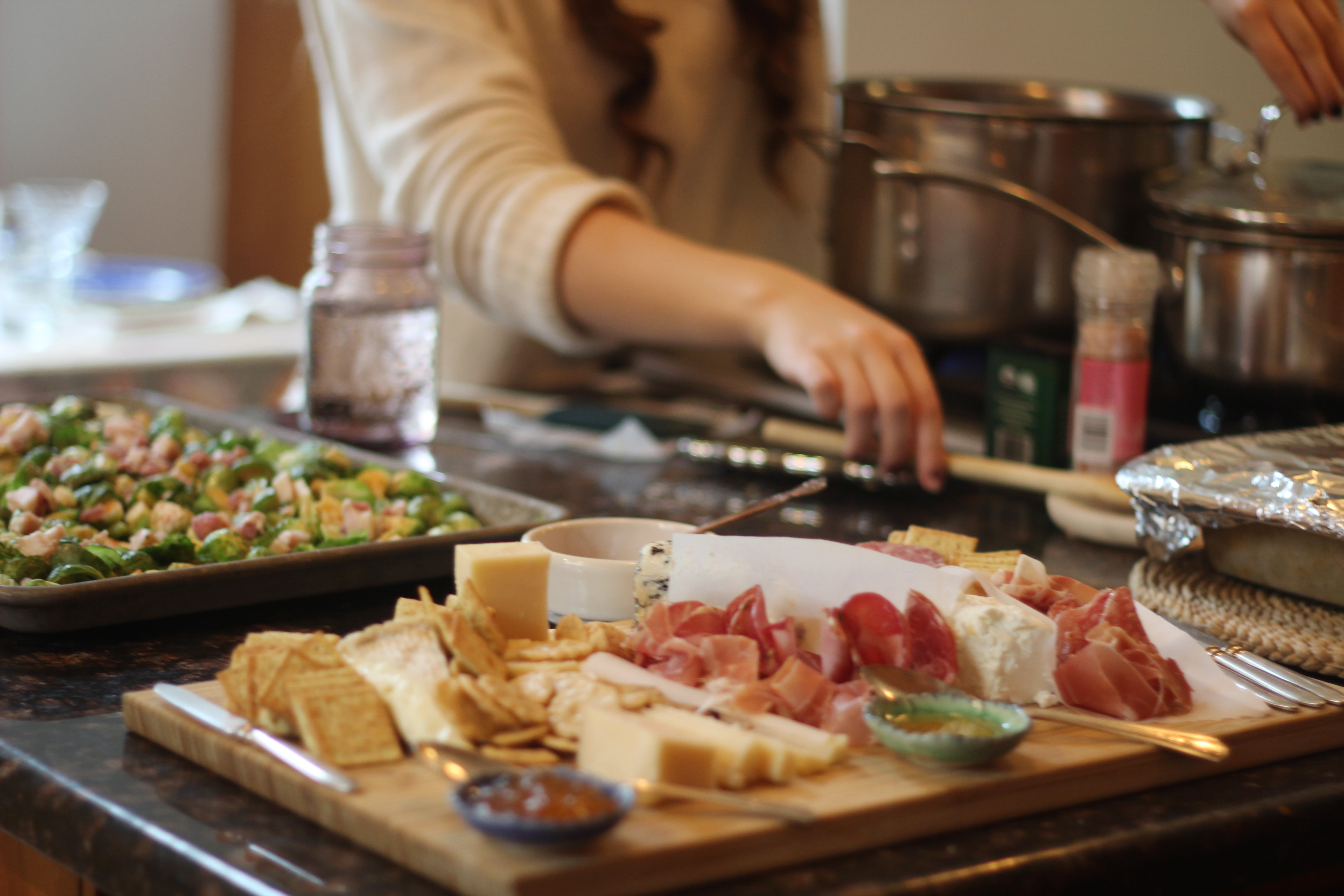
3. Treat your impending guest arrivals as a separate but very important deadline. Have any drinks, simple snacks, or appetizers ready before the doorbell starts ringing so you can greet your people without skipping a beat.

This is going to vary heavily depending on your menu and other variables, but the overall goal remains the same: You're following your preexisting plan so you can tackle everything in sequence and without stress.

Here's my sample timeline, considering my example menu.

Again, timing varies here, but it should most likely be in the oven, based on your recipe and the size of the bird. Check its progress against your planned finish time, because knowledge is power.

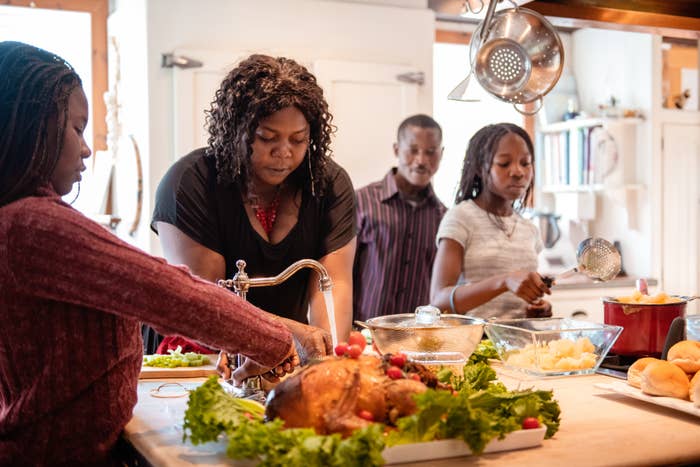
People will ask you what they can do every five minutes. That's part of Thanksgiving! When they ask, give them something concrete and immediately helpful; don't just treat them like a sous chef or kitchen helper. My go-tos:

• The snack of all trades, aka snack and app replenisher

• The coat check (so underrated and so helpful!)

• The turkey carver, if you have someone you really trust with a knife

• The server, to plate any final dishes as they come out of the oven, or get them set on the table

For me, that's my prepared mashed potatoes (with extra cream and butter). Once hot, it'll stay warm until dinnertime on very low heat, stirring every once in a while to prevent scorching.

Let that turkey rest, loosely tented with foil. Then, adjust the oven temperature for whatever dishes you're finishing up before dinner, like pre-baked stuffing, mac 'n' cheese, or green bean casserole. Since you've accounted for any guest contributions, too, this is also when you'll slide those dishes into the oven for reheating.

But if you're trying to save some time and stress, just make your gravy in advance using store-bought stock. You can start warming it again as soon as 2:45 p.m. over very low heat.

I'll quickly sauté my pre-trimmed green beans and ensure that my mashed potatoes are hot and velvety-smooth. If you have any quick stovetop dishes to finish, 30 minutes before is the perfect window.

Carve the turkey, whether you're tackling it yourself or you've delegated it to a trustworthy guest. Have your "server" start transferring finished sides to serving dishes, too. 15 minutes before dinner, they'll still be plenty warm when it's time to eat.

Once your final oven dishes are out and ready to serve, you can heat up your store-bought rolls if they only take 5–10 minutes to get warm. Then, turn that sucker off. You're done!

A note on temperatures and safety: All the times above are a guide. Turkey doneness and your recipes' reheating instructions always take priority; turkey and reheated dishes should reach 165ºF, and finished hot dishes should be at 140ºF or above while waiting to serve. For this reason and many others, an instant-read thermometer is your best friend on Thanksgiving!

Even the most carefully planned dinner might start to run behind, and that's OK. That doesn't mean your plan failed! That just means that life happened. (And can you imagine what could've happened if you didn't have a plan?!)

There's always a solution, and you're ten times more likely to figure out that solution if you're not crafting your entire Thanksgiving plan on the fly. Maybe your turkey isn't cooking as quickly as you might've hoped — so you shift back the oven window for those final sides and bump your serving time back accordingly. That's OK. Everyone will survive. (Perfect time to enlist your "snack of all trades" to make sure people are munching and snack bowls are still full.)

Happy Turkey Day. May your bird be fully defrosted, your in-laws well-behaved, and your guests out the door by 6:00 p.m.
Comments
You must be logged in to comment.