bbc Press
Woman, 65, becomes second patient to die of Ebola in Kenya
Images
1 / 20
2 / 20
3 / 20

4 / 20

5 / 20

6 / 20

7 / 20

8 / 20

9 / 20

10 / 20

11 / 20

12 / 20

13 / 20

14 / 20

15 / 20

16 / 20

17 / 20

18 / 20

19 / 20

20 / 20
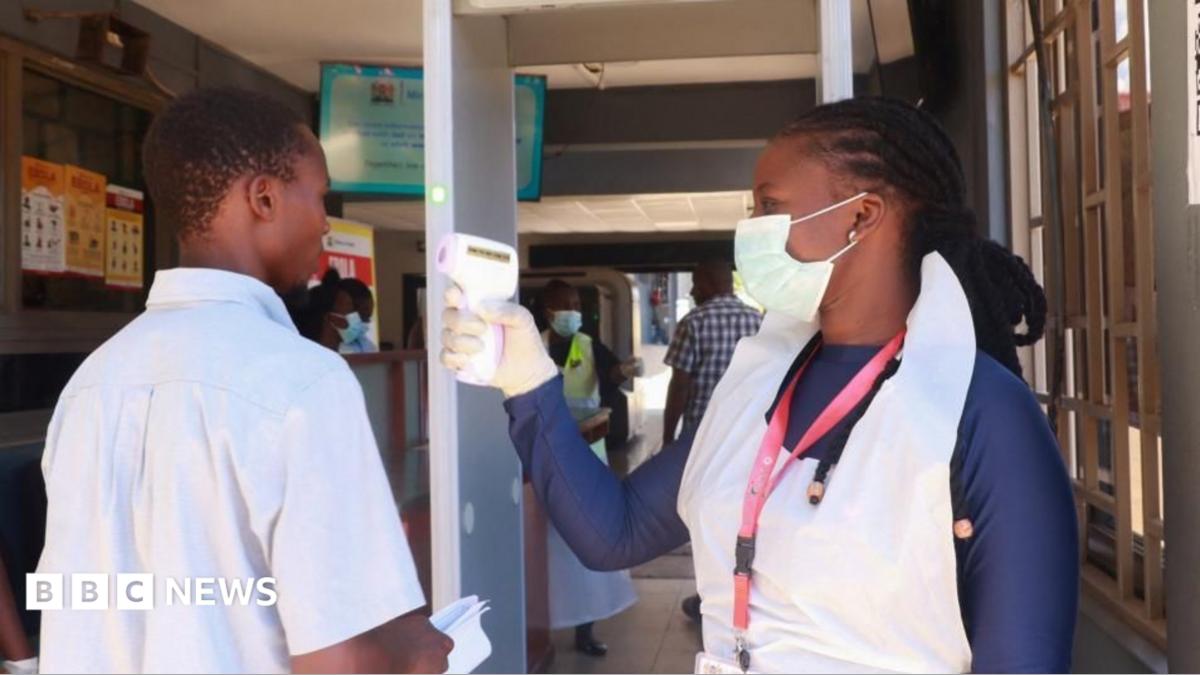
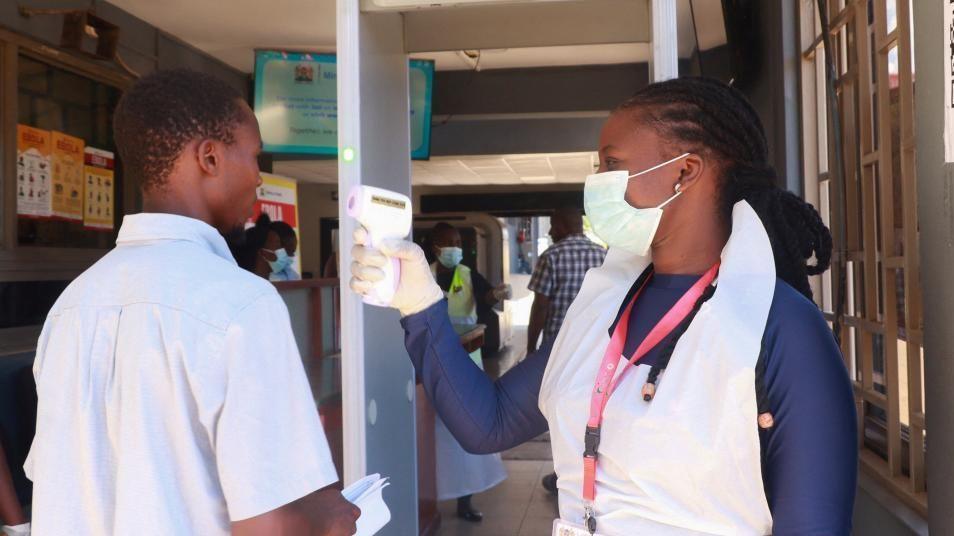
Travellers are subject to temperature checks at Kenyan border crossing-points

Kenya has recorded its second death from Ebola as it handles its first ever outbreak of the disease.

A woman, aged 65, who was a close family member of the first victim, a man who had travelled from the Democratic Republic of Congo, died after being placed in quarantine, the health ministry said.

Seven other Ebola patients were receiving treatment at two isolation facilities, it added.

All the cases were within "one cluster, with no evidence of community spread", the ministry said.

More than 4,000 people have died in Africa since Ebola was confirmed in DR Congo in May, making it the second most deadly outbreak of the disease.

Kenya's latest victim was a "direct contact and close family member of the first case (deceased) and was under quarantine when she developed symptoms" on 13 October, the health ministry said.

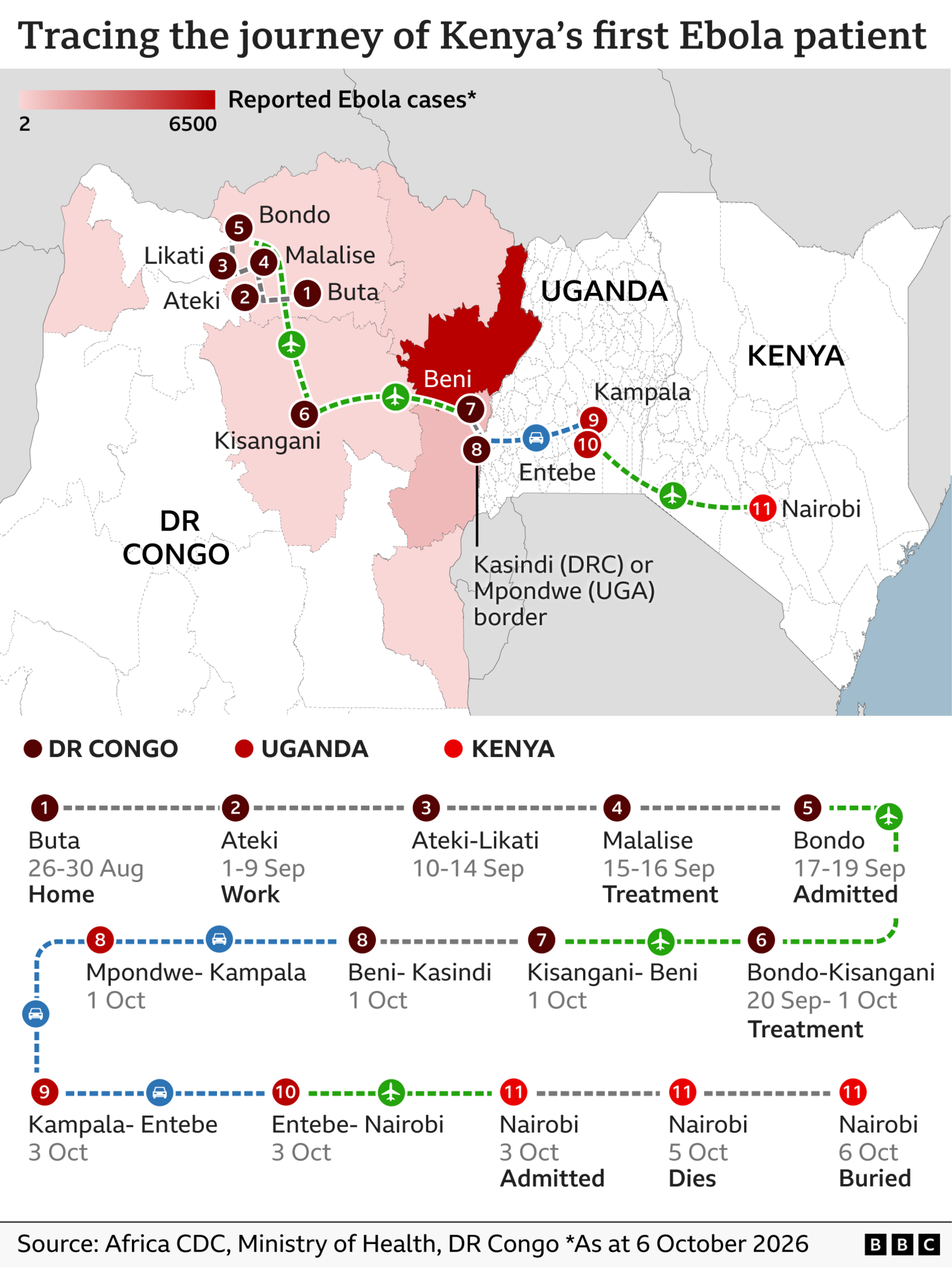
The first death, on 5 October, was that of a man who fell ill in September and was treated in several hospitals in DR Congo before arriving in the Kenyan capital, Nairobi, where he died a few days later.

Those still being treated are three other relatives of the first victim, three health workers and a hospital cleaner.

The US has warned its citizens against travelling to Kenya, while neighbouring countries such as Uganda, Ethiopia and Somalia are also on alert.

Ebola is a rare but deadly disease, external caused by a virus. As the disease progresses, vomiting and diarrhoea develop and it can lead to organ failure. Some, but not all, patients develop internal and external bleeding.

The disease spreads from one person to another by contact with infected bodily fluids such as blood or vomit.

The Bundibugyo species of Ebola is relatively rare, with no approved vaccine or treatment - though trials are under way.

With more than 9,500 cases in DR Congo, Kenya faces a steady risk of new cases arriving across borders, according to the International Rescue Committee, which has been working alongside both governments to contain the spread.

Kenya has introduced enhanced screening for travellers arriving from DR Congo and nine other countries it considers to be at high risk: Uganda, Tanzania, Rwanda, Burundi, Angola, Zambia, Ethiopia, South Sudan and the Central African Republic.

Travellers arriving from those countries are required to complete a digital surveillance form before boarding their flights, and to present a QR code to port health officials on arrival.

Kenya also ordered enhanced public health screening of aircraft arriving from those countries, as authorities seek to prevent further imported cases.

Within the country, the government has been sharing public messages to create awareness about Ebola, including encouraging people to promptly report any suspected cases and seek care at a hospital.

It has also focused on hygiene and safety measures, such as washing hands and avoiding close contact with sick people.

Is Ebola under control in Kenya after nine cases confirmed?

Woman with Ebola in Nigeria confirmed as wife of Swiss diplomat

'I buried my parents one day after the other' - Ebola mourners learn how to grieve safely

In another development, Nigeria's health minister has said the country's single confirmed case of Ebola appears to be genetically related to a strain identified earlier in Kenya.

Professor Ali Pate said there was no evidence so far that the Kenyan patient had travelled to Nigeria, but that further testing was under way.

He emphasised that Nigeria had so far recorded only one confirmed case of the virus.

"We are conducting additional tests. Some of the results are negative, while others are pending," Pate said.

Health officials have been investigating whether Nigeria's first case crossed paths with Kenya's first patient. Both are believed to have travelled through Uganda's Entebbe International Airport earlier this month.

Go to BBCAfrica.com, external for more news from the African continent.

Follow us on Twitter @BBCAfrica, external, on Facebook at BBC Africa, external or on Instagram at bbcafrica, external

Focus on Africa

This Is Africa
Comments
You must be logged in to comment.