aljazeera Press
The Muslims finding belonging in southern Spain
Images
1 / 20
2 / 20
3 / 20
4 / 20

5 / 20

6 / 20

7 / 20

8 / 20

9 / 20

10 / 20

11 / 20

12 / 20

13 / 20

14 / 20

15 / 20

16 / 20

17 / 20

18 / 20

19 / 20

20 / 20
Centuries after the end of Islamic rule, some Muslims are choosing Andalusia, drawn by traces of its past.

Save

Share

Alora, Spain - The train chugs steadily out of Malaga station, its rhythmic clatter carrying it inland towards the mountains of the Guadalhorce Valley, where whitewashed villages cling to hillsides.

Beyond the window, pomegranate trees grow close to the tracks. Palms and cypress trees stand alongside young orange saplings planted in neat rows and, farther out, olive groves whose leaves shimmer between green and silver in the breeze. Above the rugged mountains, small white clouds float across an immense blue sky, like pieces of popcorn.

Over the train's rattle, an announcement in Spanish comes through the speakers: “The next station is Aljaima.”

The name derives from the Arabic al-khaima, meaning “the tent”, a small echo of another language, another time.

And then Alora, where the town rises around a rocky hill crowned by the remains of an old fortress. Some etymologists suggest the town's ancient name may derive from the Arabic al-lawra, loosely translated as "the light".

The railway station is quiet in the midday heat.

A large black pick-up truck rumbles into the station car park and stops. Henrietta Szovati, a British-Hungarian Muslim, steps out, having driven down from the mountains to collect provisions.

Dressed in a loose blue shirt and cream trousers, she offers a warm embrace. Silver earrings dangle beside her face, and a sea-blue scarf is wrapped around her hair like a turban. A pair of red-framed spectacles rests on top.

She apologises for the truck’s state. Dust has settled on the dashboard, and bits of dried grass have found their way inside. “It is a working vehicle,” she says, more accustomed to hauling things across farmland than ferrying visitors from railway stations.

For the past two years, she and her husband, Ajmal Masroor, a therapist and imam, have been transforming an old farmhouse and its surrounding land into the House of Andalus. The project aims to bring people closer to southern Spain's Islamic history and the natural world.

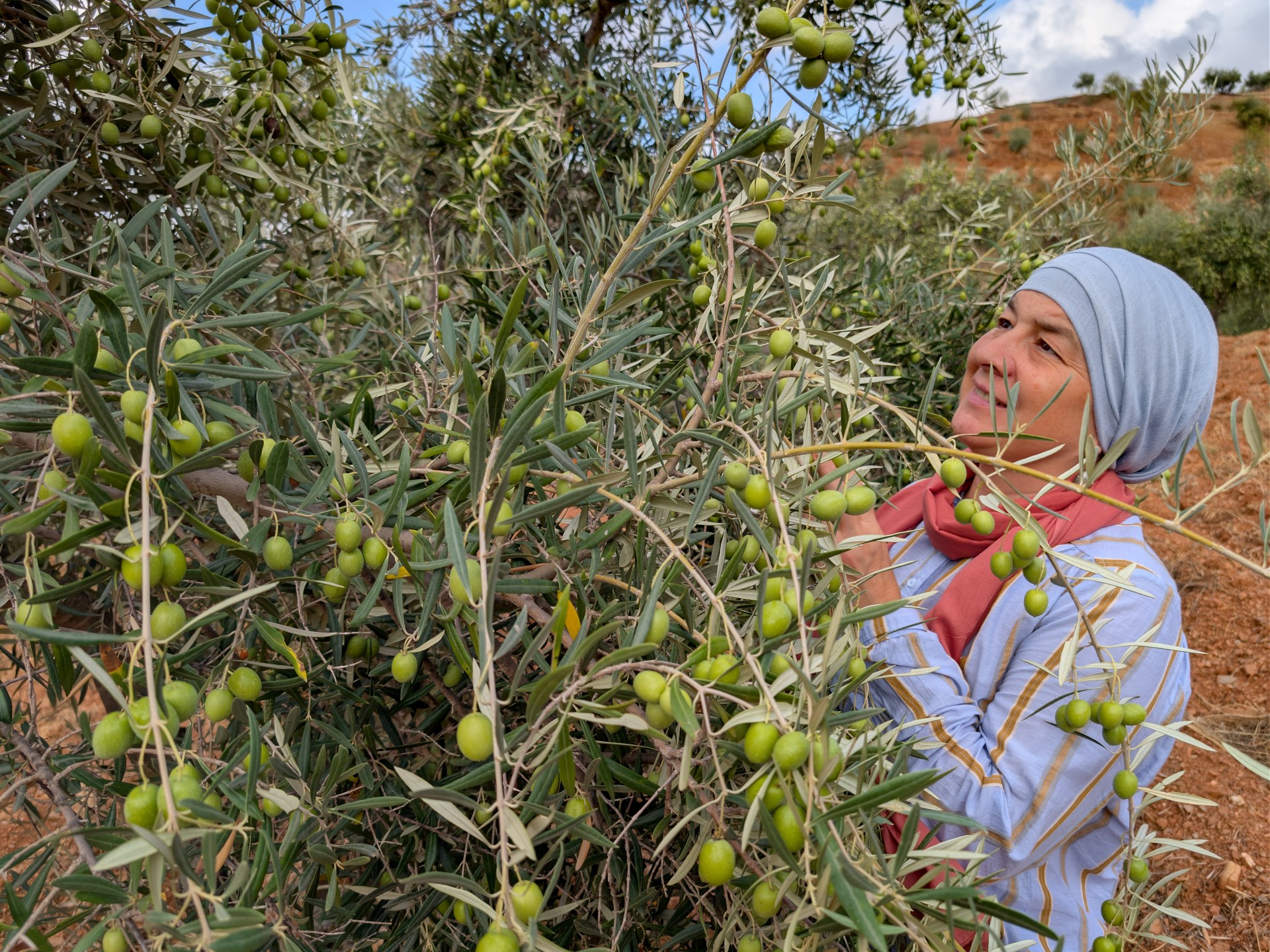
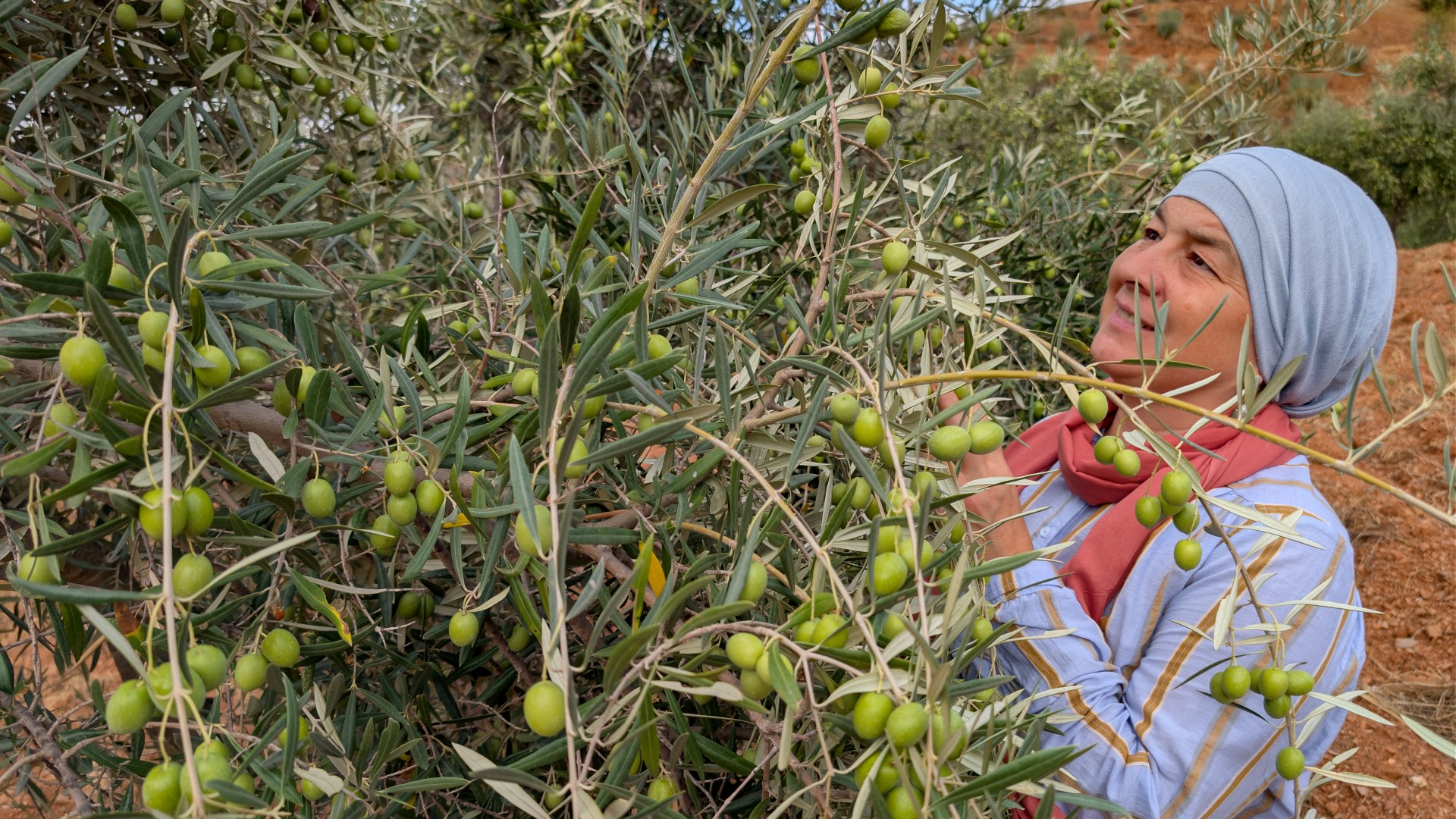
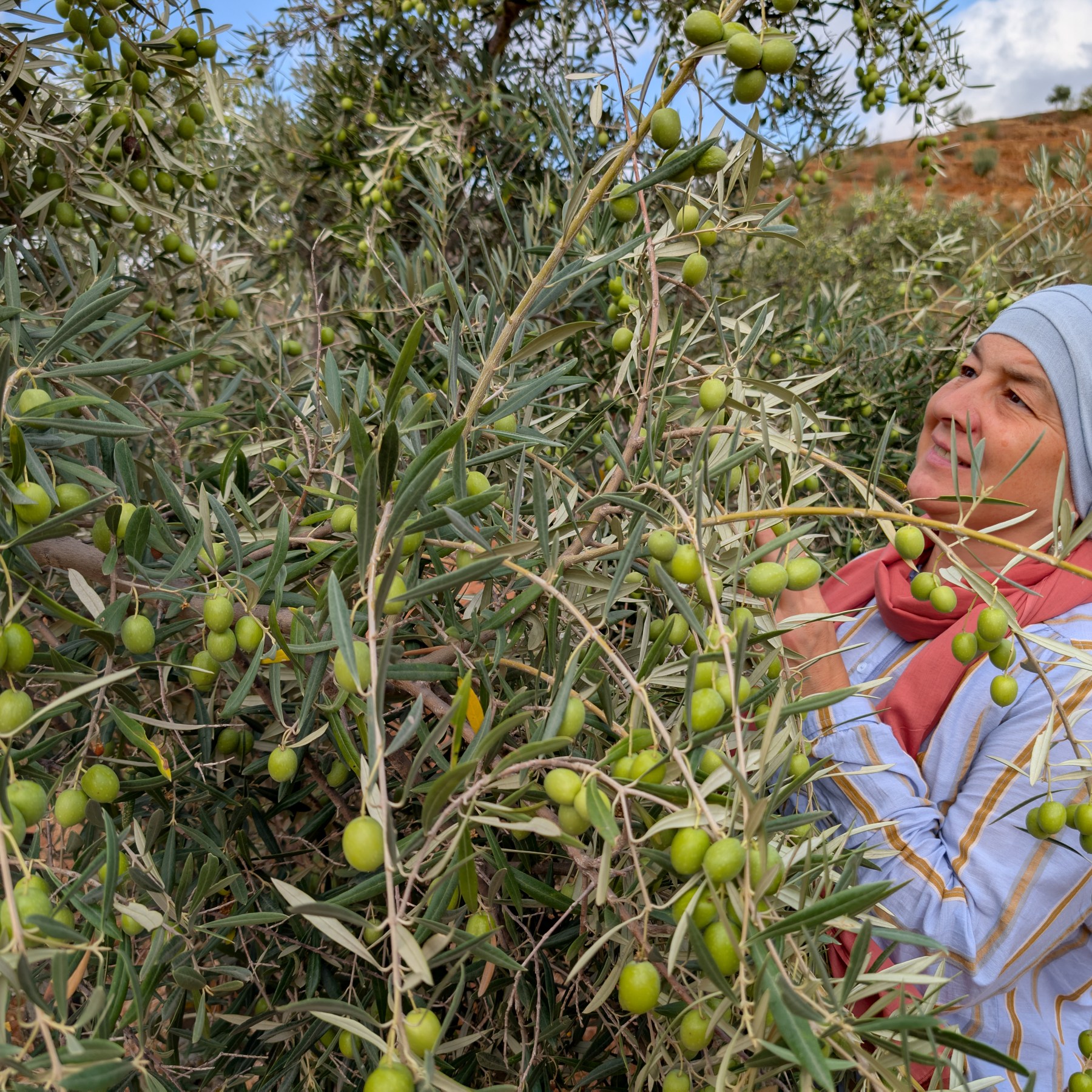
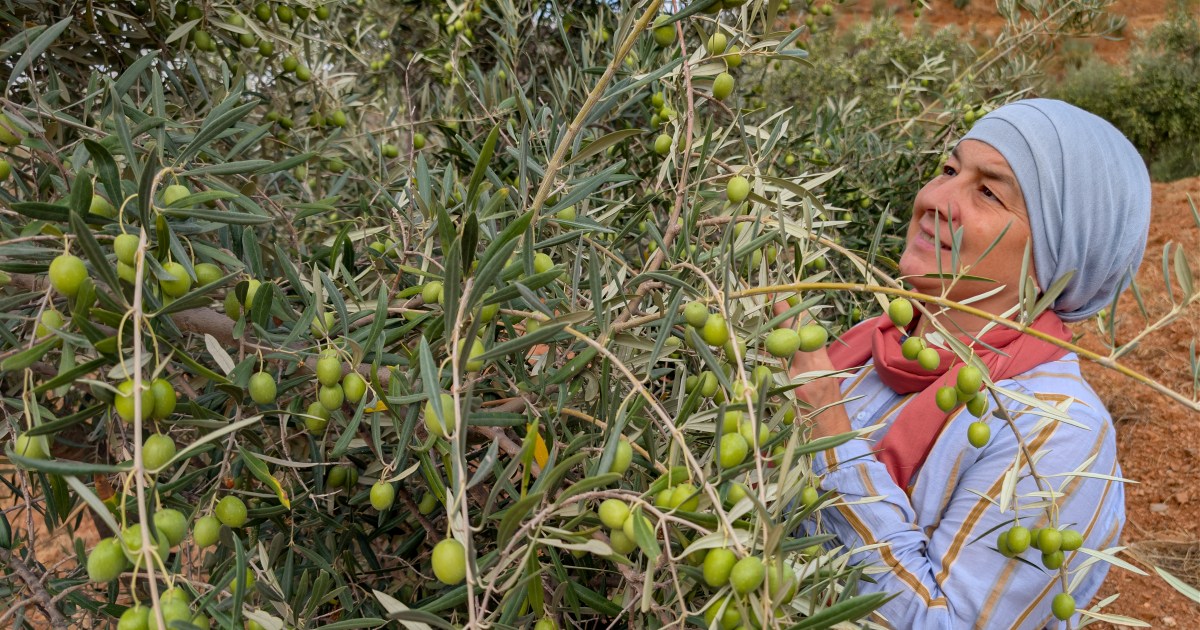
Nearly 400 olive trees dot the 14 hectares (35 acres). She wants to plant more and make it a thousand-tree olive grove, she says with a smile, glancing out of the truck's open window.

The road winds higher into the mountains. Wildfires, Henrietta says, swept through parts of the surrounding region at the height of summer, and the landscape still bears the season's harshness. Reddish-brown earth gives way to patches of parched scrub and exposed rock, while slabs of silvery-grey stone jut sharply from the slopes.

"That's slate," Henrietta explains, pointing through the windscreen. The Spanish word is pizarra, she adds, the same name as the neighbouring town.

Oranges flourish here, as do figs and avocados. And mangoes that are better than those from South Asia, Henrietta emphatically declares.

As we drive further into the mountains, Henrietta gestures towards a neighbouring property. “That's my neighbour, Juan Garcia.”

Henrietta buys lemons, avocados and honey from him. Sometimes he comes over to help with the olives. It's this sense of community and neighbourliness she found harder to come by in Britain, where she has lived since 2001, marrying Ajmal a year later.

"I feel like an outsider there. I'm still not ‘one of us’ after more than 20 years."

As a Muslim and as a European, she says, Spain feels familiar in a way no other place does. Hungary was never an option, she adds, describing its government as “racist and right-wing”. And in Britain, she says, being Muslim can feel unavoidably political, her faith viewed through headlines and public arguments about Islam.

In the mountains above Alora, she feels her neighbours meet her first as Henrietta: the woman who lives up the track and joins in village life.

"Practising Islam here is just easier," she adds.

Yet Spain is not immune to the political currents sweeping across Europe. The far-right Vox party has made opposition to immigration and what it calls the "Islamisation" of Spain central to its campaigning, raising questions about how secure that sense of belonging might be.

With a sigh, Henrietta acknowledges that being Muslim can be difficult anywhere in the world today. But she prefers to focus on what she can build, rather than on political circumstances beyond her control. "Circumstances change, but community, connections and faith don’t," she says.

For her, that means building relationships with neighbours, even when they hold different beliefs. A sense of community, she argues, is forged through everyday encounters rather than political rhetoric.

On a visit to Juan Garcia’s home, his 79-year-old mother, Maria, is curious about the scarf wrapped around Henrietta's hair.

The women are standing in Maria's living room, its shutters drawn against the afternoon sun. A portrait of Jesus hangs on the wall.

Henrietta explains that she is Muslim and that covering her hair is part of her faith, a way to feel closer to God. Maria is Catholic. The conversation turns to the Virgin Mary, who also covered her hair.

But Maria insists all that matters is being a good person. If you cannot be good, none of the outward signs of faith means very much.

There is no awkwardness between them, no need to defend or explain their beliefs. The conversation moves on.

It is such ordinary encounters that have made Andalucia feel like home, Henrietta says. But her connection to this part of Spain runs deeper than the friendships she is making. It also stems from a deep respect for a history that stretches back more than 1,000 years.

For British Muslim travel writer and historian Tharik Hussain, author of Muslim Europe, the fascination is understandable. Al-Andalus was the medieval Muslim-ruled territory of modern-day Spain and Portugal. Its heartland lay in the south, in what is now Andalucia, home to cities such as Cordoba, Seville and Granada, where surviving monuments still evoke a period when Muslims helped shape European civilisation.

Its eventual loss, he says, has given it an almost “Atlantis-like aura” in the Muslim imagination, a longing reflected in Muslim literature over the centuries, from the 17th-century historian al-Maqqari to the 20th-century poet Allama Iqbal.

For nearly eight centuries, Muslim dynasties ruled parts of the Iberian Peninsula, leaving behind palaces and fortresses with horseshoe arches, intricate zellij tilework, carved yeseria plasterwork, and curling Arabic calligraphy. Their legacy endured in irrigation channels known as acequias (from the Arabic al-saqiya), scholarship, language and traditions that continued to shape Spain long after the fall of Granada in 1492.

Britons have long headed to Andalucia in search of a place in the sun. But among those putting down roots here are Muslims drawn by something more: The chance to reconnect with a history in which Islam was part of Europe, and to build lives where their faith feels less like a defining difference.

Yet the Andalucia they are entering is not a vanished kingdom waiting to be rediscovered; it is modern Spain, with its own economic pressures, social divisions, and complicated relationship with the past.

What happens when the dream of al-Andalus meets the realities of living here?

The truck turns off the road onto a narrow dirt track, climbing towards a whitewashed farmhouse tucked into the hillside; this is the House of Andalus.

Henrietta and Ajmal bought their whitewashed farmhouse in 2024 after seven years of searching.

It was never intended as a holiday home. They always meant the House of Andalus to be a place to put down roots and invite others in.

But realising that dream meant stretching their finances to the limit. The couple poured much of their savings into the project, then turned to friends and family for loans.

It's early afternoon, and Henrietta leads the way in. The thick stone walls keep the rooms cool in the early autumn sun. Rugs from the local market soften its rustic simplicity, while references to Andalucia's Islamic past give the rooms a sense of place.

But the bookshelves offer perhaps the clearest glimpse into Henrietta's world: Copies of the Quran sit alongside histories of Islam and Spain, novels, and travelogues. There are Dickens and Hardy, V S Naipaul and William Dalrymple, Mark Twain's The Adventures of Huckleberry Finn and the Rubaiyat of Omar Khayyam. A Spanish dictionary is tucked among them.

Then there are the books that seem to speak more directly to the life she has chosen: Peter Mayle’s A Year in Provence, and M Scott Peck's The Road Less Travelled.

On a side table sits a particularly treasured volume: A first edition of Washington Irving's writings on the Alhambra, sent by a former guest who discovered it in a rare-book shop in Inverness and sent it as a thank you for their time in Alora.

“Lunch is ready,” calls Shama Rahman from the terrace. The resident chef has prepared seared tuna steaks topped with a vegetable relish, baked sweet potatoes and a fresh garden salad. Everything is sourced locally and now served on blue crockery Henrietta found in a second-hand shop in a neighbouring village.

There is a loaf of warm bread and olive oil pressed from the trees on the property. Henrietta pours some into a shallow dish, tears off a piece of bread and drags it through the golden oil.

A breeze catches the paper napkins and lifts them off the table, and Henrietta reaches to catch one. Over a slow lunch, she explains what she and her husband hope to create here. They have already begun hosting art and couples' retreats, the latter drawing on Ajmal's work as a therapist.

They plan to build a Quranic garden, dotted throughout with plants mentioned in the holy book. The olive trees were already growing when they arrived, but the couple has since planted pomegranates, figs and mangoes, and plans to add ginger, cucumbers and grapes. Educational programmes exploring the region's Islamic heritage are also in the works, alongside a library that is already taking shape.

But while Islam is at the heart of their vision, Henrietta is eager to emphasise that the doors are open to Muslims and non-Muslims alike. She speaks of “hanifs”, a term the couple uses for those who are “culturally curious and spiritually aligned”, regardless of religious background, reflecting the spirit of coexistence they associate with al-Andalus.

The idea for the House of Andalus, however, began years earlier, with a question from her five-year-old son.

The family packed their car and set off one weekend for a chestnut festival in a village near the town of Ronda. As they drove through the mountains, her son noticed something that made his mother look at the landscape differently.

“Mama, why is there something to do with Islam everywhere we go?” he asked. He’d noticed footprints of Islamic rule in the remains of castles, like the one he was then pointing to, in the zeliji tiles they would spot, and in the names of places.

Henrietta had known about al-Andalus, but now she began seeing traces of it everywhere.

She began wondering how to make that history more accessible, especially to those who had grown up in Europe and had been taught to think of Islam as something that belonged elsewhere.

But she wanted to do more than tell them about al-Andalus. Henrietta wanted to create somewhere they could encounter that history for themselves, where the landscape, food, architecture and traditions of the region might help them see Islam as part of Europe's own story. The House of Andalus became her answer.

And the desire to find a place for Islam within Europe's history extends far beyond Henrietta's family.

Hussain, the author, explains that the surviving traces of al-Andalus offer European Muslims something often missing from conventional accounts of the continent's past: Evidence that their faith is not simply a recent arrival.

“For European Muslims especially, that can help root their identities in a European history from which they have often been excluded,” he says.

But he cautions against making al-Andalus the beginning and end of Europe's Muslim story. Muslim communities have existed elsewhere on the continent for centuries, and remain part of its living cultural landscape, he says.

The following morning, sunlight spills over the jagged mountains as the town wakes to an unusually busy Saturday.

Cars have been stopped from entering Alora centre. Thousands of people are making their way uphill, following the steep cobbled streets towards the Plaza Baja de la Despedia. Some have come from neighbouring villages. Others have travelled much further.

They are all here for a bowl of soup.

It is the first Saturday of October, and Alora is celebrating Dia de las Sopas Perotas, an annual festival devoted to a dish that has sustained generations of agricultural workers in this corner of Andalucia.

The smell reaches the square before the food comes into view: Garlic frying in olive oil, ripe tomatoes, peppers, yesterday’s bread, and fresh mint carried on the warm air.

Spanish guitars compete with the crowd's rising chatter. Beneath the midday sun, cooks stand under a gazebo and tend to enormous vats of sopa perota as steam rises from the pots.

The soup arrives in a disposable plastic bowl, thick and steaming. The bread has absorbed the vegetable broth and olive oil, breaking into soft, irregular pieces, almost like clumps of couscous. It is rich, savoury and surprisingly filling.

Earlier at Maria Garcia’s house, she explained just how to make it.

Dressed in a cobalt-blue sleeveless dress, a mischievous glint in her eye, she says she’ll agree to a photograph, on one condition. She must see it first; she wants to be sure she looks pretty.

At her kitchen table, with the afternoon light falling across her face, Maria talks about the soup as though she were describing an old friend: Dependable, but still capable of causing trouble if not treated properly.

She was 11 or 12 when her mother first began teaching her to make it. Her grandmother had taught her mother, and Maria, in turn, passed the recipe on to her daughter, who now lives in the city.

In those days, people harvested the wheat by hand. "It wasn't that long ago," she says, recalling workers going into the fields with sickles, cutting the wheat and gathering it into great piles.

She gestures as she describes pulling chickpeas from the earth, her hand closing around an imaginary plant and tugging it upwards.

No great machines moved across the fields then. People worked together, and meals had to stretch far enough to feed whoever was helping with the harvest.

Each worker might receive a quarter of a loaf of bread, she recalls, roughly the size of two hands.

For sopa perota, the bread had to be at least three days old. Not the soft, factory-made loaves sold in supermarkets, Maria insists, but the sturdy sourdough traditionally baked in the village. Otherwise, it would disintegrate.

She starts by explaining the bread. "You twist it," she says. ”Don't pull it off, otherwise it will just melt into the soup. The trick is in the twist."

She explains that she places the pieces in a large bowl while the vegetables cook separately. In the old days, people balanced frying pans over three enormous stones, with a fire beneath them.

"You need to calculate measurements with your eyes," Maria says.

Once the vegetables have softened, pour the liquid over the bread. Then comes another rule: Leave it alone. Don't stir. Only when it is ready to eat should everything be mixed.

The bread must be soft enough to yield in the mouth, she says, but not so saturated that it loses its texture.

Could something so thoroughly Spanish have roots in the centuries when Muslims ruled this part of the peninsula?

She shakes her head. "No, never." Nobody has ever suggested such a thing to her.

"It was really well-respected soup, because it was so delicious and nutritious," she says. "It didn't ever matter who made it first, or where it came from."

But Alora's town council points to a possible connection to the region's Muslim past, noting that dishes made with crumbled bread were common then.

Nawal Nasrallah, a food historian and translator of medieval Arabic cookbooks, points to a 13th-century Andalusi one, Fidalat al-Khiwan. In it is a recipe for jinaniyya, an orchard dish prepared with seasonal vegetables, olive oil, garlic and herbs, served as tharid, with bread softened in broth.

Although the medieval recipe uses gourds and aubergines rather than tomatoes, potatoes and peppers, which only reached Europe after voyages to the Americas, the principle is much the same: A filling meal made from what the land provides, with bread to soak up the broth.

"It did indeed descend from the Andalusi jinaniyya," Nasrallah says, suggesting that the introduction of tomatoes, potatoes, and green peppers may explain why people often attribute the soup to 19th-century farmers.

At about 7pm that evening, just more than 100km (60 miles) east of Alora, a taxi winds its way towards the Mirador de San Nicolas, in Granada's Albaicin neighbourhood; the driver reaches for his phone to translate something into English.

"You are about to see the most spectacular sight," he says. "It's even more beautiful at this time, when it's lit up."

The car climbs through a tangle of steep, narrow lanes, past whitewashed houses and little squares where people linger over coffee beneath the trees. Couples wander hand in hand, slowing their steps as though reluctant to let the evening pass.

And then, across the valley, the Alhambra comes into view.

Perched above a wooded hillside, its russet towers and ancient walls are illuminated against the evening sky. Beyond them lies a world of courtyards and palaces, where water murmurs through marble channels and slender columns frame intricately tiled rooms. The words Wa la ghaliba illallah, "There is no victor except Allah," appear again and again in curled Arabic calligraphy across its arches and walls.

This is the Granada most visitors come to see: The extraordinary surviving architecture of a Muslim civilisation whose last kingdom surrendered to the Catholic Monarchs in 1492.

But on the Albaicin hillside, a short walk from the viewpoint, another, rather more modest building tells a different part of the city's Muslim story.

The Mezquita Mayor de Granada, or Great Mosque of Granada, stands among the neighbourhood's old houses, its courtyard facing the Alhambra. Across the valley, the illuminated palaces and towers of the Nasrid rulers rise above the trees.

As the sun sets, the call to maghrib prayer rises from the mosque. It is delivered by the voice of a man, as tradition dictates, without loudspeakers or a recording, the Arabic words carrying into the evening air of a city where the language was once heard in its streets and markets.

After prayers, the courtyard is infused with the sweet scent of night jasmine. Beyond the garden, the Alhambra continues to glow against the darkening sky.

For Granada's modern Muslim community, the mosque's opening in 2003 was a moment of considerable significance. But building it took nearly two decades of fundraising, legal disputes, and determined campaigning.

Among those who remember that struggle is Munira Mendonca.

Reaching her apartment in Granada involves climbing three flights of stairs. There is no lift.

At the top, a petite woman with a thick mane of silver hair, part of it clipped up while the rest falls loosely around her shoulders, opens the door.

Munira is now in her 70s, and although she has spent almost half a century in Spain, the unmistakable Californian drawl has never quite left her voice.

She puts on a fresh pot of coffee and brings out a plate of almond biscuits. As we talk, she occasionally stretches, slipping into a yoga pose without breaking the conversation.

The apartment, which Munira believes is about a century old, glows with colour. Against walls of burned orange and deep terracotta hang magnificent panels of decorated leather, their embossed patterns and calligraphy catching the light. Some are richly gilded, others painted in intricate geometric designs reminiscent of the Alhambra.

They are Munira's own creations.

For decades, she has practised cordoban, a traditional Andalusian art of embossed and painted leatherwork. She learned the craft from Diego Campos Mariscal, a master artisan in Granada, and went on to become a master craftswoman herself, formally recognised by the Andalusian government in 2019.

After coffee, she leads the way to the windows, where the view perhaps says most about the extraordinary path her life has taken.

Beyond the shutters and terracotta-tiled rooftops, the Alhambra's red walls rise above the city.

Munira arrived in Spain in the late 1970s, in a Morris Minor that had doubled as her home during a journey across Europe.

Raised by Catholic parents in Oakland, Munira left behind what she describes as a promising career selling lighting fixtures to construction companies to see the world. Somewhere along the way, she began to question whether she wanted to return to the life she had known.

She eventually found her way into the Alpujarras, the mountains south of Granada, where a small circle of Spaniards and other Europeans had begun gathering, drawn by the prospect of a simpler, more communal way of life.

But these mountains held a darker history. Following the fall of Granada, the last Muslim-ruled kingdom on the Iberian Peninsula, in 1492, Muslims were initially promised religious freedom. Those guarantees were subsequently broken, and Muslims faced forced conversion to Christianity and increasing restrictions on their religious and cultural practices.

By the late 16th century, the Alpujarras had become a centre of Morisco resistance against the Spanish Crown. The movement was brutally crushed. Many were massacred, their villages destroyed, and tens of thousands of survivors driven from their ancestral homes. The persecution culminated in the wider expulsion of the Moriscos from Spain between 1609 and 1614.

Centuries later, in those same mountains, a small group of seekers found its way towards the very faith once so violently suppressed there.

Munira and several others, including the Spaniard she would marry, began exploring Islam. Their changing lives bewildered the villagers.

"We were the best customers in the bar, and overnight we're not drinking," she laughs.

The group eventually moved to Granada, hoping to establish a more permanent community. They were young, idealistic and almost entirely without money.

"We didn't have a bean," Munira says.

New Muslim families also arrived, including Moroccans who came to study at Granada's university and stayed to make homes in the city. The little group of European converts was no longer alone.

Yet the small Muslim community living in its shadow had nowhere permanent to worship.

Their first prayer gatherings took place in borrowed or rented spaces, including a carmen, a traditional Granada house with a garden, in the Albaicin. In time, the idea of constructing a mosque overlooking the Alhambra began to take shape.

Munira remembers years of planning disputes, legal challenges, neighbour objections, and changes in local authorities. Money was a constant problem.

But through fundraising, donations and years of persistence, the community finally opened the doors of the Great Mosque of Granada in 2003.

"I remember feeling overwhelmingly joyful!"

South of Granada, the land rises towards the Alpujarras, a region of steep valleys and terraced hillsides on the southern slopes of the Sierra Nevada. In these mountains, once a stronghold of Muslim resistance, a new generation of Muslims has made its home.

Orgiva, a small town of about 6,000 people, is home to an international mix of Spaniards, Britons, Moroccans, Algerians, West Africans and other Europeans. Artists, retirees, and families are drawn by the landscape, a slower pace of life, and the relatively affordable cost of living. Rooms can be rented for about 300 euros ($340) a month, while small flats start at approximately 500 euros ($560) – prices that help explain the town's appeal to those seeking an alternative to life in Europe's more expensive cities.

On a Sunday afternoon, Orgiva seems to have surrendered to the heat. Shutters are closed, and the streets are quiet. The town seems to sleep through its siesta.

Then, through the stillness, comes the low murmur of Quranic verses. An elderly man is walking alone through a small cobbled side street,  reciting, his voice rising and falling, partly to himself and partly, it seems, for anyone who might be listening.

The Arabic words drift into the afternoon air.

Not far away, Medina Tenour Whiteman is watering the plants in her back garden. The leaves are an exuberant green, a small triumph after a summer that seemed capable of scorching almost anything left exposed.

She wears a faded denim shirt and black-rimmed spectacles. Her hair, cut into short, flicked layers, frames a face that seems perpetually on the verge of a smile.

The garden is a fitting place to meet. Medina, an author, singer, and teacher, is writing a book on the sacred ecology of Al-Andalus, exploring the relationship between faith, the natural world, and the lives of the people who once inhabited this region.

Medina was born in Granada in 1982. Her parents, Ian and Tahira Whiteman, were among the British and American converts who came to Andalucia in the late 1970s, drawn by Islam and the hope of building a community here.

But the young family's hopes of making a life in Spain collided with the need to earn a living. Work they had been promised failed to materialise, and money was scarce. With an infant Medina to care for, they eventually returned to Britain, where they raised their growing family in the countryside near Cambridge.

She returned to Andalucia in December 2005, after finishing university, when her parents had moved back. She remembers the weather most clearly. The days were warm enough to sit outside in shirtsleeves. In the evenings, the temperature dropped, and the family lit a wood fire. It reminded her of a crisp English autumn, only with sunshine.

And then there were the oranges. In the mornings, she could step outside, pick fruit cold from the night air and squeeze it straight into a glass. "Why are we not all living like this?" she remembers thinking. "It just felt so sensible." She laughs at its simplicity.

But Medina understands why, for other Muslims, Andalucia's appeal runs deeper than oranges and sunshine.

"Maybe it's to do with the landmarks," she suggests.

Granada's Alhambra and Cordoba's mosque-cathedral offer something tangible: Reminders of a civilisation whose influence still shows in the region's architecture and streets.

"History is one thing, and it's nourishing; it nourishes you in some way, gives you that sense of ancientness and rootedness."

Medina's own attachment to Andalucia has grown through the more ordinary experience of living here.

Granada, she says, pushing her glasses up her nose, is beautiful but intense, particularly with young children. Summers are hotter, winters colder, and daily life can feel exhausting. Orgiva is gentler, remarkably cosmopolitan and sometimes remarkably parochial, too. She laughs. "It is hardly a utopia," she says.

Praying together in a mosque is wonderful, she says, but what matters just as much is whether people genuinely care for one another. "They don't have to be Muslim," she says. "They just have to be warm."

Still, she recognises that not everyone experiences that warmth in quite the same way.

"There is something about me being white that might be different to a brown person walking down the street," she says. "I know that my husband sometimes does not get that treatment because he's Iranian."

She has explored this in her book, The Invisible Muslim: Journeys Through Whiteness and Islam, which examines how race shapes perceptions of Muslim identity.

For Medina, making a home here also means becoming part of the wider community. She insists that learning Spanish is essential, rather than remaining within familiar circles of expatriates or fellow Muslims.

"People are looking for community; that's what they're looking for."

Families like her parents helped establish Muslim communities here decades ago. Their children have grown up, friendships have formed, and others have followed. What began as a search for somewhere to belong has become an ordinary, lived reality.

From inside the house, her son calls out, excited to share a Harry Potter scene. Her daughter needs help with her homework.

Medina excuses herself and goes to see what they need.

Back in the mountains above Alora, the day begins before sunrise.

Henrietta spreads a simple prayer mat on the farmhouse's cold stone floor and performs fajr.

Across the dark Andalusian peaks, the thin white thread of dawn is just separating from the black of night. She makes her way to the terrace, her favourite spot, with a small cup of cortado. Far below lies the Arroyo Jevar, its riverbed dry after the long summer, waiting for the winter rains.

Settling into one of the bamboo-backed chairs, she makes time for dhikr, the remembrance of God, and a few quiet moments of contemplation.

But the tranquillity of these early mornings belies the demands of the life she has chosen.

More olive trees need planting, and an approaching harvest needs preparing.

"We have 15 volunteers coming to stay in the first week of November," she says. Most are travelling from Britain, with others coming from Germany and Malaysia.

Then there are the less predictable challenges. Solar panels ordered for the property have yet to arrive, delayed somewhere between Dubai and the Mediterranean. Water remains a constant concern. Getting it up the mountain is no small undertaking, and every litre must be used thoughtfully. For Henrietta, this honours the land and reflects a faith in which even the water used for ritual washing is not wasted.

“This place humbles you,” she says. “And if that isn’t Islam, what is?”

She wants the House of Andalus to become a place where people can explore an often-overlooked part of Europe's history, reconnect with the natural world, and perhaps even reconsider what gives their own lives meaning.

Among the gatherings Henrietta is organising is a leadership retreat for professional Muslim women, an opportunity to step away from the demands of work and everyday life.

Henrietta asks them to imagine stripping away their job titles, qualifications, achievements, and all the labels they usually use to introduce themselves. “If you were to introduce your soul, what would you say?”

“This place humbles you... and if that isn’t Islam, what is?”

by Henrietta Szovati

Henrietta has been exploring these ideas for years. In her 2016 book, HeartSmart: One Woman's Journey from Her Head to Her Heart, she considers what happens when we begin to question the lives we've grown accustomed to leading.

That same spirit runs through the House of Andalus. More than a place to explore the past, she hopes it will encourage people to reconsider what matters most, how they live and what they might leave behind.

There is no guarantee that everything she imagines will come to pass. The work is expensive and demanding.  “I will never see it finished,” she says. “Not in my lifetime.”
Comments
You must be logged in to comment.