yahoo Press
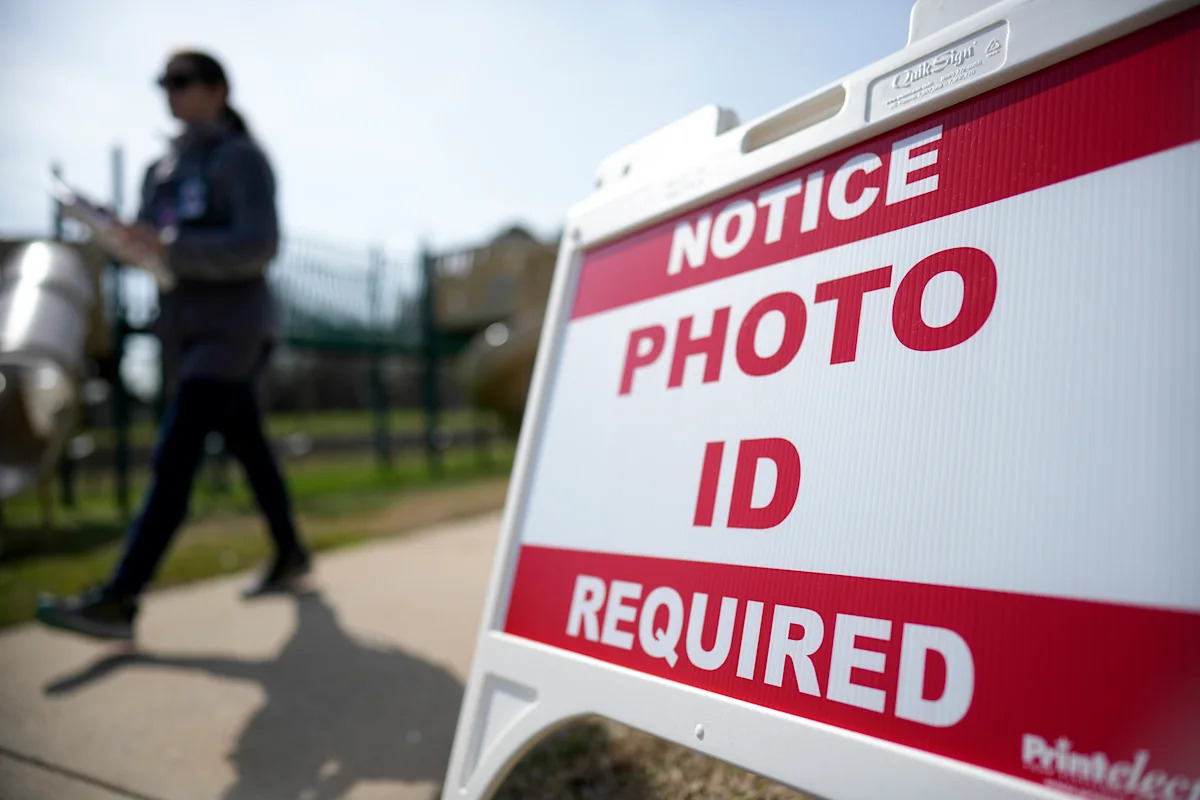
Voter ID rules are in the spotlight ahead of the midterms. Here's what you need to know before heading to the polls.
Images
1 / 7

2 / 7

3 / 7

4 / 7
5 / 7

6 / 7

7 / 7
The Supreme Court has cleared the way for New Hampshire to enforce a ban on voters using student ID as proof of identity at the polls in November's midterm elections.

In its decision Thursday, the court paused a federal court's ruling that would have allowed poll workers to consider student IDs to verify voters' identities without an approved government-issued ID. One Supreme Court judge, Justice Ketanji Brown Jackson, dissented.

The court action came as a result of New Hampshire Secretary of State David Scanlan asking the Supreme Court to intervene after telling election officials that he wouldn't accept student IDs even as backup identification in this year's midterms. Earlier this year, a Republican-backed law removed student ID from the list of identification voters can use to get a ballot.

The Coalition for Open Democracy, which is challenging the ban, wrote in a statement on Instagram that the decision was "wrong" and upheld "an unconstitutional policy that will deprive young voters of their right to vote."

The decision comes amid a broader push for tighter election rules, which limit the ID voters can use to verify their identity at the ballot box. The Trump administration is also pursuing stricter citizenship verification and voter-registration enforcement ahead of Nov. 3.

In Ohio, voters will also decide on Nov. 3 whether to add the state's existing photo ID requirement to its constitution, making it harder for future lawmakers to change or repeal.

With voter ID requirements under scrutiny across the country, here's what voters need to know about which forms of identification are accepted at the polls — and what happens if they don't have one.

President Donald Trump has made tightening election security a priority for his administration, pushing for stricter citizenship checks and changes to how voter eligibility is verified.

"There will be Voter I.D. for the Midterm Elections, whether approved by Congress or not!" the president wrote on Truth Social in February. "Also, the People of our Country are insisting on Citizenship, and No Mail-In Ballots, with exceptions for Military, Disability, Illness, or Travel."

In March, Trump signed an executive order directing federal agencies to compile lists of confirmed U.S. citizens to help states verify voter eligibility. An earlier executive order sought to require documentary proof of citizenship when registering to vote in federal elections, but a federal judge blocked that requirement.

Some groups have criticized broader efforts to tighten voter ID and citizenship rules. The Brennan Center for Justice estimates that more than 21 million Americans lack ready access to a passport or birth certificate.

Voter ID requirements vary across the U.S., with some states requiring photo identification at the polls and others accepting documents without a photograph.

According to the National Conference of State Legislatures, 36 states have laws requiring or requesting some form of identification when voting in person. The remaining 14 states and Washington, D.C., use other methods to verify voters' identities, such as checking signatures or personal information.

In states requiring photo ID, accepted documents may include a driver's license, state-issued identification card or U.S. passport. Other states allow documents without photos, such as utility bills or bank statements.

Student IDs vary by state. While New Hampshire has restricted their use, some states, including North Carolina, accept student IDs that meet specific requirements.

Voters can check the rules for their state through Vote.gov or their local election office before heading to the polls.

Voters who arrive at the polls without an approved form of identification may still be able to cast a ballot, depending on their state's rules.

Some states allow voters to verify their identity through alternative methods, such as signing an affidavit, while others offer provisional ballots, which allow someone to vote while election officials check their eligibility and whether their ballot can be counted.

However, in some states, voters must provide the right identification or complete additional verification steps within a set deadline after Election Day for their provisional ballot to count.

The National Conference of State Legislatures outlines these different procedures, while voters can check their state's specific requirements through Vote.gov or their local election office.

For those voting by mail, identification and verification requirements also vary by state. The Trump administration sought to introduce new nationwide restrictions on the mailing of ballots, but the Supreme Court blocked the changes from taking effect before this year's midterms.

Voters planning to cast an absentee or mail-in ballot should check their state's requirements and deadlines through Vote.gov.
Comments
You must be logged in to comment.