buzzfeed Press
10 Fascinating "Diary Of A Wimpy Kid" Behind-The-Scenes Facts From Author Jeff Kinney
Images
1 / 16
2 / 16

3 / 16
4 / 16
5 / 16
6 / 16
7 / 16
8 / 16
9 / 16
10 / 16
11 / 16
12 / 16
13 / 16

14 / 16
15 / 16
16 / 16
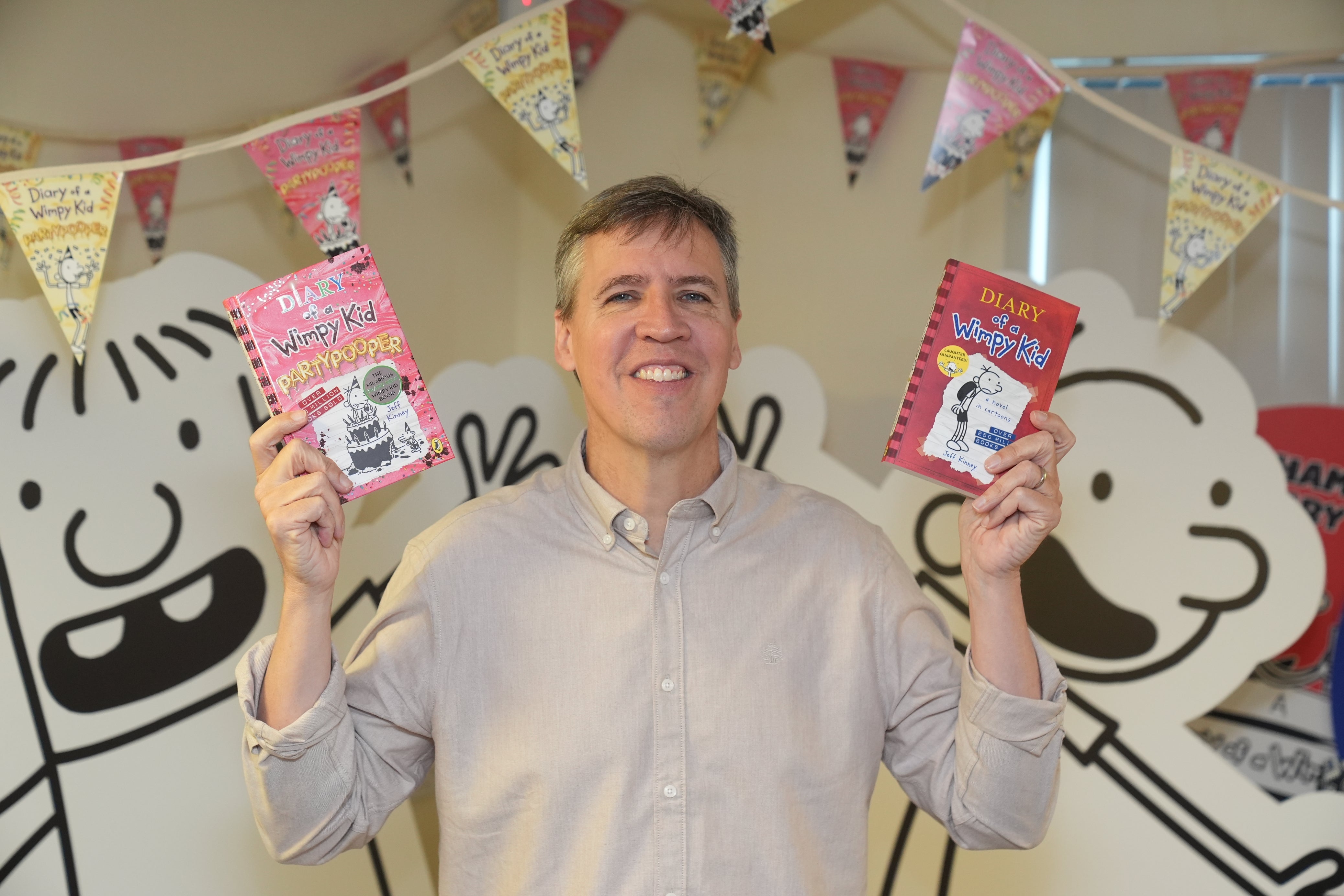
After 21 books, Jeff Kinney still has plenty of stories to tell. From the inspiration behind Greg’s chicken costume to his 20-plus drafts, the Diary of a Wimpy Kid creator shared some seriously fun behind-the-scenes stories.

I’m a pop-culture writer covering everything from TV and movies, to music, Broadway, books, and games.

When Jeff Kinney and I reunited over Zoom for our second interview, we had plenty to chat about. Book 21, Fight or Flight (out today!), introduces one of Greg's biggest challenges yet: facing his middle school bullies. In true Wimpy Kid fashion, he and Rowley find themselves in plenty of wacky situations that only Jeff can concoct so well.

We also dug into some fun behind-the-scenes stories from across the Diary of a Wimpy Kid universe, from Jeff's writing and illustration process to the little details that make Greg's world feel so alive.

Here's everything Jeff revealed about the world of Wimpy Kid.

Note: This interview has been edited for length and clarity.

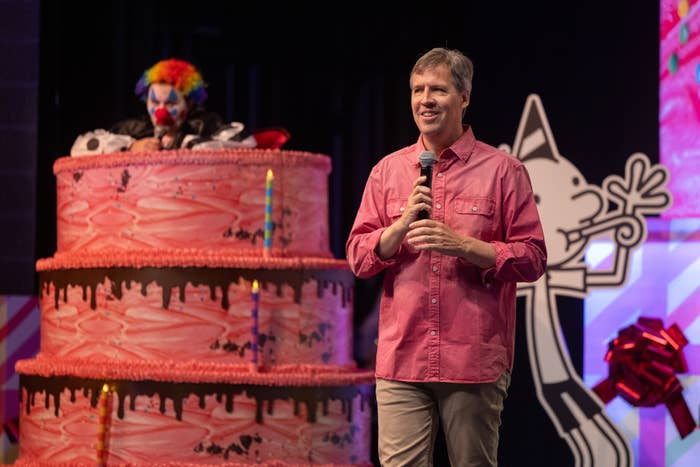
Jeff: I usually think of a theme that's universal in childhood and more or less unexplored in my books. Partypooper, Book 20, was about Greg's birthday. Every kid has a birthday, and it's a big deal, so I thought, Okay, let's fully litigate that. Let's wring out the sponge.

With Fight or Flight, it was a bit more challenging. I wanted to write about bullying and the threat of being in a fight. I started off the book thinking: Greg says he's a coward and never wants to be in a fight. So obviously, at the end, he's got to be in a fight. How do you pull that off in this kind of universe? I'd touched on this theme lightly before, but I wanted to explore it fully.

I have some karate sequences in the new book, and I interviewed a lot of people with experience in karate culture. I wanted to make sure I got things right because I want Greg to break every karate norm — so I needed to know what the norms were.

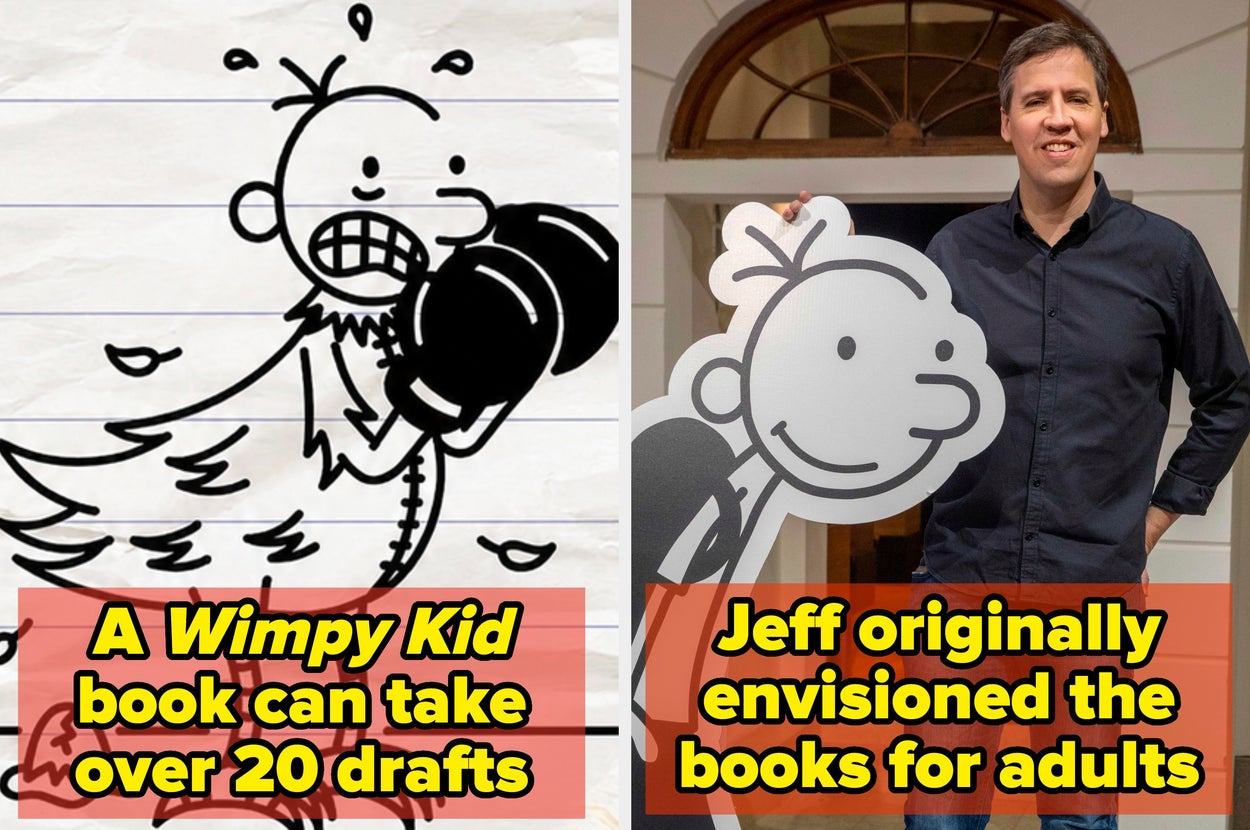
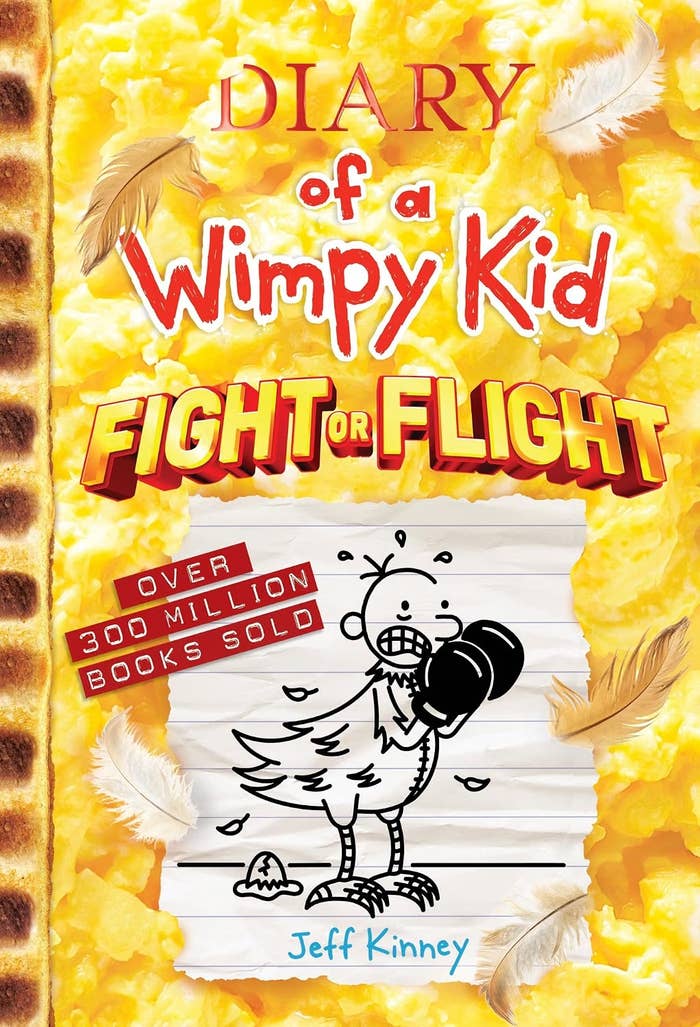
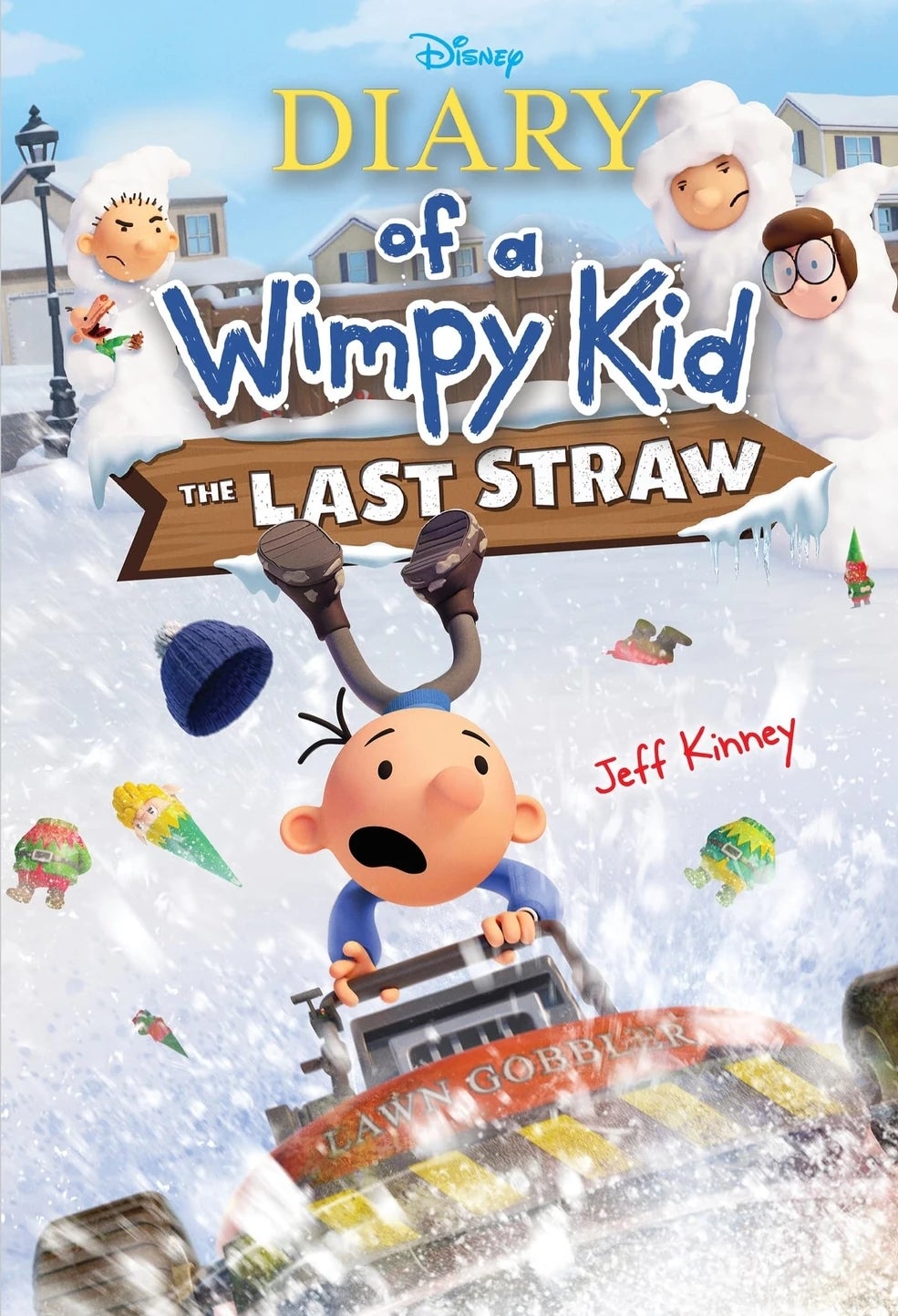
Jeff: When it came to the title, I knew titles like Fighting Words or This Is War would be seen as a book about violence. Then I thought, "Oh, Fight or Flight." It had a good cadence, and "flight" made me think of a bird. That led to the cover concept.

I drew it, and I liked it right away. I thought Greg in a chicken costume was a good visual hit. Greg also accidentally lays an egg, which is a fun little detail.

I thought it was solid gold, but I sent the image to the publisher, and they said, "We're not so sure about it." They felt Greg looked like he was a half-chicken. To fix that, I added a little zipper to make it clear that Greg was in a costume.

Jeff: When I started writing the books, I had in mind that they would be read by adults. I don't really know why, but I thought of The Wonder Years or A Christmas Story, where it's an adult looking back on childhood.

I've always written like that, but intellectually, I know that kids read the books — so it can be hard to know where the line is for Greg as a character. I'm always asking myself, "Is this too far? Is this imbalanced? Is this okay?"

I think what makes Wimpy Kid appealing to kids is that they feel like it's a little bit out of their reach, like it's a little bit of contraband.

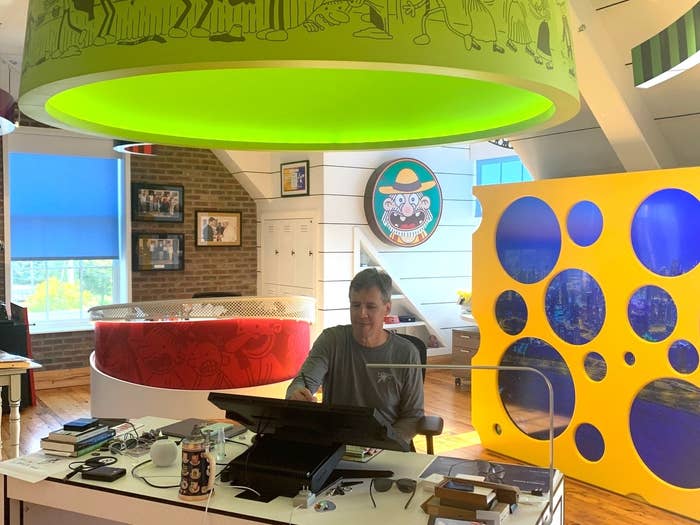
Jeff: Honestly, my best work is when the drawings contradict the writing. At my worst, I'm treating the books like illustrated novels where I'll describe a situation and then show it. That's not very sophisticated.

I like it when there's interplay between the drawings and the text that's additive, where there's some kind of dissonance. Dissonance is probably my strongest tool as a comedy writer: to create an unsettled or unsure feeling in the reader. That's what I try to do.

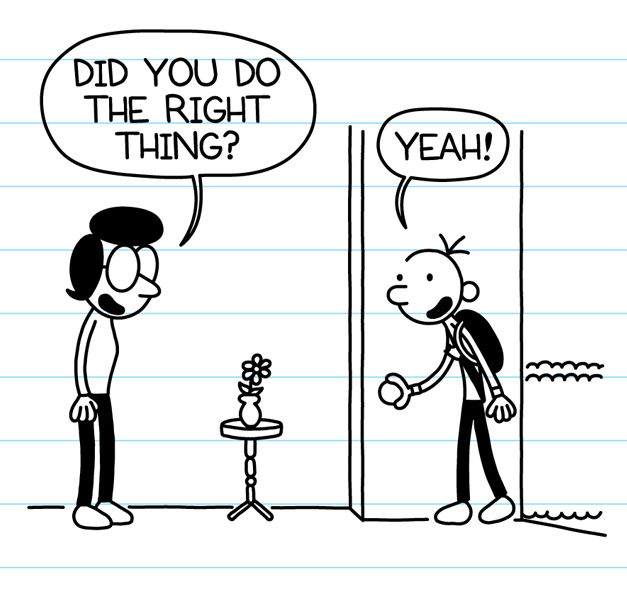
There's an example in the first Wimpy Kid. Rowley is going to take the blame for something Greg did, and Greg's mom says, "I trust you to do the right thing."

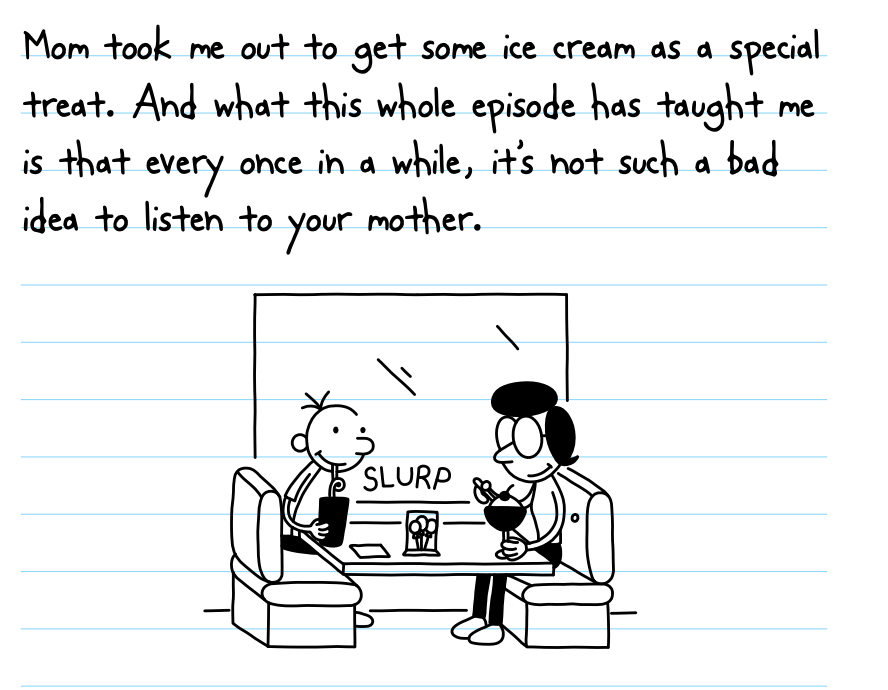
Well, Greg decides the right thing is for Rowley to take the fall. Then Greg and his mom go out and celebrate and have ice cream. You're looking at the drawing, thinking, But wait, he didn't do the right thing!

That joke wouldn't work in the Disney films because it's not the right tone for that audience. But in the musical adaptation, when Greg is with his Mom having ice cream, the stage literally opens up, and a choir of angels comes out and sings Greg's praises. You have to look for the right tone.

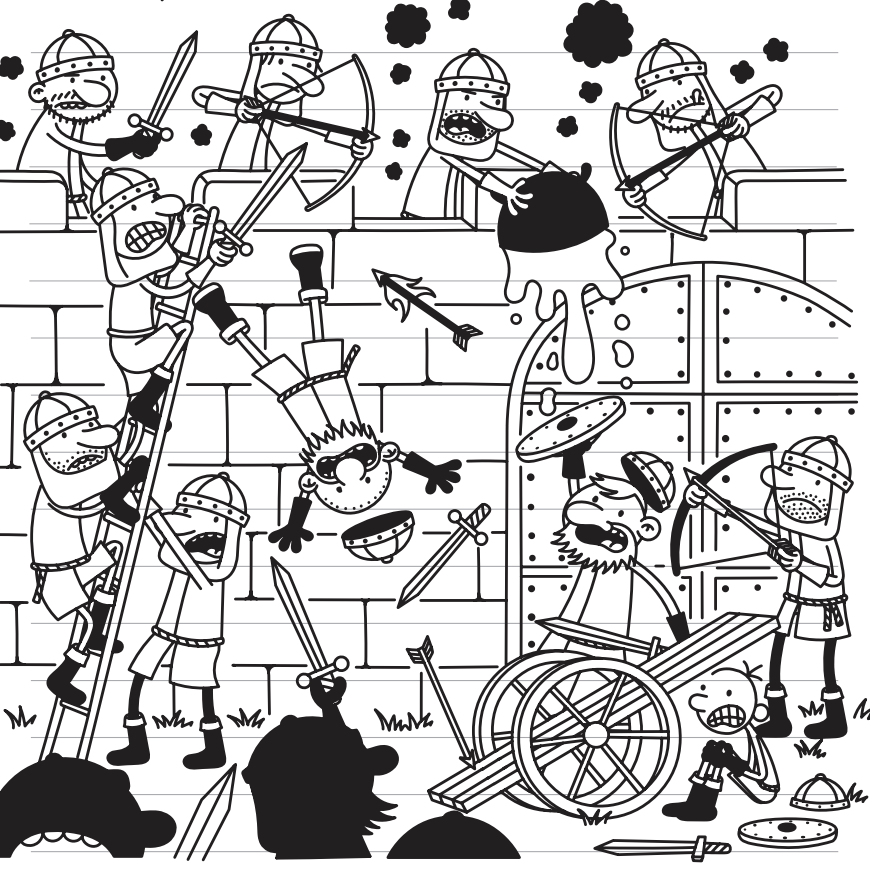
Jeff: One example in the new book is, at the beginning, Greg says he's a coward and that he's thankful to his ancestors for being cowards because that's how he got here. There's a picture of a war, and Greg's ancestor is hiding under a cart, cowering and sitting in a particular way.

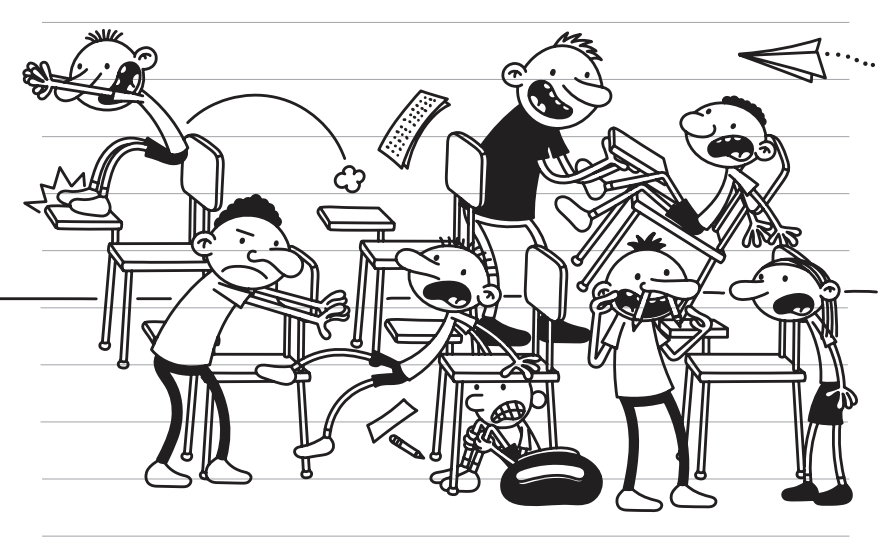
Later, a teacher puts on a movie and turns off the lights. Greg thinks he needs to hide because of the chaos, and he sits under his desk in the exact same way.

I didn't plan it, but it became a reference back to the ancestors drawing. Sometimes things happen like that.

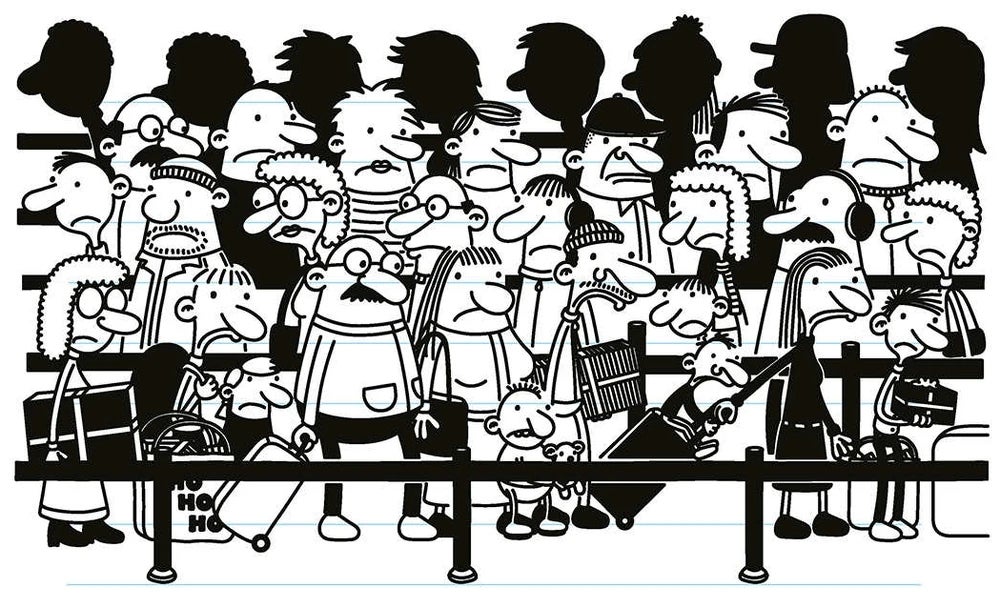
Jeff: Drawing-wise, what takes me the longest is any crowd scene — especially for a page like, "I walked into the gym, and the gym was crowded."

Then I have to draw a whole crowd for 10 hours, with everybody in the stands. (Laughs) I look and think, There's no joke there! I'm just describing what I said.

Jeff: Greg is a really tough role to fill because you need a kid who knows how to be a "likable jerk." They have to know how to act flawed, a little bit of a fast talker, and funny. It's easy to get one or two of those things right, but not all three.

For the latest animated Wimpy Kid movie, we auditioned 800 kids. You know it when you hear it. It's a tough role to play!

Jeff: The live-action movies are great. One of my favorite scenes is the fight scene between Greg and Rowley in the first movie. I think it was choreographed very well, and the characters and actors are very likable.

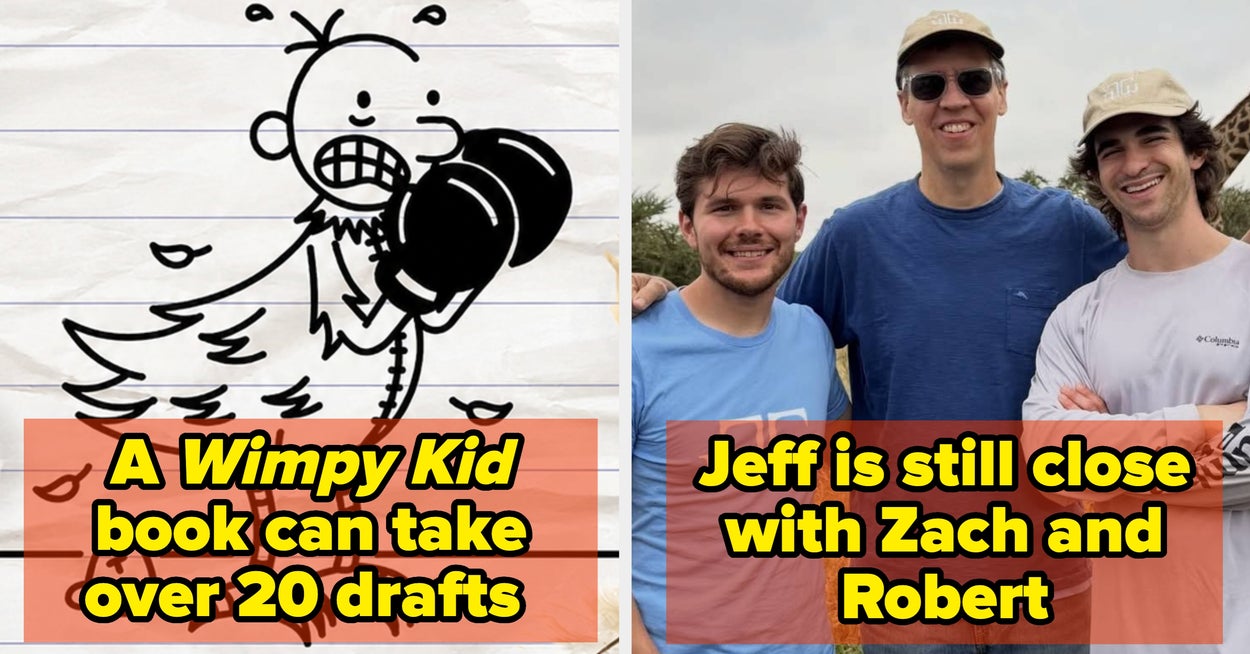
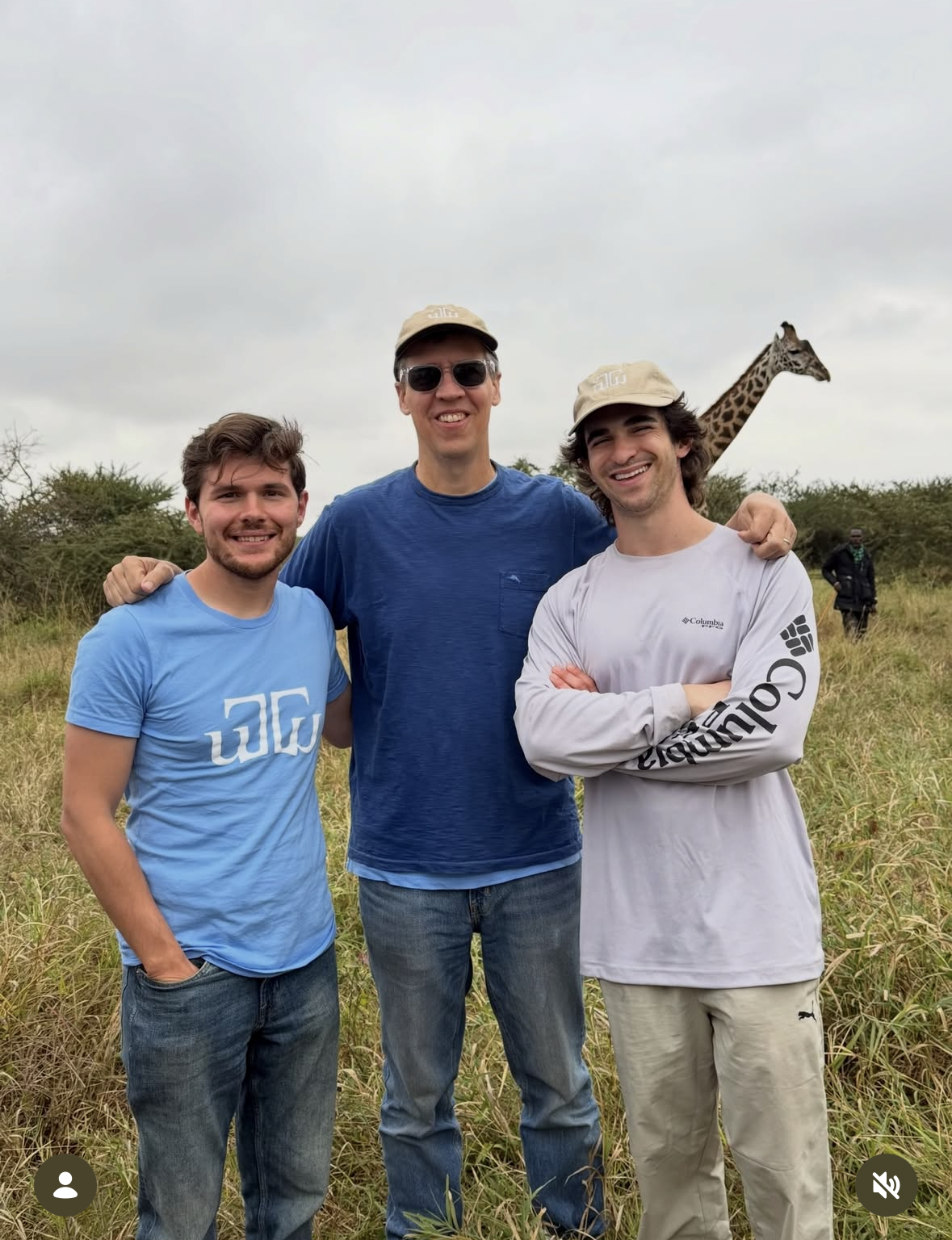
I've stayed close with Zach and Robert. I recently returned from a trip to Africa with them, where we were working on clean-water projects. On our way to Tanzania, we stopped in Amsterdam and visited a museum — and when we came out, there was a saxophonist playing "Total Eclipse of the Heart." Zach and Robert stood in front of the saxophonist and sang the song, which was funny.

Jeff: I didn't understand that the books shouldn't be about an American kid until I got out into the world and traveled to China, Brazil, New Zealand, Singapore, all over. I realized that kids who read Greg didn't really see him as an American kid. They just see him as a kid.

I wish I hadn't referenced so many U.S.-centric things in the early books. For example, in the new book, there's a bully at school who threatens Greg, and Greg has to figure out how to navigate that. That's a very universal theme. If I wrote about the Fourth of July, it would be less accessible.

The strongest Wimpy Kid books are the ones that draw upon the universality of childhood and those truths. So I’m evolving as a writer in that way.

Jeff: Weirdly, Rowley is really easy for me to write in his voice. I wrote Diary of an Awesome Friendly Kid, and then I thought, Oh, this is kind of easy for me. I wrote a few more of those books, and Spooky Stories 2, which just came out. I didn't even look at the other books to make sure I could match a cadence. I just knew that voice. He's the easiest for me to write.

I don't know why the Wimpy Kid books are so difficult. I go through something like 23 official drafts. I have to read through it repeatedly, and then it finally falls into rhythm at the very end. Even on the last day, I may make hundreds of changes to the manuscript to make sure it hits a particular cadence.

I often don't understand the work until very late. In Fight or Flight, the breakthrough for me was that storytelling requires a transformation. If the character on page one says, "I'm a coward. My worst nightmare is to get in a fight," that's setting off Chekhov's gun. That guarantees that the character has to transform and get into a fight.

I thought that was satisfying, but it wasn't satisfying enough. I realized there were further-out brackets that were bigger and more thematically interesting.

I didn't crack that until the end of the writing process — but you'll have to read to find out what happens!

Keep up with Jeff on Instagram, @diaryofawimpykid.

Check out last year's interview with Jeff for more fun facts.
Comments
You must be logged in to comment.