huffpost Press
A MAGA Senator Went On A Wild Tangent About Furries. Here's Why.
Images
1 / 12

2 / 12
3 / 12
4 / 12
5 / 12
6 / 12
7 / 12
8 / 12
9 / 12

10 / 12
11 / 12

12 / 12
For years, Republicans have had a one-sided beef with furries, a subculture centered on an interest in anthropomorphic animals and, for some, dressing up as them.

Numerous GOP politicians and pundits ― including Texas Gov. Greg Abbott, Nebraska state Sen. Bruce Bostelman and former Fox News host Megyn Kelly ― have pushed the urban myth that schools put litter boxes in their classrooms to accommodate students who identify as cats or other creatures.

Concerned about “radical” furry culture taking over public schools, last year Texas even considered legislation that would ban public school students from engaging in “non-human” behavior while on campus. (The bill failed to pass in spite of support from Abbott.)

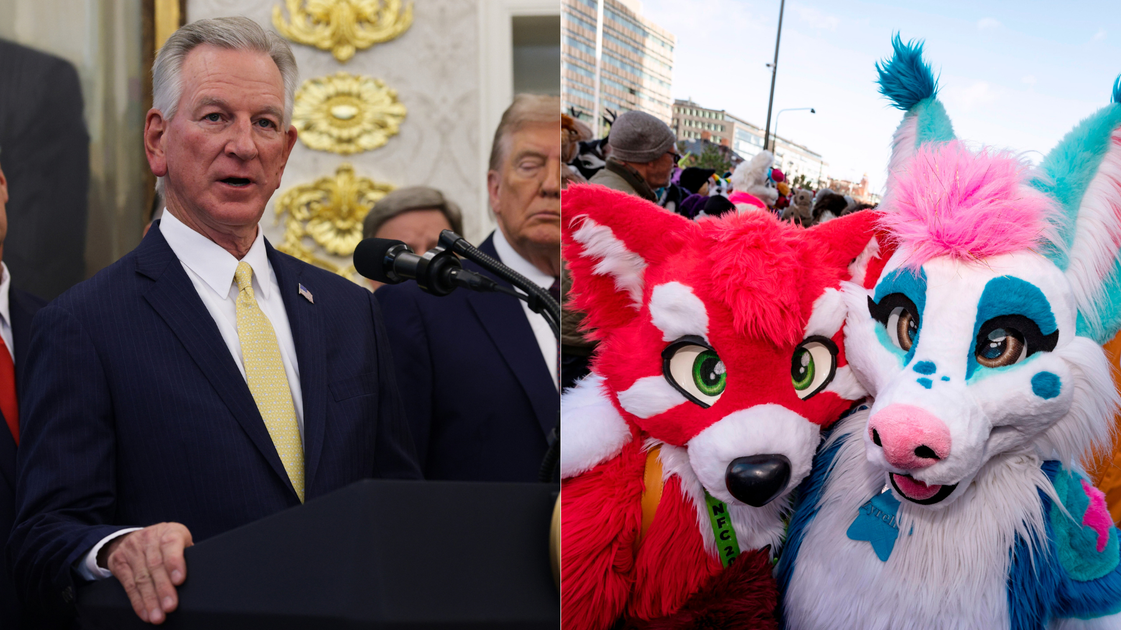
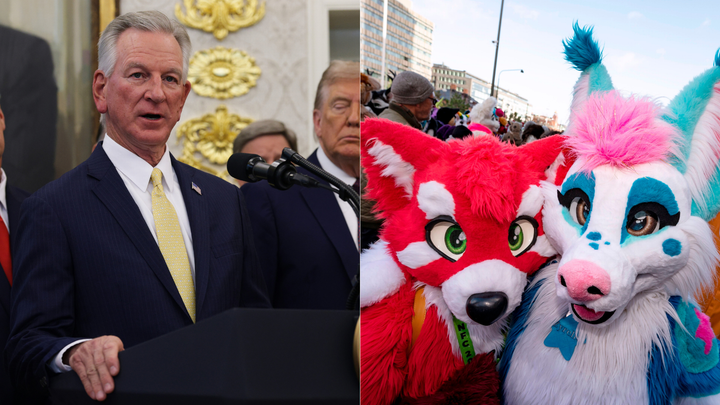
Last week, Sen. Tommy Tuberville (R-Ala.) revived the GOP’s long-running fight against furries in a Senate floor rant about transgender people that veered into an anti-furry tirade.

Specifically, Tuberville ― a vocal ally of President Donald Trump ― is worried about the pressing issue of the United States’ airline industry being full of “furries.”

“Many airline pilots, flight attendants, and air traffic controllers are part of the furry community,” the senator solemnly said. “Lord help us.”

“It’s terrifying when you think about this,” he continued. “When you walk on to a commercial flight, it’s possible that the pilot flying your plane could have a deranged fetish of dressing up like an animal.”

To make his point, Tuberville later posted a viral audio clip of airline pilots at Ronald Reagan Washington National Airport meowing and barking at each other over the radio. But as Wired reported on Wednesday, there’s no evidence the pilots were furries and the clip may have been a reference to a joke in the 2001 movie “Super Troopers.”

Tuberville’s Senate floor rant was widely mocked. Former Sen. Doug Jones, the senator’s Democratic opponent in Alabama’s race for governor, called the spiel “the strangest speech on the floor of the United States Senate I have ever heard.”

The clip also made the rounds on late night TV, with Jimmy Kimmel and “The Daily Show” both addressing the bizarre rant.

Clearly, Tuberville and the rest of the GOP are confused about furry culture. But the truth is, so are a lot of people. Below, we break down what it means to be a furry — and what Republicans are really talking about when they go after them. (Yep, as with so many of these culture-war issues, it has something to do with LGBTQ people.)

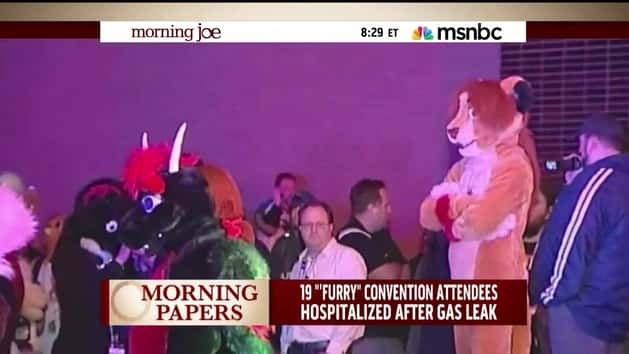
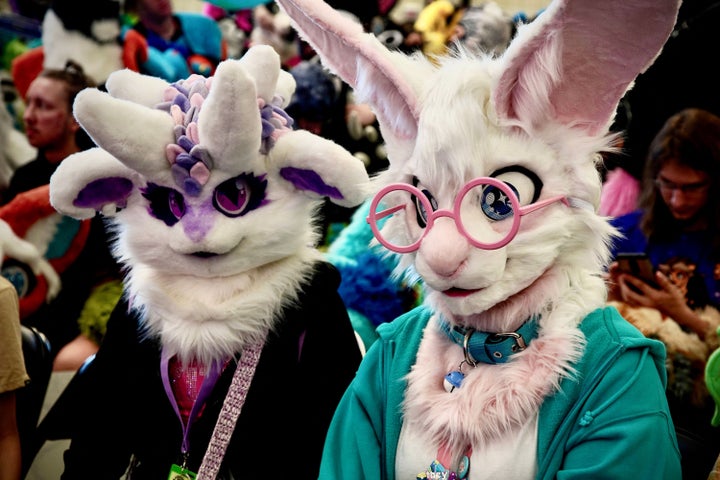
Though furries are often portrayed as sexual fetishists united by a shared interest in animal-costumed sex, that’s not what furry fandom is about for many people.

A more accurate definition, said Xavier Ho, a senior lecturer in interaction design at Monash University and co-founder and director of Furry Studies, is a group of people who “create imaginary animal-themed characters that represent themselves and express those characters through drawing, writing and performance.”

In the same way that “Star Wars” fans are fans of “Star Wars” and sports fans are fans of sports, furries are fans ― in this case, they’re fans of media featuring animals that walk, talk and do human things, said Courtney Plante, a Canadian furry researcher and a professor in the department of psychology at Bishop’s University in Quebec.

“While this might seem, at first glance, like a peculiar thing to be a fan of, keep in mind that ours is a society raised on Bugs Bunny and Mickey Mouse, with prominent television shows like ‘Bojack Horseman’ and ‘Family Guy’ featuring anthropomorphized animals,” Plante told HuffPost.

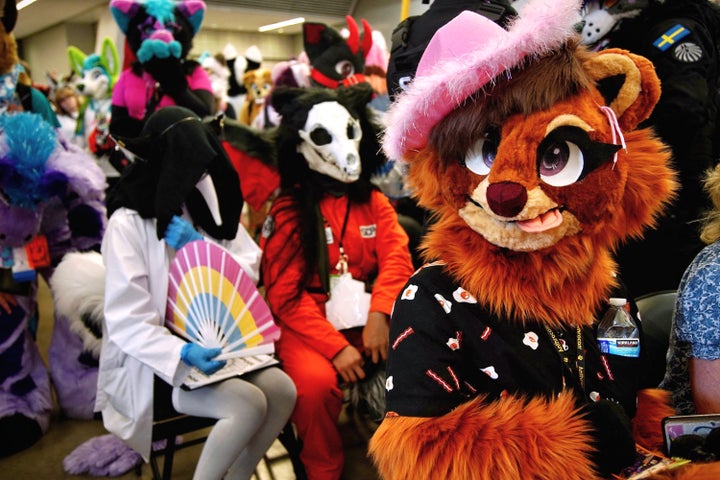
Like fans of more mainstream interests, furries express their fandom in familiar ways: They watch shows, buy merchandise and gather at conventions, much as sports fans watch games, buy jerseys and head to rallies.

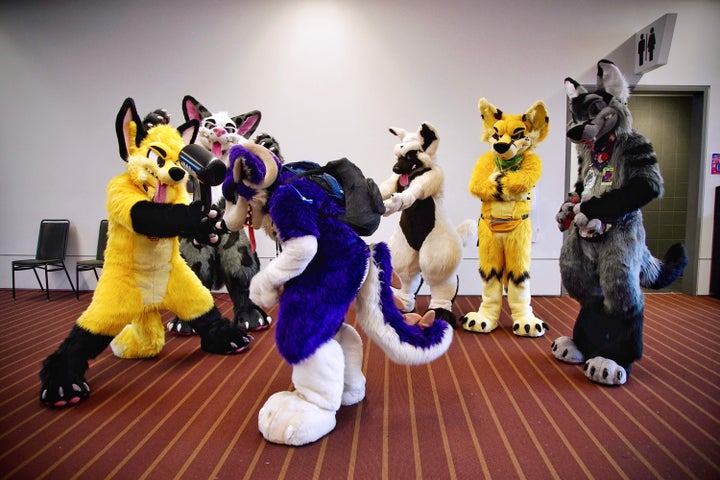
And just as “Star Wars” fans might write fan fiction or cosplay Princess Leia, Plante said furries sometimes create fan-made content or dress up in mascot-style “fursuits.” (That said, only about 10% to 15% of all furries own a full fursuit.)

Does furry fandom sometimes veer into sexual expression or kink? Sure. Some draw sexy pictures of anthropomorphized animals and post them on social media. Others incorporate ears, tails or partial costumes into their sex lives. But there’s a lot of freaky “Star Wars” content and sexual roleplay out there, too. Fandom sometimes goes there.

“At the end of the day, if you can understand a sport fan or a “Star Wars” fan, you probably understand what makes a furry tick,” Plante said.

Many furries develop what’s called a “fursona” ― a version of themselves as an anthropomorphic character, that they roleplay in person or online, said Elizabeth Nickrenz, a researcher of fan cultures and an associate professor of psychology at Duquesne University in Pittsburgh, Pennsylvania.

“Often, these fursonas represent things they like about themselves or others, or represent qualities that they want to develop,” she said. “If you’re shy, for example, your fursona might be bouncy and outgoing.”

A common misperception about furries is that they think they are actually animals or that they want to be animals, Nickrenz said.

“Furry culture is actually much more about imagination, creativity and play,” she said.

The reason conservative politicians are so hung up on furries is because there is a cross section between furries and the queer community, Plante said.

“I think the outrage toward furries stems not just from its being an unconventional interest but also from the fact that there’s considerable overlap between furries and queer culture: upwards of 75% of furries are LGBTQ+,” he said.

Many conservatives take issue with queer people more broadly, so it makes sense that a fandom with norms of acceptance toward queer people would rub them the wrong way, Plante said.

Furries also tend to be young ― more than 75% of furries are under the age of 25 ― and if there’s anything that confuses conservative Boomer politicians, it’s the intricacies of youth culture.

Given how new and relatively small the subculture is, plenty of other people aren’t quite sure what to make of it, either: While society has moved toward more progressive views of queer people, making open bigotry less socially acceptable and more likely to draw backlash, furries are still a big question mark for many.

“Furries are unconventional enough that many people, even progressives, aren’t willing to ‘die on that hill’ to defend them,” Plante said.

Over time, furries have become a proxy for attacking queer people, allowing critics to target them in a way that most people won’t get defensive about, Plante said.

“By trivializing furries, they’re also trying to stigmatize and trivialize queer people.”

Conservatives may also try to draw a straight line between the two, Plante said, making arguments like, “This is what tolerating LGBTQ+ and trans people gets you — a bunch of adults dressed up as cats and dogs!” (It’s a variation on a familiar slippery slope argument against same-sex marriage back in the early 2000s: “If we allow men to marry men,” the reasoning went, “what’s next? People wanting to marry toasters?”)

As for the brouhaha over furries in schools, researchers and LGBTQ+ advocacy groups have suggested the narrative functions as a moral panic tied to resistance against LGBTQ+-inclusive education and accommodations for students’ gender identities. (Bostelman ― the Nebraska lawmaker who helped spread the debunked rumor that schools were putting litter boxes in bathrooms ― later apologized.)

Now to Tuberville’s claim that furries are flying planes or working as flight attendants. There aren’t really reliable numbers on furry employment, but Wired did talk to some furries who work in the airline industry, so there may be some crossover.

Wired’s theory? Both worlds involve a lot of travel — many furries are constantly going from convention to convention, pilots are obviously traveling often — and an “intense level of interest” in a hobby. Some of the airline workers they spoke to pointed to the prevalence of neurodivergent people within the furry fandom, many of whom may have an aviation special interest.

In any case, Tuberville offered no data showing that personal hobbies affect flight safety or that an “alarming number” of aviation workers are furries. You’re going to be OK if your pilot likes to dress up as a sexy fox in his spare time.

But outrage about furries is a great, time-tested strategy for politicians looking to distract voters from other, more pressing political issues, Plante said. It’s easy to see why.

“Fursuits are eye-catching and easy to mock,” he said. “It’s little wonder why a politician, wanting to shift attention away from failing economic or foreign policies, would point at the people wearing the funny animal costumes and say, ‘look over there, aren’t those people strange? They’re why things are so bad right now!’”

Yes, Plante recognizes it’s a ironic that people in the funny animal costumes are the ones asking politicians to grow up and take their job seriously.

By entering your email and clicking Sign Up, you're agreeing to let us send you customized marketing messages about us and our advertising partners. You are also agreeing to our Terms of Service and Privacy Policy.
Comments
You must be logged in to comment.