yahoo Press
Stock market today: Dow, S&P 500, Nasdaq futures muted as oil falls, markets eye looming Trump-Xi meeting
Images
1 / 5
2 / 5

3 / 5

4 / 5

5 / 5
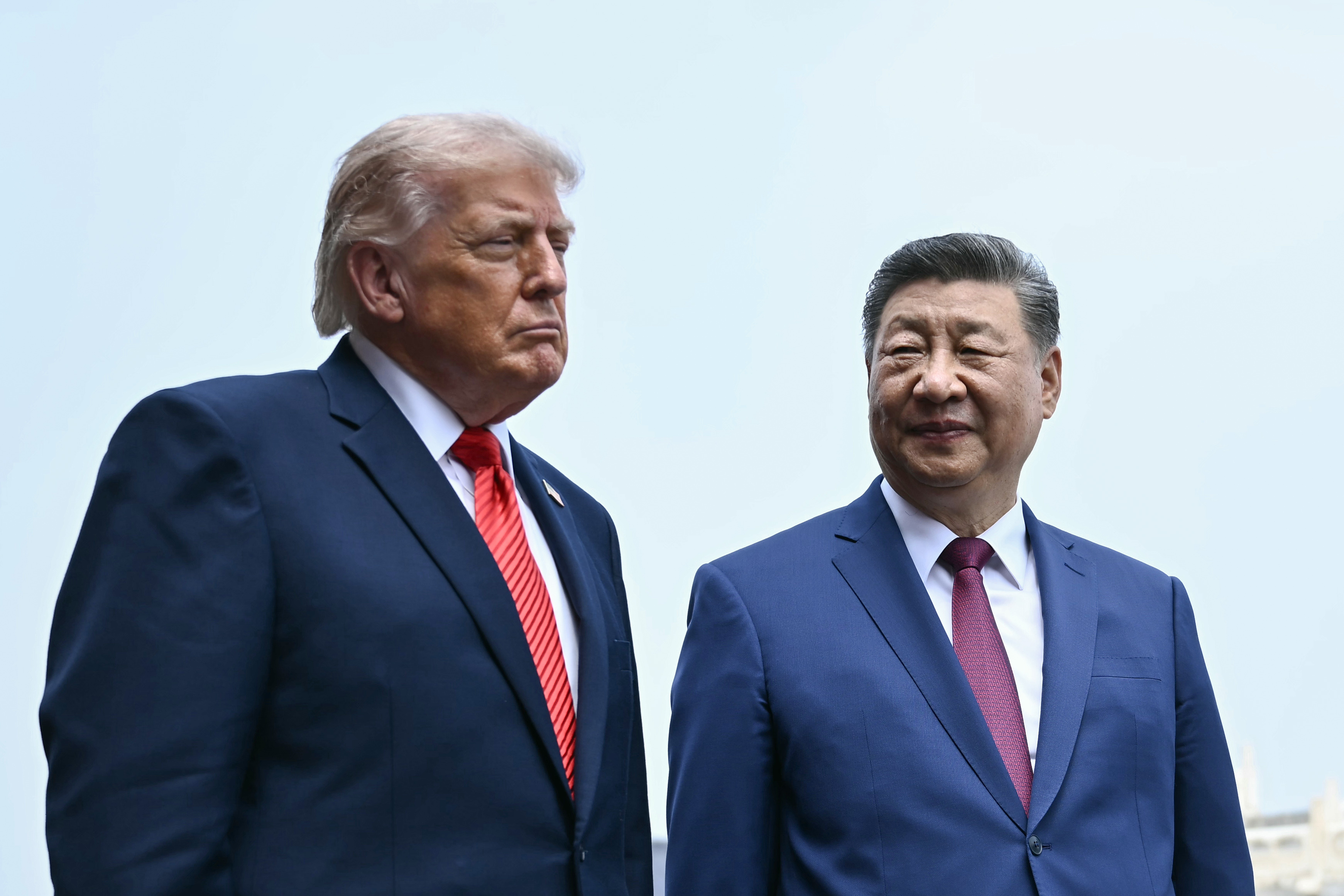
The above button links to Coinbase. Yahoo Finance is not a broker-dealer or investment adviser and does not offer securities or cryptocurrencies for sale or facilitate trading. Coinbase pays us for certain activity generated through this link. Prices displayed are informational. US stock futures went nowhere on Wednesday morning as investors monitored US diplomatic efforts with Iran and China, as well as a recent rally in tech stocks. Futures on the Dow Jones Industrial Average (YM=F), S&P 500 (ES=F), and Nasdaq-100 (NQ=F) hovered near the flat line after the Nasdaq Composite posted back-to-back record highs. President Trump is expected to greet Chinese President Xi Jinping at Joint Base Andrews, kicking off Xi's first visit to Washington, D.C., in 11 years. Experts don't expect any major policy breakthroughs, but the world leaders are expected to discuss trade, the war in Iran, rare earths, and artificial intelligence. Any developments in AI policy are sure to generate interest among tech investors, particularly after Anthropic (ANTH.PVT) CEO Dario Amodei penned an essay urging companies to pace AI development cooperatively. A who's who of Silicon Valley executives, including Nvidia's (NVDA) Jensen Huang, OpenAI's (OPAI.PVT) Sam Altman, and Google's (GOOG) Sundar Pichai, will attend a dinner with Presidents Trump and Xi on Thursday. A potential thaw in US-Iran relations, meanwhile, is sending oil prices lower and boosting stocks. President Trump said US and Iranian officials met for several hours at the UN on Tuesday, rekindling hopes of a truce between the two nations. Brent crude oil futures (BZ=F), the global benchmark, traded below $100 per barrel, while WTI crude futures fell below $90. On the economic calendar, investors will get a read of economic activity from S&P, and on the earnings calendar, a handful of consumer-facing brands, such as Cintas Corporation (CTAS), General Mills (GIS), and Cracker Barrel Old Country Store (CBRL) report quarterly results. Big Tech's AI spending boom is carrying an ever-larger share of the US growth story. So far in 2026, investments tied to the AI build-out have been responsible for roughly one-fifth of US economic growth. This year alone, the four leading "hyperscalers" — Alphabet (GOOG, GOOGL), Amazon (AMZN), Meta (META), and Microsoft (MSFT) — are expected to spend roughly $800 billion in capital expenditures, or 10 times their spend in 2019, only seven years ago, per Goldman Sachs. Sustaining that investment, however, will require an equally historic expansion in the cash generated by the companies footing the bill, says Apollo chief economist Torsten Sløk. (Disclosure: Yahoo is a portfolio company of funds managed by affiliates of Apollo Global Management.) Over the past year, the financing for the AI spending race has come increasingly from the debt market, where the hyperscalers are expected to issue $250 billion in global investment-grade debt by the end of 2026. Read more. Yahoo Finance's Dan Howley reports: If you're wondering how huge the AI segment's march toward the public markets is, look no further than the valuations of the biggest companies in the space. Take OpenAI (OPAI.PVT), which is raising cash at a $1.2 trillion valuation, according to The Wall Street Journal, throw in Anthropic's (ANTH.PVT) potential $2 trillion value when it goes public, and SpaceX's (SPCX) current $2 trillion market cap, and you're sitting at just north of $5 trillion, The Financial Times reported. That is more than the value of all of the initial public offerings from 1980 through 2025, The FT says, citing data from University of Florida Warrington College of Business emeritus professor Jay Ritter. Morning Joe economic analyst and New York Times Op-Ed contributing writer Steve Rattner illustrated the valuations in a chart he posted on X. He also notes that the historical numbers aren't adjusted for inflation. Read more. Economic data: MBA mortgage applications, week ended Sept. 18 (-4.1% previously); S&P Global US manufacturing PMI, September preliminary reading (53.6 expected, 53.9 previously); S&P Global US services PMI, September preliminary reading (56 expected, 56.5 previously); S&P Global US composite PMI, September preliminary reading (56 previously) Earnings calendar: Cintas Corporation (CTAS), Paychex (PAYX), General Mills (GIS), H.B. Fuller Company (FUL), Cracker Barrel Old Country Store (CBRL) Catch up on some top stories from overnight: 'Let's not send out the diesel': Trump floats ban on US diesel exports OpenAI, Anthropic, and SpaceX valuations could dwarf 45 years of IPOs We're growing jobs based on AI, not destroying them, claims tech boss These are the stock market's winners and losers in the AI agent economy Qualcomm reveals two new smartphone chips focusing on agentic AI Reuters reports: The dollar steadied near its strongest level in two months on Wednesday on prospects of interest rate hikes in the near term, while easing oil prices on hopes for a diplomatic breakthrough to end the Middle East war kept investors on edge. The euro was at $1.1446 in early trading, loitering near its weakest level since late July. Sterling bought $1.3337. The dollar index, which measures the US currency against six rivals, was at 100.56. The recent barrage of rate hikes and hawkish rhetoric from major central banks has taken centre stage in currency markets as the US-Israeli conflict with Iran drives oil prices higher and fans inflation worries. Investors are now anticipating further tightening from central banks, with Federal Reserve officials flagging the possibility of more hikes if inflation does not ease. Read more.
Comments
You must be logged in to comment.