yahoo Press
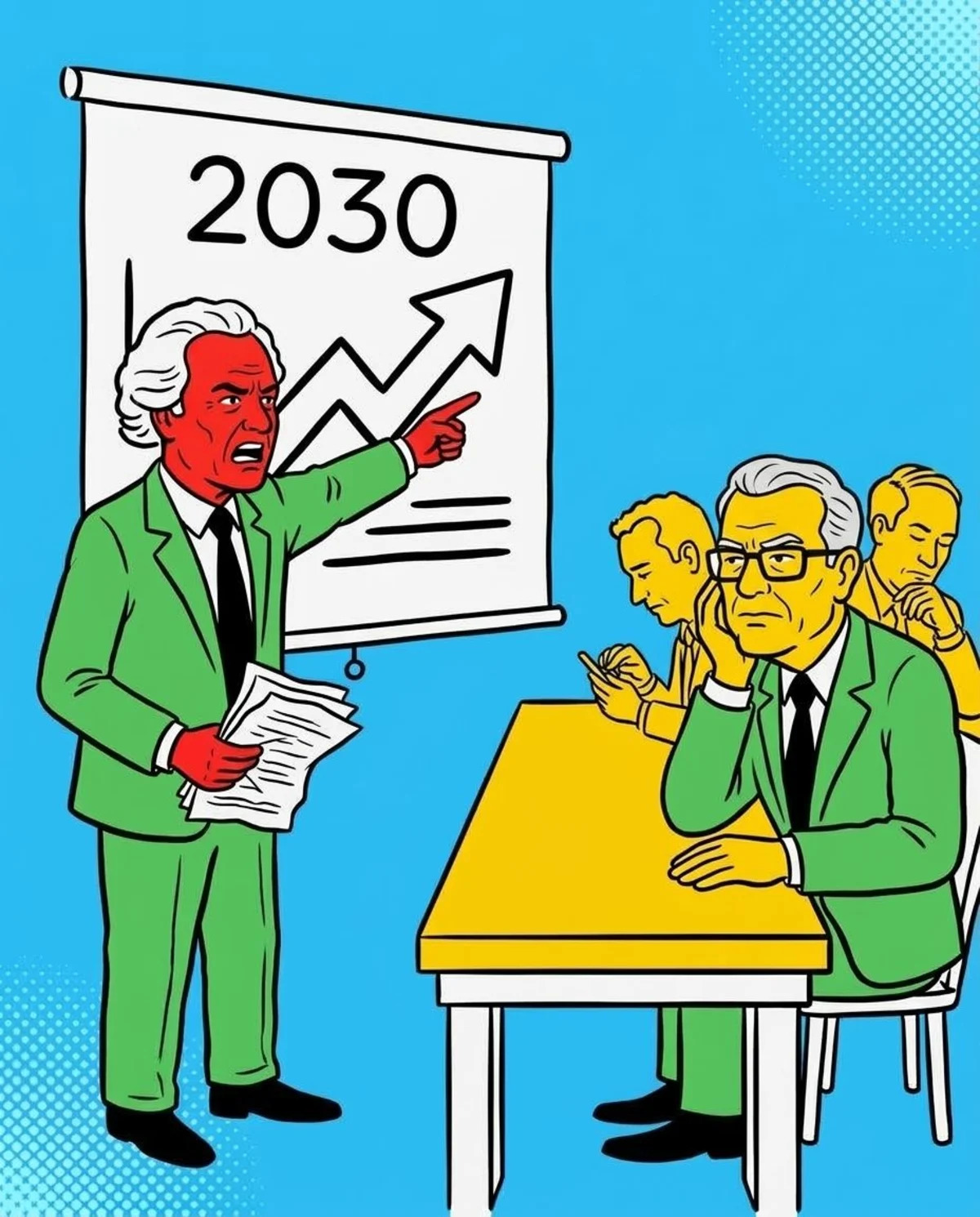
Novo’s Big 2030 Pitch Gets a Small Reception
Images

1 / 4
2 / 4

3 / 4

4 / 4
The above button links to Coinbase. Yahoo Finance is not a broker-dealer or investment adviser and does not offer securities or cryptocurrencies for sale or facilitate trading. Coinbase pays us for certain activity generated through this link. Prices displayed are informational.

Our analysts just identified a stock with the potential to be the next Nvidia. Tell us how you invest and we'll show you why it's our #1 pick. Tap here.

Novo laid out an ambitious pipeline, more patients and billions in future drug sales, but investors wanted a clearer answer to the question hanging over the company: what replaces semaglutide when competition and patents catch up?

The shares tumbled as management's long-term growth targets proved too broad to reassure a market already worried about Eli Lilly, pricing pressure and recent clinical setbacks.

Novo Nordisk shares fell as much as 9% during its Capital Markets Day in London after management unveiled new strategic ambitions through 2030.

The company wants revenue between 2026 and 2030 to grow at a compound annual rate broadly in line with major pharmaceutical peers, while maintaining a broadly stable operating margin.

Novo also aims to launch more than five medicines with multi-blockbuster potential by 2030 and generate more than DKK150 billion, or roughly $23 billion, of risk-adjusted sales from its pipeline by 2035.

The development plan includes at least five Phase III programs in obesity and diabetes and another five across other therapeutic areas.

Novo wants to serve more than 60 million patients globally by 2030 and scale manufacturing capacity so that it can provide oral GLP-1 obesity treatments to roughly ten times as many people.

The problem for investors was not a lack of ambition but a lack of precision.

Executives faced questions over pricing power, acquisitions and the company's strategy once patents on semaglutide, the active ingredient in Wegovy and Ozempic, begin expiring in major markets in the early 2030s.

Management also revealed that roughly 13,000 employees have left as part of the broader restructuring, above the original round of 9,000 planned reductions, as chief executive Mike Doustdar pushes for a leaner and faster organization.

There was positive clinical news during the event.

CagriSema beat a lower dose of Eli Lilly's tirzepatide on weight loss in a Phase III diabetes study and delivered 21% weight loss in another obesity trial, reinforcing its potential role in Novo's next generation of treatments.

That was still not enough to rescue the shares.

Novo's problem is unusual because it is trying to convince investors that one of the most successful pharmaceutical franchises in history can survive its own success.

One stock. Nvidia-level potential. 30M+ investors trust Moby to find it first. Get the pick. Tap here.

Wegovy and Ozempic transformed obesity and diabetes treatment, doubled Novo's sales over a handful of years and briefly made the company Europe's most valuable listed business.

They also created an enormous concentration risk.

Semaglutide remains the foundation of Novo's earnings while Eli Lilly has taken momentum in injectable obesity drugs with Zepbound, and generic competition begins to matter once patent protection expires in the next decade.

Investors therefore wanted the Capital Markets Day to provide a clearer bridge between today's blockbuster franchise and tomorrow's company.

More than five future multi-blockbusters sounds impressive, but many pipeline products remain years from commercialization and clinical development has recently produced several painful failures.

The DKK150 billion pipeline-sales target for 2035 also stretches beyond the 2030 strategy period, leaving investors with relatively limited numerical guidance for the nearer years when semaglutide pricing and competitive pressure could become most intense.

That helps explain why promising CagriSema data received relatively little credit.

Novo does have meaningful assets beyond semaglutide, including oral obesity treatments, next-generation amylins and programs in cardiovascular, liver and blood disorders. The Wegovy pill has also strengthened its position in oral weight-loss therapy, where the company hopes manufacturing scale can become a competitive advantage.

But the market is now demanding proof rather than possibilities because Novo shares have fallen from their record high as Lilly has gained ground.

The bar for restoring confidence is therefore considerably higher than announcing another long list of clinical programs.

CagriSema is one of the first major tests, with Novo targeting launch of the combination treatment next year before bringing additional next-generation obesity drugs to market later in the decade.

Investors will also watch whether Novo can preserve pricing in the US, where direct-to-consumer channels, government negotiations and increasing competition are reshaping the economics of obesity medicines.

Pipeline execution becomes even more important as semaglutide moves closer to patent expiry, because every successful late-stage asset reduces the company's dependence on Wegovy and Ozempic.

Novo has now told investors what it wants the company to look like in 2030. The selloff suggests the market wants considerably more evidence that it can actually get there.
Comments
You must be logged in to comment.