buzzfeed Press
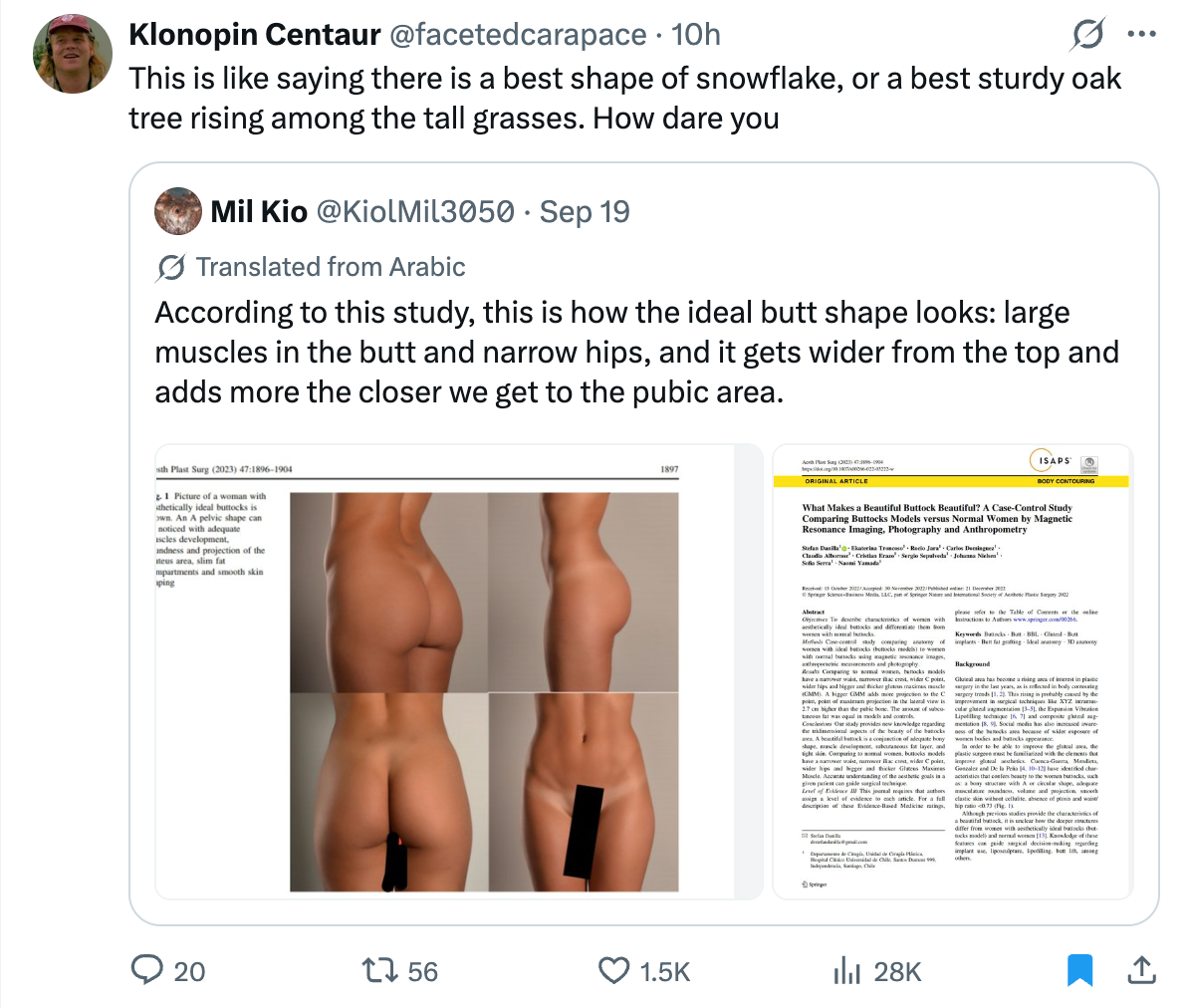
"How Dare You...": People Are Furious Over A Viral Post About A Study On The “Ideal Buttocks” For Women
Images

1 / 15
2 / 15

3 / 15

4 / 15
5 / 15

6 / 15
7 / 15
8 / 15

9 / 15

10 / 15
11 / 15

12 / 15

13 / 15

14 / 15

15 / 15
“Can we please fund research for PCOS and endometriosis instead...”

As a Writer at BuzzFeed, I write and curate quizzes, listicles, and articles about everything from pop culture and history to food and fashion.

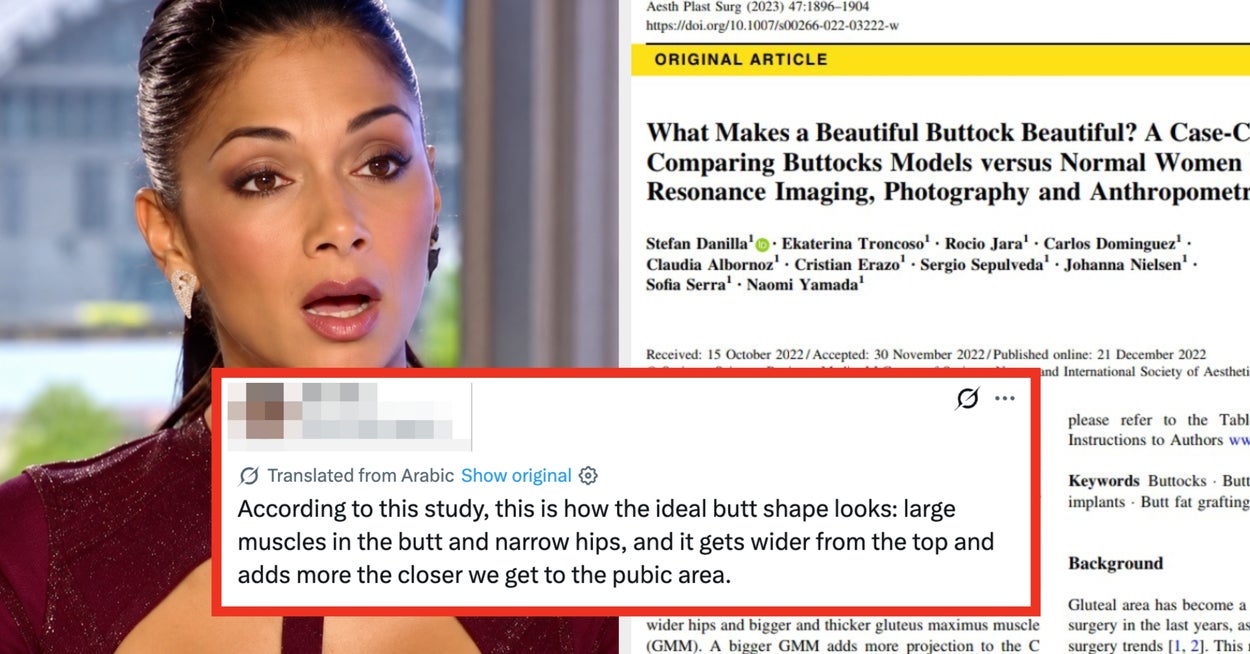
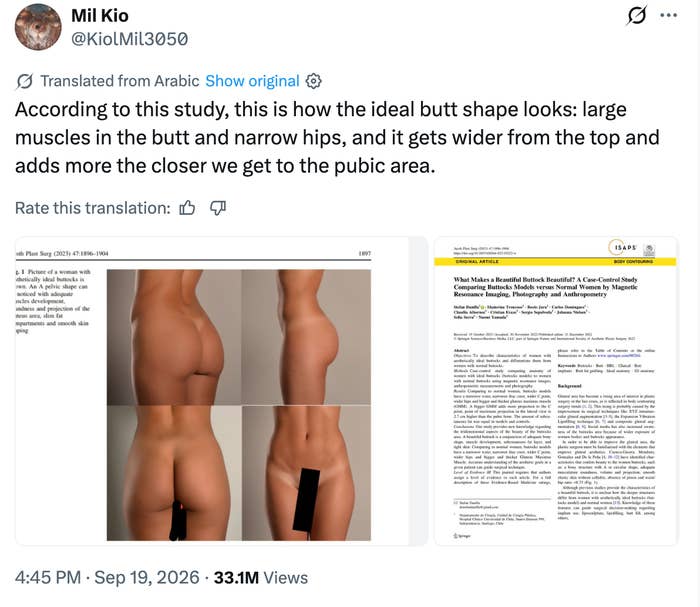
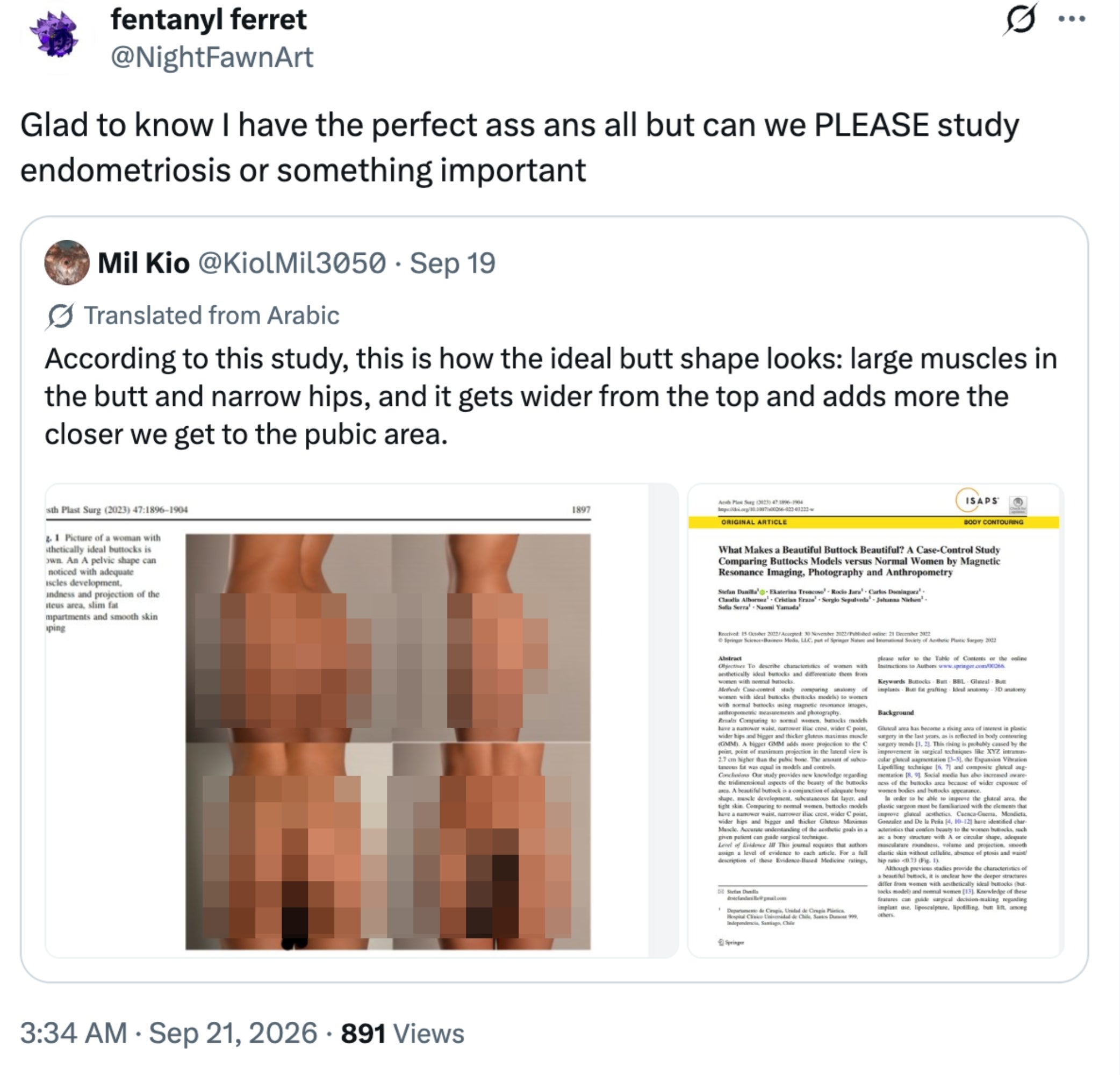
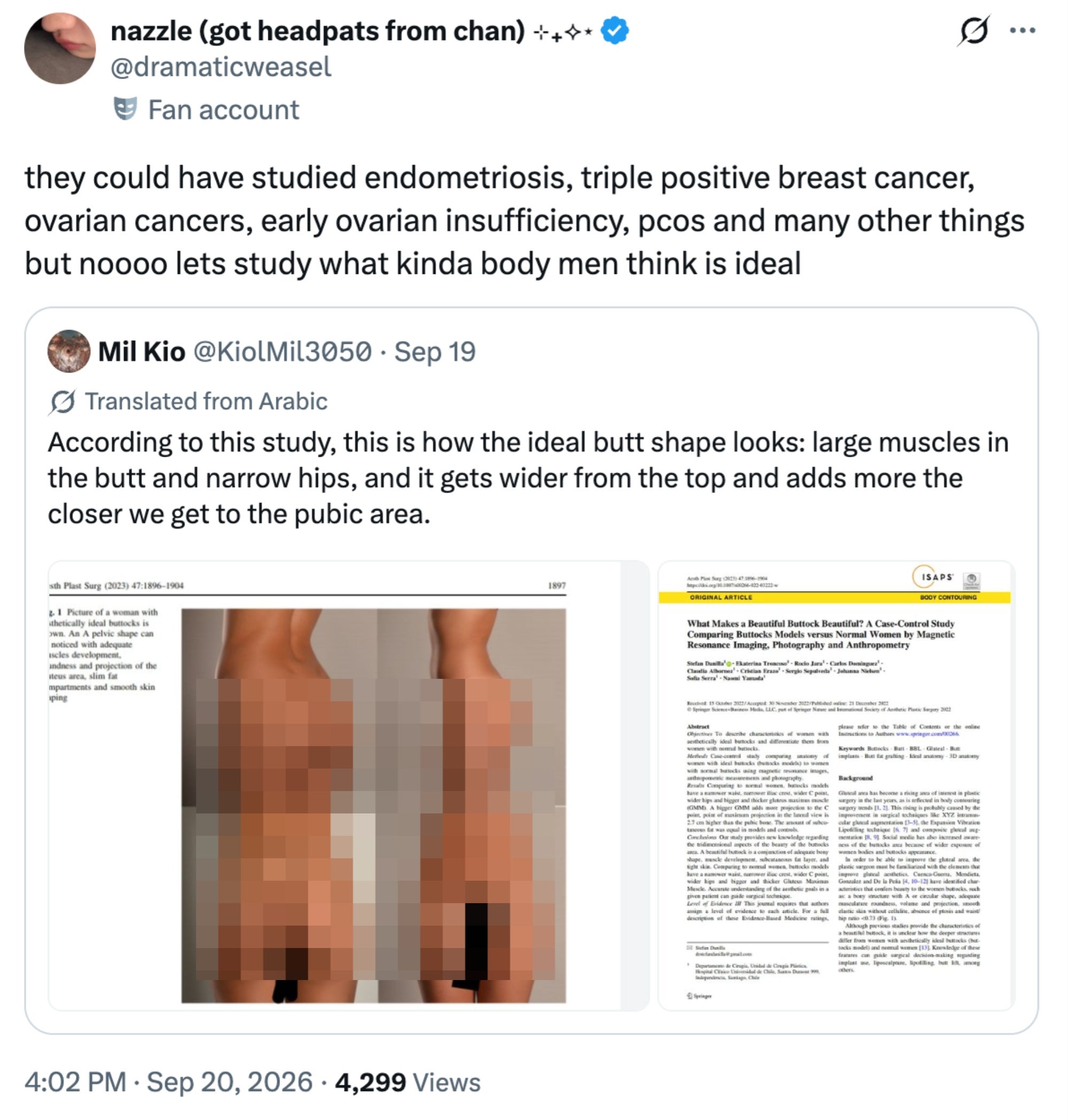
The study was published by ten researchers for Springer Nature and the International Society of Aesthetic Plastic Surgery. The study went on to describe a pair of beautiful buttocks as "a conjunction of adequate bony shape, muscle development, subcutaneous fat layer, and tight skin."

Oh how fun we have studies about female butts and how endometriosis affects women’s attractiveness but these shits still have to be shoved inside you during medical exams in the year of our lord 2026 😍😍😍😍😍😍😍😍😍😍😍😍😍😍😍😍😍😍😍😍😍😍😍😍😍😍😍😍 https://t.co/PHWYkyQCJ2 pic.twitter.com/kvpHh1xR0a

they clearly forgot to include my perfect ass in this study https://t.co/gLtkGAaADN

Don't let anyone fool you by saying "they're just hard to treat". Only 5% of all research and development funding globally goes to women's health related research, and only 1% goes to non-cancer related women’s health. But sure, a paper about "perfect butt" is worth publishing.🙄 https://t.co/NIGjPc9lbd

i find these takes so strange — every time a random study comes out people say these researchers, who have nothing to do with the field, should study endometriosis insteadshould i, an arts major, study endometriosis instead of my silly videogames https://t.co/TocWEYIvvm

Why would a plastic surgery journal…you know what. Nevermind. https://t.co/oiz7J2EQZq

In the 1940s and 50s, researchers blamed women's hormones as the reason behind why they were more difficult to study. In 2020, 25% of funding was limited to fertility research, with 4% for women's cancer and 1% for all other women-specific health issues.

Finally! Some research into how endometriosis affects men pic.twitter.com/NnB1VxXGQM

These revelations led to calls for improvement in postpartum mental health care, so that women are not left alone suffering with these conditions. According to several studies, postpartum depression affects 10% of new mothers, whereas postpartum psychosis affects moms in an estimated 1-2 out of every 1,000 births. And 66% of women are more likely to be medically misdiagnosed than men.

The things academia will research instead of anything to improve women's health or understand conditions unique to us. https://t.co/td0VACUVXi
Comments
You must be logged in to comment.