yahoo Press
The 3 investing rules used by Warren Buffett to turn $10K into billions — that still work in 2026
Images
1 / 4
2 / 4

3 / 4

4 / 4
The above button links to Coinbase. Yahoo Finance is not a broker-dealer or investment adviser and does not offer securities or cryptocurrencies for sale or facilitate trading. Coinbase pays us for certain activity generated through this link. Prices displayed are informational.

Moneywise and Yahoo Finance LLC may earn commission or revenue through links in the content below.

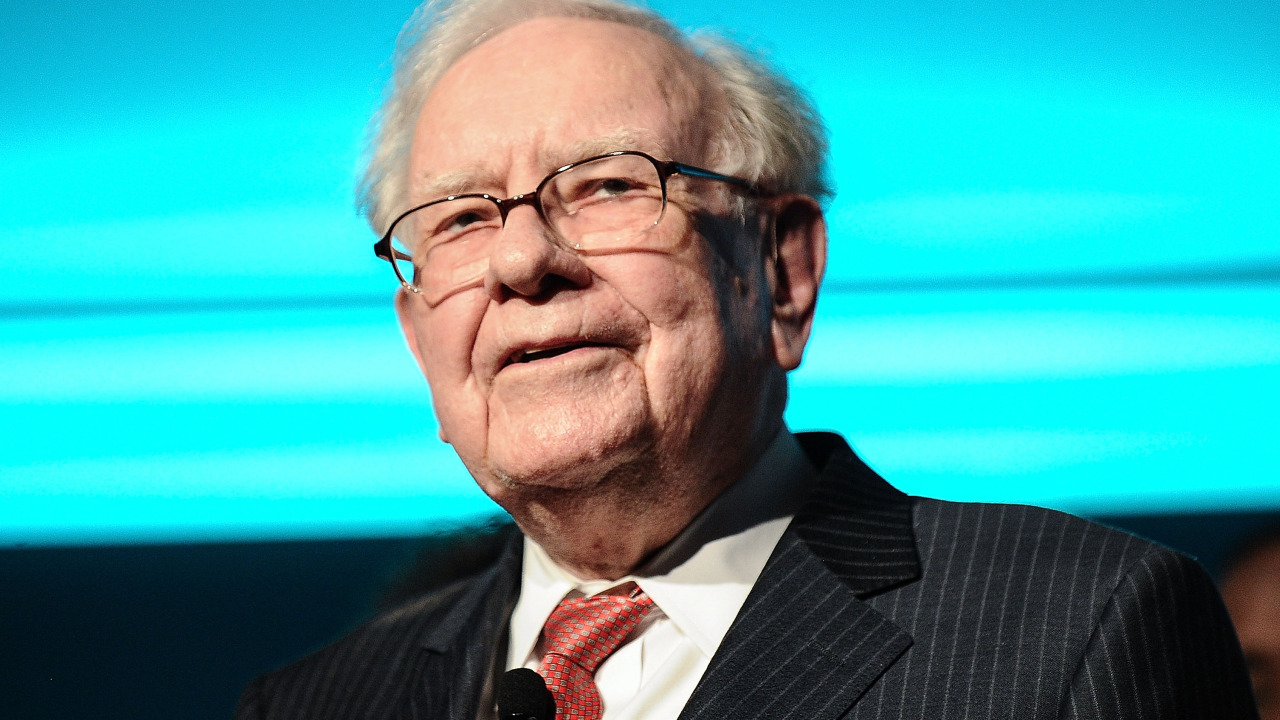
Warren Buffett built one of the world's largest fortunes by investing in businesses he understood, buying at attractive prices and giving those investments plenty of time to grow.

But what would the legendary investor do if he had to start over with just $10,000?

Jeff Bezos backs a platform that lets anyone invest in rental homes for as little as $100 — 6 ways to build wealth like a landlord without actually being one

A single line on your car insurance policy could be inflating your premium by up to 30% — here's what to change

A record 45% of central banks plan to grow gold reserves — and many investors are following suit. Get your free gold IRA guide from Priority Gold

Buffett addressed that question during Berkshire Hathaway's 1999 annual shareholder meeting, when an investor asked him bluntly how they could make $30 billion dollars (1).

His answer offered a window into the principles behind his investing philosophy.

"If I were getting out of school today and I had $10,000 to invest … I probably would focus on smaller companies … You have to buy businesses, or little pieces of businesses called stocks, and you have to buy them at attractive prices, and you have to buy into good businesses."

More than 25 years later, those principles can still offer a useful framework for investors who are starting with considerably less than Buffett has today.

Here are three of his fundamental rules to consider.

Tom Watson Sr., the founder of IBM, once said, "I'm no genius. I'm smart in spots — but I stay around those spots (2)." It's a philosophy Buffett has applied to investing throughout his career.

Rather than chasing every new opportunity, Buffett has generally focused on businesses and industries he understands well enough to judge their long-term prospects.

But understanding an investment doesn't eliminate risk. At Berkshire Hathaway's 2020 annual shareholder meeting, for instance, Buffett warned that investors also need the conviction to withstand major swings in the market.

"You've got to be prepared, when you buy a stock, to have it go down 50% — or more — and be comfortable with it, as long as you're comfortable with the holding," he said (3).

Read More: Vanguard reveals what's coming for U.S. stocks — and it could be bad news for this group of investors

Knowing your circle of competency can also mean recognizing how involved you actually want to be in managing your investments.

You don't have to spend all of your time researching individual businesses and deciding when to rebalance your portfolio. For investors who want to stay invested without making every decision themselves, a more automated approach can handle much of that work.

If you prefer a hands-off, tech-forward approach to building wealth, Vanguard's Digital Advisor puts the investing expertise of one of the world's largest asset managers right at your fingertips.

It takes the guesswork out of investing by building a personalized portfolio for you using Vanguard's well-known low-cost ETFs and mutual funds — then keeps things running smoothly with automatic rebalancing.

The platform also offers guidance on saving for retirement and lets you set additional goals as your life evolves. Plus, it can help you think through debt repayment strategies, potentially freeing up more cash to invest toward your long-term plans.

With a minimum investment of just $100, it's an easy way to get started with professionally guided investing.

For every $10,000 in an all-index portfolio, you'll pay approximately $15 to $16 per year.*

You can even test-drive the Vanguard experience with no advisory fees for the first 90 days.

*All investing is subject to risk, including the possible loss of the money you invest.

Buffett's enormous fortune wasn't built overnight. Time has been one of his biggest advantages.

"We started building this little snowball on top of a very long hill," he said (1). "We started at a very early age in rolling the snowball down, and of course, the nature of compound interest is that it behaves like a snowball."

Buffett bought his first stock when he was just 11 years old, giving his investments decades to compound.

That long runway helps explain an extraordinary feature of his wealth. In 1999, when Buffett was already nearly 70, his net worth stood at about $30 billion. Today, it's roughly five times that amount, at around $150 billion, according to Bloomberg (4).

For everyday investors, the lesson isn't that you need to start investing as a child. It's that the earlier you put your money to work, the more time you give compounding to do its job.

But what if you don't have Buffett's hypothetical $10,000 to start with? Where could you start that little snowball rolling?

One way might be to invest your spare change from everyday purchases into a diversified portfolio of ETFs through platforms like Acorns.

Signing up for Acorns takes just minutes: All you have to do is link your cards, and Acorns will round up each purchase to the nearest dollar, investing the difference — your spare change — into a smart investment portfolio managed by experts at leading investment firms like Vanguard and BlackRock.

For instance, if you buy a donut for $3.25, Acorns will round up the purchase to $4 and invest the change in a smart investment portfolio. So a $3.25 purchase automatically becomes a 75-cent investment in your future.

Sign up today and get a $20 bonus investment.

Starting small can help you build the habit. As you become more comfortable investing, you may want more control over where your money goes.

A platform like SoFi gives you a more hands-on way to invest, letting you buy stocks, ETFs and more with no commission fees and no account minimums.

SoFi is designed for both beginners and seasoned investors, with real-time investing news, curated content and the data you need to make smart decisions about the stocks that matter most to you.

Plus, for a limited time you can get up to $1,000 in stock when you fund a new account.

If Buffett were starting over with $10,000, he has been surprisingly specific about where he'd look for opportunities.

"I probably would be focusing on smaller companies because I would be working with smaller sums, and there's more chance that something is overlooked in that arena," he said at Berkshire Hathaway's 1999 annual shareholder meeting (1).

That approach echoes Buffett's earlier years, when smaller businesses could offer opportunities that weren't attracting the same attention as major public companies.

For instance, he bought Nebraska Furniture Mart in 1983, while the business was still expanding beyond its home state (5). Even before that, Berkshire Hathaway had acquired See's Candies a decade earlier, when the company was generating about $4 million in annual profits (6).

Of course, finding an overlooked company with room to grow is much easier in hindsight. Investors trying to identify those opportunities today still have to research the business and decide whether its prospects justify the price.

Need more in-depth research on which small-cap stocks to consider?

The team of former hedge fund analysts and experts at Moby spend hundreds of hours each week sifting through financial news and data to provide top-tier stock and crypto reports to keep you updated on what's moving the markets.

Moby's superior research can help you reduce the guesswork when selecting stocks and ETFs. In four years, across almost 400 stock picks, Moby's recommendations have beaten the S&P 500 by almost 12%, on average.

With their easy-to-understand reports, you can become a wiser investor in just five minutes, and maybe even make some investments that Buffett would approve of.

This can also be the first step to building your own circle of competency.

Buffett wasn't the only legendary investor dispensing advice at that 1999 meeting.

His longtime business partner Charlie Munger focused on a challenge that comes before investors can worry about finding the next great company: accumulating enough money to invest in the first place.

"The hard part of the process for most people is the first $100,000. If you have a standing start at zero, getting together $100,000 is a long struggle for most people," he said (1). "And I would argue that the people who get there relatively quickly are helped if they're passionate about being rational, very eager and opportunistic, and steadily underspend their income grossly. I think those three factors are very helpful."

That gives investors another piece of the Buffett-Munger playbook. Investing consistently matters, but so does keeping enough of your income available to save and invest.

As your savings and investments grow, knowing where you stand can help you see whether you're actually making progress.

You can also let Rocket Money work behind the scenes to keep your finances on track.

With the app's premium Net Worth feature, you can link all your accounts — banking, investments, retirement, property, vehicles and even manually added items like jewelry — and it shows your assets versus liabilities in real time, no spreadsheets required.

With free tools like subscription tracking, bill reminders, credit scores and budgeting basics, plus premium features such as automated savings and customizable dashboards, Rocket Money makes it easier to see the big financial picture, stay on top of your investments and keep you focused on building your wealth.

Millionaires under 43 hold only 32% of their wealth in stocks. Here's where their money is actually going

Dave Ramsey says this 1 indulgent purchase stops Americans from becoming wealthy. Here's what he recommends instead

The tax breaks in Trump's 'big beautiful bill' expire after 2028. Here are 4 moves to make before the window closes

This 20-year old lotto winner refused $1M in cash and chose $1,000/week for life. Now she's getting slammed for it. Which option would you pick?

Get Warren Buffett's best investing lessons, free. Join 250,000 readers getting Moneywise's sharpest money reporting every week. Subscribe and we'll send you our guide to the ideas that built Buffett's fortune as a welcome gift.

We rely only on vetted sources and credible third-party reporting. For details, see our editorial ethics and guidelines.

CNBC (1), (3); Business Insider (2), (5), (6); Bloomberg (4)

This article provides information only and should not be construed as advice. It is provided without warranty of any kind.
Comments
You must be logged in to comment.