huffpost Press
The Emmys Were Missing Something Important This Year — And It Says A Lot About Where We’re Headed As A Country
Images
1 / 9

2 / 9

3 / 9
4 / 9
5 / 9
6 / 9
7 / 9
8 / 9

9 / 9
There once was a time when Hollywood could both celebrate its biggest stars and offer them a space to freely speak truth to power, all on the same stage. These days, though, that’s an increasingly rare combination as a troubling trend among the industry’s biggest institutions suggests that times have changed drastically.

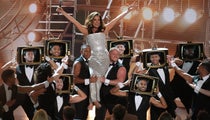
Perhaps that shift was to be expected at Monday’s 78th Primetime Emmy Awards, where “Law & Order: SVU” star Mariska Hargitay took the hosting reins. Her selection was both historic — as the first woman to host the Emmys in 15 years — and emblematic of just how dramatically the ceremony has changed in recent years.

For the first time in nearly two decades, the televised Emmys broke with tradition by turning to a non-comedian or comedic actor for hosting duties. In an era of growing political pressure and corporate caution in Hollywood, the Television Academy’s decision to tap Hargitay felt less like a bold choice than a calculated effort to embrace the least-offensive option possible — and, in the process, sidestep the spontaneity that once gave the industry’s biggest nights their spark.

As the Television Academy surely knows, comedy has a tendency to push — and sometimes cross — boundaries, often stirring controversy in the process. Stephen Colbert demonstrated that at the 2017 Emmys, opening the ceremony with a barrage of jokes aimed directly at President Donald Trump, which mocked everything from the former reality star’s TV obsession to his complaints that “The Apprentice” never earned him an Emmy.

That may be precisely what the Academy and NBC, which aired the ceremony live alongside Peacock, sought to avoid this year, opting for a more restrained show in which nothing would threaten to overshadow the evening’s awards or NBC’s 100th anniversary celebration.

But those weren’t the only precautions the Emmys took this year — nor were they the most troubling.

Much like last year’s show, the 2026 Emmys went out of its way to steer clear of any political talk, despite the challenges currently facing Hollywood, including massive media mergers and an increasingly hostile political climate under the Trump administration.

There were, however, a few exceptions.

“The Traitors” host Alan Cumming used his acceptance speech to urge viewers to exercise their right to vote on the eve of National Voter Registration Day. Meanwhile, Hollywood veteran Sally Field took a swipe at Paramount’s pending takeover of Warner Bros., reminding audiences: “Our diversity, our unique storytelling matters. We can’t let those voices be silenced or compromised or merged.”

But even so, the ceremony itself seemed to favor caution over conviction, playing it safe when the moment ultimately called for something more.

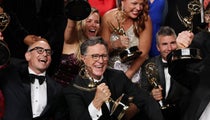
Case in point: Many expected Colbert to use “The Late Show’s” Outstanding Variety Series win on Monday as an opportunity to take a pointed jab at CBS. The network abruptly canceled his show last summer, shortly after Colbert criticized a $16 million settlement between CBS’s parent company, Paramount Global, and President Donald Trump over the editing of a “60 Minutes” interview with former Vice President Kamala Harris.

Instead, the former host kept his remarks brief and controversy-free, devoting much of his speech to thanking the people who had supported him throughout his 11-year run on “The Late Show.”

The ceremony itself seemed to favor caution over conviction, playing it safe when the moment ultimately called for something more.

Many of the night’s other winners appeared to follow suit, opting not to use the stage as a pulpit to criticize government agencies or political figures, address conflicts abroad, or turn their acceptance speeches into acts of protest — which is somewhat of a far cry from the more politically charged moments we’ve seen in the past.

Just last year, “Hacks” star Hannah Einbinder went scorched-earth at the Emmys, ending her acceptance speech with a blunt “fuck ICE and free Palestine” — a line that was, unsurprisingly, bleeped on air. And at this year’s Grammy Awards, Billie Eilish used her Song of the Year acceptance speech to deliver her own pointed message against Immigration and Customs Enforcement.

“No one is illegal on stolen land,” she said onstage. “I feel really hopeful in this room, and I feel like we just need to keep fighting and speaking up and protesting, and our voices really do matter, and the people matter.”

But the Emmys’ apparent aversion to risk this year seemed to extend beyond the speeches themselves and into the winners who were celebrated.

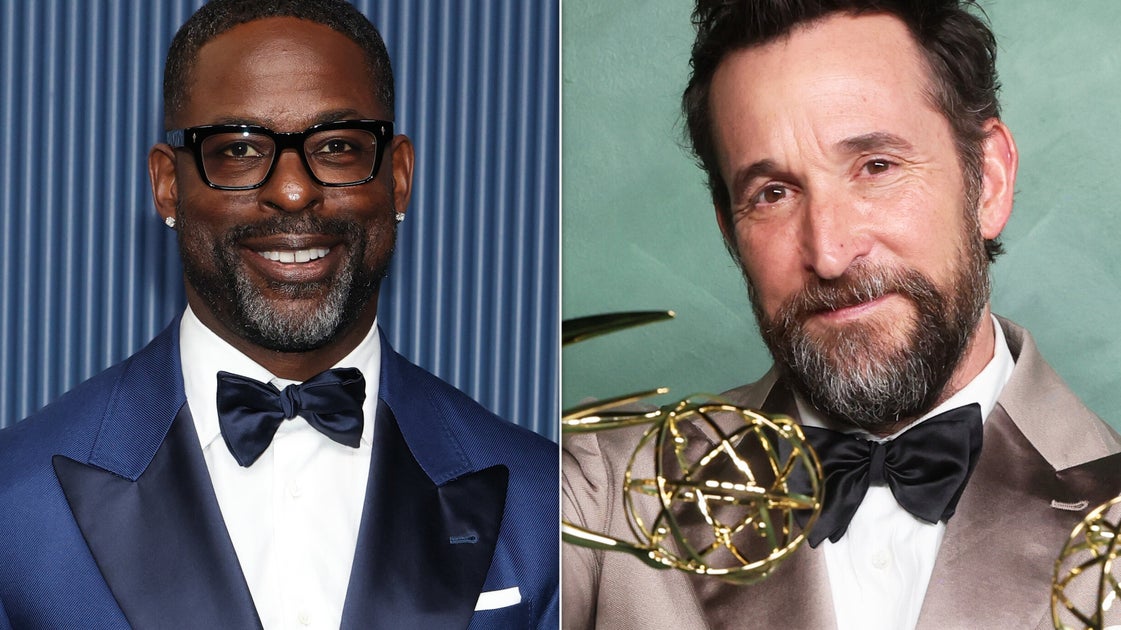
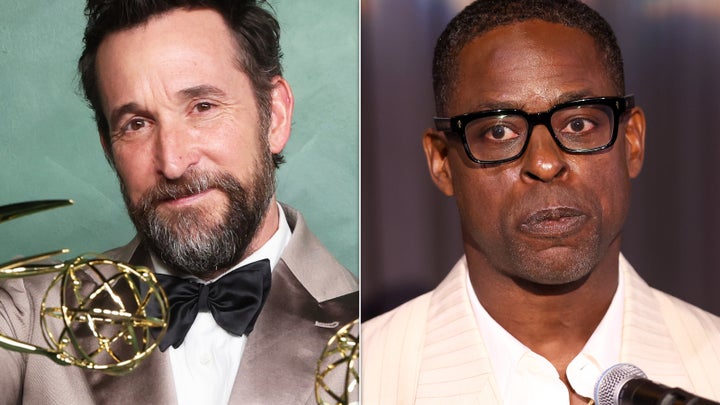
According to a Variety report, no actors from underrepresented communities won televised lead and supporting acting Emmys across the drama, comedy and limited series categories this year.

Two people of color did receive acting Emmys this year, but neither win was featured during the main telecast. Ernest Harden Jr. won best guest actor in a drama for HBO Max’s “The Pitt” at last week’s Creative Arts Emmys, while Octavia Spencer won an Emmy for narrating the three-part series “Lost Women of Alaska.”

Hiro Murai also made history as the first Asian person to win the prize for best directing for Apple TV’s “Widow’s Bay,” becoming only the third Asian director to take home an Emmy in any category.

Still, with no performers of color recognized during the primetime Emmys, outraged viewers voiced their frustration on social media.

These winners looking real white #Emmys pic.twitter.com/QnSfWQyGoc

not a single Black person has won an Emmy tonight.. #Emmys pic.twitter.com/RHed3aKCx8

not a single actor of color winning an award is actually fucking insane

Just white white white white white white white tonight lord it’s so over

2026 emmys pic.twitter.com/ldhO0THYWZ

the #Emmys to anyone non-white in pretty much all the categories tn pic.twitter.com/oENvsiLe9E

we need to defund the emmys, like what is this...#EmmysSoWhite pic.twitter.com/xqeLukBpwY

The backlash also brought renewed attention to the #EmmysSoWhite hashtag, which last gained traction in 2021, when every major acting Emmy went to white performers despite a then-record 49 nonwhite nominees.

Per Variety, the number of performers of color nominated in the lead and supporting acting categories fell to 17 this year, down 39% from 28 nominees in those races last year.

It’s hard to dismiss those statistics as mere coincidence when they mirror what’s happening to diversity across corporate America. Trump has made dismantling diversity, equity and inclusion initiatives a political priority, and the Television Academy’s voting members’ reluctance to recognize actors of color as winners this year is hard to separate from that same agenda.

The danger here isn’t just about what happens at one awards ceremony. It’s what happens when that pattern becomes normalized across the industry—when fewer opportunities lead to fewer nominations, wins, and, ultimately, fewer expectations that people of color belong at the center of Hollywood’s most prestigious institutions just like everyone else.

Audiences are seeing the pattern unfold in real time, and they’re speaking up. But in the case of the Emmys, it’s up to the Television Academy to decide whether to listen.

It’s hard to tell if this exclusionary effort — intentional or not — will become the new normal for award shows. But history always has a way of reminding us where those kinds of mistakes can lead.

By entering your email and clicking Sign Up, you're agreeing to let us send you customized marketing messages about us and our advertising partners. You are also agreeing to our Terms of Service and Privacy Policy.
Comments
You must be logged in to comment.