huffpost Press
Supreme Court Blocks Trump’s Attack On Mail Voting — For Now
Images
1 / 9

2 / 9
3 / 9
4 / 9
5 / 9
6 / 9
7 / 9
8 / 9

9 / 9
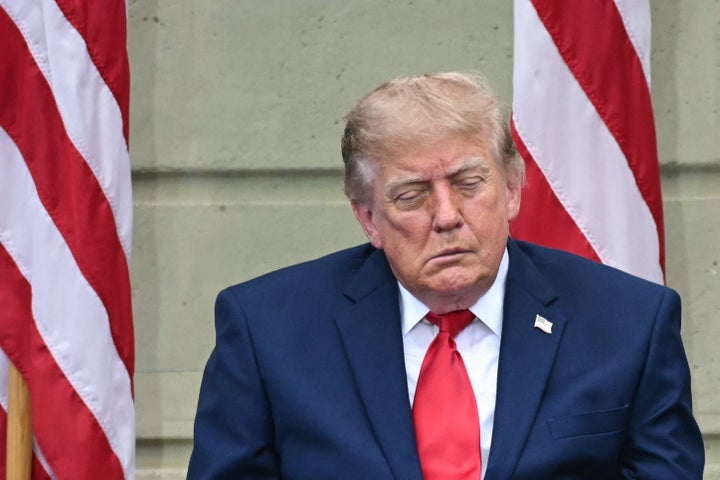
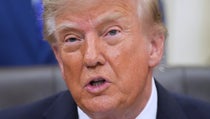
The Supreme Court on Monday declined to lift a preliminary injunction blocking the implementation of President Donald Trump’s effort to undermine mail voting weeks before the Nov. 3 midterm elections.

“The Government is unlikely to succeed on the merits of its challenge to the District Court’s preliminary injunction. And the equitable factors applicable for obtaining emergency relief from this Court do not favor a stay,” the ruling read. Justice Brett Kavanaugh wrote a brief concurrence, while Justice Samuel Alito wrote a more lengthy dissent, joined by Justice Clarence Thomas.

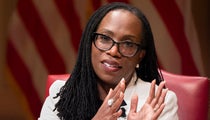
The case came to the Supreme Court after the administration appealed a Sept. 4 decision by District Court Judge Indira Talwani blocking the Postal Service from implementing a rule that would change state mail voting rules. The Trump administration filed appeals seeking to stay Talwani’s decision in the First Circuit Court of Appeals on Sept. 5 and the Supreme Court on Sept. 6. The appeals court rejected the administration’s stay request on Sept. 9.

“The Supreme Court read the Constitution,” Arizona Secretary of State Adrian Fontes, a Democrat, told HuffPost ahead of the ruling. “It’s none of his business how elections are run.”

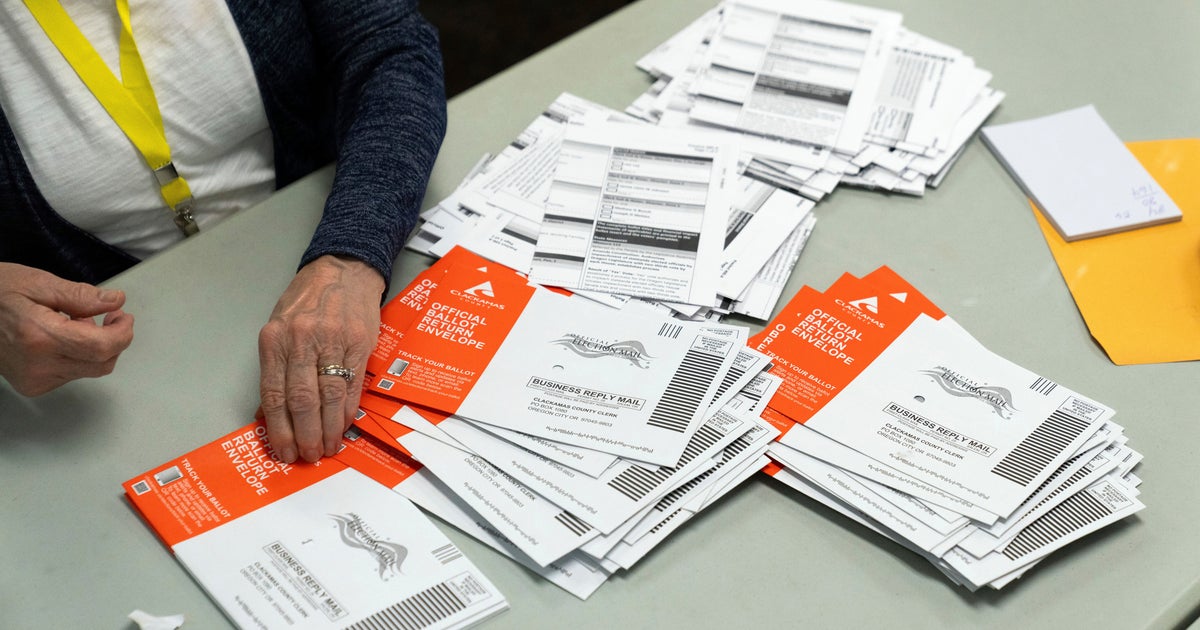
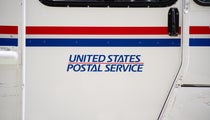
The rule would have required states to completely overhaul their mail voting systems in the middle of an ongoing election. It required states to use USPS barcodes on all mail ballots and submit lists of mail voters to the federal government ahead of time. If states failed to comply, the Postal Service would refuse to deliver those ballots.

Experts have warned that the rule would have blocked eligible American citizens from legitimately voting.

In briefs to the court, election officials from both parties argued that implementing the rule now would be “impossible.” Ballots had already gone out to voters in North Carolina on Sept. 4. Any attempt to do so “will almost certainly lead to mistakes, delays, and confusion for both voters and election officials,” a group of current and former Republican election officials wrote in one brief.

“No election office, at any level of government, has budgeted for the work the Rule requires,” the brief from GOP election officials stated. “And none have the time or the means to fully train or test on this Rule. That simply cannot be done midstream of this election.”

The fact that it would be impossible for election officials to conform to the rule was the main reason Kavanaugh offered his vote against the Trump administration. However, he added that the rule itself maybe be legal, just not for this election.

“In my view, based on the briefing the Court has received at this interim stage, there is at least a fair prospect that the final rule falls within the Postal Service’s statutory authority,” Kavanaugh wrote. “But applying the rule in the 2026 elections would be arbitrary and capricious in violation of the Administrative Procedure Act because state and local election officials do not have sufficient time to reasonably implement the rule before the elections.”

In dissent, Alito took the opposite position, claiming that the states who sued to block the Postal Service rule were to blame for suing in the first place.

“The plaintiff States cannot claim the timing of the rule tilts the equities in their favor when they, and courts hearing their claims, are responsible for so much of the delay,” Alito wrote.

Potential problems with the administration’s plan had already emerged before it even launched a portal meant to handle the Postal Service’s matching of names to submitted lists of mail voters.

A whistleblower told Congress that a “secretive” and rushed process for USPS to implement the rule could lead to mass disenfranchisement. The whistleblower’s report stated that the rule would lead the Postal Service to refuse to deliver all mail ballots in a single batch if one ballot’s barcode presented an issue. That meant that one error could lead to 10,000 ballots being rejected for delivery.

The Postal Service even rejected the envelope design for 32,000 mail ballots in Leon County, Florida, on the technicality that the return address was 0.014 inches too close to a label stating “return service requested.” The Leon County clerk said he would send them out anyway, assuming the court would strike down the rule.

With the Supreme Court’s decision to keep the district court order in place, the administration’s effort to undermine mail voting in this election is likely dead.

“This was an attempt by this administration to decide who gets to vote that was illegitimate,” Fontes said. “That’s not the way America works.”

But Trump has attempted to make it work that way. He has claimed that every election Republicans lost over the past two decades were tainted by imaginary fraud. And, when he lost one of those elections in 2020, he attempted to overturn the results, first in the courts and then through a coup attempt on Jan. 6, 2021.

This is not the only voting-access case before the Supreme Court. On Sept. 8, the administration appealed to the court for permission to use a Department of Homeland Security database to verify voters’ citizenship. A federal judge had blocked use of the database, which the administration argued it needs to combat voter fraud, on the grounds that it violated federal laws on privacy, governance of administrative agencies, and the Social Security Act.

The Postal Service rule was just one of many efforts by Trump in his second term to undermine elections — all of which have been blocked by the courts. He may yet try another attempt in the final weeks before Nov. 3.

By entering your email and clicking Sign Up, you're agreeing to let us send you customized marketing messages about us and our advertising partners. You are also agreeing to our Terms of Service and Privacy Policy.
Comments
You must be logged in to comment.