buzzfeed Press
“I Think Back On How Lonely And Desperate For Connection I Was”– Adults Who Were Homeschooled Are Being Brutally Honest About Its Realities
Images
1 / 9
2 / 9

3 / 9
4 / 9
5 / 9
6 / 9
7 / 9
8 / 9
9 / 9
“Turns out you need more than ego and vibes to educate children.”

"I spent eight years teaching myself how to reverse-engineer answers. It was lonely and boring, but I was also a very timid kid. Am I successful now? Sure. But it came at a cost socially and artistically. Had I stayed in public school and received the specialised attention younger me deserved, I may have ended up in a very different place in life."

"A good homeschool setup probably isn’t about one parent being an expert at everything. It’s about knowing when to bring in another teacher, use outside resources, or admit that someone else can explain it better.

That seems like an important distinction between homeschooling well and simply keeping a child at home.”

"However, my brother suffered from a learning disability, and they didn’t bother to get him diagnosed until he was 17 years old. He struggled to graduate high school, and things would have been different if he had had early intervention. My parents had four other kids and, unfortunately, were even less hands-on with them. My youngest brother couldn’t even read until third grade. Thankfully, they did eventually put everyone in school, and they did okay, but that’s mostly because my siblings are naturally gifted.

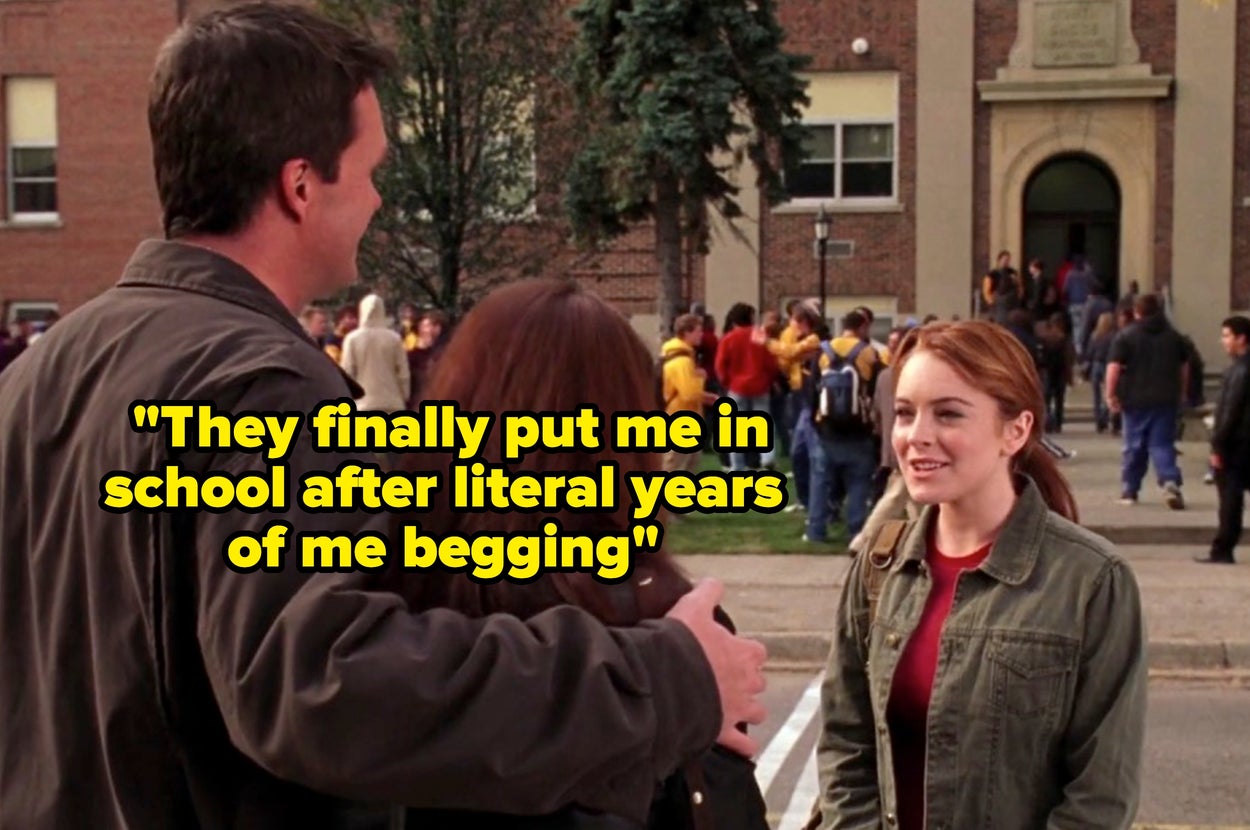
Social exposure is the other thing. I had no friends until 6th grade, when they finally put me in school after literal years of me begging because I was lonely. I missed developmental social milestones, and I have few childhood memories of playing with other kids. I learned to read people’s expressions and figure out social cues through trial and error, but it was a rough transition. I sometimes still misread social cues.

Finally, there’s the lack of oversight. I know now that my parents definitely would have been reported to CPS if any mandated reporters had an eye on us. And I know of other homeschooling families who were far worse and shouldn’t have had any kids in their custody.

I went to college, made friends, entered a career path that I enjoy, so I don’t hold it against them. But I do think that while there are valid reasons to homeschool (medical concerns, bullying, child’s preference, etc.), it should be heavily regulated, and there should be some kind of child welfare professional checking up at regular intervals.”

"To add to this, we are advocates for homeschooling reform laws. We saw a lot of kids who were educationally or otherwise neglected, fell through the cracks, and dropped out of society. It was completely legal. High-control religions/cults were able to control every aspect of the lives of some children, and now they are adults with no real education and have few options.”

"My parents stopped teaching me around 10 and I was entirely self taught after that point. I now have two college degrees but it was hard as hell to get here on my own without help.

I cringe a little when people say 'you are really good at learning because you were homeschooled'.

No, I am good at learning despite having my education taken from me.

It's the equivalent of telling a child who was food insecure that they are so good at fasting as an adult.

Being starved of opportunity was not and never will be a positive part of my childhood."

"My parents were both public-schooled, and they started homeschooling in the late ’80s, when there weren’t a lot of resources or community for it. We explored interests we had and were required to commit to them for a while (no picking up a guitar and giving it up a week later), and we did everything. We all played instruments; we all played sports; I did speech competitions from middle school to college, Boy Scouts, museums, and an assortment of social outings.

While I was in high school, my parents formed a co-op that met in their home, where tutors were hired to teach the advanced classes that my parents felt they couldn’t teach, and that was closer to a traditional classroom setting. I feel I received an excellent education. There aren’t any career or social ‘failures’ in my family, and all the siblings still get along and appear to be well-adjusted today.

However, I have met homeschoolers who fit the socially inept stereotype. I would even argue that more parents get it wrong than get it right. Doing it well requires an exceptional amount of patience, energy, and attention. Both of my parents were heavily involved in every stage of my life until I got married, and if you aren’t willing to take that work on, you should probably consider other methods.”

"After being homeschooled, I gained a new set of homeschool friends at co-ops, with their parents teaching subjects my mother wasn’t knowledgeable in, and vice versa. I think I socialised pretty well despite anxiety and other things.

I ended up going to community college at 16, taking my time slowly (not a full-time student), and graduated at 20. I’m in my early 20s now and have a job that I enjoy, and friends I’ve kept in contact with for 10+ years.

I personally liked homeschooling because I’m not a morning person, and my mum would recognise when I needed a break to reset my mind after some subjects. I got good grades that matched what public school peers were doing, and I was ahead in some things, like English.

"I know my parents had good intentions, but they had no idea what they were doing. I used a programme called Switched-On Schoolhouse, which was a conservative Christian curriculum. I had a variety of CDs that I rotated between for a few hours a day, and that was my education. My parents did not teach me anything directly. It was basically: here are the discs, go learn. Any social connections I had up until 5th grade steadily disappeared, and I was extremely lonely."

In 11th grade, my parents did allow me to try to get back into public school to graduate with a class, but I would have had so much to catch up on that it would have been miserable still. So I started taking remedial classes at a community college instead. I can’t remember now how I managed to do that without a high school diploma, but I’m glad it worked out that way because then I wasn’t so behind once I did actually graduate. And by graduate, what I did was purchase a diploma, and my ‘sponsor’, who I met with once a year to ensure I was doing something, just had to sign it.

It still saddens me when I think back on how lonely and desperate for connection I was. College helped tremendously in gaining social confidence again, but now, being in my mid-30s, I don’t know that I’ll ever have the confidence I might have had otherwise.

Not to mention, what were my parents thinking, letting a pre-teen in the early 2000s go unsupervised on a laptop for hours at a time?? It was a very different time, I guess.”

"My mother was a teacher. She homeschooled me for a few years as a stopgap when we lived in an awful district and bullying was a huge problem. My sister was homeschooled for a few years longer as she worked through some health issues and related disabilities. Mum had us at activities or classes almost every day of the week, and she put huge amounts of effort into teaching us a varied and challenging curriculum.

Both of us were back in school by 6th grade, which was massively important for our development. I am certain I would have a very different experience if she hadn’t gotten us back in a classroom when it made sense.”

"She was not equipped to raise us, a lot of the time. My next brother down, four years my junior, got to go to high school, and every other sibling got full schooling. I got a GED at 17 and immediately started working. I've never been able to afford... much of anything.

I do feel weird, not because of what I missed (though I am useless at maths), but just because so much of my socialisation was at the church instead of with people my own age. I don't know how much it affected me vs mental disabilities/abuse, and... I try not to think about it too much. I'm not dumb, just... not like anyone else.”

"I ended up doing well academically in college, but I also didn’t challenge myself at all and ended up at a degree level below my natural abilities and affinities.

And my sister’s experience was even worse. She was homeschooled from first grade on and was left significantly further behind, socially and academically.

It was awful, it was bad for us, it was a way for our mother to scratch her narcissistic itches and control things while also building herself an excuse to not go back to work, and my observations of the several dozen other homeschool families we interacted with once a month at homeschool group was that the only difference about our experience was that it was being done for fewer religious reasons than the others.

I would make it illegal, were I so empowered.”

Additional thumbnail credits: Westend61 / Getty Images/Westend61, Narcos
Comments
You must be logged in to comment.