huffpost Press
She Had One Of The Biggest Hits Of The '90s. Here's What Made Her Want To 'Vomit All Over' It.
Images
1 / 10

2 / 10

3 / 10
4 / 10
5 / 10

6 / 10
7 / 10
8 / 10

9 / 10

10 / 10
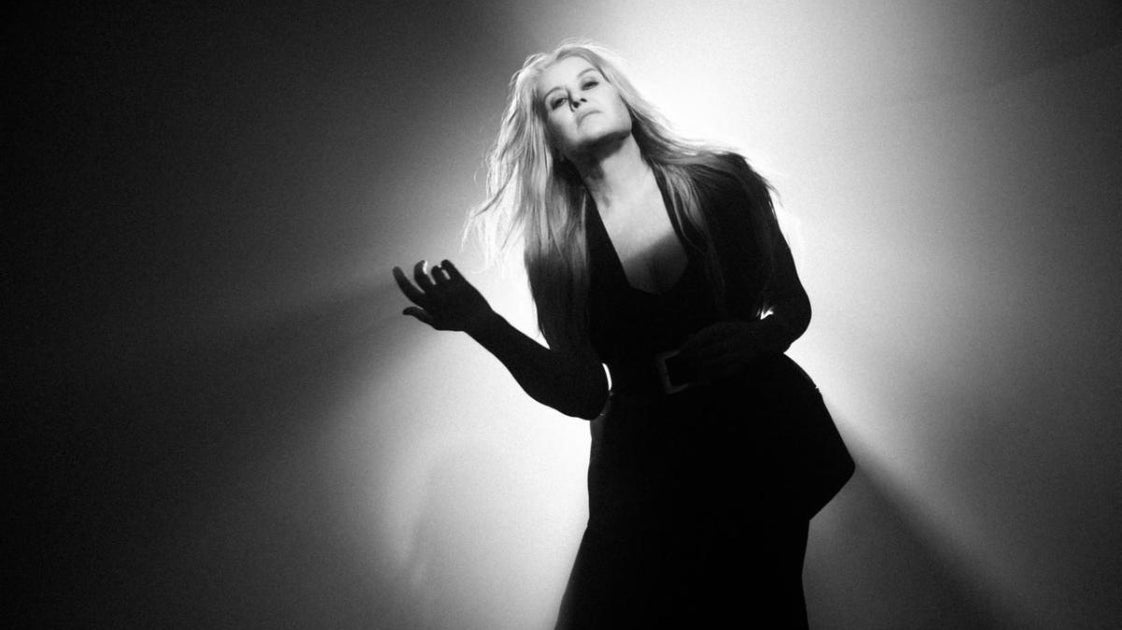
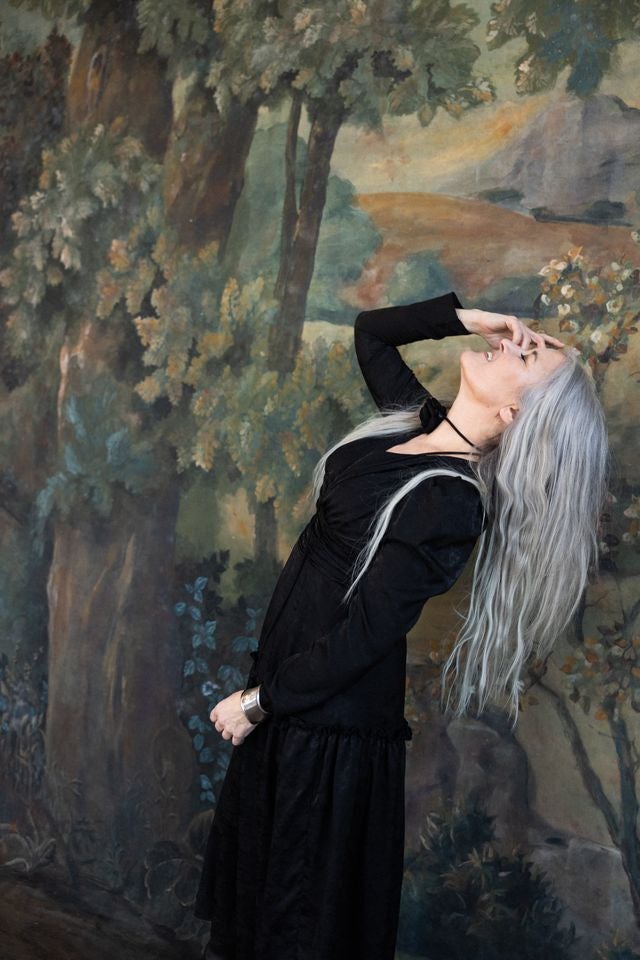
Thirty years ago it was almost impossible to go an entire day without hearing Paula Cole’s voice. Whether it was her hit “Where Have All the Cowboys Gone” pumping through the speakers at Walgreens or “I Don’t Want to Wait,” which served as the theme song for the berserkly popular teen drama “Dawson’s Creek,” wafting out of a TV set, Cole was everywhere. The deeply vulnerable — yet ridiculously catchy — songs on her stunning 1996 album, “This Fire,” earned her seven Grammy nominations, including the first nomination for a woman in the Producer of the Year (Non-Classical) category, and a win for Best New Artist. Still, despite her success — or perhaps because of it — she was often misunderstood or dismissed by critics, mistreated by the music industry and made the butt of countless jokes about her earnestness and … armpit hair.

This week Cole is releasing “Sonic Memoir: Demos 1989-1998,” a collection of 63 cuts pulled from her personal archives of cassettes, DATs, ADATs and analog tapes. To herald its arrival — and her upcoming U.S. tour — HuffPost recently jumped on Zoom with the musician to talk about the “meanness” that manifested in the wake of her fame, misogyny in the music industry in the ’90s and how she really feels about “I Don’t Want to Wait.”

You dug through dozens of tracks for “Sonic Memoir: Demos 1989-1998.” What did you discover while you were excavating?

I wasn’t starting this with the intention of, “Oh, I’m going to make a box set in time for the 30th anniversary of ‘This Fire.’” Not at all. It was this very intuitive, slow process.

My friend Mark Hutchins died some years ago, but despite my rocky life and all these moves [I’ve done], I still had these shoeboxes full of cassette tapes, DAT tapes, and ADAT tapes, and I was finally getting to the piles and seeing, like, “Oh my god, I have Mark’s demos from the late ’80s and ’90s, and his kids are about the same age as he was when he made them, and I need to digitize these.”

It’s like B.C. and A.D. Those [tapes were made] before the digital era, so all of our intellectual property can be lost if we don’t bother to digitize it, right? So I’m like, “OK, I’m going to find a mastering lab.”

I know these guys in Maine, and I realized I have a mountain of my own stuff too — oh my god, it’s such a mountain. So I gave them boxes and boxes. I had to go through everything, of course, and that took almost engineering. I had to do a meticulous note-taking of listening to every track, notating the take I wanted, and giving them all of my notes. So I drove these boxes up to Maine, and they digitized everything, and then I continued listening.

I sent the playlist of Mark’s work to his family, importantly, and then I just kept listening. Like, who was I? What is this? And I found myself intuitively culling and eliminating.

There absolutely were discoveries, and the discoveries were like, “Oh my god, I was so prolific! Oh my god, I had so much trauma!” I was seeking music as a healing art to find my feelings and to kind of sing my feelings and to feel that I mattered in the world, and I had a place to stand because I was little Paula in my family. I felt like I didn’t matter [in my family], and I’m still grappling with that, but in music, I had a place to stand in the world.

Like Archimedes said, “Give me a place to stand, and I can move the world.” So I found music, and that was my place to stand. The early ’90s was an explosive time for me, and it was all coming out in the music, and I was prolific, and I was struck by how eccentric I was, and I dug it! Like, I wanted to lean harder into my eccentricity. I was proud of that — how weird I was. Of course, the late ’80s and ’90s digital piano sounds are cringy as hell, right? And [listening to the tapes I could hear] I’m out of tune on a certain note, but you can’t do anything about it. There’s no auto-tune, so you just live with it.

The light bulb moments just kept coming. I was shaping it. I started with over a hundred songs. I just kept culling down until I got to 63. I eliminated a couple at the very end. We even had to go back to the final pressing plant because I wanted to remove a song that was bugging me, and we had to cut a new lacquer for the final master.

It was such a different time for women in music, and you were at the forefront of so much change. You were demonstrating a different way to be for millions of young women — and a lot of young gay guys like me — that we hadn’t encountered before in mainstream media. And it wasn’t just refreshing, it was truly radical. How do you relate to that Paula Cole now — the one from the late ’80s and ’90s that you encountered when you went through those old songs? Does she feel like a friend? Does she feel like someone you don’t really know anymore?

I have so much tenderness for that early incarnation of Paula Cole, because especially before success kind of ruins things, and gets you off track, and fucks with your head, she was pure, she was wounded, she was bisexual and not out about that. She was feeling insignificant and small. She was creative, and I just feel tenderness for that, and I feel inspired by my searching, so I feel like it was a really, really good thing.

The entire exercise of excavation, as you put it earlier, was a healing journey going through that music. It wasn’t easy. Sometimes I felt really uncomfortable listening to it, but it’s all good, and I think I’m old enough now where I can have more perspective on life and exercise more self-kindness.

I saw you as really courageous, but it was also like — your arms were wide open to whatever was coming your way. I wouldn’t call it naive; I’d say you were vulnerable in a really beautiful way. But I found this quote in a 1998 Rolling Stone profile that reads, “You may have noticed that some of the things Cole says are the kinds of tremulous, corny things that twelve-year-old girls say before they learn to be self-conscious. ‘I just go with the flow,’ she’ll say. ‘Merrily, merrily, merrily, merrily, life is but a dream.’ This takes getting used to, but, rest assured, it is not a pose.”

That, to me, is dripping with so much misogyny, but tell me how you feel about those kinds of critiques. Were you getting them in real time, and were they having an effect on you?

It can hurt. On the Enneagram, I’m such a four, I’m such an artist, I’m very porous, and I’m an empath, and as much as I try to protect myself or not care [what people say], I always care.

It’s hard to do this [career] — it’s just hard, and, and I’ve walked away from the business a couple of times because it’s so hard for me. It’s funny because the “merrily, merrily,” I remember I adopted [that saying] because Jim Carrey had his star put on the Hollywood Walk of Fame, and he wrote “merrily, merrily,” because life is this dream, it is an illusion, and it’s important that we keep that in mind. Praise or criticism can’t matter too much — you [have to] walk this middle path [and practice] humility, so in my mind, I thought it made perfect sense. And, you know, and it’s funny if Jim Carrey puts it in pavement — it’s not considered corny.

Completely. I remember the critics calling Tori Amos “the queen of the kooks,” and saying that Bjork was out of her mind. If a woman was paving her own path, and doing it with emotion and vulnerability, that was so threatening in the ’90s. Honestly, it still is today. But there was a revolution starting to happen back then, and you and a handful of other female musicians were really leading that charge. And whether or not the journalist who wrote that profile was conscious of what he was writing — and what he was implying — you were truly revealing unspoken things about our culture at that time.

Wow. Thank you. That’s healing to me, for you to frame it as misogyny. There’s these barbs — there’s always little barbs — and you get kind of used to it. Also, at that time, [my career started taking off] very quickly for me, and I was suddenly on the radio, and losing my anonymity. It happened very fast, and I wasn’t ready for it at all. I came from a tiny town at the tip of an island in the northeast of Massachusetts, where I wasn’t even listening to the radio. I discovered the Beatles in my 20s. My parents made music, and my dad was a polka musician, so that gives you a clue [about where I came from], so I definitely was a bit naive. I was learning everything hard and fast, and things hurt, but I didn’t have time to process it. I didn’t have time to go to therapy until I took a break from the business.

There’s this other quote in the Rolling Stone profile: “I miss my parents. And there’s no time … I miss my friends. And I have to be more mean and … strong, because people are so demanding of me right now … I feel like I’m mourning the loss of my little girl inside, you know?”

I’m especially interested in that “meanness” that you referenced there. Was there a moment when you had to unlearn that meanness, or is it just a part of you now?

When I hear that quote, it’s just so true — it’s just true, and honest, and vulnerable. The meanness became part of me for a while. It was like a duality almost, [the meanness] along with not trusting people, walking with my head down, not looking people in the eye. It was really sad for me — not being able to look people in the eye during those moments of kindness, like with the person who’s working the cash register. That’s everything for me — [those interactions are what give] me hope for the future, and humanity, so that was really sad.

That kind of started [my] depression. Meanness was self-protection. I don’t think I really changed until I had to go through several years and blows of life: choosing the wrong person to marry, being in a torturous divorce, finding myself a single mom, signing a bad [record] deal. I was continually trying to extract myself from these kinds of abusive situations, and then landing, living at home, like a fool’s full circle, in my small town of Rockport [Massachusetts], which I wanted to leave. All of my ego wanted to leave that place. I was a single mom and I was trying to get out of this hole, and that’s when, in a way, some of the healing began.

The healing began with my parents, it began with myself and my friends, and I started to have a more regular kind of life. I put being a mother first, and I couldn’t tour as much, but I feel like I’m back to myself now, which is great.

That’s amazing. The last time we talked, back in 2018, you told me that you were locked in a “very draconian” record contract. Where are you at with that now?

I’m still locked. I have tried a few times [to get out of it], and it feels like I’m dealing with the mafia. If I was dealing with a major label like Warner Brothers or Universal or Sony, that kind of thing, most of them have adopted the practice that they forgive the debt of legacy artists, and I would just be happy with that. Let’s just start with a clean slate and move forward. But anybody that signed prior to 2000 ... we’re paying back, you know, 0.005 cents on a Spotify stream for big budgets from the ’90s. At least in the’90s you could recoup with a nickel a play or something — that’s a profound difference from 0.005 cents. It’s an extreme punishment.

I don’t know how that’s going to end… that’s heavy on my heart and on my back, like Atlas, and it’s something I want very much to find redemption for before the end of my lifetime, because copyrights last 50 years postmortem and I want [the rights] to go to my daughter.

But you own everything that’s on the new compilation, right? Those are all yours?

Right. I own all those recordings.

That makes me really happy. We also chatted in 2018 about “I Don’t Want to Wait,” and you said, “I played [that song] for my father before I released it so he could prepare himself emotionally. It’s hard being a parent and having your kid write songs about you and your family that they then put out into the world. Imagine having no time to react, so you have to share your reactions publicly.”

I’m always curious about that because, as an artist, you want to be able to speak your experience, but so often you’re talking about other people who don’t have the opportunity to offer their sides. Was giving people a heads-up a courtesy that you practiced in general when you were writing songs at that time or was it specifically about “I Don’t Want to Wait”? Are there other songs that you played for people and said: “I wrote this about you”?

I learned as I went. Track one on my first album, “Harbinger,” is called “Happy Home.” It talks about my home and, more so, about my mother. It kind of weaves her lost hopes and dreams and me feeling that heaviness and a purpose for my being. It goes back to Carl Jung — I love Jungian psychology — and he says the single most profound influence on a lifetime is the unfinished hopes and dreams of our parents. My mom, who was a visual artist, didn’t really get enough of her life being acknowledged. Towards the latter part of her life, it was kind of a mission for me to create her website and to help her get a couple of museum shows.

She got some acknowledgement. It was very healing, which made her a better human and easier to relate to. And her website is still out there. It’s stephaniecoleartist.com. And it’s so powerful. She needed this acknowledgement, but she was an artist first and a mother last, so it was hard. It’s like growing up with Frida Kahlo or somebody tortured, you know? So that informs a lot of my [childhood] psychology, just feeling like I didn’t matter. “Happy Home,” which actually gives her a lot of leeway and is pretty empathetic — it’s nothing harsh — but it bothered her deeply.

She was the most silent of the Silent Generation. She passed away recently, so I’m doing a lot of life review at the moment, but the song really hit her so hard. It was released on July 19, 1994, and she got Bell’s palsy in June or early July [of that year], and she blamed “Happy Home” for being the trigger for her Bell’s palsy.

Now that could be true, but I highly doubt it because medically they don’t really understand what causes Bell’s palsy. But, of course, it made me feel terrible about it. As a writer, if you write about people, there are consequences, [but] I need my freedom. I desperately need to write my feelings because that’s my purpose. That’s my outlet. Otherwise I’d be a toxic human being [laughs]. I need my music so badly. I need it as my voice. So I’m going to continue writing my truths.

Another song I’m wondering about is “Carmen.” I’ve never heard you talk about it or who it was for. Is that a song where you went to whoever Carmen is, if Carmen is a real person, and said, “This is about you”?

It took me a long time to find the courage to do that, but I finally did. It took me a lot of courage to accept my bisexuality, because it’s there and it happened and I feel that way.

So for me, [some of it had to do with being] Gen X and I had a lot of conflicts when I was younger about [my sexuality], but I ended up mostly in straight relationships and married to a straight man, so I felt like that disqualified me, but then that made me feel invisible.

Like I wasn’t my whole person. So I needed to grapple with that. That’s a more recent thing.

Also, even though I talk very openly in music and I’m being very open with you right now, I’m a really, really private person. So it’s this hard thing. I don’t know how to handle this career — I don’t — because I don’t want to lose my kindness and I feel like I need to be an honest person. So I came out like just a few years ago, and I told the woman that I was in love with when I wrote that song that it was for her and it was very beautiful.

You previously told me, “When I met James Van Der Beek, he told me that he was a big fan of ‘This Fire’ — it was apparently one of his favorite albums. Years later, I read somewhere that he was haunted by ‘I Don’t Want to Wait’ and would leave whatever room he was in if it started playing and I don’t blame him.”

Do you feel the same way about that song? I know some songwriters end up resenting some of their hits — even if only secretly — because that’s all people want to hear. So do you feel indebted to the hits and required to play them? Or are you like, “I don’t want to do that one again,” or “I’ll do it once in a while, but that was a different time and I don’t want that to be the thing that defines me”? What camp are you in?

You have to surf both camps. I’ve done shows where I didn’t do any of the hits. When “Amen” first came out [in 1999], the first shows I was doing, I just played [songs from that album]. People were wanting the hits, and they felt underserved. But I love my people. I love my community. So it hurt — it hurt them and that hurt me. It didn’t sit right.

So I do play [the hits] because I accept that they want them. I’m now less attached to everything. I’m on a continual path of music. When I toured for my last album, “Lo,” I did do a lot of songs from it, and the setlist really worked. I was able to show who I am now and what we have together nostalgically. It really balanced well. And I’m OK with that.

Yes, James Van Der Beek said he wanted to hide [when he heard “I Don’t Want to Wait”], and I did too. There have been moments where I just want to vomit all over “I Don’t Want to Wait” because I was so sick of it. Truly. And yet, it’s the song of my life that affords me the ability to be an independent artist. I can make whatever the hell I want to — the craziest art. This “Sonic Memoir” album is so expensive and so impractical. It’s a total money loser. And I can do that because of “I Don’t Want to Wait.” I get to do what I want to do and put out my really zany shit and serve the people I love — like my community.

It’s also like a reclamation of my narrative. I want to reclaim my narrative. I felt very misunderstood in the business by the reception of “Amen,” “I Don’t Want to Wait” and my association with “Dawson’s Creek.” I’m a musician’s musician. I’m really, really ... I just go deep. So it’s ironic to be [known] for pop hits. That’s really ill-fitting for me. I have to kind of tolerate that and just keep going. I make another album and another album. And I’m not doing it for any reason, but because I must. This is where my intuition is leading me. And if you want to come with me, then please come. It’s a beautiful journey. I find that the community that’s with me, they want to hear the deep cuts. They’re interested in the new work. And it’s beautiful.

“Sonic Memoir: Demos 1989-1998” will be available Sept. 10 on all streaming platforms and record stores everywhere. Paula Cole heads out on the road on Sept. 17, and you can find a full list of concert dates here. For more info on her, visit her official website and check out her Instagram.

By entering your email and clicking Sign Up, you're agreeing to let us send you customized marketing messages about us and our advertising partners. You are also agreeing to our Terms of Service and Privacy Policy.
Comments
You must be logged in to comment.