bbc Press
Sir Sadiq Khan convicted for not taxing car he denies owning
Images
1 / 20
2 / 20
3 / 20
4 / 20

5 / 20
6 / 20

7 / 20

8 / 20

9 / 20
10 / 20

11 / 20

12 / 20
13 / 20

14 / 20

15 / 20

16 / 20

17 / 20

18 / 20

19 / 20

20 / 20
City Hall officials said the car did not belong to the mayor

Mayor of London Sir Sadiq Khan has been convicted and fined in a fast-track court system after being accused of not taxing a 24-year-old Nissan Micra.

The Labour politician, 55, was found guilty by a magistrate last month of keeping an unlicensed vehicle, in a criminal prosecution brought by the DVLA.

Court documents show that DVLA letters addressed to the mayor about the unpaid tax bill were sent to Gordon Ramsay's east London restaurant, instead of the nearby Transport for London (TfL) offices.

City Hall officials said the car did not belong to the mayor or TfL.

The magistrate, sitting in a private hearing of the Single Justice Procedure in Herefordshire, convicted Khan in his absence and ordered that he pay a £220 fine, £85 in costs, and settle the £35.84 bill for unpaid tax on the Micra.

After the mayor expanded the Ultra Low Emission Zone (Ulez) to cover the whole of London he faced a wave of protests, including from motorists who said they planned to register their car in his name - supposedly to make him liable for the £12.50 daily charge.

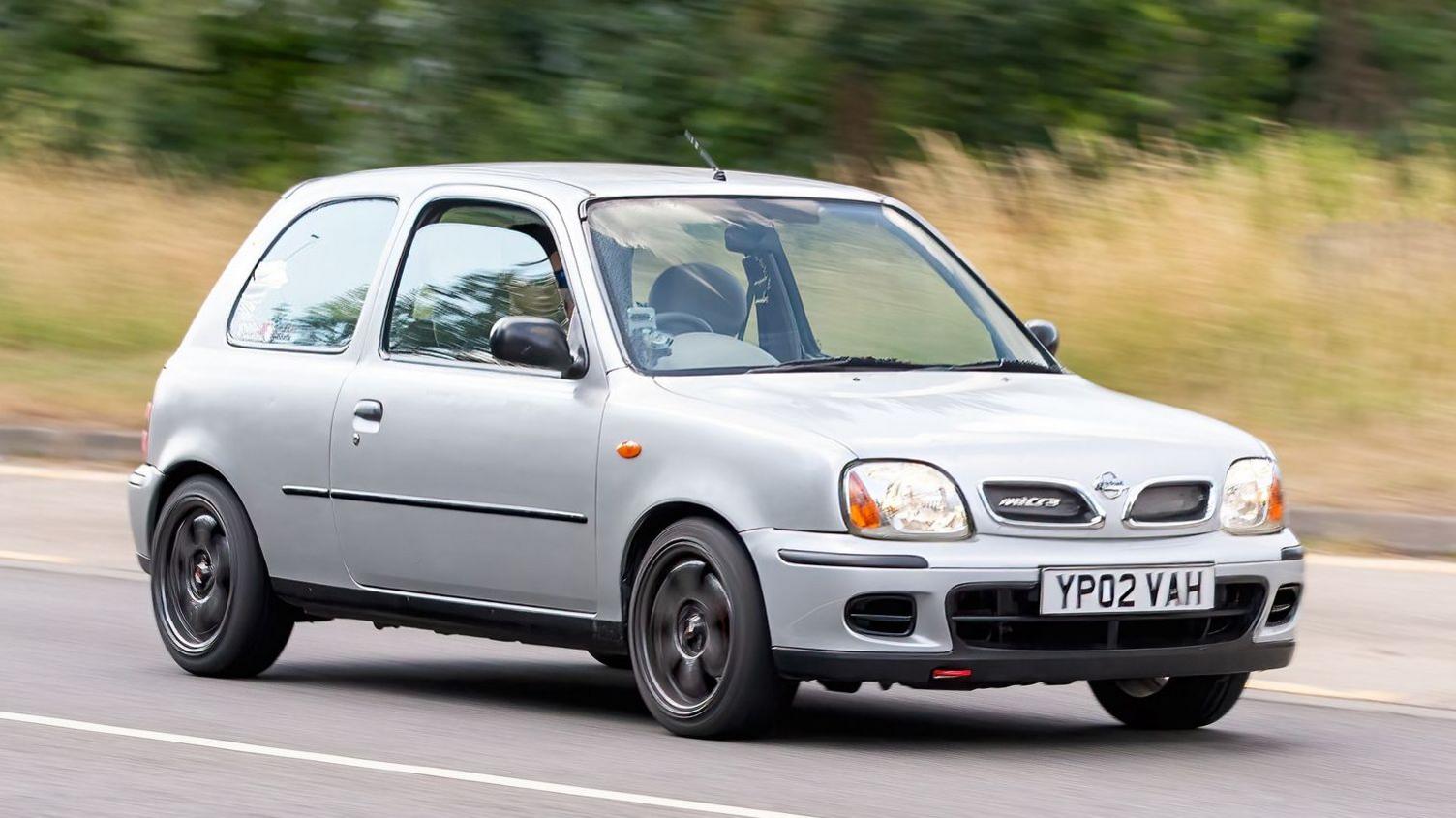
Khan was convicted and fined after being accused of not taxing a 2002 Nissan Micra, which would have looked similar to the one pictured

Court records show Khan was prosecuted by the DVLA after the annual tax on the blue Nissan Micra, which was first registered in 2002, ran out in September last year.

The DVLA said the vehicle was spotted untaxed on 24 January and told the court that his name and date of birth appeared against the car on official records held by the government.

The agency said a letter asking for confirmation of the identity of the car owner, which was sent to the wrong address, went unanswered in January, leading to a criminal prosecution on 18 August after no plea was entered to the charge.

The court also sent a record of conviction to the Gordon Ramsay restaurant, ordering Khan to pay the £340.84 court bill within 28 days or face the prospect of increased fines, bailiffs, or even "a warrant for your arrest to bring you to court".

The DVLA said it was reviewing the case and investigating the circumstances of the prosecution.

Defendants who believe they have been wrongly convicted of a crime in their absence can apply for the case to be reopened, typically by appearing in person in front of a judge to make a statutory declaration.

Khan could argue that he did not know about the criminal case because the letters were addressed to the wrong building.

Once reopened, he could petition the DVLA to withdraw the prosecution if it can be shown that he was wrongly accused, or enter a not guilty plea.

Alternatively, the DVLA could apply to the court for the case to be reopened.

Listen to the best of BBC Radio London on Sounds and follow BBC London on Facebook, external, X, external and Instagram, external. Send your story ideas to hello.bbclondon@bbc.co.uk, external
Comments
You must be logged in to comment.