yahoo Press
Nokia Gets Back Into Europe’s VIP Room
Images
1 / 4
2 / 4

3 / 4

4 / 4
The above button links to Coinbase. Yahoo Finance is not a broker-dealer or investment adviser and does not offer securities or cryptocurrencies for sale or facilitate trading. Coinbase pays us for certain activity generated through this link. Prices displayed are informational.

Our analysts just identified a stock with the potential to be the next Nvidia. Tell us how you invest and we'll show you why it's our #1 pick. Tap here.

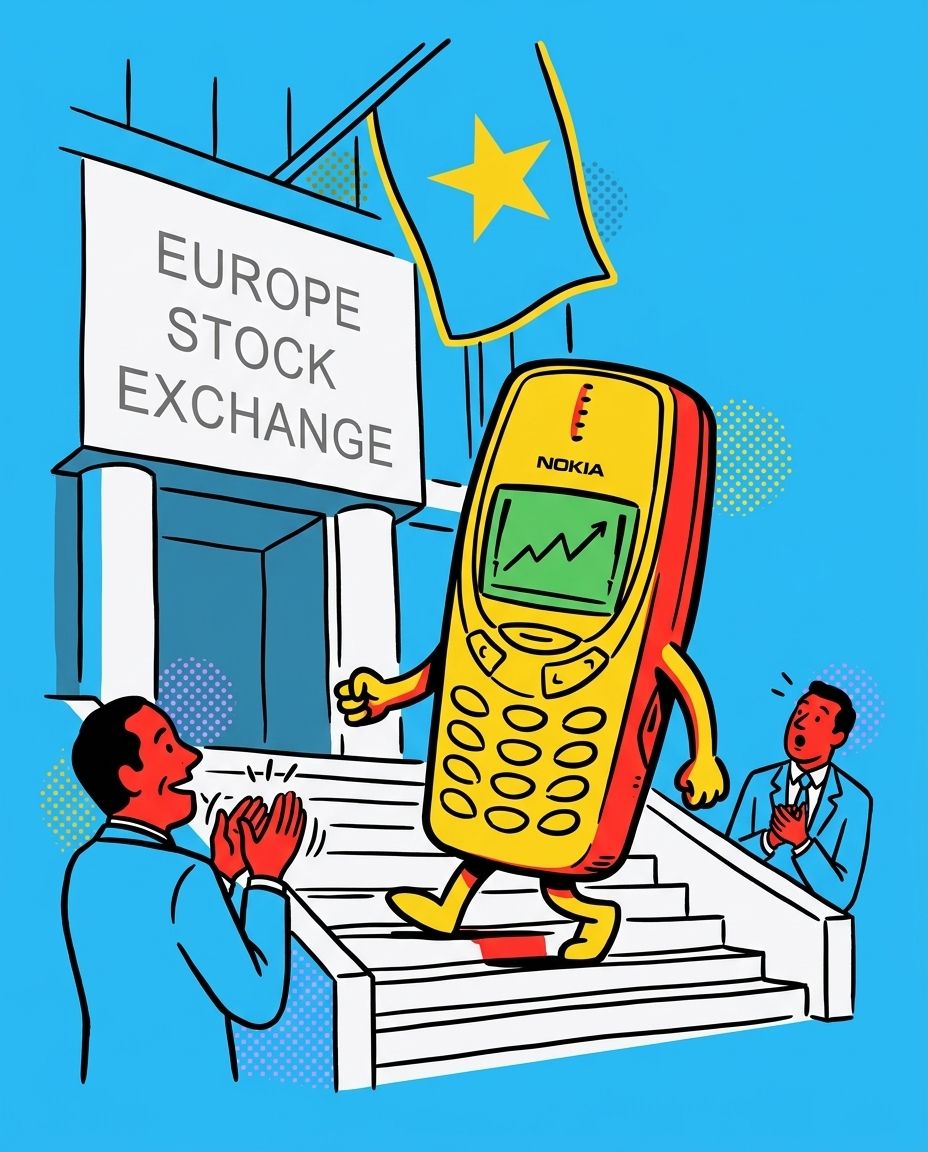
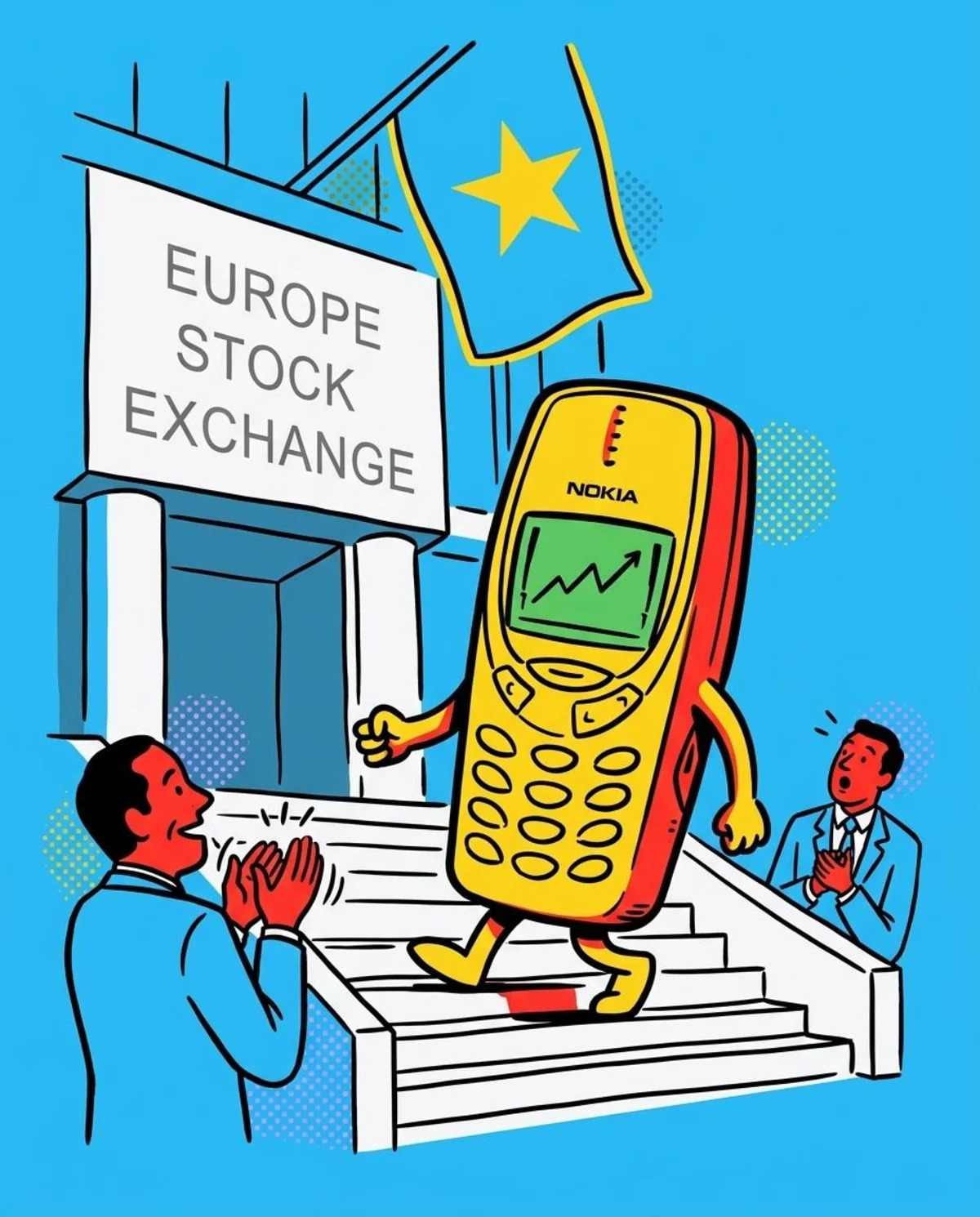
Europe's benchmark just swapped an old auto giant for an AI infrastructure comeback story. Nokia is back in the Euro Stoxx 50. Volkswagen is out. That says a lot about where investors think Europe's future growth is hiding.

Nokia will rejoin the Euro Stoxx 50 before the market opens on September 21, ending a one-year exile from the euro area's blue-chip stock benchmark.

The Finnish mobile network-equipment maker will enter alongside French utility Engie. Volkswagen and Dutch information-services group Wolters Kluwer will drop out.

The reshuffle is more than a quarterly paperwork exercise. Nokia shares have more than doubled over the past year as investors bought into the company's push into artificial intelligence and cloud infrastructure. The group has been shifting more attention toward fiber-optic equipment and network systems used by companies building AI data centers.

Volkswagen's exit tells the opposite story. The German automaker has endured another weak stretch as investors worry about rising Chinese competition, cost-cutting headaches and the expensive transition to electric vehicles. Once VW leaves, BMW, Mercedes-Benz and Ferrari will be the only carmakers left in the Euro Stoxx 50.

Engie's entry follows a near 40% gain in its shares over the past year. The utility raised its full-year profit forecast at the end of July, supported by market volatility linked to the Middle East conflict, demand tied to the global AI boom, a major UK acquisition and currency moves.

Wolters Kluwer is being removed after sliding with a broader group of companies seen as vulnerable to disruption from advances in artificial intelligence. That makes the reshuffle feel especially pointed: one company is getting rewarded for supplying the AI buildout, while another is being punished for sitting in AI's possible blast zone.

There were also changes to the broader Stoxx 600 Index. Greek lenders Piraeus Bank and Alpha Bank are being added, while German airport operator Fraport and UK retailer JD Sports Fashion are among those dropping out.

Index changes sound boring until real money starts moving.

The rise of passive investing means benchmark membership has become a powerful market force. Funds that track the Euro Stoxx 50 need to own the companies inside it. When Nokia enters, index-trackers buy. When Volkswagen exits, they sell. That does not guarantee long-term performance, but it can create near-term demand, trading volume and attention.

One stock. Nvidia-level potential. 30M+ investors trust Moby to find it first. Get the pick. Tap here.

For Nokia, the move is a stamp of market relevance after years of being treated like a faded telecom name. The old story was about 5G cycles, carrier spending and tough equipment competition. The new pitch is more exciting: AI needs data centers, data centers need networks, and networks need high-capacity optical and cloud infrastructure.

That has helped Nokia climb back into the conversation at exactly the moment investors are hunting for European AI-adjacent winners. The company is not Nvidia, and nobody should pretend otherwise, but it does sit closer to the plumbing of the AI boom than many investors previously appreciated.

For Volkswagen, the demotion is another bruise on an already battered brand. Europe's largest automaker is still huge, but huge is not the same as loved. The market is questioning whether legacy carmakers can defend margins while fighting Chinese EV rivals, restructuring old cost bases and funding the switch away from combustion engines.

That is the bigger symbolic punch. The Euro Stoxx 50 is not just changing names. It is showing the market's changing pecking order. AI infrastructure, utilities and power demand are moving up. Legacy autos are under pressure. Traditional information providers are being judged against the risk that AI eats into their moat.

Europe has spent years worrying that it lacks global tech champions. Nokia's return does not solve that problem, but it does give investors a cleaner way to play the infrastructure side of the AI cycle without crossing the Atlantic.

The first thing to watch is the trading impact before September 21. Nokia could see extra demand from passive funds and benchmark-sensitive investors, while Volkswagen may face forced selling as trackers adjust.

The bigger test is whether Nokia can justify the AI enthusiasm with sustained growth. Investors have already rewarded the pivot, so the company now needs to show that cloud and AI infrastructure demand can keep feeding orders, revenue and margins.

Volkswagen's challenge is more brutal. It needs to prove that its EV transition, China strategy and cost cuts can stabilize the investment case before the market starts treating its index exit as part of a longer decline.

This is a neat snapshot of the new European stock-market hierarchy. The pipes powering AI are in. The car giant stuck in transition is out.

That is not just an index reshuffle. It is a changing of the guard in miniature.
Comments
You must be logged in to comment.