huffpost Press
What Lindsay Clancy's Majority-Women Jury Could Mean For Her Verdict, According To Experts
Images
1 / 12

2 / 12
3 / 12
4 / 12
5 / 12
6 / 12
7 / 12

8 / 12

9 / 12
10 / 12

11 / 12

12 / 12
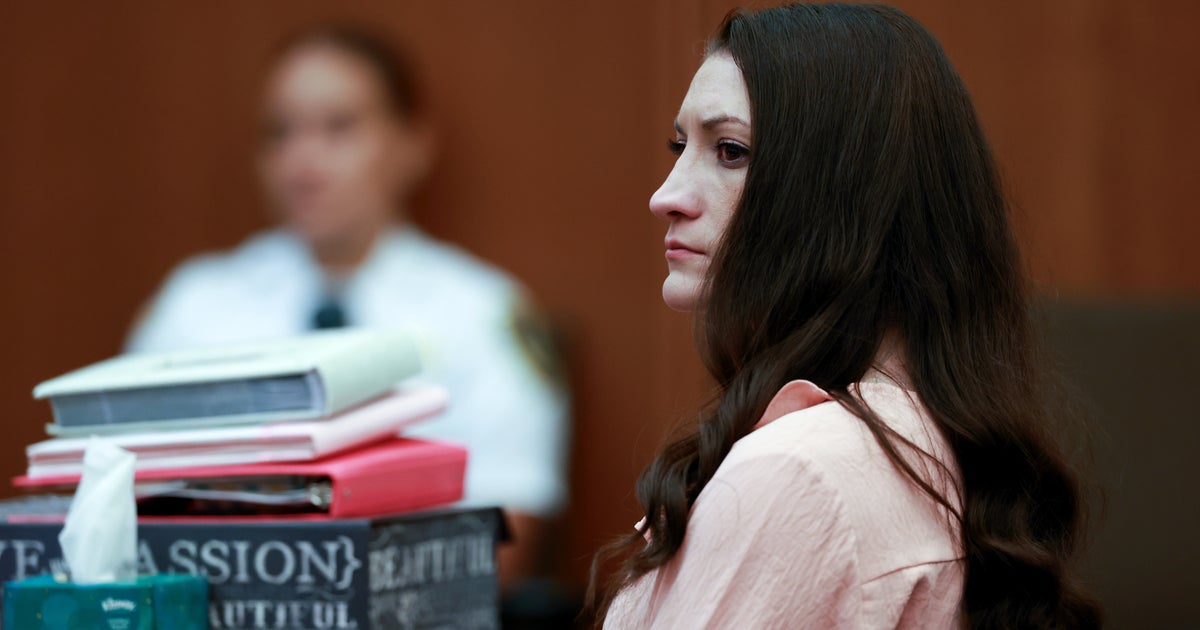
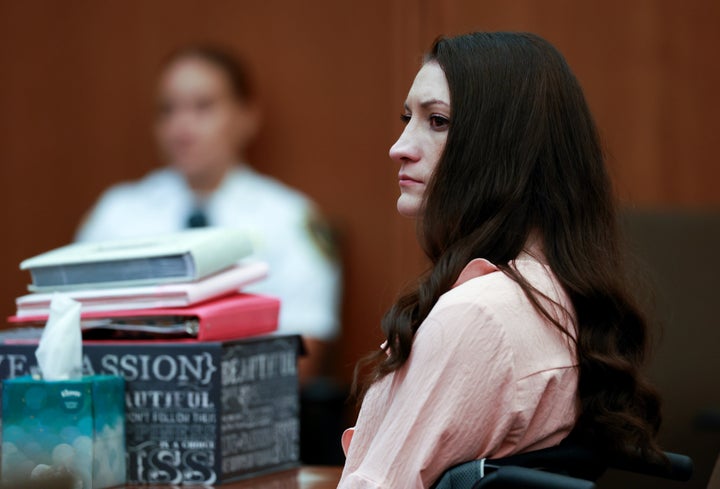
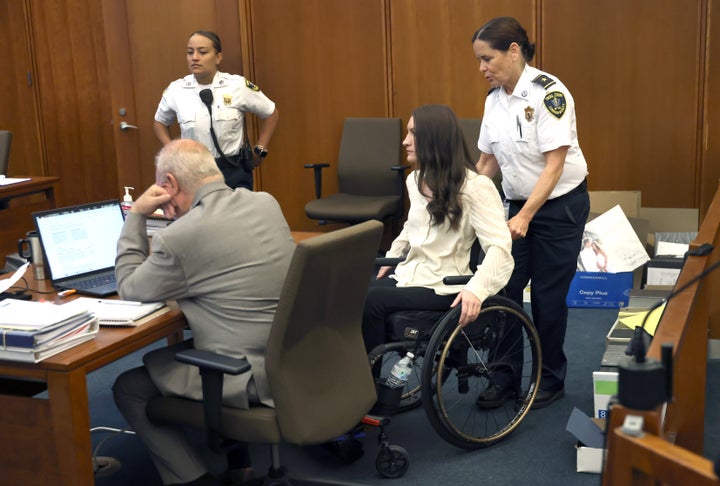
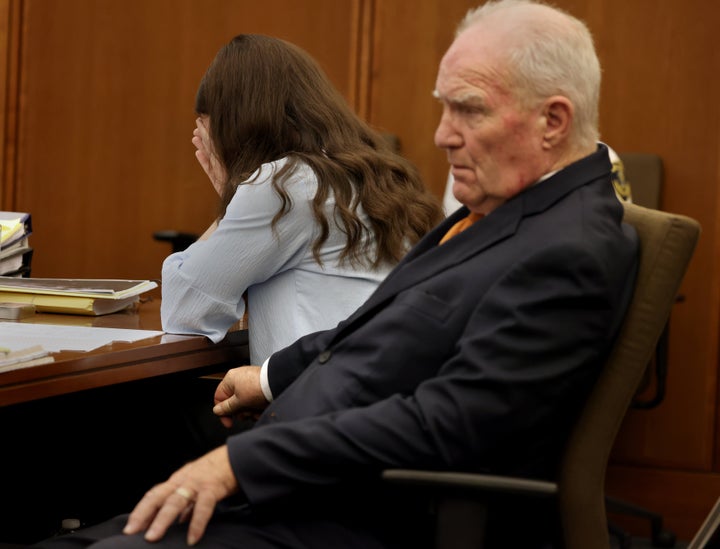
Jury deliberations in the high-profile murder trial of Lindsay Clancy entered their fourth day Tuesday. The panel of nine women and three men is tasked with deciding whether Clancy is criminally responsible for the strangulation deaths of her three young children: Cora, 5, Dawson, 3, and 8-month-old Callan.

Prosecutors portray Clancy ― a former labor and delivery nurse from Duxbury, Massachusetts ― as a calculating killer who waited for her husband to leave for takeout before strangling their children with an exercise band. The defense, meanwhile, contends she was suffering from severe, undiagnosed postpartum psychosis and was overmedicated with a rotating mix of psychiatric drugs originally meant to treat depression and anxiety.

Now, five weeks into the trial, the question is in the jury’s hands: Did Clancy know at the time of the killings that what she was doing was wrong, and did she have control over her actions?

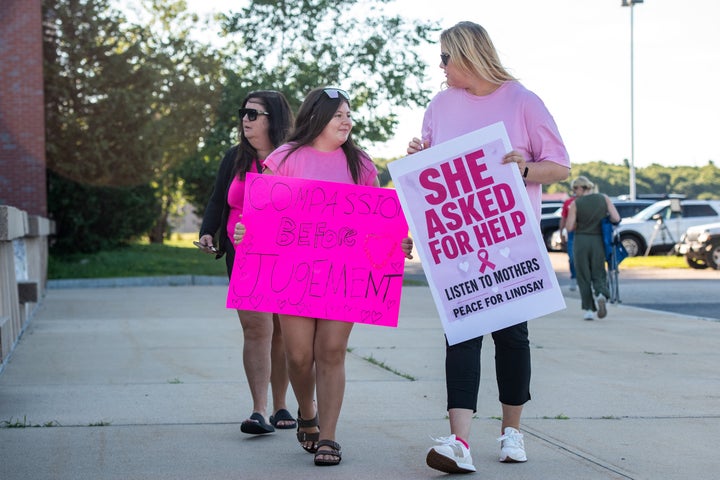
The trial has captured national attention for a variety of reasons, the most potent arguably being the conversation around postpartum mental health. The case has, after all, triggered a wide range of sympathy for Clancy from women who’ve had their own struggles with psychosis and depression after childbirth. Research shows there’s a significant treatment gap for women living with postpartum mental illness. According to a 2024 Columbia University study, “only one in four individuals with depressive symptoms received a perinatal mood and anxiety disorder diagnosis, and one in two reported receiving some form of mental health care in the first year postpartum.”

Given that most of the jurors are women, some have wondered whether gender — and the jurors’ own experiences as women and, in some cases, parents — could influence how they view the case. Could a female-dominant jury more harshly judge a woman who has failed to meet the expectation of mothers as nurturing and protective, especially if they have children of their own?

Or could such a jury have a harder time conceiving how a mother could kill three children without being under the influence of some severe postpartum mental illness?

Some research suggests women jurors may be more punitive than men in child abuse, sexual assault and domestic violence cases, and that in mock juries especially, women jurors are harder on female defendants, lawyers, experts and victims. But a 2014 study found gender had only a small effect on verdicts, concentrated almost entirely in sexual violence cases, where women were somewhat more likely to convict.

“Gender is one of the poorest predictors of jury decision-making,” said Richard Gabriel, a jury consultant who has assisted counsel in the trials of O.J. Simpson, Casey Anthony and Phil Spector.

Where gender might be a factor is whether the nine women on this jury have children or have any experience with postpartum depression, Gabriel said. Or if the three men on the jury have a partner or family member who has experienced the condition.

“Some jurors think that mental illness is never an excuse for conduct as extreme as filicide, while others may be more receptive to nuanced arguments about how mental disease and defect affects judgement and behavior,” he said.

David Cannon, the founder and a trial consultant at Trial Innovations, agrees that when compared with attitudes, values and life experience, gender matters little.

“While emotions play a huge role, just extrapolating outcomes based on gender composition is too simple,” he told HuffPost.

You can’t read the nine-to-three split as either a problem or a gift for the defense without knowing more about the jurors, said Toni M. Blake, a trial and jury consultant and professor of psychology.

“Without knowing much about them, I’d say the gender makeup is a double-edged sword,” she told HuffPost.

Blake, who has consulted on numerous cases involving child deaths, delved a little deeper into how a woman’s lived experience might impact her reading of the case.

“What I’ve seen is that in child death cases, female jurors are more likely to judge another woman’s parenting and more likely to measure her against themselves,” Blake said. “For instance, a woman juror might think, ‘I was exhausted, too, after giving birth. I was on medication, too, and I did not do that.’”

On the other hand, those same jurors are also more likely to have some familiarity with postpartum mood disorders, whether their own or a sister’s or a friend’s, and to have followed the public conversation about the conditions over the past decade.

“That is less sympathy than familiarity, and it means the term postpartum psychosis does not sound to them like something the lawyers invented,” Blake said.

Postpartum psychosis affects roughly one to two mothers out of every 1,000 births. It’s a medical emergency that requires immediate psychiatric care and is much more severe than the “baby blues” or postpartum depression.

Doctors say that if diagnosed and treated correctly, the vast majority of women with the disorder achieve full recovery and go on to live normal, fulfilling lives.

According to court testimony and documents, Clancy went to the hospital, called a suicide hotline and was prescribed a slew of medications in the months before the killings. A psychologist who met with Clancy testified that he heard her claim she heard voices telling her to kill her kids.

Given how complicated all this is, jury deliberations may take a while. Ultimately, Blake said, the defense’s real problem with this panel is not gender; it is the distinction between depression and psychosis.

“A juror who had postpartum depression and came through it can be a very unfavorable juror in the room if she collapses the two conditions together, while a juror who understands that psychosis is a different illness altogether, with command hallucinations and a genuine break from reality, is a very different juror,” Blake said.

That matters because juries are typically directed by the foreperson and only two or three opinion leaders, Gabriel said.

“So, it becomes important how persuasive those jurors are with their fellow jurors and how divided the individual members are on the evidence and the charges,” he said. “There are lesser included charges so jurors can negotiate to one of the other charges if they are inclined to convict, even though the evidence really does not support a manslaughter charge.”

Gabriel said courts have often struggled to account for the ways severe mental illness can affect criminal behavior — a failure he points to in cases like Andrea Yates’ roughly 25 years ago.

In 2002, a Texas jury composed of eight women and four men convicted Yates of capital murder for drowning her five children the previous year, rejecting her insanity defense and recommending a life sentence. In a 2006 retrial, a jury of eight men and seven women found Yates not guilty by reason of insanity.

In the Yates trials, other complicating factors played a larger role than jury gender composition, noted Deborah Denno, the founding director of the Neuroscience and Law Center at Fordham Law School.

“For example, the fact that her attorney used the time between the trial and retrial to educate the potential jury pool on postpartum depression and psychosis,” said Denno, who covered the case extensively.

The case got the public talking about postpartum mental illness and ended in an overturned conviction for Yates, but the legal system hasn’t really changed much, Denno said.

“A quarter-century later, I am saddened and disappointed that there has been zero progress in the legal system’s understanding of postpartum depression and psychosis,” she told HuffPost.

Gabriel agrees the courts need a more nuanced understanding of maternal mental health.

“In this trial, jurors have to struggle with whether Lindsey Clancy knew the criminality or wrongness of her action at the time of the murders,” he said. “Those are two different issues. She could know that killing her children was wrong, yet still feel compelled to do it because of the voices in her head.”

Clearly, the jury has a tall order in front of them, said Susan Hatters-Friedman, a psychiatrist specializing in forensic psychiatry and maternal mental health.

The group has heard about some complicated topics over the past month: postpartum mental health and infanticide and what symptoms are real versus what prosecution experts expressed skepticism over, Hatters-Friedman said.

“These are topics that mental health professionals spend years learning about, but then the jury needs to understand over such a quick period of time and then make momentous decisions about,” she said. “It’s so difficult.”

Twenty-five years after the Yates case, Hatters-Friedman hopes that greater public understanding of maternal mental health will be one positive outcome of this similarly tragic case.

“Though the last thing I would want is for people to presume that having a maternal mental illness means that a mom is going to kill her children,” she said.

Ultimately, she said, postpartum depression and postpartum psychosis “are very treatable disorders ― if we identify them, moms can get treatment, live better lives, and prevent bad outcomes.”

If you or someone you know needs help, call or text 988 or chat 988lifeline.org for mental health support. Additionally, you can find local mental health and crisis resources at dontcallthepolice.com. Outside of the U.S., please visit the International Association for Suicide Prevention.

By entering your email and clicking Sign Up, you're agreeing to let us send you customized marketing messages about us and our advertising partners. You are also agreeing to our Terms of Service and Privacy Policy.
Comments
You must be logged in to comment.