yahoo Press
Revolutionary War battlefields often romanticize combat, but this mass grave just outside Philadelphia shows the violence soldiers actually experienced
Images
1 / 9
2 / 9

3 / 9

4 / 9
5 / 9
6 / 9
7 / 9

8 / 9

9 / 9
"I think I found a bone."

A volunteer whispered that to us on the last day of a public archaeology project at the Red Bank Battlefield Park in southern New Jersey in June 2022. Over the course of four days, dozens of volunteers worked under the supervision of trained archaeologists and other professionals to dig, sift and identify artifacts at the site of the Battle of Red Bank on Oct. 22, 1777.

The bone was a stunning discovery. We are an archaeologist and the director of the Red Bank Battlefield Park. We knew this public project would likely reveal dozens of artifacts, but we never anticipated finding human remains.

And we certainly did not expect to find a mass burial – one of just a handful of Revolutionary War mass burials that have been discovered.

Whose bone was this? How many others were there? And what exactly happened here 250 years ago?

The Battle of Red Bank was a major upset victory for the patriots in what became known as the Philadelphia Campaign, a series of maneuvers and engagements that ultimately resulted in the capture of Philadelphia by the British.

In the fall of 1777, Fort Mercer played a pivotal role protecting Philadelphia from British troops – and the ships supplying them – moving up the Delaware River. The city had fallen to the British in September, but the patriots still maintained control of the river. Two Rhode Island regiments under the command of Col. Christopher Greene defended the fort.

In an attempt to open the river to the Royal Navy and establish a supply line, the British Army sent a Hessian brigade to attack the fort. Hessians were German auxiliary soldiers hired by the British crown to supplement their troops.

Despite the patriot forces being dramatically outnumbered, they won a stunning victory. Our project team historian Robert Selig's original research in the Marburg Archives in Germany documents that when the smoke had cleared, 111 Hessian soldiers lay dead. Many more were wounded and died in the coming days and weeks. It was one of the worst losses of Hessian life in the Revolution. On the American side, there were 14 dead and 23 wounded.

On Oct. 23, 1777 – the day after the battle – Greene ordered the Rhode Island regiments to bury the dead. The remains of the Hessian soldiers were unceremoniously dumped in a ditch.

As one member of the Rhode Island regiments, Sgt. John Smith, documented: "[I]n the morning we began to strip & Bury the dead of our men & hesians (sic)– we buried 75 hesians in one Grave in the intrenchment & Covered them over & 8 or 10 more below the bank by the River – it took us all day to Bury the dead."

Maps from the period indicate a burial space near the prosperous home of Quakers James and Ann Whitall, whose property had been seized to construct Fort Mercer. However, our burial space was nowhere near the house.

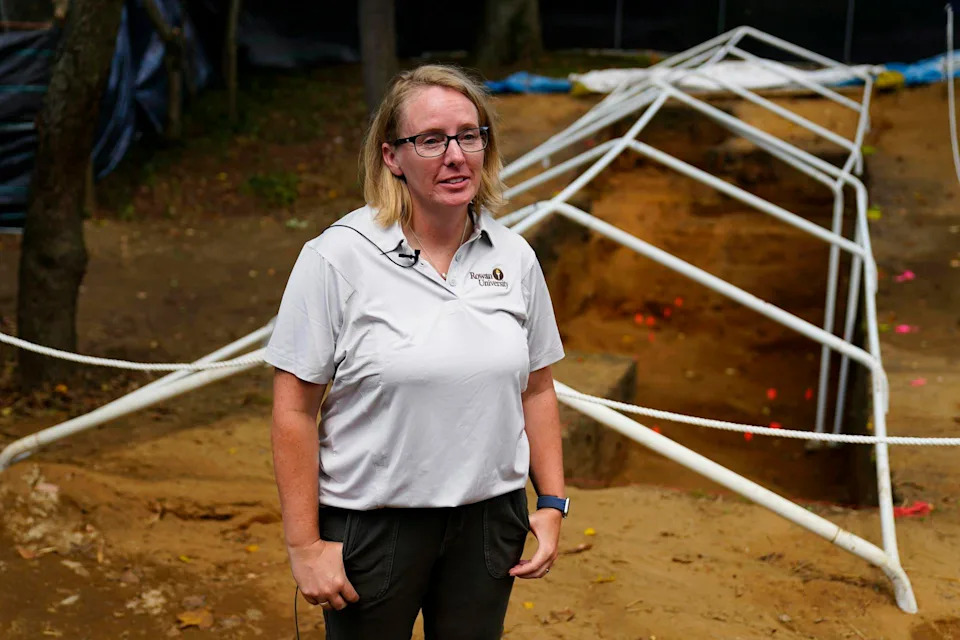
One of the authors of this article, public historian Jennifer Janofsky, speaks with the media at the Red Bank Battlefield Park after she and other researchers discovered the mass grave. AP Photo/Matt Rourke

Located on the Delaware River directly across from Philadelphia International Airport, the Red Bank Battlefield today offers a mix of history, recreation and nature.

Visitors can see the Whitall House, which dates to 1748 and served as a field hospital in the days after the battle, and the earthen remains of Fort Mercer. There are also recreational paths and views of the river and of the Philadelphia skyline.

The park is administered by Gloucester County's Department of Parks and Recreation. In 2021, Gloucester County purchased a small, quarter-acre parcel adjacent to the park's northern boundary. The site was particularly compelling because it contained an undisturbed trench, a part of Fort Mercer's fortifications.

In the spring of 2022, we had begun to archaeologically survey the site – never expecting that this unassuming parcel would become among the most significant spots in the park.

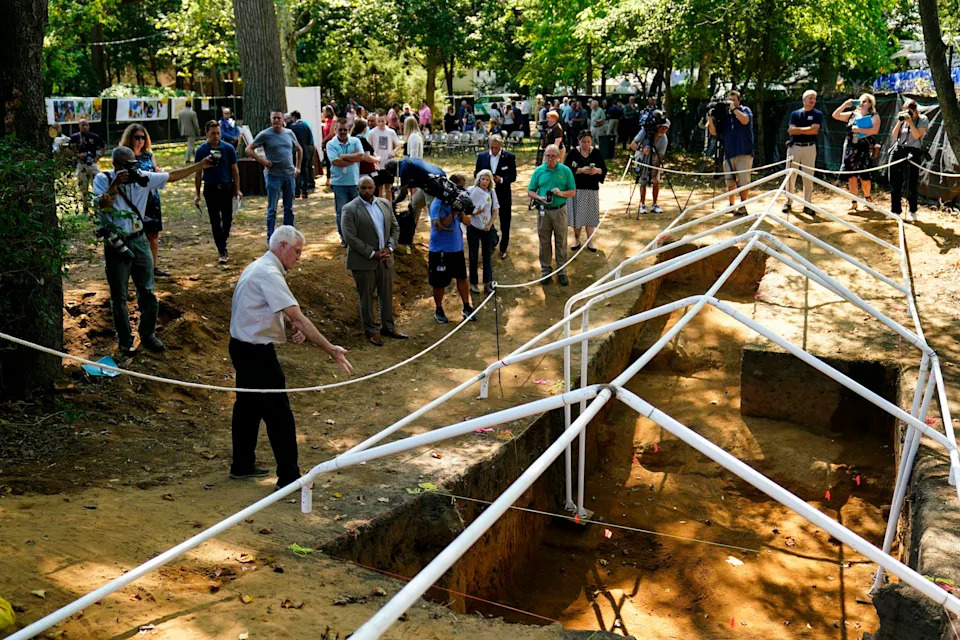
After the discovery of human remains, our team of archaeologists and volunteers worked tirelessly over the long, hot summer. Eventually we recovered the remains of 15 individuals believed to be Hessian soldiers. The project has benefited greatly from the resources committed by the New Jersey State Police Forensic Anthropology Unit.

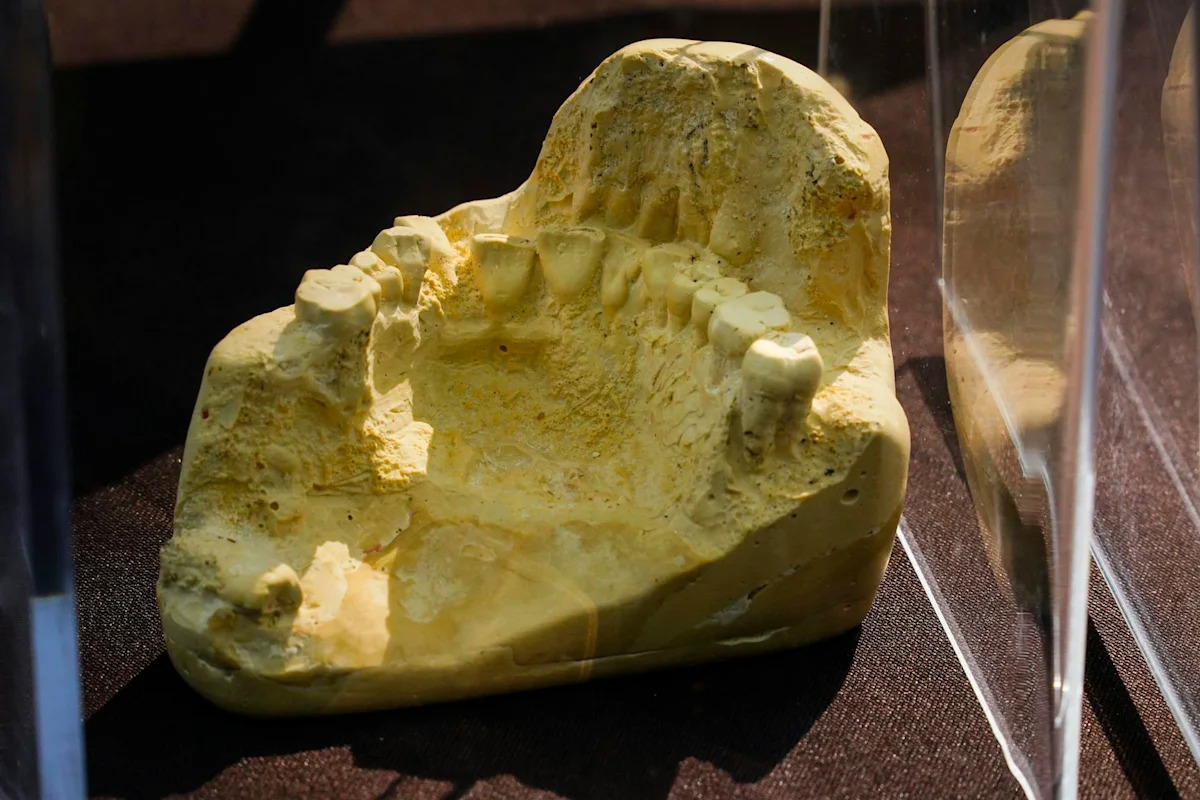
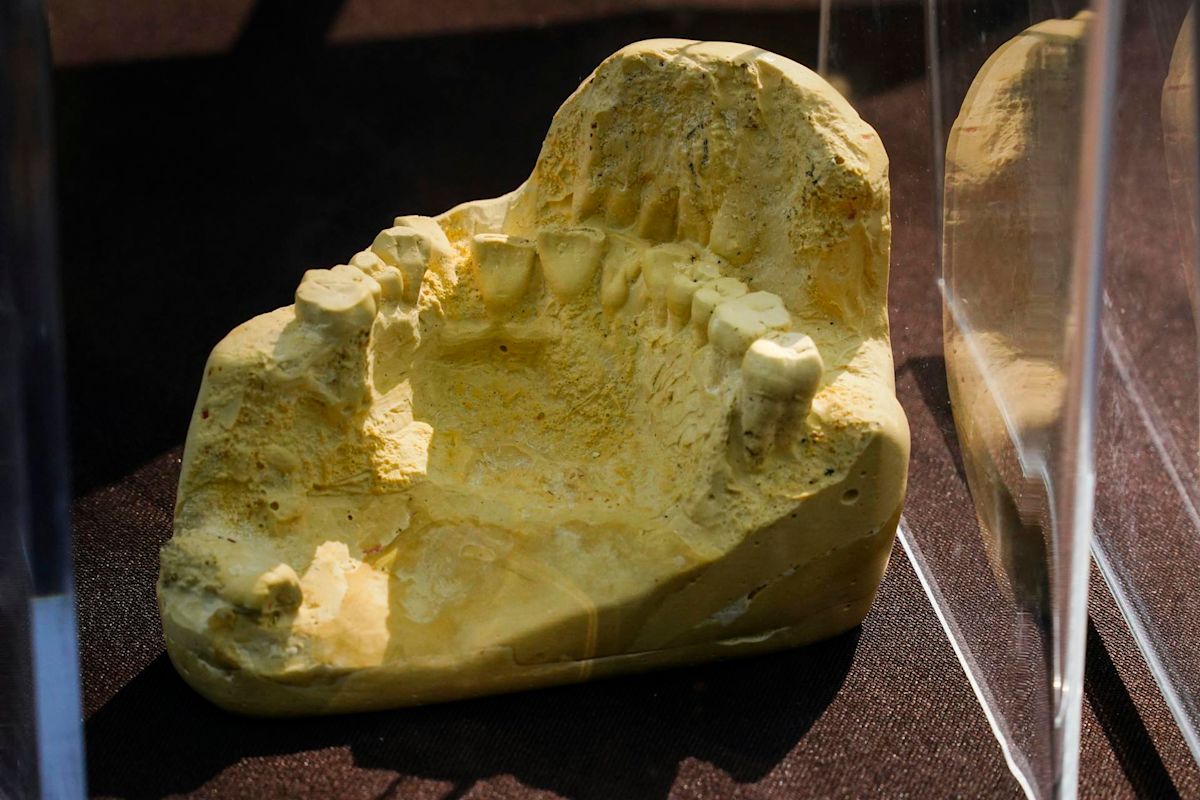
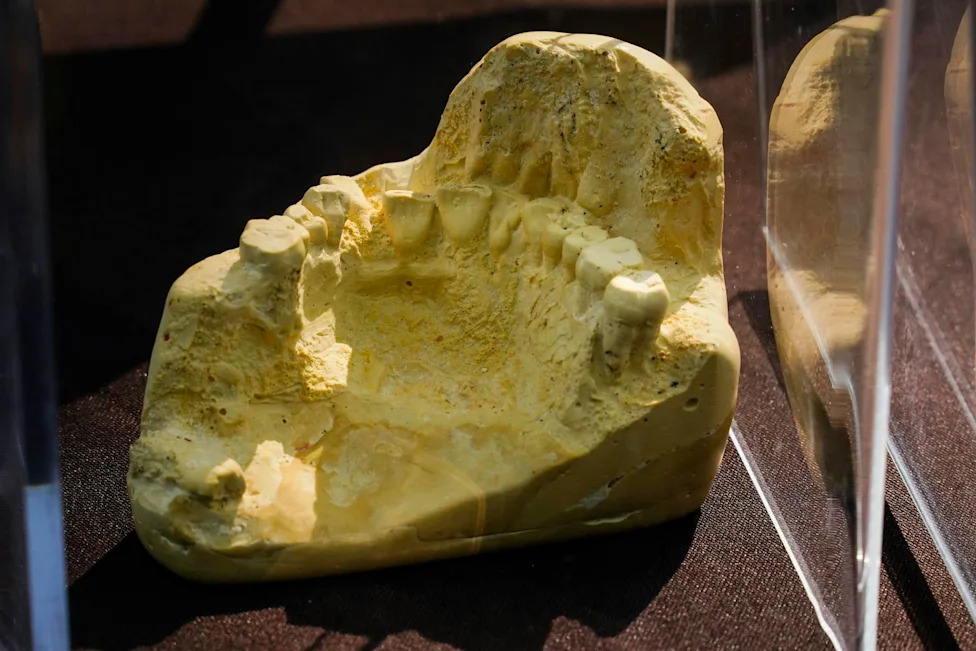
The work of removing the human remains was delicate. The bones were not in good condition; there were no fully articulated skeletons. The team recovered pieces of people: craniums, jawbones and femurs. As the work progressed, it became very clear from the artifacts of battle – the buttons, buckles and musket balls – that these were Hessian dead.

As the team worked, they numbered the remains from 1 to 15.

Bones are artifacts and can share powerful stories that are sometimes missed in traditional primary sources. This was the case with No. 7, whose remains told a particularly sad story. He was found face down at the base of the fort wall. We believe he was hit by a lead musket ball in his right hip, a lead canister shot in the center of his back and iron grapeshot, which is like a mini-cannonball about the size of a golf ball, in his left arm.

Other injuries revealed more grim realities of a Revolutionary War battlefield, such as the Pennsylvania Navy's use of bar and chain shot as ammunition. Bar shot looks like a heavily weighted dumbbell. Chain shot is two cannonballs linked by a chain. Once fired from a cannon, both spin as they sweep through the air toward the target.

Traditionally used to damage a ship's rigging and destroy masts, in this instance it was used by the patriots as an antipersonnel weapon, with devastating effect. We did not have complete individuals. What we recovered was battlefield gore.

Archaeologist Wade Catts, one of the authors of this article, shows the site of the mass grave to members of the media in August 2022. AP Photo/Matt Rourke

Since the discovery in 2022, the team has grown from historians, archaeologists and forensic anthropologists to include experts in stable isotope analysis and ancient DNA.

Teeth can tell a lot about a person's early years. The food we eat and the water we drink create a unique signature that signals our geographic origins. By analyzing the tooth enamel, the stable isotope experts concluded that the soldiers' diets were consistent with a European diet of wheat, barley and oats.

The analysis also indicates that these men spent their childhoods within a 30-mile (48-kilometer) radius of one another. Ancient DNA studies conducted on three of the individuals by Raquel Fleskes of Dartmouth College demonstrates strong northwestern European ancestry.

The project's "CSI" approach to studying the past captured the public's attention. We have offered presentations on this project nationally and internationally to well over 1,000 people. A new round of funding from the National Endowment for the Humanities is allowing for more robust testing of our remaining individuals.

The ultimate goal of the project is to identify at least one individual by name.

As America celebrates 250 years since its founding, we believe the Red Bank Battlefield Park project is an opportunity for more nuanced interpretations of who and what constitutes the enemy.

Rather than seeing the battle as good guys versus bad guys, we encourage people to consider the space in between. These men never anticipated being dumped in a New Jersey ditch so far from home.

The mass burial of these soldiers also prompts questions regarding who and what we remember – and who and what we forget.

War is frequently romanticized at Revolutionary War battlefields. Red Bank Battlefield Park is one of the few battlefield sites that tackles the actual violence of a Revolutionary War battlefield.

The discovery of human remains encourages a more human connection with the past while fostering empathy for those left behind at the end of the battle. It compels us to consider the real lives that were lost on a Revolutionary War battlefield and the human cost of war.

Read more of our stories about Philadelphia and Pennsylvania, or sign up for our Philadelphia newsletter on Substack.

This article is republished from The Conversation, a nonprofit, independent news organization bringing you facts and trustworthy analysis to help you make sense of our complex world. It was written by: Jennifer Janofsky, Rowan University and Wade Catts, Rowan University

Read more:

The American Revolution's triumphant story of democracy and freedom overlooks loyalists who paid a steep price for allegiance to Britain

Martha Washington's enslaved maid Ona Judge made a daring escape to freedom – but the National Park Service has erased her story from Philadelphia exhibit

Stockings once worn by Philly's wealthiest man show the value of women's mending in early America

Jennifer Janofsky receives funding from the New Jersey Historical Commission, the New Jersey Council for the Humanities, the Villanova Lepage Center, the New Jersey Historic Trust, the County of Gloucester. I serve on the board of the Glen Ridge Historical Society and the Glassboro Historic Preservation Commission.

The Red Bank Battlefield Archaeology Project has received funding from the New Jersey Council for the Humanities, the New Jersey Historical Commission, and Gloucester County.Wade Catts is a member and former president of the American Cultural Resources Association. Wade Catts is a member of Preservation Delaware.
Comments
You must be logged in to comment.