yahoo Press
Fed Chairman Warsh says inflation is running too high, offers first assessment of economy
Images
1 / 5
2 / 5

3 / 5

4 / 5

5 / 5
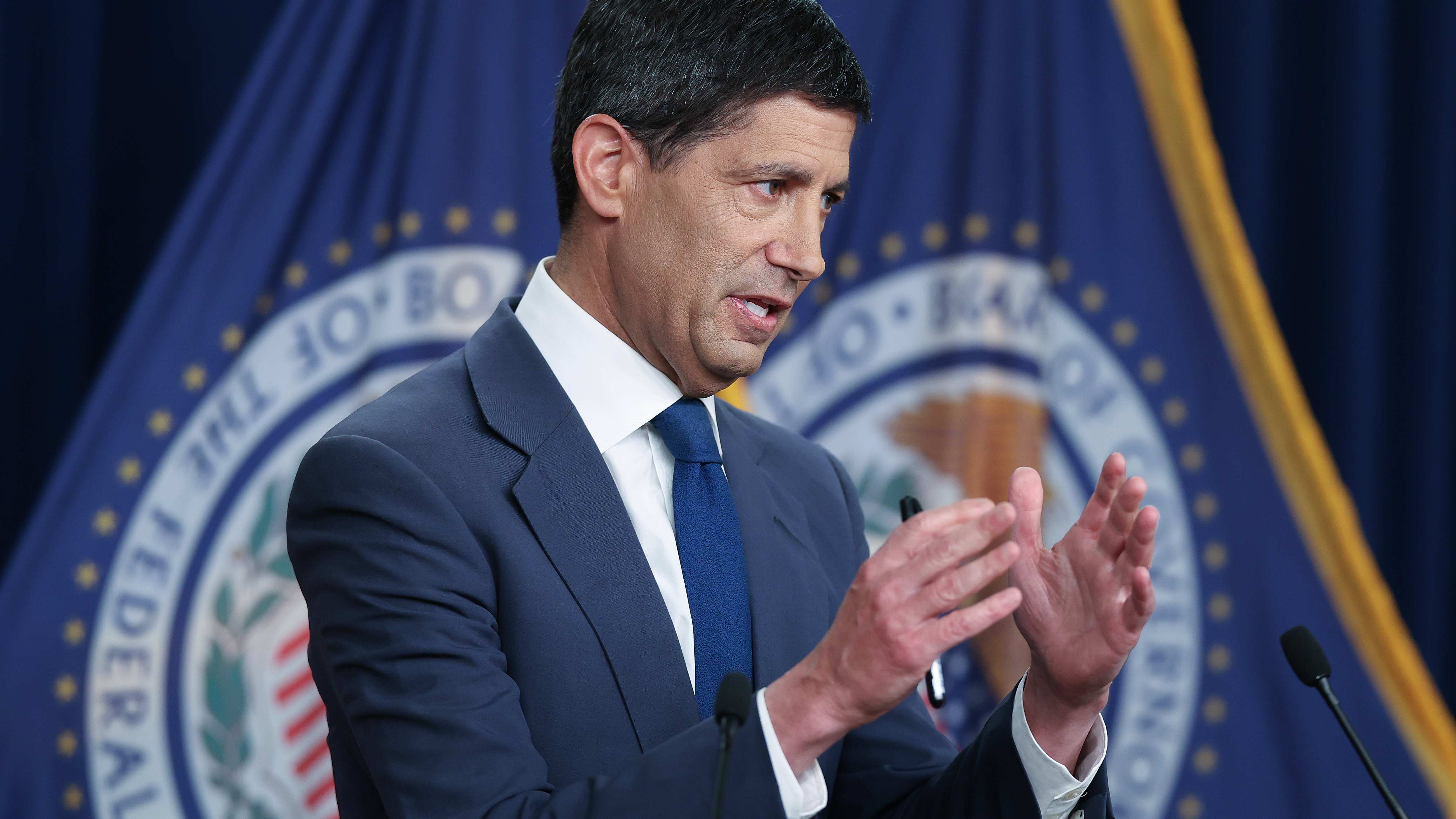
Federal Reserve Chairman Kevin Warsh, in a closely watched speech Friday, said inflation is running too high and should be the focus for the central bank, while laying out a strong assessment of the economy for the first time. But he held to his pledge not to provide forward guidance.

"We must be confident that underlying inflation is moving to our objective, clearly and at sufficient speed. Otherwise, we have work to do," Warsh said in his first speech as chairman in Jackson Hole, Wyo. "It is the Fed's job to deliver stable prices."

While Warsh did not offer forward guidance, he hinted that interest rates may not be holding back the economy much, saying, "I would be hard-pressed to describe broad financial conditions as restrictive."

Warsh delivers the high-stakes speech as markets clamor for more clarity on whether the Fed has a credible strategy to bring down inflation and whether the chairman would offer an assessment of the economic picture. He came through on the latter; whether markets are satisfied on the strategy question will become clear in the reaction to the speech.

Pointing to the Personal Consumption Expenditures index, Warsh noted that "the numbers are more concerning."

He noted market measures of inflation expectations and stressed the importance of those signals reverberating back to the Fed.

"It is a credit to the Fed as an institution — and consistent with the best of the Fed's traditions — that market prices show confidence that we will deliver price stability. And I can assure you … they're right," he said.

Warsh noted that broad inflation measures have fallen significantly from their 2022 heights, but that progress over the past two years has been modest. He said that while this summer's PCE and Consumer Price Index readings were better than expected, "they do not tell me that underlying trends have meaningfully improved."

There have been questions about whether PCE would remain the central bank's preferred inflation gauge, given the doubt Warsh cast during his press conference in July. Warsh's mention of PCE on Friday seemed to suggest it will.

Warsh painted a robust picture of the US economy, noting that economic growth appears to have strengthened, citing "rapidly rising" capital expenditures, which he estimates grew by 9% over the past four quarters.

Warsh noted that more than half of this year's capital expenditure growth is likely attributable to the artificial intelligence build-out. He noted that consumer spending adjusted for inflation has been healthy despite the surge in oil prices, tariffs, and other shocks, increasing by more than 2% over the past four quarters

He also pointed to firms' profits in the S&P 500, noting that profit margins are "quite elevated relative to history."

Warsh doubled down on the fact that the Fed is closely watching markets for signals on the economy.

"We're staying keenly focused on market internals, watching performance across sectors," he said.

Warsh said he will continue to monitor changes in the growth rates of corporate earnings and capital spending, as well as the follow-on effects on asset prices, business confidence, consumer income, and spending.

Warsh characterized the job market as "quite stable," saying it's consistent with full employment. He noted that low turnover is a result of the significant rematching between employers and employees that happened at scale after the pandemic.

Warsh stuck to his pledge not to offer guidance about the path forward for monetary policy. Early in the speech, as he provided an overview of the topics he would cover, he quipped, "You can call it an outline . . . you can call it a trail map . . . just don't call it forward guidance."

Later, he struck a more sober tone as he returned to his long-held skepticism about overcommunicating.

"Transparency in communications about future policy decisions is not a virtue unto itself," he said. "Communications must be in service to the Fed's paramount responsibility: getting monetary policy right."

But he did explain why officials decided to hold interest rates steady in July, pointing to the minutes from that meeting.

Warsh noted that a "good majority of my colleagues and I thought the wiser course was to await new information in the intermeeting period — especially given possible developments in supply chains, investment flows, and geopolitics — before deciding whether a change in interest rate policy was advisable."

Jennifer Schonberger is a veteran financial journalist covering markets, the economy, and investing. At Yahoo Finance, she covers the Federal Reserve, Congress, the White House, the Treasury, the SEC, the economy, cryptocurrencies, and the intersection of Washington policy with finance. Follow her on X @Jenniferisms and on Instagram.

Click here for the latest economic news and indicators to help inform your investing decisions

Read the latest financial and business news from Yahoo Finance
Comments
You must be logged in to comment.