huffpost Press
Experts Explain Why Deaths Seem To Come In Threes
Images
1 / 11

2 / 11
3 / 11

4 / 11
5 / 11
6 / 11

7 / 11

8 / 11

9 / 11

10 / 11

11 / 11
There’s a superstition that as soon as one famous person dies, two more will follow. “Death comes in threes,” people will say.

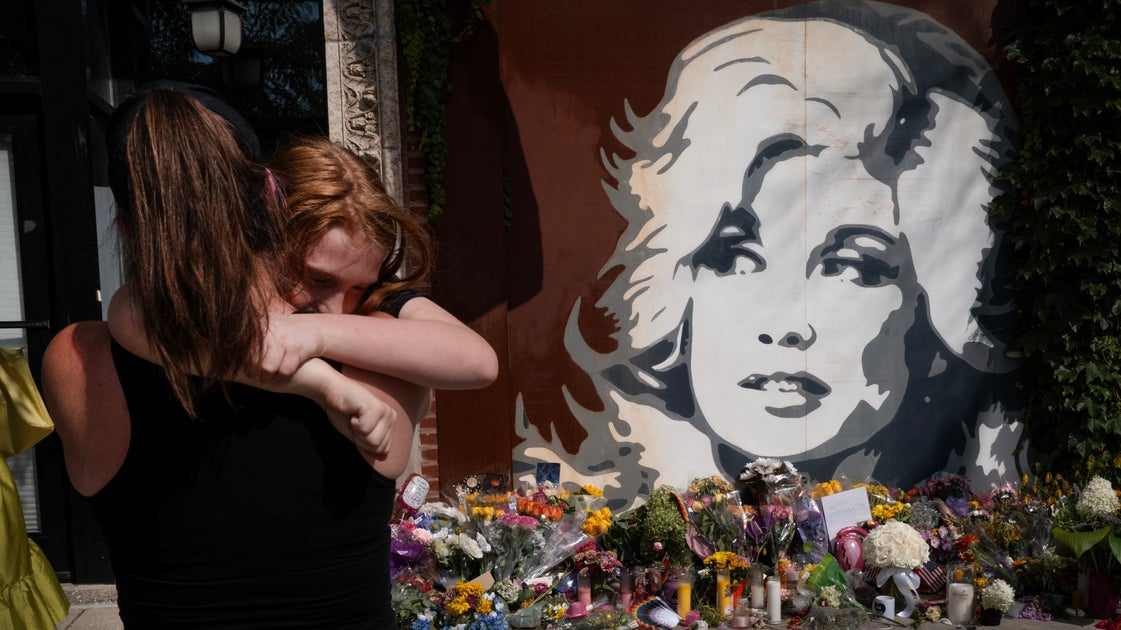
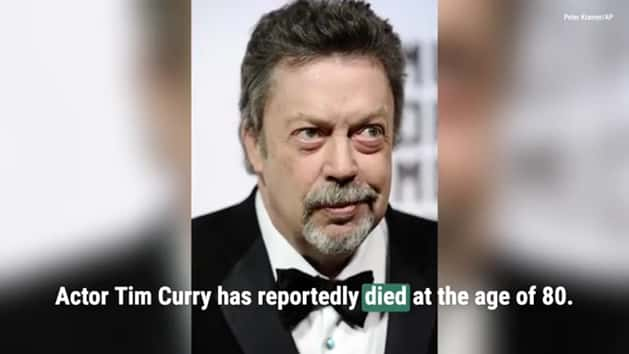
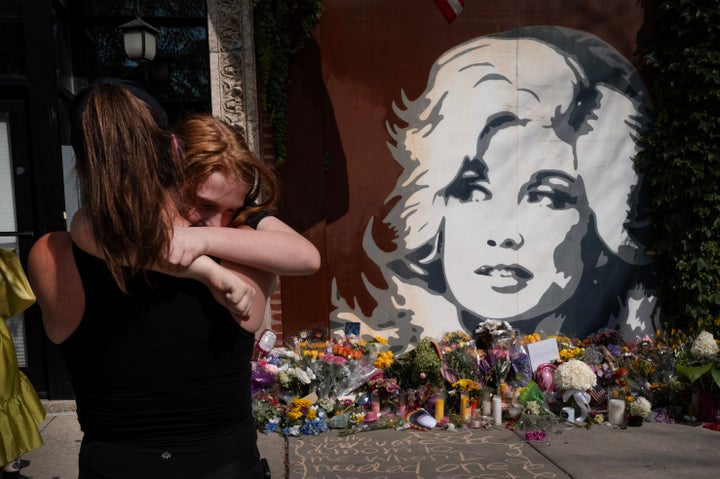
In the last two weeks, we saw the phenomenon play out with three fan-favorite entertainers: “Heroes” actor Hayden Panettiere, who died on Aug. 16 at just 36 years old; country icon Dolly Parton, who died at 80 on Tuesday; and “The Rocky Horror Show” actor Tim Curry, who also died Tuesday at age 80.

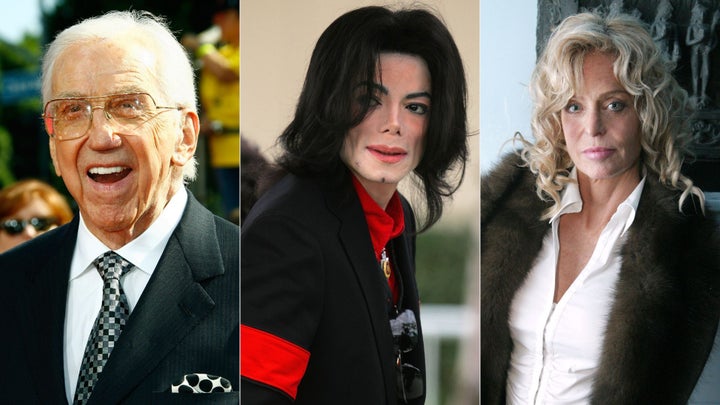
Some other notable death trios?

Beyond the “celebrity death rule of threes,” you’ll sometimes hear paramedics, nursing home workers and others in healthcare talking about deaths clusters with patients.

“I’m from Argentina and I work in a rural area, the same rule: ‘Cuando se va uno, se van tres (When one leaves, three leave),’” a doctor who works in a Medical Intensive Care Unit wrote on Reddit.

In the U.S., there’s some suggestion that the belief has European and Scots-Irish roots — that people who settled in Appalachia brought these traditions with them from across the Atlantic, where a religious and cultural emphasis on the number three, including the Holy Trinity, may have shaped how people made sense of the world.

So is there anything to this folkloric belief, or are we just pattern-loving humans barking up the wrong tree because we desperately want to find order in chaos?

Psychologists and researchers who study superstitions say, alas, it’s more the latter. There’s no evidence that three deaths are somehow connected. But there is an evolutionary reason behind why superstitious beliefs like this persist, said Lienna Wilson, a psychologist in Princeton, New Jersey.

“There is a theory that our brains, evolutionarily, would rather err on the side of caution and see a false positive than a false negative,” she told HuffPost.

For example, if you are out in the woods and you think you see a predator hidden in the forest, for survival purposes, it might be wiser to assume that the outline is a bear and not a product of your imagination.

“When it comes to death, it is usually scary and often unpredictable, so we again try to create some sense of control by looking for patterns,” she said.

“Once a notable death happens, we tend to look for deaths that follow and group them together,” she explained. “If we notice that a third death has occurred, we might even relax for a bit, knowing that we, or people we care about, are safe for the time being.”

Michael Shermer, the publisher of Skeptic magazine and host of “The Michael Shermer Show,” calls this human desire to find connection or intent in random, largely unconnected things “the process of patternicity.”

“[It’s] the tendency to find meaningful patterns in meaningless noise: The face of Jesus in a tortilla, the vision of the Virgin Mary on the side of a building. Rock stars that die at age 27. Scientists who work for NASA or on propulsion systems or are interested in UFOs die or disappear,” he said.

There’s another term in psychology for our very human pattern-seeking tendency: Apophenia, a term coined by the German neurologist and psychiatrist Klaus Conrad in 1958 to describe the impulse to see patterns or connections in random or meaningless data.

Apophenia is also the psychological idea that’s driving a lot of conspiracy theories, said Bruce Poulsen, a clinical psychologist who’s written about apophenia before.

“When we see the contrails streaming behind commercial airliners ― benign water vapor freezing into ice crystals ― some of us conclude that they are chemtrails — part of a hidden, government plot to disperse chemicals for weather and population control, or some kind of surveillance,” he said.

Poulsen told HuffPost it can be harder to go with the more rational explanation because we’re then forced to contend with the “chaotic bits of our life.”

“Then we’re left without good explanations about how bad things may still be happening around us,” he said.

According to Wilson, people tend to experience apophenia when they have heightened negative emotions such as anxiety or grief ― two states that often accompany high-profile deaths.

“So to try to gain some sense of control over the unpredictability of death, we come up with a pattern of threes,” she said.

In the end, we’re creatures of habit, and patterns provide comfort and reassurance, the psychologist said: Fans wearing a certain jersey to make sure their team will win, for instance, or “deaths come in threes.

“I see [apophenia] lot with clients who are grieving,” Wilson said. “They hold on to a connection with their lost loved ones and see certain patterns; for example, a butterfly or a bird landing on their porch is a sign that a loved one has peacefully transitioned.”

In this way, apophenia can be a heartening thing for us to hold on to.

“These are all culturally accepted examples of apophenia that actually comfort people during grief,” she said.

By entering your email and clicking Sign Up, you're agreeing to let us send you customized marketing messages about us and our advertising partners. You are also agreeing to our Terms of Service and Privacy Policy.
Comments
You must be logged in to comment.