aljazeera Press
Can Trump really rename Lake Ontario, ‘Lake America’?
Images
1 / 9
2 / 9
3 / 9
4 / 9

5 / 9

6 / 9

7 / 9

8 / 9

9 / 9
Amid tariff war with Canada, Trump has signed an executive order renaming the shared lake.

Save

Share

‘Typical Trump, silly joke’: ‘Lake America’ has Canadians laughing

United States President Donald Trump’s war on geography has opened up a new front – this time on the Canadian border.

Amid escalating trade tensions between Washington and Ottawa, Trump said he would rename the large body of water shared between the US and its northern neighbour.

We break down what Trump has announced, whether he can actually rename this particular body of water, and whether the rest of the world will have to use the new name.

During a news conference in the Oval Office of the White House on Thursday, Trump signed an executive order that changes the name of Lake Ontario to Lake America.

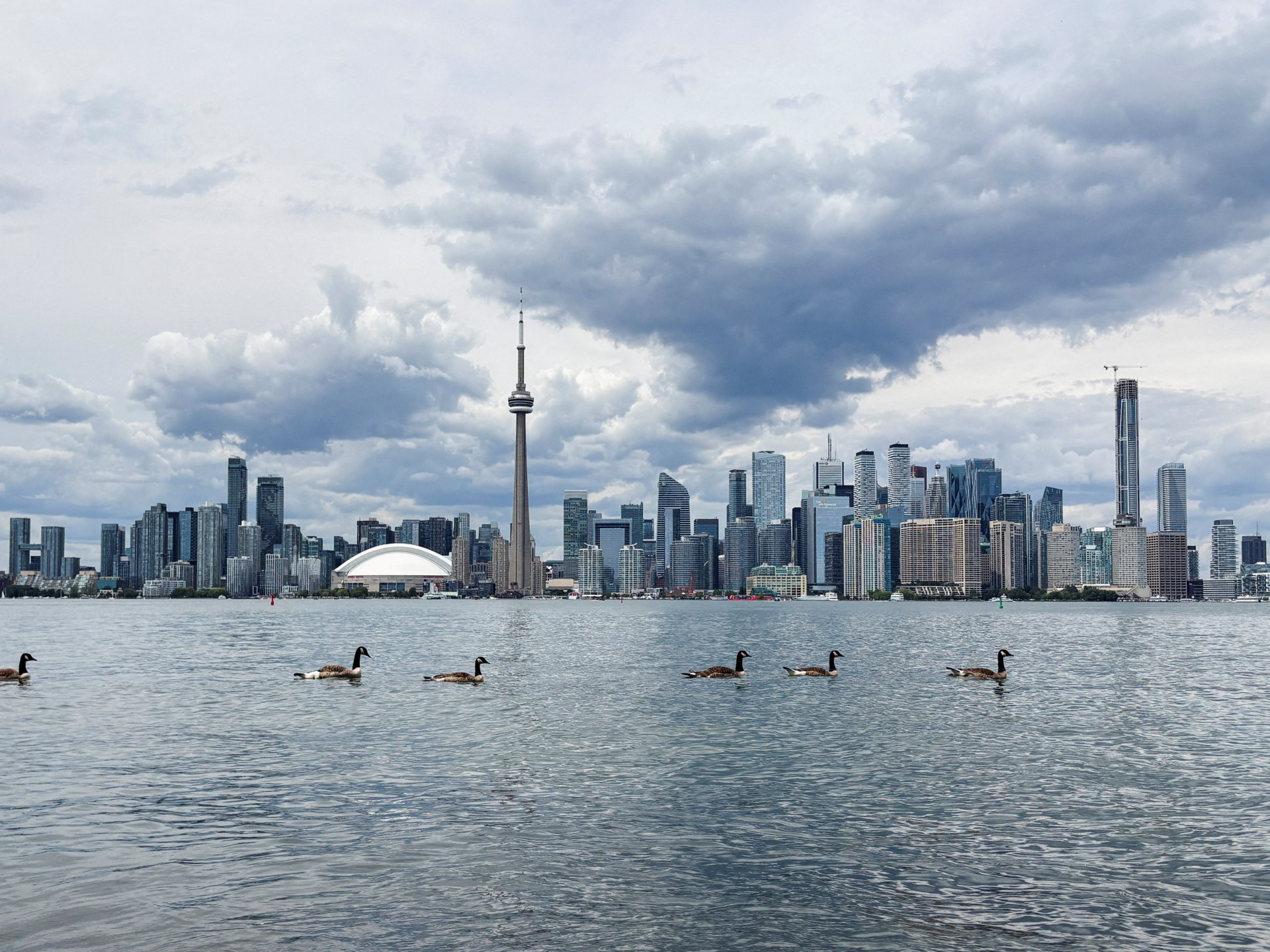
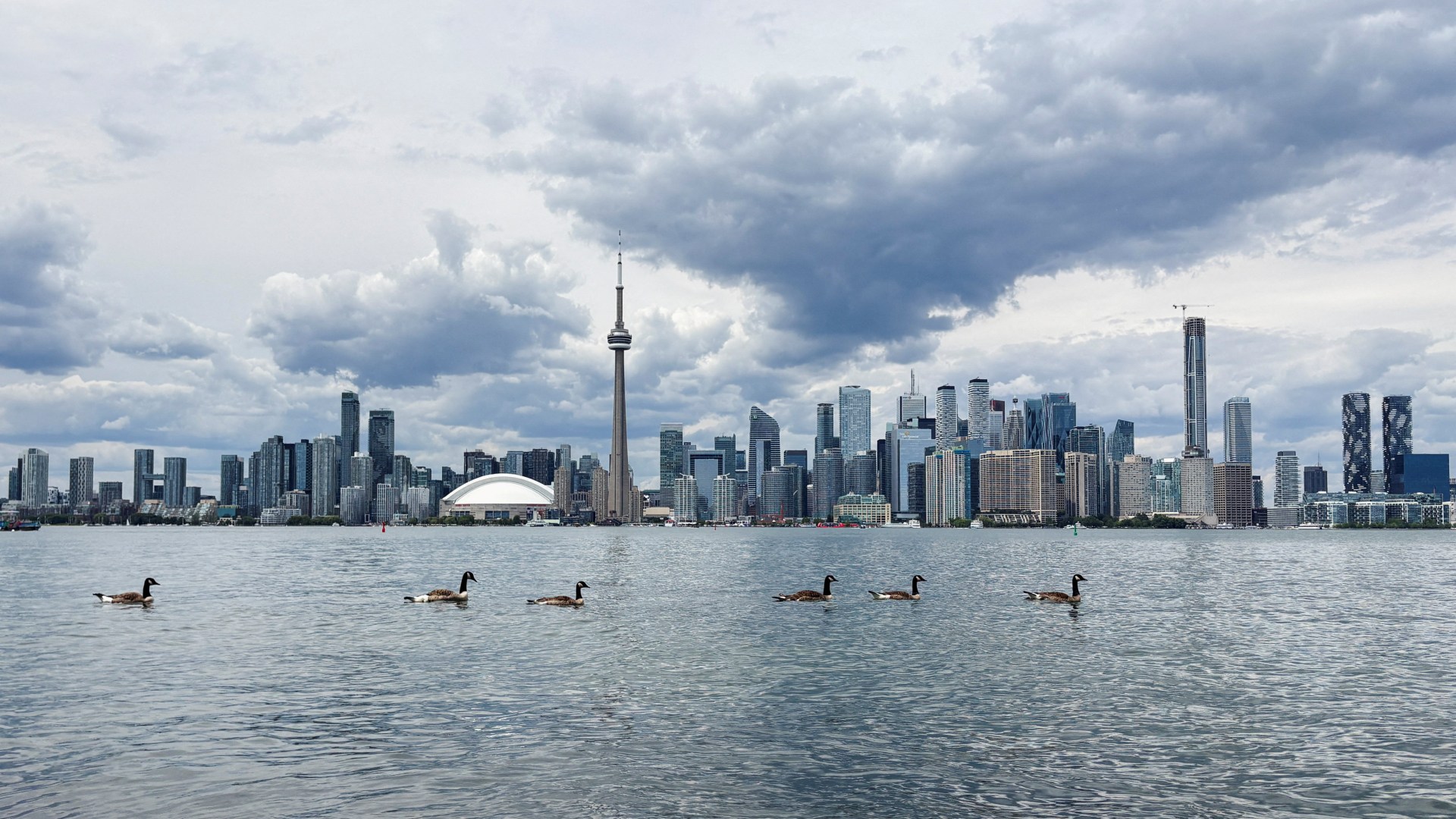
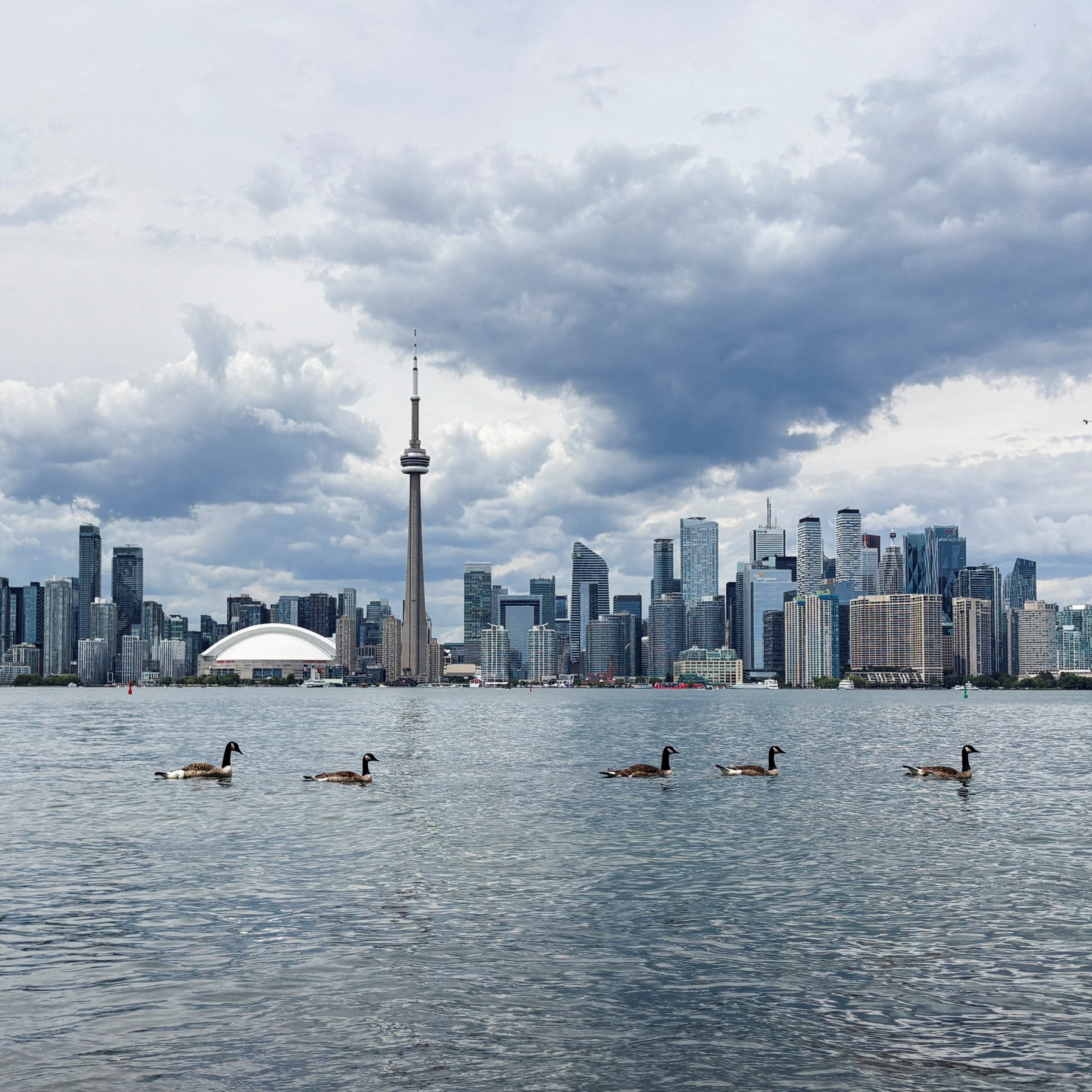
Lake Ontario is in North America, on the border between the Canadian province of Ontario to the north and the US state of New York to the south.

The name “Lake Ontario” is believed to be derived from the Huron Indigenous people’s Wendat language word “oniatarí:io,” which is thought to mean “lake of shining waters”, “great lake” or “beautiful lake”.

“The name Ontario is witness to a native presence that existed before the establishment of the United States and Canada, and which is crucial for expressing the historical depth of North America to students and wider communities,” Derek Alderman, the chancellor’s professor of geography at the University of Tennessee, told Al Jazeera.

“Trump’s executive order similarly is an attempt at erasing Indigenous culture from the map, exerting not just an ‘America-first’ ideology across the continent but a decidedly neocolonial geographic imagination in which the map and its names become tools for narrowing whose histories and contributions matter.”

The lake lends its name to the Canadian province of Ontario, which was founded in 1867.

The body of water has already survived attempts by the French in the 17th and 18th centuries to rename it and the name first appeared as “Lac Ontario” on maps in the 17th century, replacing earlier names which had honoured French officials or saints.

Trump said the change would be “effective immediately” and linked it to trade tensions with Ottawa, claiming Canada “has been ripping us off for a long time”.

“Well, they haven’t treated us well. The Canadian officials have treated us very badly. They’re nasty people,” Trump said.

“So the lake change – the Lake of America – was something I’ve been thinking about for a long time, actually.”

However, the actual text of the executive order states that the secretary of the interior will take the next 30 days to work on the name change with the Board on Geographic Names. Doug Burgum, who is not mentioned by name in the order, is the US secretary of the interior.

The US and Canada, whose economic relations have been fraught since Trump’s first term as president from 2017 to 2021, are currently embroiled in a renewed tariff war after failed trade talks.

Last week, Trump imposed 50 percent tariffs on nearly $20bn worth of Canadian goods. Canadian Prime Minister Mark Carney, in retaliation, has promised to impose “dollar-for-dollar” tariffs against the US from September 8.

“I don’t anticipate that the Lake Ontario name change will do anything to assist [in] the trade war with Canada,” Alderman said.

“I believe the name change, because of the way it is being carried out in such an abrupt, unilateral and vitriolic way by the president, could likely damage the United States’s ability to negotiate, given how much the Lake America mandate is inflaming opinions and defensive posture anxieties in Canada.”

Prime Minister Carney dismissed Trump’s lake renaming order.

“The name is more than 400 years old, predating both the Confederation of Canada and the Declaration of Independence of the United States of America,” Carney wrote in an X post on Thursday.

“Canadians also know that naming reality means calling it Lake Ontario – then, now and always.”

Ontario Premier Doug Ford wrote on X: “It’s Lake Ontario to Canadians and the rest of the world. Now and forever.”

Tim Houston, the premier of Canadian eastern maritime province Nova Scotia, wrote on X: “We’re into some real foolishness now. It’s Lake Ontario, buddy.”

While technically Trump can call the lake “Lake America” within the US, his order is meeting resistance there as well.

Democratic New York Governor Kathy Hochul has refused to call the water body by Trump’s suggested name. “New York won’t be calling it that,” Hochul wrote in an X post, responding to the White House announcement.

Alderman said that: “There is an important caveat in that this change does not have any authority on how US private entities [companies, nonprofits, news outlets] refer to the Lake.

“Research has long shown that there can be a disconnect between a new naming being carried out officially by leaders and the ordinary people and their communities using and retaining the older name.  That possible dissonance or disconnect can, at the end of the day, shape and in fact lessen the power of a federal mandate,” he added.

He can – but he can’t make anyone use the new name.

There is no single, binding international authority which determines what every country must call a shared body of water.

Furthermore, there are no formal, international laws which spell out what a common maritime space or a disputed territory should be called universally.

However, the International Hydrographic Bureau (IHB), which ensures all the world’s seas, oceans and other navigable waters are surveyed and charted, does standardise names.

While the United Nations Group of Experts on Geographical Names (UNGEGN) provides guidance on nomenclature and also standardises names, it does not enforce them.

The US Board on Geographic Names oversees geographic nomenclature for the country. The board’s website says that it “discourages name changes unless there is a compelling reason”.

The board reports to the secretary of the interior, and so to the ruling administration.

“While it is not perfect, it at least establishes an institutional procedure for review, consultation, evidence gathering, and consideration of competing claims before a geographic name is changed,” Alderman said.

Overall, then, there is no governing body that can prevent Trump from renaming the lake, but also no governing body that can force other countries to use Trump’s new assigned name for it.

“What we see at this moment, and with [Trump’s] previous renaming of the Gulf of Mexico, is a unilateral naming by decree or angry whim with seemingly no public discussion or real government consideration of impacts and consequences. The cost at stake with this renaming Lake Ontario is the loss of yet another democratic process in the United States,” Alderman added.

Canada, for one, has made it clear it will continue to call it Lake Ontario.

“He can do what he wants within legal limits. That said, this will be challenged and because it is a transnational water body, no other jurisdiction needs to abide. Ontario and Canada certainly will not,” Gail Krantzberg, a professor at Canada’s McMaster University, told Al Jazeera.

“Federal agencies will need to change their maps. Canadians reject the name, remember that Ontario – derived from the Wendat word Ontari’io – spans centuries and remains unchanged in Canada and international usage,” Krantzberg, who has expertise in public policy, Great Lakes and water resource management and governance, added.

Diplomatic tensions between neighbouring countries have led to long-running naming conflicts of maritime spaces.

Japan and Korea have feuded over what to call the sea lying between the two countries. Tokyo calls it the Sea of Japan while Seoul insists on calling it the East Sea.

The name for the South China Sea is also contested. The Philippines insists that parts of it should be called the West Philippine Sea while Vietnam prefers the East Sea.

What Iran calls the Persian Gulf is known as the Arabian Gulf by Arab nations.

Yes. In January last year, he issued an executive order for Alaskan Mount Denali to be renamed Mount McKinley after the former US Republican president William McKinley, who was in office from 1897 to 1901.

The peak had previously been named Mount McKinley in 1896, but Indigenous Alaskan natives had long called it Mount Denali, meaning the “high one”. In 1975, the state of Alaska officially renamed the mountain as Denali and began to lobby the federal government to do the same. The mountain’s name was changed from McKinley to Denali by former Democrat President Barack Obama in 2015.

Also in January last year, Trump signed another executive order renaming the Gulf of Mexico as the Gulf of America. This drew ire from Mexican President Claudia Sheinbaum.

The Gulf of Mexico is bounded by Cuba, eastern states in Mexico and states on the Gulf Coast of the US.

The Gulf of Mexico has had its name for about 400 years. In his book, The Principall Navigations, Voiages and Discoveries of the English Nation, published in 1589, English geographer Richard Hakluyt calls the water body “Gulfe of Mexico”. In Mexico, the gulf is also called by its Spanish name, El Golfo de Mexico.

Just as other countries are under no obligation to adopt Trump’s preferred name, international organisations are not required to do so, either.

The United Nations, for example, continues to use established names for contested bodies of water, such as the Gulf of Mexico.

Google Maps displays different names for certain places, depending on who’s looking.

In January, Google announced that its online mapping platform, Google Maps, would change the name of the Gulf of Mexico to the Gulf of America and Mount Denali to Mount McKinley for users in the US. For users in any other country, the gulf is labelled “Gulf of Mexico (Gulf of America)”.

“When official names vary between countries, Maps users see their official local name. Everyone in the rest of the world sees both names. That applies here too,” Google said in an X post at the time.

This is Google’s standard strategy when it comes to dealing with geographic sites with contested names.

The sea that is bound by Japan and the Korean Peninsula is called the Sea of Japan by Japan, while both North and South Korea call it the East Sea.

If you are in Japan, Google Maps labels it the Sea of Japan. In South Korea, it appears as the East Sea. Outside of Japan and South Korea, it appears as “Sea of Japan (East Sea)”.

“As a university educator, I worry about what broader educational and psychological deficits will be passed down to American classrooms required to use Lake America (as well as Gulf of America),” Alderman said.

“Those classrooms run the risk of communicating a myopic sense of place that diminishes Indigenous histories and the United States’s deep connections with Canada, Mexico, the Caribbean, Central and South America. The cost of the executive order is not simply an old name, but fuller awareness of the globe.”
Comments
You must be logged in to comment.