aljazeera Press
Top official says Iran, Oman have agreed new temporary route in Hormuz
Images
1 / 4

2 / 4

3 / 4

4 / 4
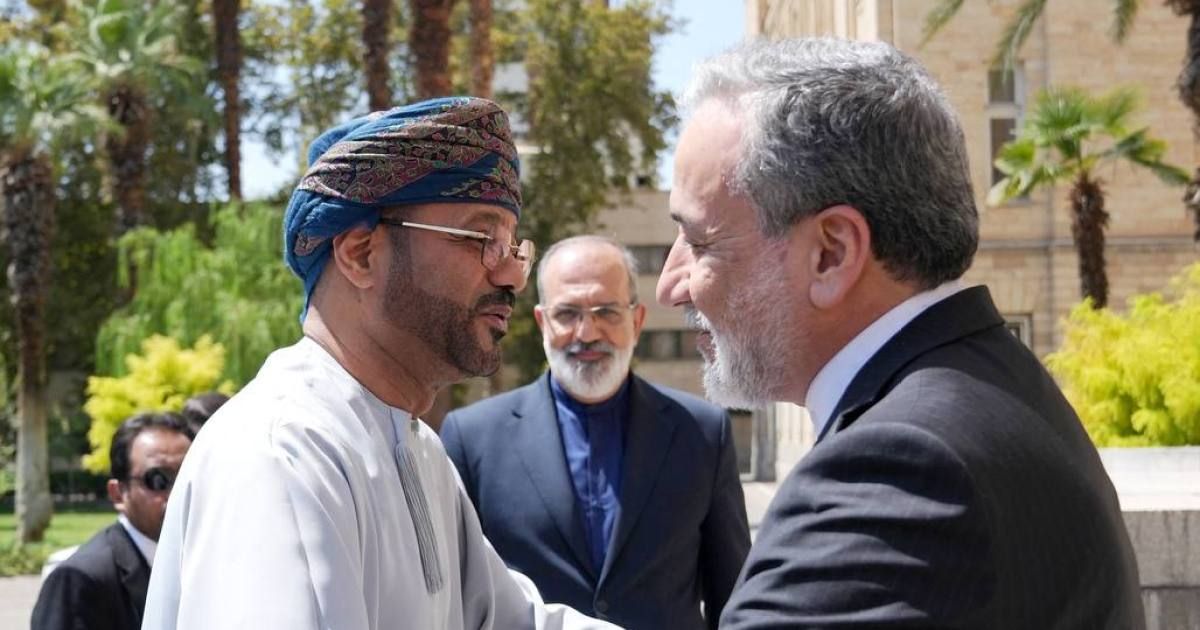
Kazem Gharibabadi says Iran and Oman had agreed the route’s entry would run through Iranian territorial waters, with part of the exit also passing through them. Save Share A top Iranian official says Iran and Oman have agreed on a new temporary route for shipping in the Strait of Hormuz, but insisted that the waterway will not reopen until the United States fulfils its commitments under an interim peace deal signed in June. The remarks by Kazem Gharibabadi, Iran’s deputy foreign minister for legal and international affairs, came on Tuesday, after Iran and Oman’s top diplomats held talks in Tehran to finalise the details of a phased framework for managing the strait. Iran and Oman, both coastal nations on the strait, have been in on-and-off talks for weeks about controlling traffic through the strategic waterway, which handled one-fifth of global oil and liquefied natural gas shipments before the US-Israel war on Tehran began in February. Most shipping in the strait has been shut down since then. Gharibabadi, speaking on state television, said Iran and Oman had agreed the new route’s entry “would be through our territorial waters, and part of the exit route would also be through our territorial waters”. The transit corridor would be seven miles (11.3km) wide, he said. “The agreed-upon transit route with Oman is a temporary route,” he added. Earlier on Tuesday, Iran’s Foreign Minister Abbas Araghchi met with his Omani counterpart, Badr Albusaidi, in Tehran to discuss the temporary navigation corridor as well as a project to clear mines from the strait, according to a joint statement. Albusaidi said on X he hoped the countries would “soon announce” the corridor, adding that “future management of the strait and a permanent solution will follow in due course.” Technical talks are planned to develop a long-term arrangement, including mechanisms for information sharing and navigational and security services, according to the statement. The Strait of Hormuz became a flashpoint after Tehran responded to the US-Israel war by closing the waterway. It then announced a new shipping route through its territorial waters, bypassing the internationally recognised Traffic Separation Scheme adopted by the International Maritime Organization (IMO) in 1968. Tehran said that route had been mined. Then in June, when Iran and the US signed a Memorandum of Understanding (MoU) to end the war, Oman and the IMO announced a new transit corridor in the Strait of Hormuz – backed by the US – that hugged the Omani coast. Iran said the so-called southern route violated the MoU and launched attacks on ships using the corridor, resulting in the collapse of the interim deal. Diplomatic efforts towards a broader peace deal have since stalled, and passage through the strait remains dangerous. An oil tanker was disabled by an unidentified projectile on Tuesday near Oman’s Ash Shishah, close to the strait’s entrance, the United Kingdom’s maritime trade watchdog said. Gharibabadi, in his comments on Tuesday, said Iran would not consider the strait open despite the agreement with Oman. He also dismissed a claim by US President Donald Trump that all mines had been cleared from the strait’s international waters, saying it was “only aimed at calming the markets”. He warned that US mine-detection vessels would become “very good targets” if they entered the area. Gharibabadi insisted the US must fulfil its commitments under the MoU – including sanctions relief and the release of frozen Iranian assets – if it wants a return to the diplomatic track. He also urged countries to resist US pressure over sanctions on Iran. Trump had announced last week the “most crushing economic operation ever” against Iran, and threatened sanctions against any country that does business with it. “We are urging countries not to succumb to American pressure regarding the sanctions that Washington wants to impose on us,” Gharibabadi said, adding that Washington was “mistaken about its ability to enforce its sanctions against our neighbours”. He said an earlier US sanctions campaign under Trump had failed to achieve its goals and predicted new measures would meet the same fate. “The new American sanctions are doomed to failure, and we have our own methods to counter them,” he added.
Comments
You must be logged in to comment.