yahoo Press
'Day of reckoning': Moody's economist Mark Zandi warns that conditions for economic crisis are falling in place for US
Images
1 / 4
2 / 4

3 / 4

4 / 4
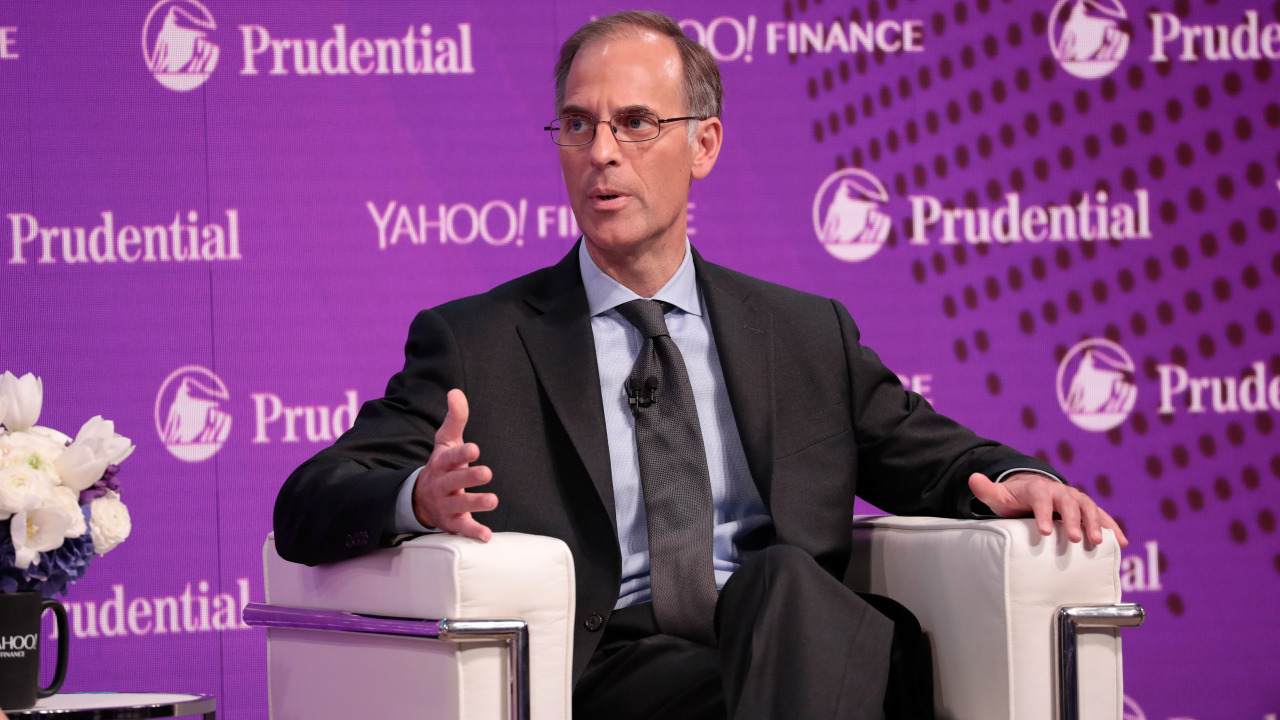
Moody's Analytics Chief Economist Mark Zandi is increasingly unnerved about the potential for the U.S. to sleepwalk its way into an economic crisis.

"I can't tell you when that day of reckoning might happen," Zandi told hosts Sonia Jahshan and Simon Baggs on a recent episode of the Sonia and Simon podcast. "All I can tell you is all the preconditions for that are coming into place and I don't think that's appreciated."

Jeff Bezos backs a platform that lets anyone invest in rental homes for as little as $100 — 6 ways to build wealth like a landlord without actually being one

Dave Ramsey warns nearly 50% of Americans are making 1 big Social Security mistake. Here's what it is and 3 simple steps to fix it ASAP

The tax breaks in Trump's 'big beautiful bill' expire after 2028. Here are 4 moves to make before the window closes

Zandi said he thought it was unavoidable that the U.S. could address its deteriorating finances without an external shock to force it. Over the past month, a sell-off in bond markets has pushed yields on the critical 30-year treasury bond sharply upwards, pushing the Treasury Department to buy back more of its bonds, starting early September, in an effort to artificially suppress interest rates.

"I think it's almost inevitable that we're going to see an event like this because I don't think the American political system and people can make the changes that are necessary to address our long-term fiscal problems without being pushed by something like a crisis generated by higher interest rates," Zandi said on the podcast.

Zandi argued that he has never seen unnerving circumstances converge like this all at once. "Never in the 35 years has there ever been a time when all of the measures are screaming, you know, we got a problem," he said.

The Moody's economist first pointed to America's debt-to-GDP ratio, which crossed the 100% threshold at the end of April. That gauge is typically used to demonstrate the amount of the debt held by the U.S. government against the size of the U.S. economy. It also provides insight into the federal government's ability to repay it over time. The U.S. hasn't reached triple-digit territory in debt-to-GDP ratio since the aftermath of World War II, when it once stood at 106%.

"If you look at our deficits, what we're taking in right now and spending out, it's massive," Zandi said, referring to the government's $2 trillion annual budget deficit. That sum becomes harder to pay down if interest rates climb, which is the current situation in part due to investors dumping their treasury bonds to fortify their financial portfolios against risks from the Iran War and the U.S.'s growing debt.

Read More: Vanguard reveals what's coming for U.S. stocks — and it could be bad news for this group of investors

The cumulative national debt barreled past $40 trillion for the first time last week and there's little sign it will stop snowballing anytime soon.

"We're issuing a lot of debt. The fiscal situation is eroding," Zandi said. "You mix that in with the increasing skepticism of global investors and investing in the United States because of what policies have been put in place over the last couple of years, and I think that's the recipe for much higher interest rates."

The yield on 30-year treasury bonds stood at 5.17% on August 25, near multi-year highs. It topped out at 5.3% earlier this month, the highest level since 2007.

Yields dictate what an investor is expected to receive in interest for holding the bond. They influence consumer borrowing costs for mortgages and auto loans, in addition to the federal government's interest payments on the U.S. national debt.

One prominent billionaire investor recently came out swinging against Treasury Secretary Scott Bessent's gambit to ramp up the administration's bond-buying spree: hedge fund investor Stanley Druckenmiller. He mentored Bessent when the pair worked together at an investment fund that George Soros led in the 1990s.

Druckenmiller cast the bond-buying spree as outright market manipulation that the federal government should steer clear from.

"Governments defending prices against fundamentals always lose. The only variable is how much they spend before conceding," Druckenmiller wrote in an op-ed for the Wall Street Journal. "The U.S. shouldn't put itself on the wrong side of that trade, not with the most important price in the world, and not when that price is trying to say the one thing Washington most needs to hear: Let the bond market speak."

Millionaires under 43 hold only 25% of their wealth in stocks. Here's where their money is actually going

Here's the average income of Americans by age in 2026. Are you keeping up or falling behind?

Robert Kiyosaki says China is 'dumping' the US as America piles on debt. Fortify your riches with 4 key assets

This fund has historically paid 8% or higher for 25 months, with just a $100 minimum to start — 4 ways to grow your cash without the stock market

Join 250,000+ readers and get Moneywise's best stories and exclusive interviews first — clear insights curated and delivered weekly. Subscribe now.

This article originally appeared on Moneywise.com under the title: 'Day of reckoning': Moody's economist Mark Zandi warns that conditions for economic crisis are falling in place for US

This article provides information only and should not be construed as advice. It is provided without warranty of any kind.
Comments
You must be logged in to comment.