huffpost Press
Trump's Trade War With Canada Could Spell Disaster For Senate Republican Candidates
Images
1 / 4
2 / 4
3 / 4

4 / 4
WASHINGTON — President Donald Trump’s rapidly escalating trade war with Canada could be a political disaster for Republican Senate candidates in a quartet of states bordering the country, a region particularly vulnerable to trade disruptions with the neighboring nation and one where undecided voters are more likely to blame the GOP for the economic pain.

The U.S. slapped a 50% levy on $20 billion worth of Canadian imports over the weekend as trade talks fell apart, and Canada announced Tuesday it would respond with tariffs on $20 billion worth of American products in a dollar-for-dollar retaliation. Tariffs are taxes paid by companies that import goods, with the companies often increasing consumer prices to make up for the money taken by the government.

“Canada has been ripping off the United States for decades ― and President Donald J. Trump is done letting them get away with it,” the White House claimed in a Tuesday press release that accused Canada of tanking trade talks.

“Last week, the U.S. offered Canada the most preferential market access of any country on Earth, with deep cuts on steel, aluminum, autos, lumber, and more,” the White House said. “Instead of partnership, Canada chose unreasonable demands, walk-backs, and flat-out rejection.”

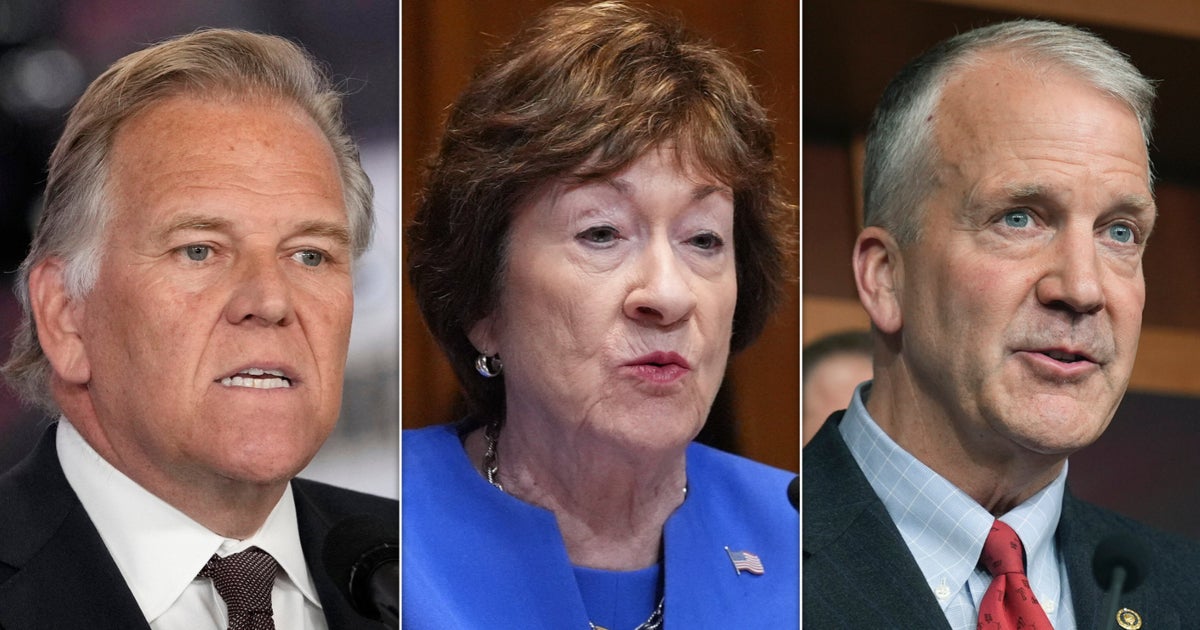
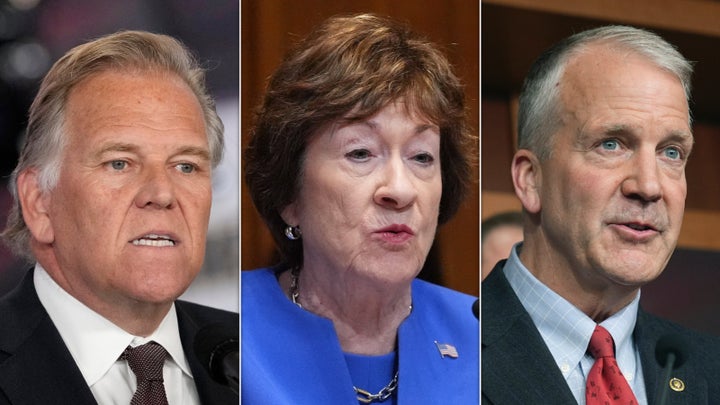
The president’s aggressive stance is only making life harder for four Senate Republican candidates who are in competitive races in states that border Canada, a top trading partner to each of their states: Sen. Susan Collins of Maine, Sen. Dan Sullivan of Alaska, Sen. Jon Husted of Ohio and former Rep. Mike Rogers of Michigan.

All four of these races are rated a “toss up” by the nonpartisan Cook Political Report, and their outcomes will likely decide which party controls the Senate after November. And in all four of these states, trade policy experts said, Canadian products and markets make a huge difference between economic prosperity and poverty.

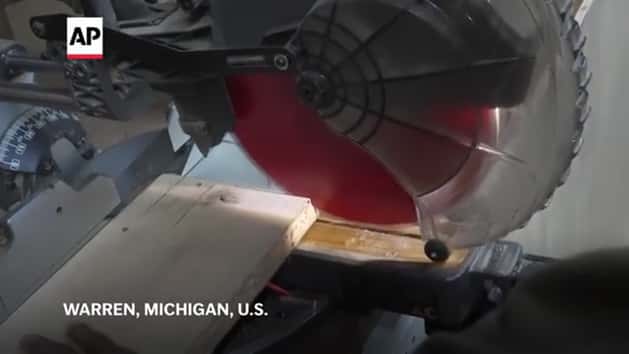
Consider Trump’s Monday threat of another 50% tariff on Canadian automobiles, car parts and steel. This would be devastating for Michigan, which brings in as much as $40 billion annually in cross-border auto trade, and for Ohio, which brings in $14 billion annually.

“There are strategic ways to use tariffs to crack down on unfair trade practices,” Liz Pancotti, vice president of policy and advocacy at Groundwork Collaborative, a liberal think tank, told HuffPost. “But going back and forth with Canada, which is a vital partner to our auto supply chain, is really not the way to do that.”

In Alaska and Maine, natural resources and fisheries are crucial to the bottom lines of businesses and farms, to the tune of $300 million annually in agricultural exports to Canada from Maine and $100 million annually in fish exports to Canada from Alaska.

“With tariffs on plywood, threats of even higher tariffs on autos, steel, and aluminum, and Canadian retaliatory tariffs on like items, it’s a prime recipe for declining border state GDPs, job loss, and domestic political discontent,” Ross Burkhart, a political scientist at Boise State who specializes in trade policy, told HuffPost. “Economic decline is historically toxic for the electoral fortunes of the incumbent party in Washington.”

David Axelrod, a national Democratic political consultant and former chief strategist to President Barack Obama, called Trump’s trade fight with Canada a “nightmare” for Senate Majority Leader John Thune (R-S.D.) as he tries to cling to his slim 53-47 Senate majority.

“Four battleground states — Maine, Michigan, Ohio, and Alaska — could face disproportionate economic pain as a result of @POTUS’s imposition of 50% tariffs on some Canadian goods & Canada’s pending retaliation,” he wrote Monday on social media.

Among the Senate Republicans running in those states, only Collins was willing to outright say Trump’s proposed tariffs were a bad idea. Sullivan and Husted did not respond to requests for comment, and Rogers’ campaign pointed to July comments he made in support of Trump’s efforts to stop “Chinese cars” from pouring across the northern border.

“The on-again/off-again trade talks between the U.S. and Canada lead to higher costs, risk, and uncertainty for Maine businesses,” Collins wrote Saturday on social media. “If the Administration proceeds with these tariffs, they will increase costs for Maine families, as most businesses will have no choice but to pass on the tariffs to their customers through higher prices.”

Collins noted that Maine imports about $2 billion in non-petroleum products from Canada every year, and ever since Trump announced his first round of tariffs, she’s heard from businesses and farmers worried about the costs and likely retaliatory tariffs by Canada.

“The Administration must consider the negative impact tariffs would have on Maine businesses, communities, and families and work to reach a fair agreement with our Canadian neighbors,” she wrote.

The Senate Democratic nominees in these states have plenty to say. Most are directly tying their Republican opponents to the president’s trade policy.

“All across Ohio, I hear from small business owners, farmers, and hardworking families who are getting crushed by reckless tariffs that Jon Husted supports,” Ohio Senate Democratic nominee Sherrod Brown told HuffPost. “I’ve called for hard-working Ohioans to be refunded for the burden they’ve taken on due to the tariffs, while Husted has called for more money to go to corporations. It’s clear Husted will put his billionaire and special interest friends before hardworking families every time. Ohioans deserve better.”

Abdul El-Sayed, the Democratic Senate nominee in Michigan, pointed out over the weekend that consumers typically bear the cost of tariffs, suggesting during a Sunday appearance on MS NOW that the $3,200 studies indicate Trump’s tariffs have already cost the average Michigander is “about to go way up.”

A spokesperson for Maine Senate Democratic nominee Troy Jackson said Collins has long supported the president’s policies and voted against efforts to rein in his tariffs in April 2025. Alaska Senate Democratic nominee Mary Peltola’s campaign highlighted six times that Sullivan voted in 2025 in support of the Trump administration’s tariffs.

Canada will impose its $20 billion in retaliatory tariffs on Sept. 8. But even taking that out of the equation, given the shrinking Midwestern manufacturing sector, the U.S. economy could already be on track for a negative Q3 economic growth number, warned Burkhart. And that would leave Republican candidates with a terrible economic status to defend a month out from the November elections.

Douglas Irwin, an economics professor at Dartmouth, said the problem for Republicans isn’t limited to states along the Canadian border. He noted that economies in agricultural states in the Midwest rely heavily on exports to Canada, and on fertilizer imports like potash.

“At a time when the public is sensitive to affordability concerns and feels insecurity about their jobs, disrupting trade with a close and popular ally creates challenges for the GOP in these and other states,” Irwin told HuffPost.

Trump’s combative approach to trade policy may have made more sense with regard to China, a country long described by politicians in both parties as a global adversary. But “nobody sees the point” with Canada, said Pancotti.

“Nobody hates Canada,” she said. “It’s kind of the most likable country out there.”

And while many Democratic candidates have supported tariffs or other restrictions on trade in the past, it will be somewhat obvious who voters should point the finger at in November.

“The Canadian government appears ready to endure the pain of tariffs over the long term, past the U.S. midterm elections,” Burkhart said.

“The responsible party is clear: The Republican Party under President Trump’s direction has elected to pursue protectionism, and economic decline from high tariff walls will likely leave many normally undecided voters blaming Republican candidates for the economic state of affairs.”

By entering your email and clicking Sign Up, you're agreeing to let us send you customized marketing messages about us and our advertising partners. You are also agreeing to our Terms of Service and Privacy Policy.
Comments
You must be logged in to comment.