yahoo Press
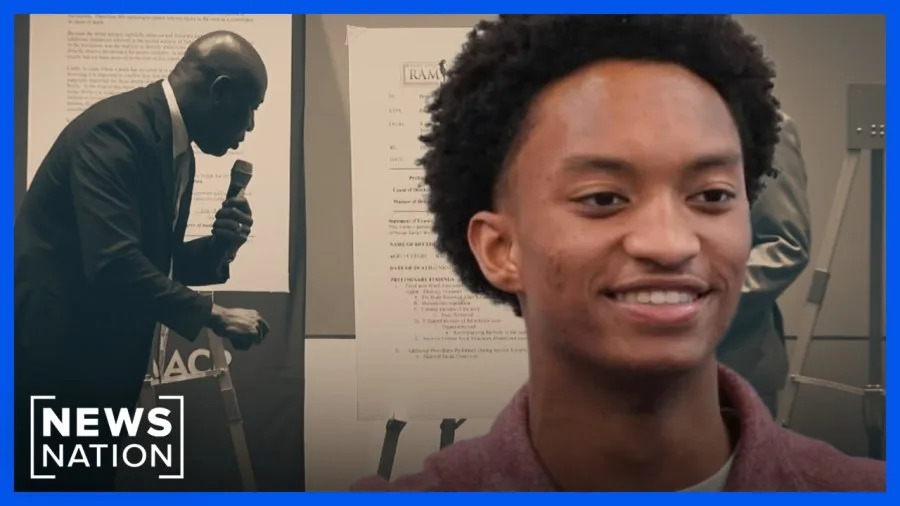
Why has Nolan Wells’ phone not been turned over?
Images
1 / 6
2 / 6

3 / 6

4 / 6

5 / 6

6 / 6
(NewsNation) — More than a month after Nolan Wells' death, investigators still have not looked into the teen's cell phone, which his family has reportedly not yet turned over to police.

Wells' parents have hired civil rights attorney Ben Crump to do a review of the investigation, and they want there to be a joint investigation of the phone involving the state, the FBI and their independent experts.

The cell phone could hold critical information about where Wells was before he died, what kind of messages he was sending and whether any content was deleted.

 Mother and son charged after college soccer player's body found on campus

Wells' mother has said that her son's friends had custody of the phone and that she was able to get it the night she reported him missing. She has said in interviews that there was no Snapchat history for the day, which she found suspicious.

Investigators reportedly demanded that the family turn over the phone, but Crump said they're seeking a joint examination to ensure everything is done properly, according to local reporting.

Digital forensic expert Jake Green told NewsNation's Brian Entin that a forensic examination of the device could yield important information, but time is of the essence.

"There are databases in that iPhone that can keep track of the last 30 days of usage. Now, given that we're beyond 30 days, it's all going to come down to have these devices been properly preserved by law enforcement or by anyone involved in a potential litigation or lawsuit," Green said.

Preserving the phone would include powering it off and giving it to a forensic expert who could ensure the data wasn't deleted, Green explained.

"The more time that goes on, the less likely these items can be recovered," he said.

The family has demanded data from Meta, TikTok, Snap, WhatsApp and Life36, but how much can be retrieved also depends on when Wells' phone was last synced to the cloud, Green said.

 Judge weighs unheard evidence as Karmelo Anthony seeks retrial

"So if Nolan's phone continued to have a cellular signal or connected to somebody's Wi-Fi and that data did sync up to the cloud, we start running into a data destruction period," he said.

Another major element of the case concerns the autopsy results. The official state autopsy results are under seal until a grand jury investigation is completed, and a private autopsy arranged by the family came back inconclusive.

Judge Tarika Nunez-Navarro noted that grand jury procedures are typically kept secret.

"Grand juries are extremely secretive, and that's to protect those accused of crimes, witnesses, anyone that the grand jury decides to bring in," she said. "Typically, when the grand jury goes through their investigation and even when they come out, they are protected. It's nothing like once the case is charged."

Unlike trial juries, grand juries have investigative power, Nunez-Navarro noted.

"They have subpoena power. They have investigative power. They will take a look at the case, and they will ask, what more do we need to know? How do we need to prove this death? They'll take a look at the autopsy.  They will interview all the witnesses. They will interview law enforcement, and they will essentially be citizens investigating the case," she said. "That is to protect; that is to be a barrier between law enforcement and the accused."

 Ex-Kentucky student Laken Snelling changes plea to guilty in newborn's death

While secretive, she stressed that the grand jury procedure is not unfair.

"These grand jury indictments, it's tried. It's tested." Nunez-Narro said. "It really is fair, accountability in our system. And I think we just have to be patient."

Copyright 2026 Nexstar Media, Inc. All rights reserved. This material may not be published, broadcast, rewritten, or redistributed.For the latest news, weather, sports, and streaming video, head to NewsNation.
Comments
You must be logged in to comment.