yahoo Press
James Webb Space Telescope finds 'hidden stars' making the universe's 1st galaxies much bigger than we knew
Images
1 / 10
2 / 10

3 / 10

4 / 10
5 / 10
6 / 10
7 / 10
8 / 10

9 / 10

10 / 10
When you buy through links on our articles, Future and its syndication partners may earn a commission.

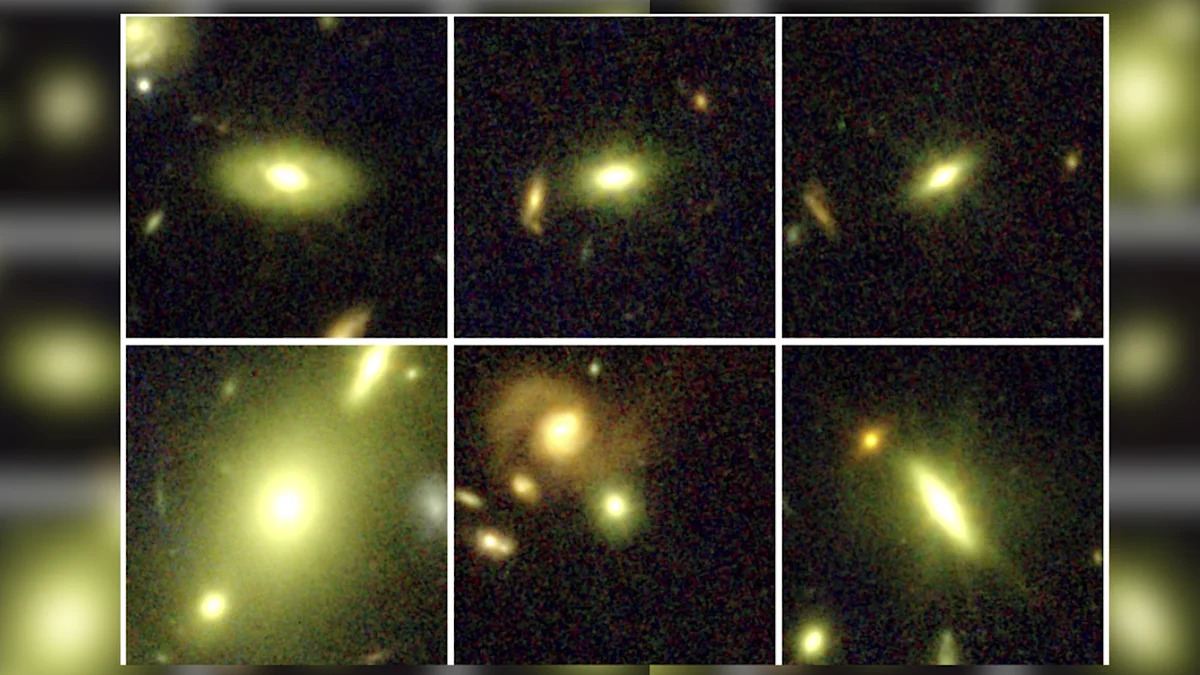
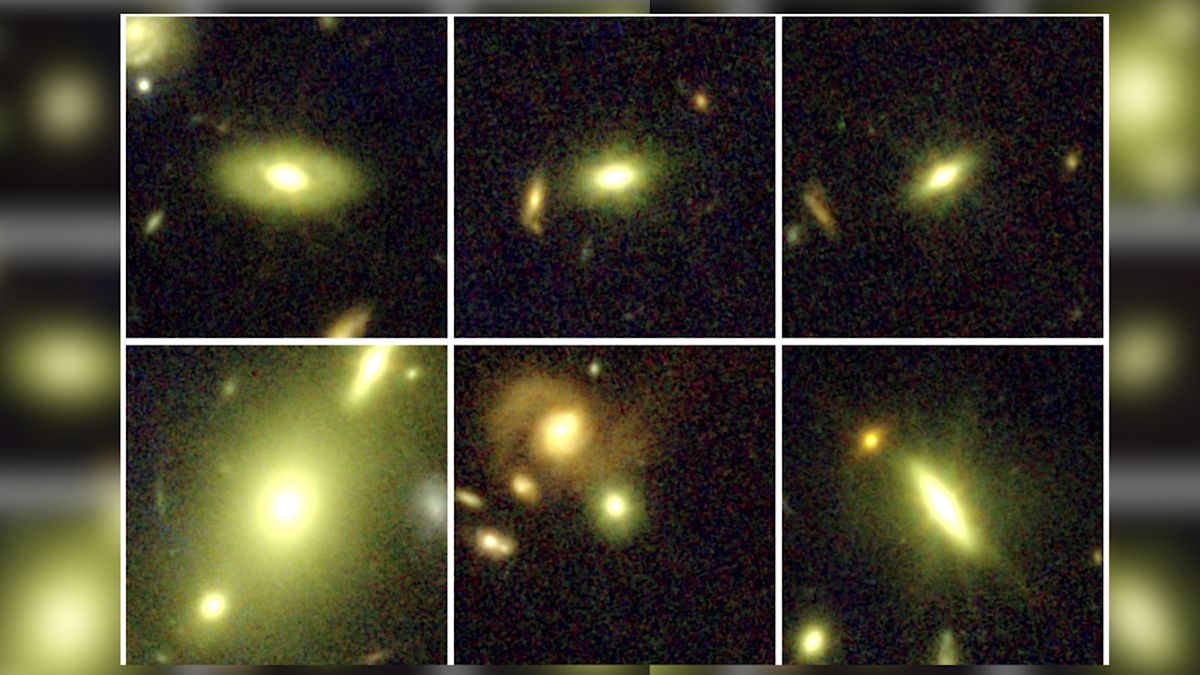
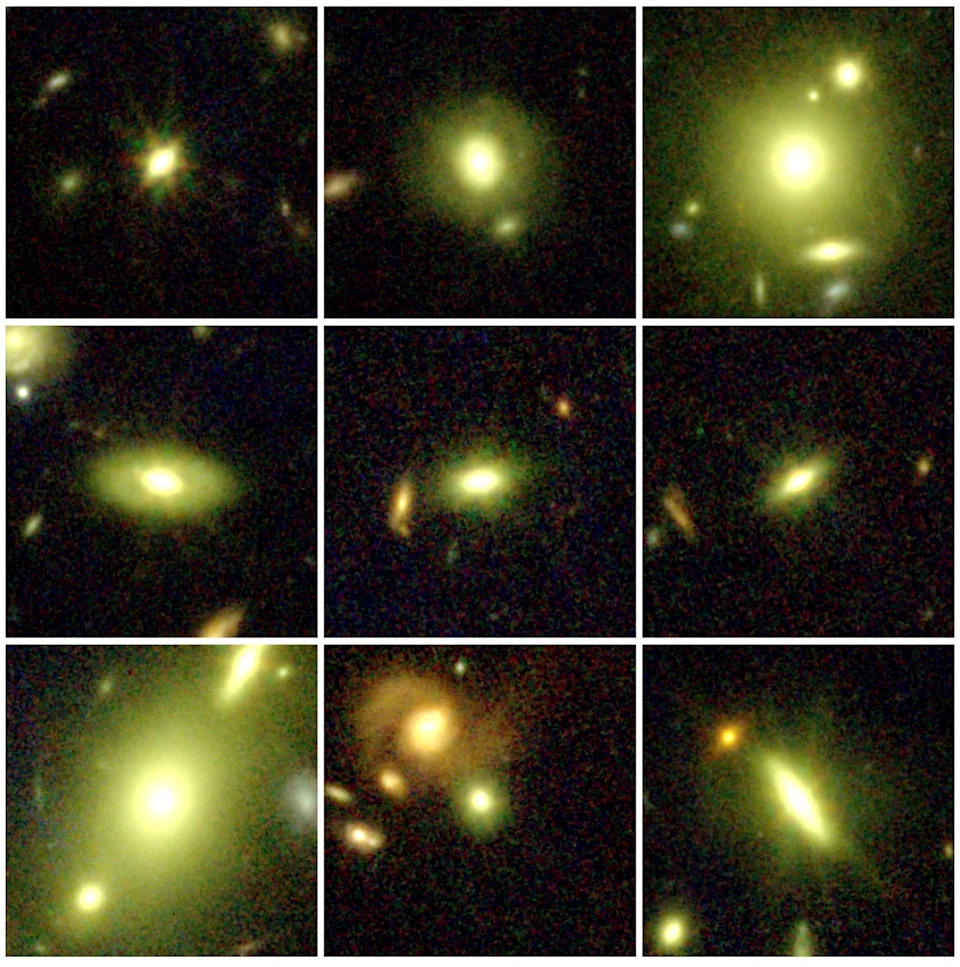
Nine galaxies captured by the James Webb Space Telescope. Their spectrum reveals that there are many more relatively small stars in these galaxies. | Credit: Cheng et al. 2026

Imagine looking at a vast city on Earth from a great distance, knowing nothing about that city; you may assume that its only buildings are the largest, most visible skyscrapers. But, get closer or look with a far more powerful tool, and you would begin to discover smaller buildings between mountainous skyscrapers.

Now, the James Webb Space Telescope has discovered that this looks like that is a fitting analogy for early galaxies.

Astronomers are finding that in between the brightest stars, the 'tallest skyscrapers' in the above analogy, there are much fainter stars analogous to smaller buildings. That means early galaxies may actually have a lot more mass packed into them than we believed.

The team behind this research reached this conclusion by using the James Webb Space Telescope (JWST) to study nine early galaxies that have passed through their period of intense star formation. They combined this data with observations from the Very Large Telescope (VLT) here on Earth to measure the population of small and faint stars in these galaxies for the first time. What they found was that the proportion of small stars in these galaxies is much greater than is found in modern galaxies like the Milky Way. This comes as something of a surprise to scientists who have assumed these populations would be similar.

"This means that the galaxy as a whole is much more massive than previous estimates suggested," team member Chloe Cheng of Leiden University, Netherlands, said in a statement.

Astronomers study galaxies and calculate their stellar population rates using the total light, or spectrum, coming from these cosmic metropolises. The problem is, the more massive a star is, the brighter it is. Thus, the overall spectrum of a galaxy is dominated by the most massive stars, while smaller stars are drowned out.

The sensitivity of the JWST has allowed astronomers to finally give these smaller stars a chance to shine and stand out, like spotting an incredible piece of architecture in a vast metropolis of glass and steel."Until recently, this type of measurement was simply not possible," team member Martje Slob of Leiden University said. "We needed not only a telescope that collects sufficient light, but also spectra of exceptional quality and new analysis techniques to reliably distinguish the subtle features of small stars."

Nine galaxies studied by the James Webb Space Telescope. Their spectrum reveals that there are many more relatively small stars in these galaxies | Credit: Cheng et al/ Nature Astronomy 2026

The team's discovery has implications for our understanding of young galaxies in the early universe. This is because scientists had always assumed the stars of different masses were born in the same proportion across cosmic history. Now that seemingly isn't the case.That is especially true if more early galaxies are like one particularly striking example examined in this study. This galaxy, which formed less than 1.5 billion years after the Big Bang, contains up to four times the mass previously estimated thanks to its huge population of smaller stars.Thus, our models of galaxy formation may need some serious revision in the near future.

"This result shows that much more mass than previously thought is hidden in small stars," team leader Mariska Kriek of Leiden University said. "That has implications for all kinds of fields within astronomy. Because many planets orbit small stars, it could even mean that more planets formed in the early universe than we previously assumed."

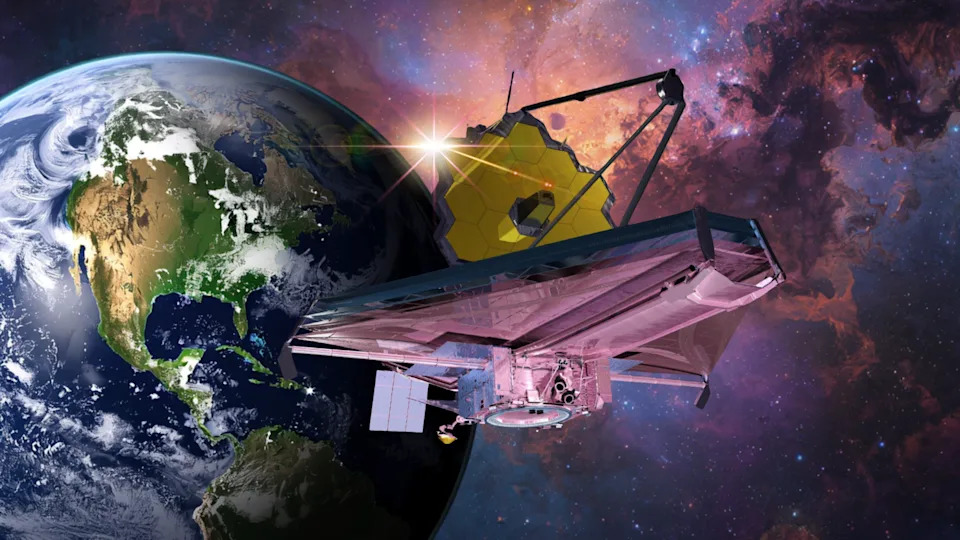
An illustration of the JWST which continues to break new ground in astronomy. | Credit: Robert Lea (created with Canva)

The team now intends to apply this method to more of the universe's earliest galaxies, hoping to stretch their investigation back to the universe's first stars.The team's research was published on Wednesday (August 18) in the journal Nature Astronomy.
Comments
You must be logged in to comment.