aljazeera Press
Infantino has ‘no way out’ as regional bodies consider no-confidence vote
Images
1 / 6
2 / 6
3 / 6
4 / 6

5 / 6

6 / 6
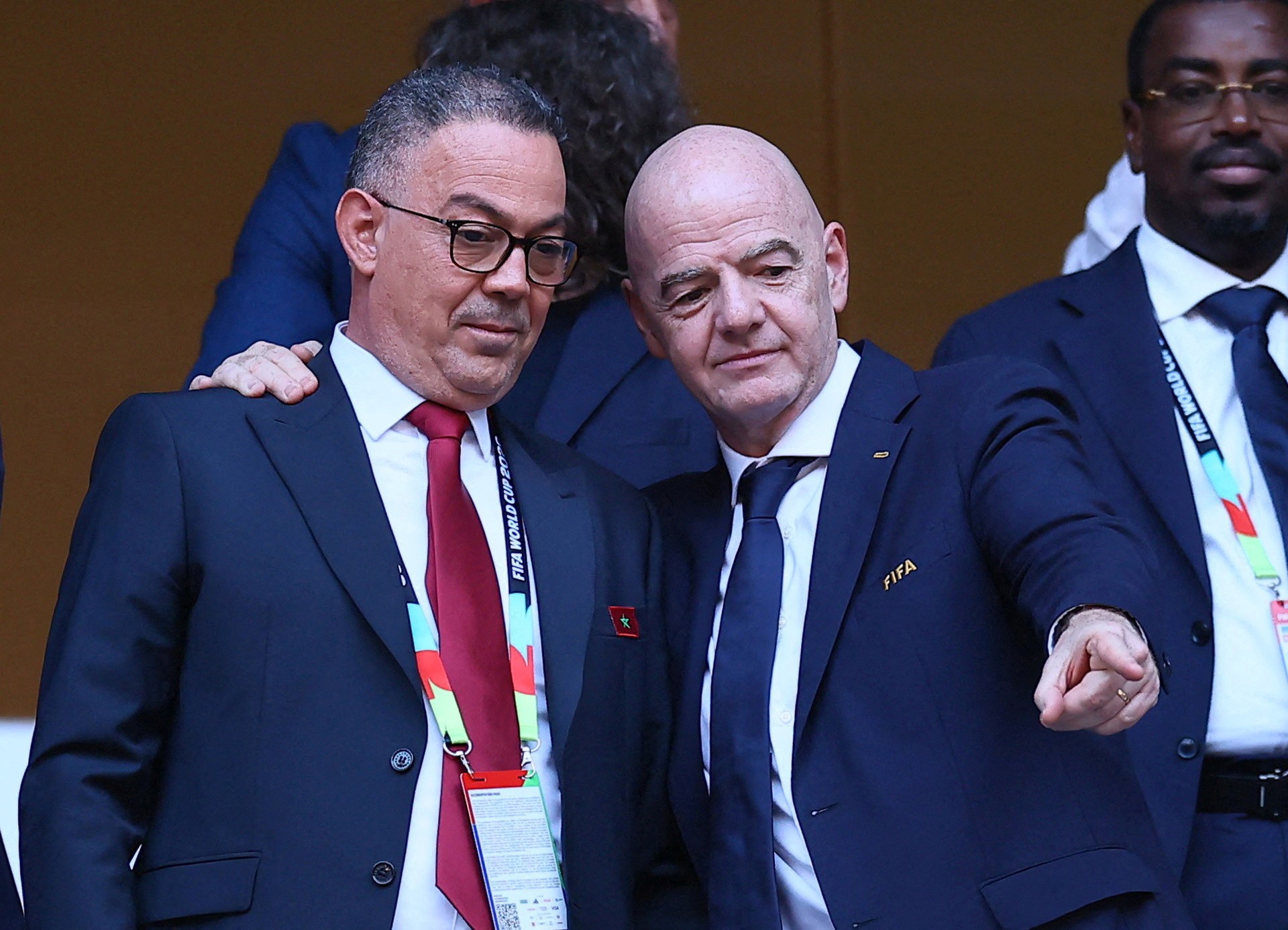
UEFA, AFC and CONCACAF understood to be considering no-confidence vote against FIFA’s President Gianni Infantino.

Save

Share

World football’s regional powerhouses are discussing whether to move a vote of no confidence as they seek to oust FIFA President Gianni Infantino, according to senior figures familiar with the discussions.

UEFA, AFC and CONCACAF are understood to be considering the move, having previously spoken out against Infantino following his proposal to sell private investors a stake in FIFA events, including the World Cup.

“There is no way out,” one source said when speaking to the Reuters news agency on condition of anonymity because of the sensitivity of the discussions.

“Either he goes the peaceful way and decides not to stand in March or he goes the hard way,” the person said, referring to a possible vote of no confidence.

Under FIFA’s statutes, the FIFA Council can convene an Extraordinary Congress at any time, while the Council is required to call one if at least one-fifth of FIFA’s 211 member associations submit a written request specifying the items they want on the agenda.

An Extraordinary Congress must then be convened within three months, with each attending association holding one vote. FIFA’s statutes contain no specific provision governing a vote of no confidence in its president.

FIFA did not immediately respond to a request for comment when contacted by Al Jazeera.

UEFA has not commented directly on whether a no-confidence vote was under discussion, but has instead referred to its earlier statement that a review of FIFA’s leadership and governance should be “thorough and fundamental” and that “no option should be off the table”.

CONCACAF declined to comment directly, also referring to an earlier joint statement with UEFA and the AFC accusing FIFA’s leadership of a fundamental breach of trust. The AFC did not immediately respond to a request for comment by Al Jazeera.

Infantino has said he intends to seek re-election at the scheduled March 2027 FIFA Congress, and retains significant support among FIFA’s member associations, including from Africa’s confederation CAF.

FIFA has apologised to its member associations for mistakes in the handling of the proposal, and last week six Arab football associations, including Qatar and 2030 World Cup co-host Morocco, publicly backed Infantino. FIFA’s leadership reaffirmed its full support for Infantino after a crisis meeting in Morocco earlier this month.

A senior figure close to the matter told Reuters that while a no-confidence vote was favoured by the three confederations, there were fears an unsuccessful challenge would strengthen Infantino, demonstrate his continuing electoral support and bolster his position ahead of next year’s scheduled presidential election.

Infantino has come under intense pressure since the collapse of his proposal to sell a minority stake in a new FIFA commercial entity to private investors. That entity would have controlled the commercial rights to the World Cup, the game’s flagship event.

FIFA says its revenue for the 2023-2026 cycle is expected to exceed $15bn, with the bulk of that generated in this 2026 World Cup year.

Three of FIFA’s six continental confederations – UEFA, AFC and CONCACAF – opposed the proposal and have since sharply criticised Infantino’s handling of it, citing failures of transparency, consultation and governance.

The crisis deepened this week with the departure of FIFA Chief Operating Officer Kevin Lamour, who had criticised the investment proposal and said staff had been “deceived” over what he described as the project of one person. FIFA gave no reason for his departure.

FIFA Vice President Sandor Csanyi withdrew his support for Infantino this week, saying Lamour’s departure was the “final straw”.

Infantino’s opponents, however, face significant obstacles.

No challenger has publicly stepped forward ahead of the November 18 nomination deadline and Infantino retains backing from parts of FIFA’s membership.

CAF President Patrice Motsepe said last week that Infantino continued to have Africa’s support and that his future should be decided by FIFA’s members at the election.

Under the abandoned investment proposal, associations would have been able to access up to $20m in one-off capital for infrastructure, coaching, national teams, competitions, grassroots football and the women’s game.

Pressure also extends beyond those with a FIFA vote.

European Football Clubs (EFC), chaired by Paris Saint-Germain president Nasser Al-Khelaifi and representing more than 800 clubs, is aligned with UEFA and others seeking change at FIFA, according to a source familiar with the discussions.

EFC has warned FIFA that its members could refuse to take part in future men’s and women’s Club World Cups unless its concerns over governance and the clubs’ relationship with FIFA are addressed.

Clubs have no FIFA vote but wield considerable sporting and commercial leverage.

Michael Payne, the former International Olympic Committee marketing chief, said even an electoral victory for Infantino would not necessarily resolve the divisions.

“It’s all very well to sneak through with a 51 percent majority with many of the tiny nations but all of the football superpowers against you. How do you run the organisation?” Payne told Reuters.

No FIFA sponsor has publicly criticised Infantino over the crisis.

“Sponsors are raising their eyebrows, saying, ‘How can you manage to have such a successful World Cup and then shoot yourself in the foot afterwards?’” Payne said.
Comments
You must be logged in to comment.