yahoo Press
Big Pharma is Making Chinese Biotechs Prosper
Images
1 / 4
2 / 4

3 / 4

4 / 4
The above button links to Coinbase. Yahoo Finance is not a broker-dealer or investment adviser and does not offer securities or cryptocurrencies for sale or facilitate trading. Coinbase pays us for certain activity generated through this link. Prices displayed are informational.

Our analysts just identified a stock with the potential to be the next Nvidia. Tell us how you invest and we'll show you why it's our #1 pick. Tap here.

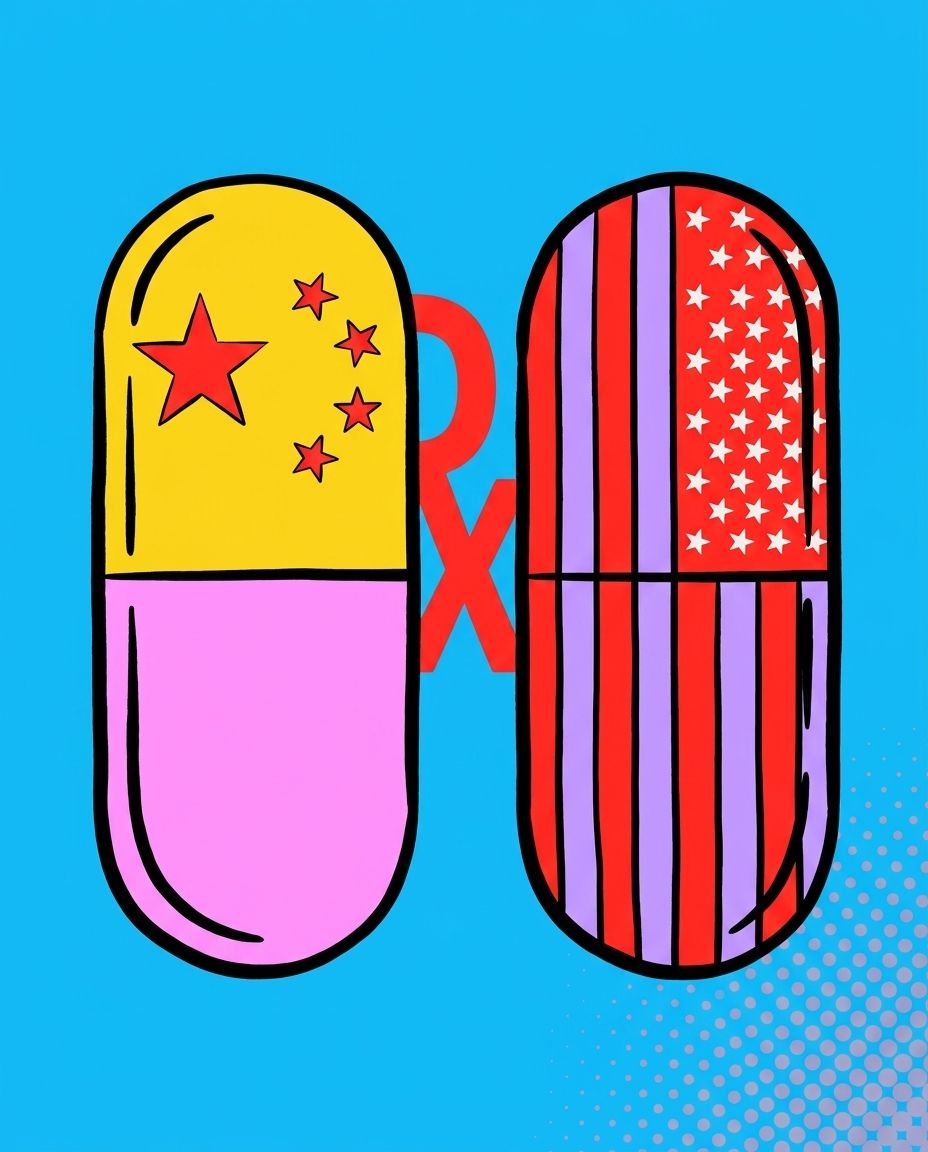
Big pharma either hasn't gotten the 'America-good-China-bad' memo, or it's choosing to ignore it and continue making deals with the so-called devil.

Drugmakers have accelerated licensing deals with Chinese biotechs even as Washington escalates efforts to restrict the practice. At this point, it feels like a snub.

Bipartisan lawmakers are pushing to add biotech to the Treasury's outbound investment screening list. But dealmakers are going to make deals and there's no political power that speaks louder than capitalism.

Don't take my word, the numbers tell the story: There were $43 billion in licensing agreements with Chinese companies in the first five months of this year. By June, Chinese biotechs struck 81 out-licensing deals worth $110 billion, or about 80% of all of the deals made last year. Chinese firms landed roughly 6 of every 26 major pharma deals over the past 16 months, worth $53 billion. And most of these are big ticket deals: AbbVie's $5.6 billion deal with RemeGen on tumor drugs, AstraZeneca working with CSPC on diabetes and obesity drugs and Pfizer's cancer drug deal with 3SBio where Pfizer paid $1.25 billion upfront for non-small cell lung cancer drug.

Deal structures are shifting too. The companies are licensing entire drug-discovery platforms rather than single molecules, and these deals are roughly three times larger than a typical single-asset license. Upfront payments to Chinese partners have more than tripled, from about $52 million on average in 2022 to $172 million in early 2026.

This should make sense of why the price of lab monkeys has doubled in a year. Chinese biotechs are striking deals at a pace monkeys cannot keep up. China's biomedical research sector now needs an estimated 30,000 monkeys annually, but only about 15,000 are available.

One stock. Nvidia-level potential. 30M+ investors trust Moby to find it first. Get the pick. Tap here.

Meanwhile, Washington is sticking to its slogan "America First Investment Policy," naming China a biotech rival insisting that biotechs be subjected to a national-security screening regime.

The economics driving this are stark and largely explain why political pressure hasn't slowed dealmaking. A typical non-small-cell lung cancer trial costs about $296,000 per patient in the U.S. versus roughly $165,000 in China. But the approximately 44% saving is just the cherry on top, the real cake is the speed at which the Chinese run trials. China also outpaced the U.S. last year for total new drug launches for the first time on record.

And it's clear that pharma CEOs are considering the political rhetoric as a bump on the road, rather than a wall.

None of this momentum is without risks and both sides are acutely aware of that. U.S. buyers are deepening diligence on early-stage data and building in contractual off-ramps, and Chinese sellers are pushing for bigger upfront payments and courting buyers in Europe.

The single determining factor whether this momentum continues or slows down is whether Congress can pass COINS Act expansion before it becomes even harder to unwind.
Comments
You must be logged in to comment.