yahoo Press
Why Treasury Yields Are Surging—and What It Means for Your Money
Images
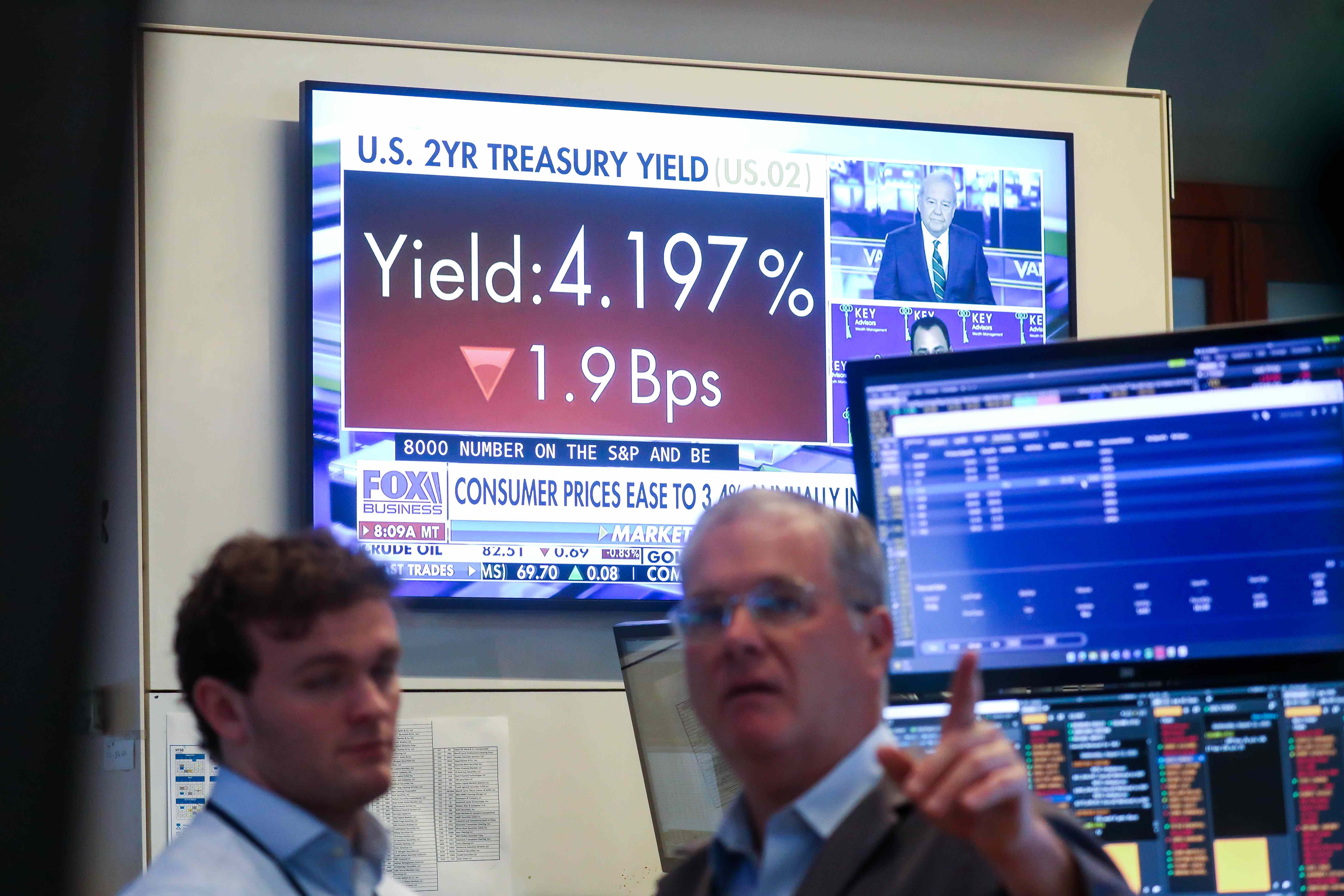
1 / 4
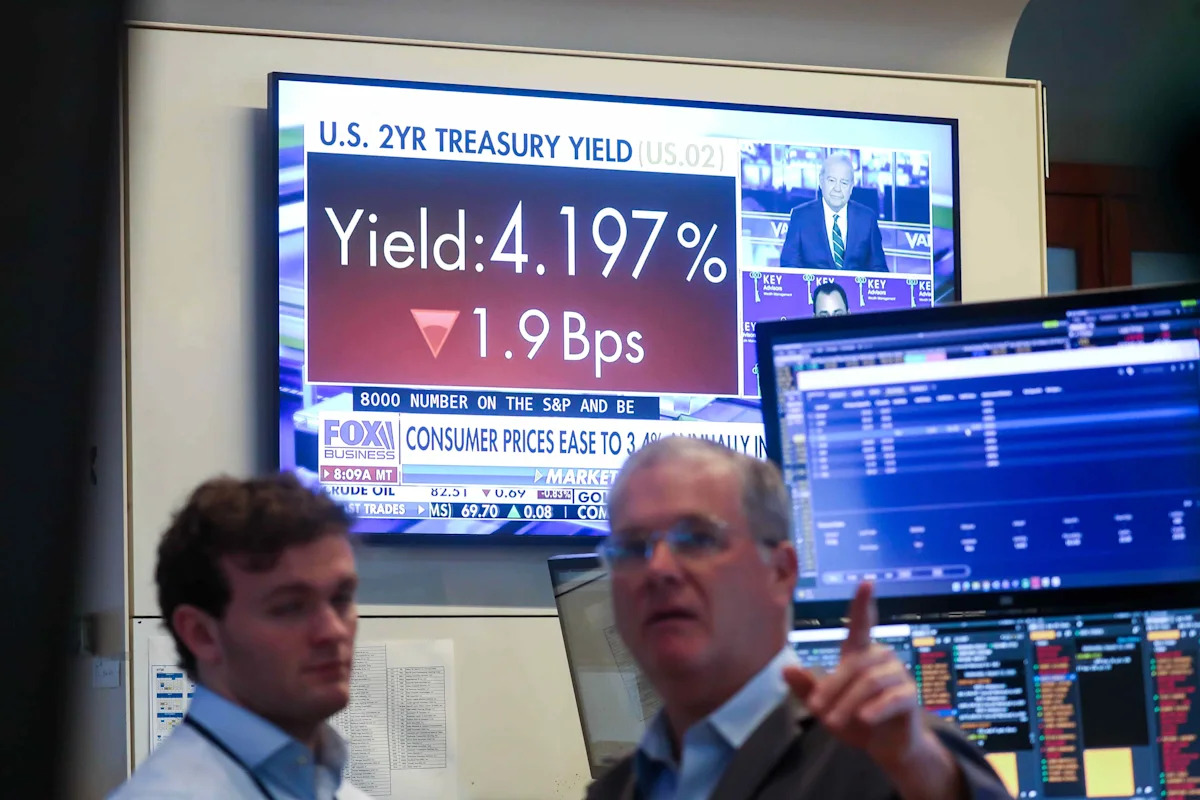
2 / 4

3 / 4

4 / 4
Some U.S. Treasury yields have surged to their highest levels since 2007, raising borrowing costs for homebuyers, businesses, and the government.

Rising bond yields could be driven by global debt concerns, inflation fears, and reduced Federal Reserve guidance on interest rate policies.

The bond market is raising caution flags again, sending up borrowing costs for homebuyers, businesses and the federal government alike—and potentially stalling the stock market's momentum.

The yield on the 30-year U.S. Treasury bond, which the government sells to investors to borrow over 30 years, shot up to 5.29% in mid-afternoon trading—its highest levels since 2007.

There is no single factor driving up bond yields in recent days, analysts and investors say.

The rise is global in nature: bond yields are also surging in Europe and Asia as governments grapple with rising debts. It reflects some worry over the Iran war, inflation and a Federal Reserve that's more vague about its interest rate policies. And it's partly due to indigestion, as the bond market struggles to keep up with a surge in corporate borrowing to build data centers.

"You put it all together, and that's why we are where we are," said Kevin Flanagan, head of investment and fixed income strategy at WisdomTree.

Persistently high bond yields can make mortgages and business loans more expensive while pressuring stock valuations. They can also give savers and income investors more attractive yields.

What it means depends on who's asking, plus how long rising yields last.

For those hoping to buy a home, moves in bond markets are raising mortgage rates, making homebuying more expensive. Higher yields offer a mixed picture for investors, who can suddenly buy bonds that'll pay them interest rates last seen 20 years ago.

Stocks fell on Tuesday, however, as higher bond yields make debt more expensive for companies and could weigh on profitability.

What's clear is that the explanation for the run-up in yields is far from simple.

"Investors may be keen to attribute one explanation to the recent rise in Treasury yields, but we believe the long-end has been subjected to death by a thousand cuts," wrote Gennadiy Goldberg, head of U.S. rates strategy at TD Securities.

One factor appears to be the strategy from the new Fed chair, Kevin Warsh, to reduce the guidance it has long given to markets on what the Fed may do next.

For years, the Fed has sought to limit surprises for markets by giving them a sense of what may cause them to raise or lower interest rates. Warsh has long argued that practice makes markets too reliant on the Fed and scaled it back when he took the helm in late May.

There are valid arguments for either approach, WisdomTree's Flanagan said. But at least for now, rising bond yields partly reflect a market that's left more in the dark.

That's less of a worry for shorter-term Treasury securities, such as bills that last up to a year or two-year Treasury notes. But investors are a bit more hesitant to take on the risk of a less predictable Fed over the next 10 or 30 years.

"The further you go out on the curve, the less uncertainty you want," Flanagan said.

Bond investors, hesitant to take on duration risk, are compensating for that by charging more for longer-term borrowing—whether those seeking financing are the U.S. government, blue-chip corporations or less-than-stellar companies.

The market is also adjusting to the sheer amount of borrowing tied to data centers and artificial intelligence infrastructure.

It's a shift that's occurred this year, as tech firms tap bond markets in multi-billion dollar deals rather than fund their capital expenditures with cash.

There are plenty of buyers out there. The more than $100 trillion bond market includes pension funds, hedge funds, insurance companies, foreign governments and your average retiree—all of whom earn interest when they buy bonds.

But even such a massive market has trouble digesting a boom in supply, analysts say.

The bonds from AI hyperscalers have "been well absorbed," wrote Meghan Swiber, a Bank of America analyst. But that appears to be coming at the expense of Treasury bonds, she wrote, and thus "crowding out demand" for U.S. government debt.

If that trend continues, analysts say, the U.S. government may have to pay a bit more interest to keep its bonds attractive to investors.

The U.S. government pays lower yields than corporations—even the most rock-solid ones—because it is seen as perhaps the safest borrower in the world.

The risks of a U.S. government default are so low that U.S. Treasury bonds are often referred to as "risk-free," even as federal debt keeps rising.

But the U.S. has to pay interest on its debts nonetheless, and markets are increasingly "zeroing in on the U.S. Treasury's surging net interest burden" as rates keep rising, wrote Shaun Osborne, chief currency strategist at Scotiabank.

Other governments are undoubtedly having a tougher time. Lingering questions over Japan's fiscal path meant the country's bonds "were hit especially hard" in this week's global bond sell-off, according to John Canavan, lead analyst at Oxford Economics. European government bonds have faced similar pressures.

That has ripple effects in U.S. markets, since pension funds or investors in Japan or France are now able to buy higher-paying bonds at home—all without having to swap their currencies. And it is yet another factor weighing on demand for U.S. government bonds.

"It's no longer as enticing just to buy Treasurys," WisdomTree's Flanagan said, with some investors deciding "there's a better break-even if I stay home."

But one of the biggest questions remains: where is the economy going?

Renewed flare-ups in the Iran war are driving up oil prices. The Brent crude benchmark, which had calmed earlier this summer, has now risen to over $90 per barrel but remains below its recent April peak of $120.

Inflation data has been relatively benign of late, but lingering inflation concerns are keeping yields elevated, according to Ian Lyngen, head of U.S. rates strategy at BMO Capital Markets. That's because investors still see the Fed raising rates this year, even if the case for hiking weakened after July's soft jobs report, he wrote.

Overall, however, the U.S. economy "has proven resilient despite the sharp rise in oil prices," Lyngen wrote, helping propel stock markets to new highs earlier this month. Tuesday's pullback in equities is a sign that investors may be growing more cautious over rising yields, bringing some pain for the economy, Lyngen wrote.

"Stocks are finally beginning to consider the potential fallout from sustainably high borrowing costs," he wrote.

Read the original article on Investopedia
Comments
You must be logged in to comment.