yahoo Press
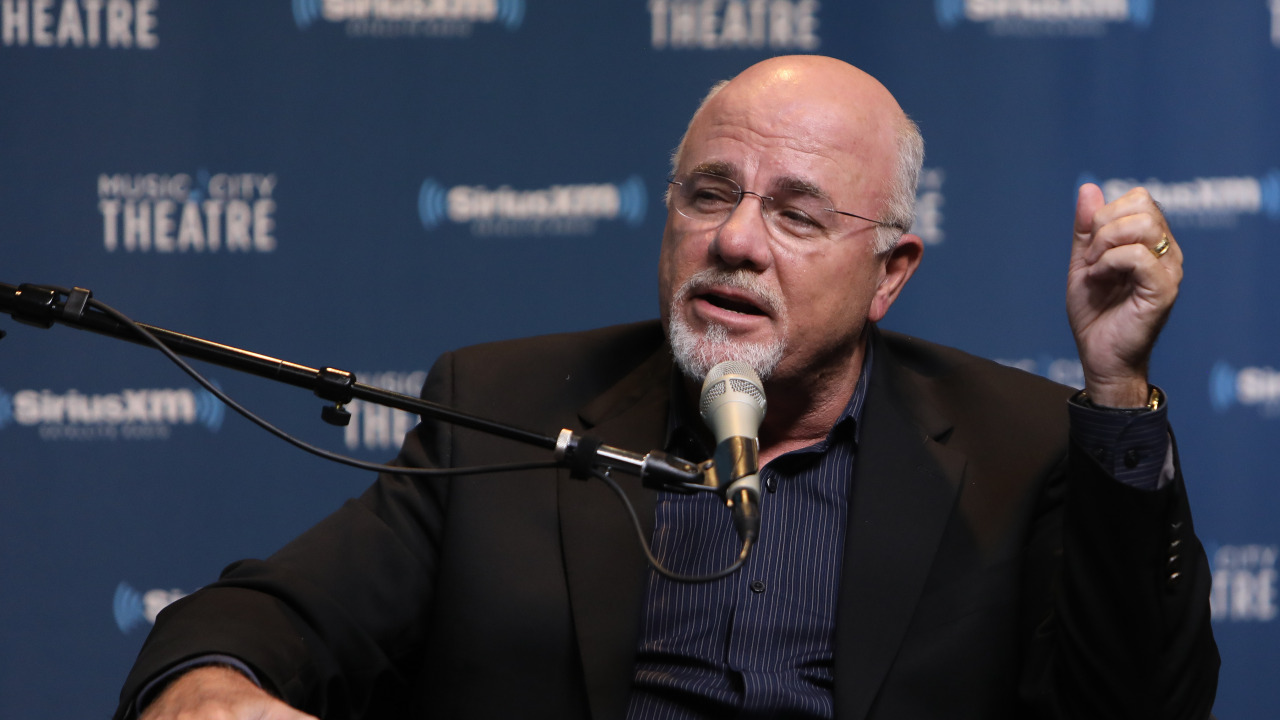
Dave Ramseys explains 3 serious retirement mistakes Americans make after 55. How many are you making?
Images
1 / 4

2 / 4

3 / 4

4 / 4
The above button links to Coinbase. Yahoo Finance is not a broker-dealer or investment adviser and does not offer securities or cryptocurrencies for sale or facilitate trading. Coinbase pays us for certain activity generated through this link. Prices displayed are informational.

Moneywise and Yahoo Finance LLC may earn commission or revenue through links in the content below.

By the time retirement is within sight, you may have spent decades building your savings. But a few financial decisions in those final working years can determine how far that money will actually take you.

That's because preparing to retire involves more than reaching a certain balance in your 401(k) or IRA. You also have to figure out when you can afford to leave the workforce, how your expenses could change once the paychecks stop and how you'll make your savings last through what could be decades of retirement.

Jeff Bezos backs a platform that lets anyone invest in rental homes for as little as $100 — 6 ways to build wealth like a landlord without actually being one

JPMorgan sees gold hitting $5,000/oz by Q4 — and savvy investors are protecting their wealth with a tax-advantaged Gold IRA. Get your free guide from Priority Gold

The tax breaks in Trump's 'big beautiful bill' expire after 2028. Here are 4 moves to make before the window closes

Personal finance guru Dave Ramsey says there are several mistakes he repeatedly sees people over age 55 make during this critical stretch. In an interview with Kiplinger (1), the author and podcaster laid out three major pitfalls to watch for as they approach retirement.

Here's what he says to avoid.

Ramsey has witnessed a steady rise in senior debt over the years, which is a genuine cause for concern.

Between 1992 and 2022, the average debt burden for households headed by people aged 65 to 74 quadrupled, according to an AARP report (2) citing the Fed's most recent Survey of Consumer Finances (SCF). This cohort now carries $45,000 in debt on average.

For households 75 and up, the debt burden has jumped sevenfold in the same period, from under $5,000 to $36,000.

"They hang onto debt. Especially mortgages and car payments. Then they assume they'll just 'manage it' in retirement," Ramsey told Kiplinger. "The fix is simple. Attack that debt with intensity now, before you step into your golden years."

Two common strategies for paying down debt are the avalanche and snowball methods.

With the avalanche method, you make minimum payments on all your debts while putting extra money toward the debt with the highest interest rate. Once that balance is gone, you move to the debt with the next-highest rate. Because you're attacking the most expensive debt first, this approach can reduce the amount of interest you pay.

The snowball method takes a different approach. You start with your smallest balance and work your way up, regardless of the interest rate. That can provide a psychological boost as debts disappear, although you could ultimately pay more in interest.

If neither approach feels manageable because you're juggling several high-interest debts, consolidation is another option to consider.

Consolidating multiple debts into a personal loan through Credible can simplify repayment by replacing several monthly bills with one predictable payment. Depending on the rate you qualify for, it could also reduce the amount of interest you're paying.

Through Credible's online marketplace, finding the right loan becomes much simpler. Credible lets you comparison-shop for the lowest interest rates with just a few clicks.

In less than three minutes, you'll see all the lenders willing to help pay off your credit cards or other debts with a single personal loan.

Read More: Millionaires under 43 hold only 25% of their wealth in stocks. Here's where their money is actually going

Despite the challenges, many Americans continue to hope for a chance to leave the workforce early. Roughly 18% of people surveyed by YouGov in 2024 (3) said they plan to retire at or before the age of 55.

However, leaving the workforce a decade or so early has real risks, as Ramsey highlights. First, without Medicare coverage, early retirees might need to find a way to pay for medical insurance, which pushes their budget higher. Second, a longer retirement increases the chances of outliving your money.

These challenges are solvable. A clear and robust financial plan could help you cover all your bases before you take the leap. You can also create a back-up plan for part-time or gig work to cover any unexpected gaps that arise during early retirement.

The takeaway, Ramsey told Kiplinger, is: "Don't retire until you're truly ready."

Being ready also means thinking about where the money for your near-term expenses will come from once your regular paycheck stops. Keeping some savings in cash can give you money to draw on for planned expenses or unexpected costs without having to sell investments.

A high-yield account like a Wealthfront Cash Account can be a great place to grow your uninvested cash, offering both competitive interest rates and easy access to your money when you need it.

A Wealthfront Cash Account currently offers a base APY of 3.30% through program banks, and new clients can get an extra 0.75% boost during their first three months on up to $150,000 for a total variable APY of 4.05%.

That's 10 times the national deposit savings rate, according to the FDIC's July report.

Additionally, Wealthfront is offering new clients who enable direct deposit ($1,000/mo minimum) to their Cash Account and open and fund a new investment account an additional 0.25% APY increase with no expiration date or balance limit, meaning your APY could be as high as 4.30%.

With no minimum balances or account fees, as well as 24/7 withdrawals and free domestic wire transfers, your funds remain accessible at all times. Plus, you get access to up to $8M FDIC Insurance eligibility through program banks.

Cash reserves are only one part of preparing for retirement. Your longer-term savings also need to support what could be decades without a paycheck, making the way your retirement portfolio is invested important as well.

Diversifying across different types of assets can help reduce the risk that too much of your retirement savings is tied to the performance of a single investment or asset class.

A gold IRA is one option for building up your retirement fund with an inflation-hedging asset.

Opening a gold IRA with the help of Goldco allows you to invest in gold and other precious metals in physical forms while also providing the significant tax advantages of an IRA.

With a minimum purchase of $10,000, Goldco offers free shipping and access to a library of retirement resources. Plus, the company will match up to 10% of qualified purchases in free silver.

If you're curious whether this is the right investment to diversify your portfolio, you can download your free gold and silver information guide today.

Ramsey isn't a fan of the Social Security system. In a previous interview on the Iced Coffee Hour (4) with Graham Stephan, he said the underlying funds were earning a "negative return" and the system was never designed to be anyone's retirement plan.

There are also long-term questions about the program's finances. According to the 2026 Social Security Trustees Report (5), the Old-Age and Survivors Insurance (OASI) Trust Fund, which pays retirement and survivor benefits, is projected to deplete its reserves in the fourth quarter of 2032. If Congress makes no changes before then, continuing income would be sufficient to pay 78% of scheduled benefits.

That doesn't mean Social Security is disappearing. But it reinforces the risk of building a retirement plan that depends too heavily on a monthly benefit check.

One way to supplement Social Security and retirement savings is to build additional sources of income. For investors interested in real estate, that doesn't necessarily require buying a rental home and becoming a landlord.

You can tap into this market by investing in shares of vacation homes or rental properties through Arrived.

Backed by world-class investors, including Jeff Bezos, Arrived allows you to invest in shares of vacation and rental properties, earning a passive income stream without the extra work that comes with being a landlord of your own rental property.

To get started, simply browse through their selection of vetted properties, each picked for their potential appreciation and income generation. Once you choose a property, you can start investing with as little as $100, potentially earning monthly dividends.

Once you're an investor with Arrived, you'll gain access to their newly launched secondary market, where investors can buy and sell shares of individual rental and vacation rental properties directly on the platform.

This allows you to buy into properties you may have missed at the initial offering or sell shares before a property reaches the end of its hold period.

With access to more than 400 properties in 60 cities, this new way to trade real estate opens up flexibility and opportunities to gain access to more properties if your appetite to invest increases.

A single line on your car insurance policy could be inflating your premium by up to 30% — here's what to change

Dave Ramsey warns nearly 50% of Americans are making 1 big Social Security mistake. Here's what it is and 3 simple steps to fix it ASAP

Robert Kiyosaki says China is 'dumping' the US as America piles on debt. Fortify your riches with 4 key assets

Here are the 7 top habits of 'quietly wealthy' Americans. How many do you follow?

Join 250,000+ readers and get Moneywise's best stories and exclusive interviews first — clear insights curated and delivered weekly. Subscribe now.

We rely only on vetted sources and credible third-party reporting. For details, see our ethics and guidelines.

Kiplinger (1); AARP (2); Yougov (3); The Iced Coffee Hour/ YouTube (4); Social Security Administration (5)

This article provides information only and should not be construed as advice. It is provided without warranty of any kind.
Comments
You must be logged in to comment.