yahoo Press
Shuttered Colleges Are Selling The Only Asset They Have Left: Their Campuses
Images
1 / 5
2 / 5

3 / 5
4 / 5

5 / 5
The above button links to Coinbase. Yahoo Finance is not a broker-dealer or investment adviser and does not offer securities or cryptocurrencies for sale or facilitate trading. Coinbase pays us for certain activity generated through this link. Prices displayed are informational.

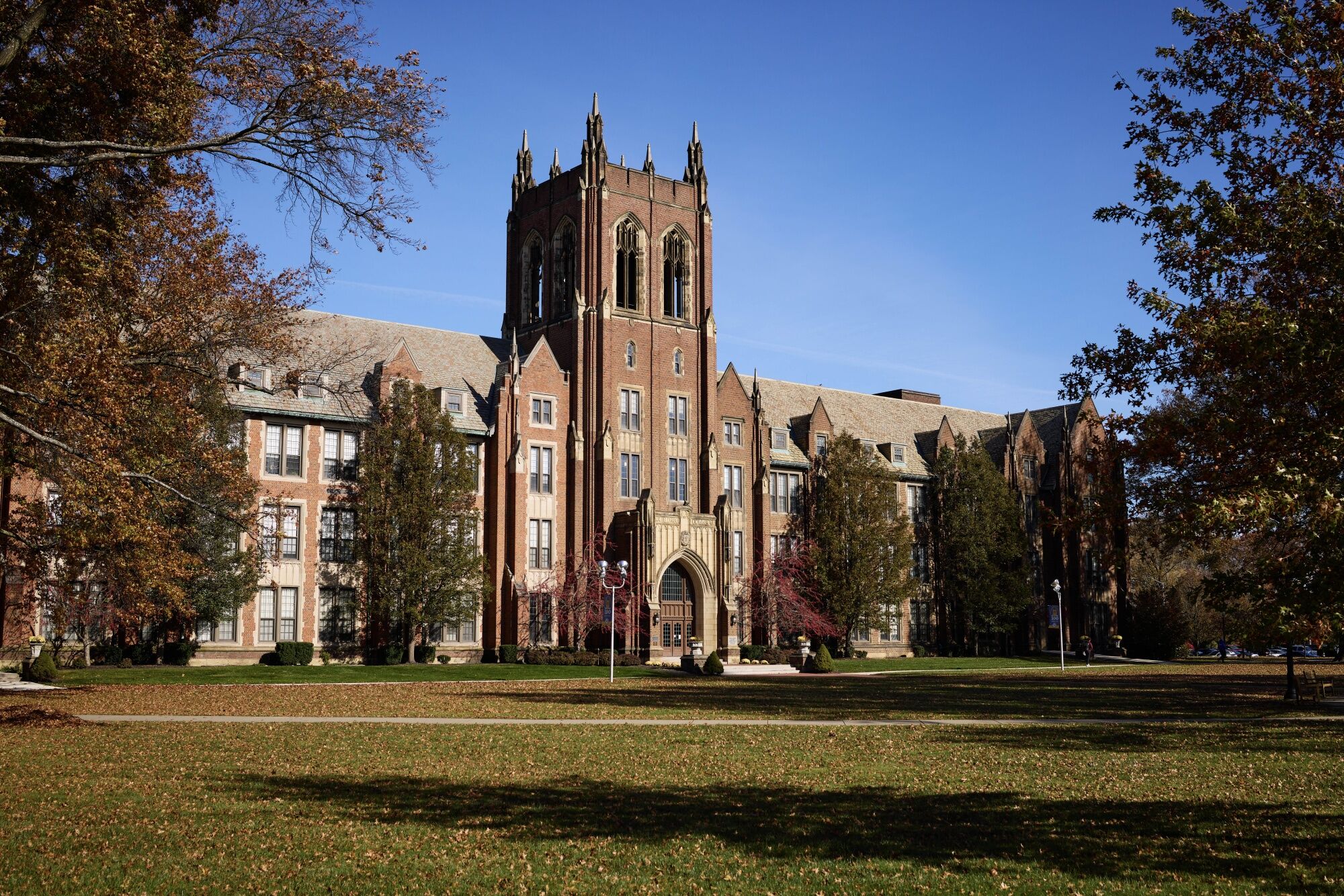
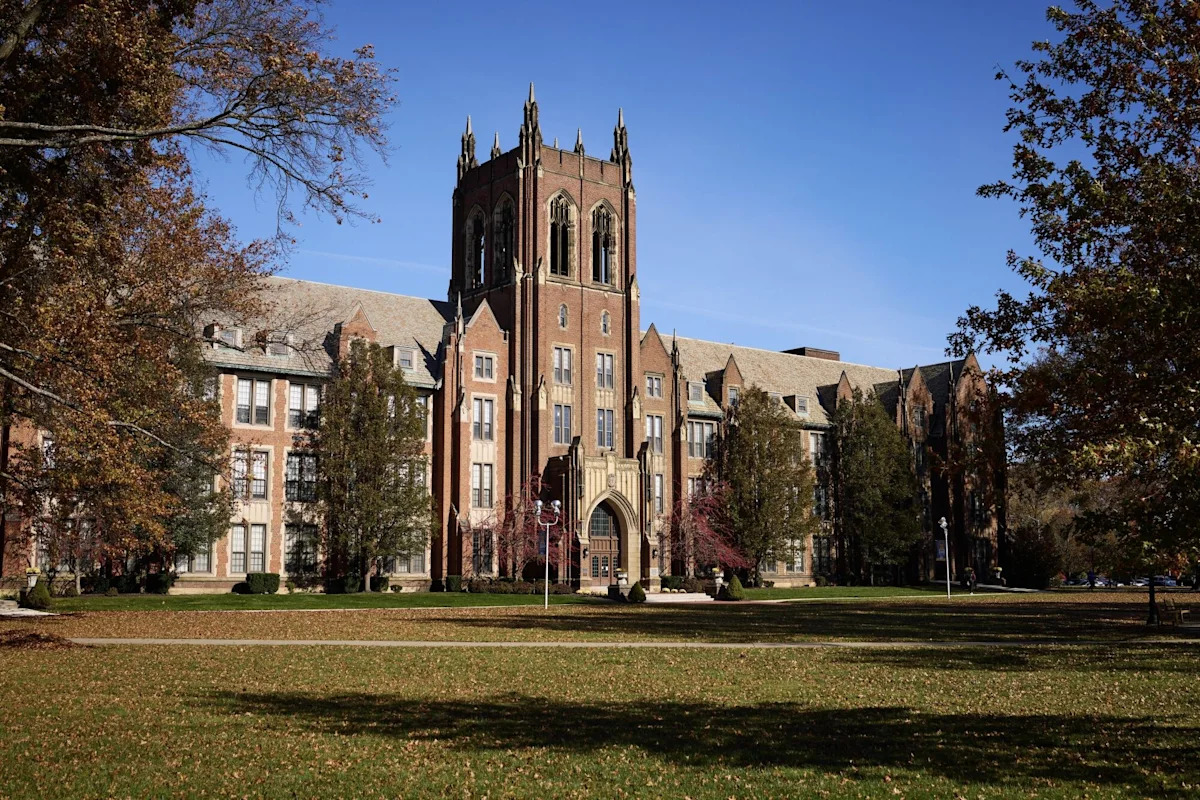
(Bloomberg) -- Trinity Christian College moved fast. Even before its final graduating class walked the stage in May, the private school put its 60-acre Illinois campus on the market.

Most Read from Bloomberg

Walter Sells Lakers, Seeks More Cash to Pay Loans Amid DOJ Probe

Phoebe Gates Knew Phia Shopping App Took Credit for Sales It Didn't Drive

Trump Seeks Immediate Halt to Judge's Penalties in IRS Case

Anthropic Said in Talks to Buy Startup Decart for $6 Billion

Trump Weighs Call for Capital Gains Tax Cuts as Midterm Boost

It needed a buyer that not only would take on the land, but also the 22 school buildings, including dorms, science labs and a 1,200-seat chapel with a pipe organ, that came with it. Late last month, one came through: Chicago Christian Schools acquired the college in a deal that fully pays off municipal bondholders who financed Trinity before its financial collapse.

It's a rare, optimal outcome in a brutal era for higher education. Driven by shifting demographics and mounting debt, over 50 US colleges have closed or merged since 2020. That distress has put thousands of acres of classrooms, dorms and athletic facilities on the real estate market, many in need of redevelopment.

For shuttered schools, selling campuses has become critical to repaying bondholders who increasingly view the real estate as a backstop for their investments. For communities built around those institutions, the sales can reshape entire towns as developers convert campuses into housing, medical centers, luxury resorts or other uses — or, if no buyer emerges, they're left with vacant reminders of a vanished academic institution. About a dozen schools currently have campuses in limbo, according to a Bloomberg analysis.

"In so many of these smaller towns, the college is the economic engine," said David Carlos, a broker with JLL who has worked on real estate deals with more than two dozen colleges, including St. John's University, College of Saint Rose and Hebrew Union College. "So losing those jobs, losing that economic development, is a real blow."

Trinity Christian's May closure hit Palos Heights' grocery stores, pizza parlors and coffee shops, said Mayor Robert Straz. The local businesses had been accustomed to the college students, faculty and families frequenting their establishments for six decades.

The fate of campuses stands to become an even more pressing issue in coming years as enrollment declines and rising expenses lead to deeper strains for schools. More than 400 private colleges in the US will close or merge over the coming decade, according to Huron, a consulting firm that advises higher education institutions. That's more than a quarter of all of the country's existing private colleges.

"Unfortunately, I think this is only the beginning," said Carlos, who speaks with colleges weekly regarding their real estate. He has sold more than $600 million of assets for schools.

Campuses represent centuries of memories for a school's students, alumni, employees and surrounding community. The outpouring of grief when a college shutters often morphs into strong opinions about the future of the property, making things difficult for potential new owners.

"Opposition from city councils and residents at public hearings can make redevelopments challenging," said Anne Rahm, the Midwest head for CBRE's public institutions and education group. "That can be problematic for a sale."

For example, developer Graham Crain's attempt to buy his shuttered alma mater, Eastern Nazarene College, fell through after city officials rejected his plans to build housing on the leafy suburb campus outside of Boston.

Most schools, after they change hands, will need to be completely overhauled into a different use, said David Crawford, a managing director who leads higher education real estate advisory at Hilco Global. Even though it can be extremely challenging for developers to get local approval for a new use, according to CBRE's Rahm.

But campuses can find second lives. Keen-Summit Capital Partners sold Birmingham-Southern College in Alabama, which shuttered in 2024, to the US Coast Guard for $126.5 million. Its 192-acre campus will be converted into a training center. And just outside of Cleveland, the firm also sold Notre Dame College's campus for $8 million to Akron Children's Hospital.

All About Location

As with all real estate deals, the outcome of a sale depends a lot on location. Campuses in hot metropolitan markets have been swallowed up quickly. Northeastern University took over Marymount Manhattan College, for instance, after the New York City-based school struggled to maintain adequate enrollment. The deal added $215 million of Upper East Side real estate to Northeastern's coffers. In Philadelphia, Villanova University snapped up two neighboring schools, Cabrini University and Rosemont College to expand its campus.

Schools in remote areas can be a tougher sell. Northland College has been on the market for nearly a year in Ashland, Wisconsin, which has a population just under 8,000. The school offers 72 acres and 19 buildings along Lake Superior's shoreline including a football stadium, greenhouses and laboratories.

"It's very different if you're a struggling school in the middle of a city compared to a struggling school in the middle of a cornfield," said Jennifer Johnston, who leads municipal research at Franklin Templeton.

Then there's the physical real estate itself, which often dates back to the 1970s or earlier. A report by construction data company Gordian showed deferred maintenance has reached its highest level on record as classrooms and dorms crumble across the country.

"Our caution signs go up when a struggling college has an aged campus," said Gabriel Diederich, a managing director and portfolio manager at Baird Asset Management. Real estate value — or lack thereof — has pushed him to pass on bond sales. "Especially when it's not in a location that could be attractive for another university or redevelopment."

In some cases, highly customized facilities — often a school's most prized asset — can be too niche to attract buyers. "I can't remember the last time we sold a campus where there wasn't a large chapel," said Rahm. "They're gorgeous, but developers don't typically need chapels."

Winners and Losers

Higher education bets are becoming more of a real estate play for municipal bond investors, said Franklin Templeton's Johnston.

Borrowers are left in the lurch when a campus sale comes in shy of paying off debt. Bank of America Corp., for example, is poised to take losses on Notre Dame College bonds it purchased almost two decades ago. The bank filed a lawsuit foreclosing on the property last year, with court documents showing it is owed $17.8 million. The property sold for $8 million.

When Cazenovia College's upstate New York campus sold at a 60% discount earlier this year — more than two years after the school closed — municipal bondholders recovered just half of their outstanding debt.

On the flip side, campus sales can bolster bond investors. Washington University in St. Louis earlier this year announced it would absorb junk-rated University of Health Sciences and Pharmacy. As part of the deal, WashU, with the second-highest credit rating from S&P Global Ratings, could take over the St. Louis college's $90 million of debt.

"That's a situation where location helped," said Diederich of Baird, which owns UHSP bonds. "They had a valuable footprint and WashU stepped in."

Back in Palos Heights, Mayor Straz said Chicago Christian Schools' takeover of Trinity Christian College's campus is a boost to the community. The private school wants to preserve the property's "long-standing legacy of Christian education," Superintendent Mark Hamstra said in a press release.

Straz said Chicago Christian may sell some parts of the campus, potentially providing a chance to add senior housing or recreational activities to Palos Heights. He recalls how his alma mater, Saint Joseph's College in Indiana, shuttered in 2017 and is now a workforce training hub.

"It's a sad thing that the school closed, but that's the fate of a small college now," he said. "It also creates an opportunity, it's a chance to develop some new things in town that we haven't had before."

Most Read from Bloomberg Businessweek

AI Music Startup Suno Bets Anyone Can Be a Rock Star

The Steamy, Magical and Now Very Lucrative Romantasy Business

ICE Arrests Are Pushing Immigrant Families Deeper Into Poverty

With EV Sales Slowing, Hybrid Cars Are Hot Again

Supercharged by Social Media, the GLP-1 Boom Is Warping Teen Psyches

©2026 Bloomberg L.P.
Comments
You must be logged in to comment.