yahoo Press
$10,000 in MSTY Became $6,614 Before the Tax Bill: The Cost of Riding MSTR’s Volatility
Images
1 / 4
2 / 4

3 / 4

4 / 4
The above button links to Coinbase. Yahoo Finance is not a broker-dealer or investment adviser and does not offer securities or cryptocurrencies for sale or facilitate trading. Coinbase pays us for certain activity generated through this link. Prices displayed are informational.

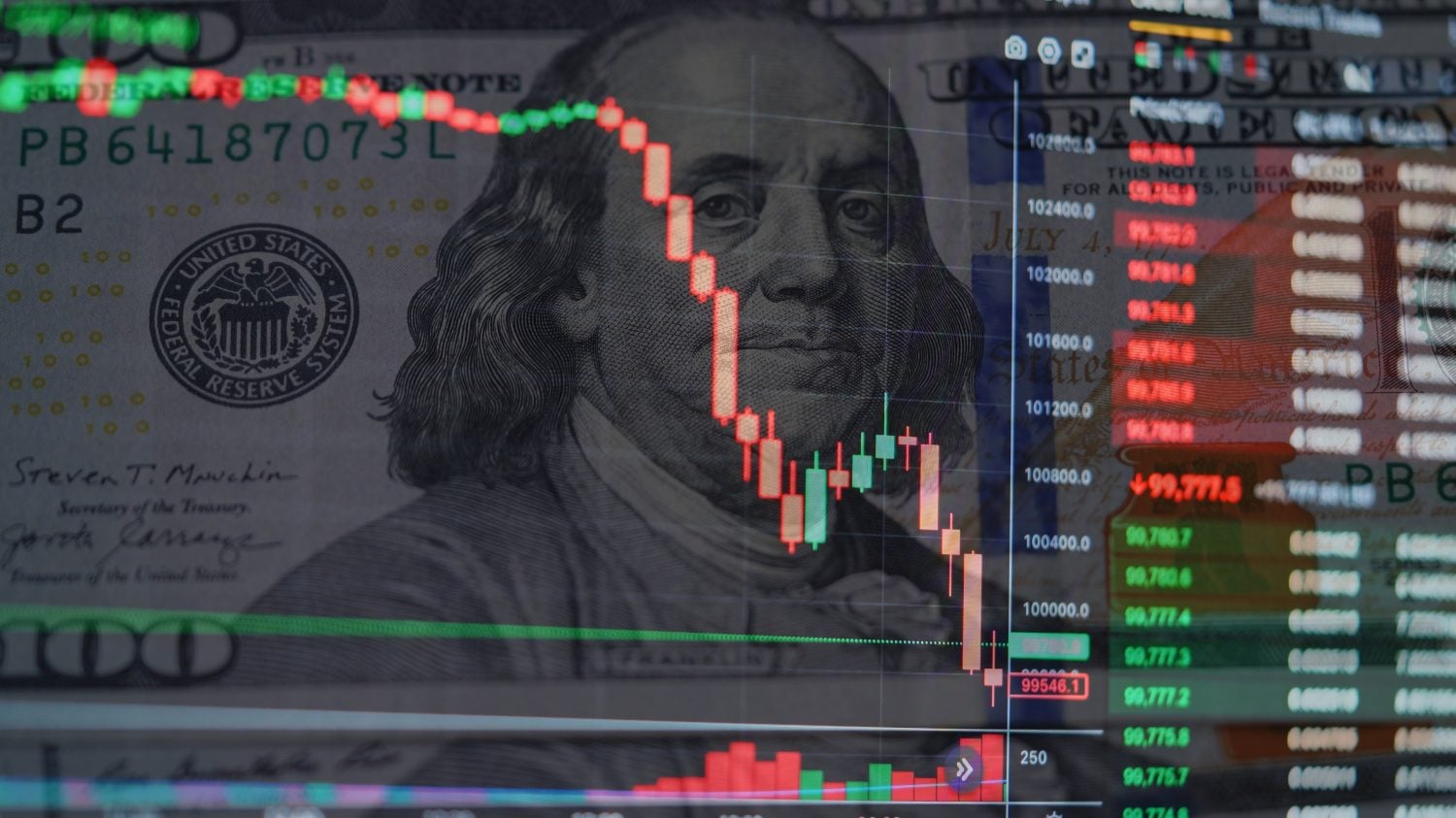
MSTY lost 70% of its value over the past year, turning a $10,000 stake into roughly $6,600 even as weekly distributions from MSTR's covered-call strategy kept arriving.

Distributions are taxed as ordinary income and portions arrive as return of capital, stacking tax drag directly on top of MSTY's structural NAV erosion.

JEPI and XYLD spread covered-call income across hundreds of names at a fraction of MSTY's cost, eliminating the single-stock volatility risk that drives its headline yield.

It sounds nuts, but SoFi1 is giving new Active Invest users up to $3,000 in stock for a limited time, and all it takes is a $50 deposit to get started.2 See for yourself (Sponsor)

If you put $10,000 into MSTY a year ago, then you watched it shrink to roughly $6,614 before the IRS even sent a bill.  The weekly checks kept landing, but the account balance kept sinking. That gap in income and performance is the entire product story.

YieldMax MSTR Option Income Strategy ETF (NYSEARCA:MSTY) sells call options against synthetic exposure to MicroStrategy (NASDAQ:MSTR) stock. The pitch is income, and the fund's headline expense ratio is only part of the drag. The more significant cost is structural: when MSTR drops, MSTY holds the downside; when MSTR rips higher, the short calls cap the upside. Essentially, you get the losses and rent out the gains.

The price action tells the story. MSTY closed at $12.27 on August 12, 2026, down 69.72% over the trailing year from $41.02. Year to date, the fund is down 31.48% from $18.13. Distributions have not made up for that underperformance. Per-share payouts peaked at $4.4213 on the November 21, 2024 ex-date and have compressed to just $0.2083 as of the August 6, 2026 ex-date. The trailing 12-month distribution total sits at $15.8652 per share, but the share price backing it is worth a fraction of what it was at the end of last year.

SoFi Active Invest is offering a limited-time promotion. Open an account, fund it with $50 or more, and you could receive up to $3,000 in complimentary stock for Active Invest accounts. See for yourself by clicking here now.

The distributions are largely taxed as ordinary income -- not qualified dividends. And portions of that income can arrive as return of capital that lowers your cost basis instead of representing real earnings.

For investors in a taxable account, the weekly distributions can create a second layer of drag. Much of that income may be taxed at ordinary-income rates, while declines in the fund's NAV reduce the value of the underlying investment. The result is a difficult combination: taxable income today alongside potential capital losses over time.

Then there is the volatility mechanic itself. MSTR fell 75.99% over the past year, from $400.25 to $96.09. Covered-call strategies suffer in that environment. In such cases, option premiums spike, but the fund is capped on the rebound and fully exposed on the drawdown.

The options chain for MSTR shows put/call ratios spiking to 3.41 and 4.67 for September 2026 expirations, a sign traders are hedging into the next move. Whichever way that move goes, MSTY's payoff profile is asymmetric against the holder.

Retail investors are noticing this. A widely shared r/wallstreetbets post titled "Got liquidated but thankfully just under 25 so will never do this ever again" drove sustained very-bearish sentiment scores across 11 consecutive readings in early July 2026. The community discussion has shifted from yield-chasing to damage control.

Because MSTR's next move dictates MSTY's payoff, the view on the underlying stock matters. The consensus price scenario for MSTR frames the range MSTY will be forced to trade through:

If the goal is MSTR exposure, owning MSTR directly costs a brokerage commission (often zero) and taxes gains at long-term capital gains rates when held over a year. You keep the upside the call overlay would have capped.

If the goal is covered-call income on a diversified base rather than a single volatile stock, broad-market option-income ETFs like JPMorgan Equity Premium Income ETF (NYSEARCA:JEPI) and Global X S&P 500 Covered Call ETF (NYSEARCA:XYLD) charge a fraction of a specialty single-name product and spread risk across hundreds of names. Neither replicates MSTY's headline yield, and that is the point: the yield existed because the risk existed.

The question worth asking is how much of the original investment remains after distributions and taxes. If a $10,000 position is worth roughly $6,614 before taxes, a high distribution yield alone has not protected the investor's capital. The weekly payments may provide substantial income, but they need to be measured against NAV losses and the taxes owed along the way. For MSTY investors, the number that ultimately matters is after-tax total return, not the headline yield.

Looking to grow your money but unsure where to begin? SoFi Active Invest is offering a limited-time promotion—open a new Active Invest account, fund it with $50 or more, and you could receive up to $3,000 in complimentary stock.

From $0 commission trading3 to fractional shares4 and automated investing, this app is designed to simplify investing for everyone, whether you're just starting or already experienced. Its easy to sign up and secure your bonus.(Sponsor)

Contact editorial@247wallst.com for any questions or corrections.
Comments
You must be logged in to comment.