foxnews Press
Haunting new images reveal the final ship where explorer Sir Ernest Shackleton died
Images
1 / 20

2 / 20
3 / 20
4 / 20
5 / 20

6 / 20
7 / 20
8 / 20
9 / 20
10 / 20
11 / 20

12 / 20
13 / 20

14 / 20
15 / 20

16 / 20

17 / 20
18 / 20
19 / 20

20 / 20
Footage provided by a U.S. Coast Guard member shows the heavy icebreaker Polar Star maneuvering through dense Antarctic ice to free the Scenic Eclipse II after the expedition cruise ship became immobilized near McMurdo Sound.

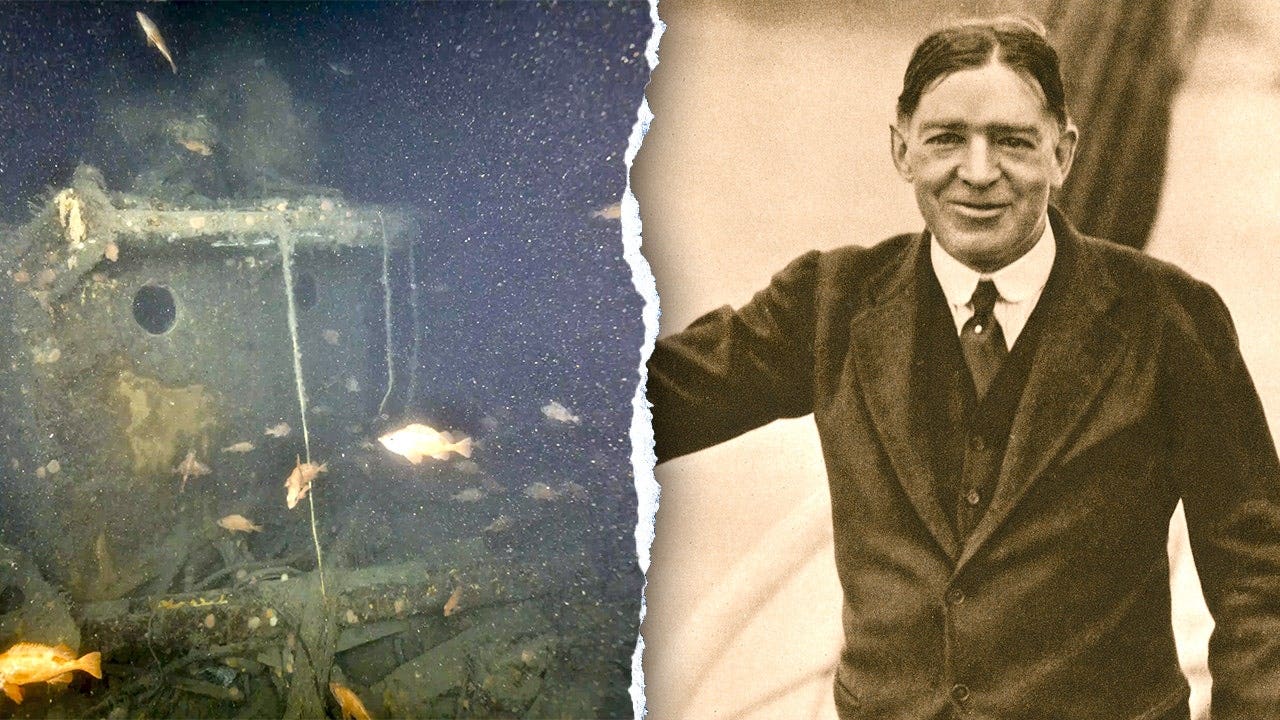
Officials have released the first close-up images of the remains of Quest, the final ship of the legendary Antarctic explorer Sir Ernest Shackleton.

The images were taken at the ship's location in the Labrador Sea, around 1,280 feet deep in the waters off of Newfoundland and Labrador, Canada, and were released in July.

After 60 years, the vessel remains recognizable and in moderate condition, Dwight Coleman, co-chief scientist at Woods Hole Oceanographic Institution (WHOI), told Fox News Digital.

MYSTERY OF GOLD COIN SHIPWRECK FINALLY UNMASKED AFTER 30 YEARS: 'FANTASTIC CONCLUSION'

"You could tell it was a ship," he said. "It had an obvious bow and stern, rudder and propeller.

"Even though it was sort of covered in fishing nets, you could still tell that some of that structure was preserved underneath the nets."

In a statement from the Royal Canadian Geographical Society (RCGS), in partnership with WHOI, officials said the wreck "was populated with pink corals, and several species of fish including cod, red fish and wolf fish."

Newly released close-up images show the wreck of Quest, the final ship of legendary Antarctic explorer Sir Ernest Shackleton, resting on the floor of the Labrador Sea off Newfoundland and Labrador, Canada. (Canadian Geographic and Voyis; Royal Geographical Society via Getty Images)

The images show fishing nets draped across parts of the wreck, as well as parts of its metal superstructure and portholes that still remain intact.

Shackleton, one of history's most celebrated Antarctic explorers, died on Quest in 1922 at age 47. He suffered a heart attack while the ship was anchored in South Georgia, a remote island in the South Atlantic.

'SPECTACULAR' SHIPWRECK FOUND WITH UNDERWATER TIME CAPSULE OF UNTOUCHED CARGO: 'AMAZING FIND'

After his death, Quest was later sold to Norwegian owners. It spent decades sailing in Arctic waters before being crushed by ice floes and sinking in the Labrador Sea in 1962.

"The public can gain a deeper appreciation for history and for the ocean."

John Geiger, CEO of the RCGS, described seeing Quest for the first time as "a moving experience."

"To see Shackleton's ship, and to think that Shackleton was standing on that deck a century ago ... At first, there was a lot of darkness, but suddenly the bow emerges as you are going toward it. It's incredible," Geiger said in a press release.

UNDERWATER ROBOTICS EXPERT REVEALS 'SHIPWRECK CITY' HIDING BENEATH MAJOR URBAN LAKE

The team used WHOI's Falcon ROV to image the ship and create its digital twin, as well as DSV Alvin, the iconic submersible that first visited the Titanic wreck 40 years ago. The vessels were made available through the National Science Foundation.

Coleman of WHOI, who is based in Rhode Island, said a major part of his job was creating a digital twin of the shipwreck.

Shackleton died aboard Quest in 1922 after suffering a heart attack while the ship was anchored in South Georgia during his final expedition. (Bettmann via Getty Images; Canadian Geographic and Voyis)

The ocean scientist said he was surprised to find the wreck covered in fishing nets and teeming with marine life.

"I wasn't expecting all the fishing gear, the nets and all the fish," he said. "I was honestly thinking it was a little bit deeper and in cold water, and that it would be pretty well-preserved and free of fishing gear because I didn't think there was that much fishing up there."

CENTURIES-OLD PIRATE MYSTERY DEEPENS AFTER WRECKS ARE FOUND NEAR BAHAMAS HAVEN

Added Coleman, "Boy, was I wrong. … It was a vibrant sort of marine life ecosystem around it."

While much of the ship remains recognizable, Coleman said its wooden components are "rapidly deteriorating" after decades in the underwater environment.

"The metal structures of the ship were still pretty well intact, although deteriorating," said Dwight Coleman, seen at right. (Ken Kostel, Woods Hole Oceanographic Institution)

"A lot of the wood was collapsing and degrading. The wooden deck was basically completely gone," he said.

"The metal structures of the ship were still pretty well intact, although deteriorating."

CLICK HERE TO SIGN UP FOR OUR LIFESTYLE NEWSLETTER

Coleman said researchers hope to preserve the wreck through detailed digital mapping rather than artifact recovery.

"We understand most of the components that we could find on it, so you're not really learning anything about history by recovering the artifacts. … There really isn't much need to," he said.

An undated side-scan sonar image shows the wreck of Quest, Sir Ernest Shackleton's last expedition ship, as it lies upright and intact on the seabed at a depth of 390 meters northwest of St. John's, Newfoundland, Canada. (RCGS/Reuters)

Expeditions like this help researchers better understand both maritime history and the marine ecosystems around historic shipwrecks, he added.

CLICK HERE FOR MORE LIFESTYLE NEWS

"By studying them, we can bring recognition to history and oceanography," Coleman said. "These shipwrecks are now artificial reefs that support diverse sorts of biological communities."

TEST YOURSELF WITH OUR LATEST LIFESTYLE QUIZ

He added, "We care about those communities. We want to understand how animals live in the deep ocean. So by bringing this project to the public, the public can gain a deeper appreciation for history and for the ocean."

After Shackleton's death, Quest — seen above — was sold to Norwegian owners and operated in Arctic waters for decades. It ultimately sank after being crushed by ice in 1962. (Print Collector/Getty Images)

The newly released images come not long after another Shackleton-linked discovery garnered international attention.

CLICK HERE TO DOWNLOAD THE FOX NEWS APP

In October 2025, researchers challenged the long-held belief that Shackleton's famed expedition ship Endurance sank solely because it was crushed by Antarctic ice. They argued instead that structural flaws in the vessel also contributed to its loss.

Andrea Margolis is a lifestyle reporter for Fox News Digital and Fox Business. Readers can follow her on X at @andreamargs or send story tips to andrea.margolis@fox.com.

A look at the top-trending stories in food, relationships, great outdoors and more.

By entering your email and clicking the Subscribe button, you agree to the Fox News
        Privacy Policy
       and
        Terms of Use
      , and
      agree to receive content and promotional communications from Fox News. You understand that you can
      opt-out at any time.

Subscribed

You've successfully subscribed to this newsletter!
Comments
You must be logged in to comment.