yahoo Press
Speed as Strategy: Rabigh Reinforcement Delivers 1,179 MW on an Accelerated Timeline
Images
1 / 4
2 / 4

3 / 4

4 / 4
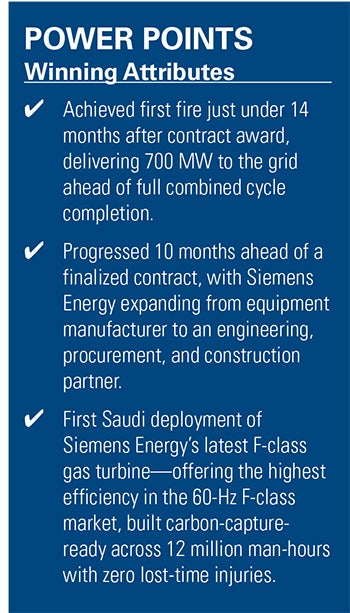
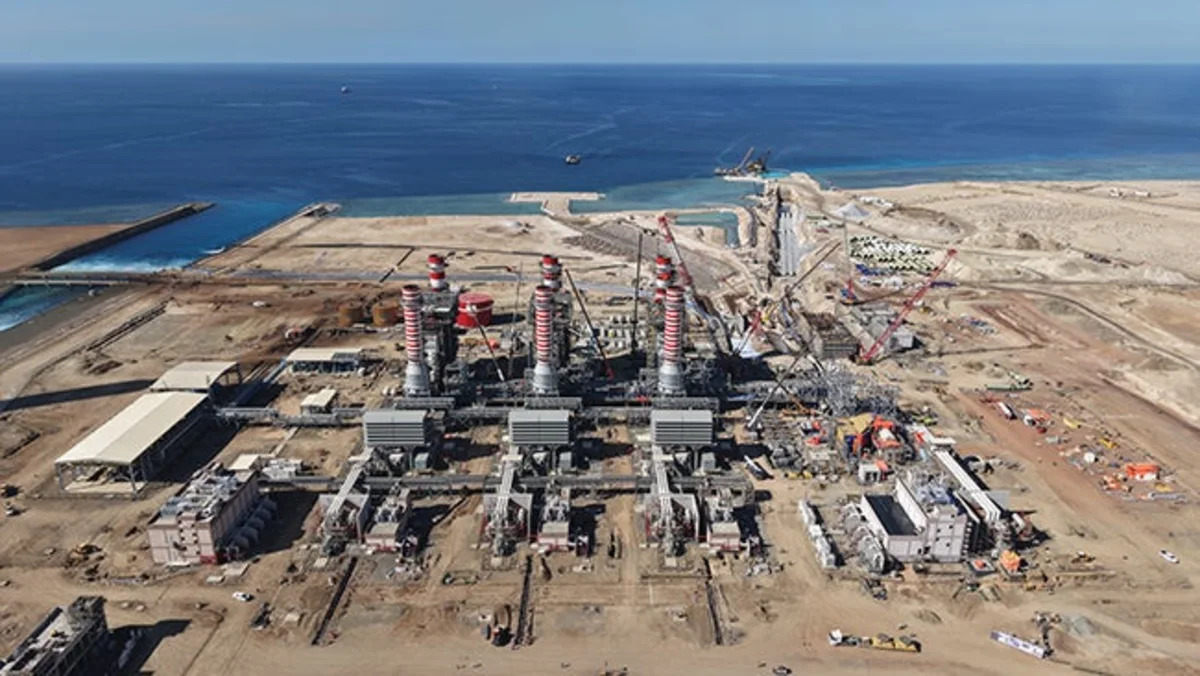
Facing potential supply constraints along the Makkah-Jeddah corridor, Saudi Arabia's power sector compressed a combined cycle schedule by months driven by early alignment, staged authorization, and world-class execution.In July 2025, the first of three gas turbines fired at the Rabigh Reinforcement Combined Cycle Power Plant on Saudi Arabia's Red Sea coast. Four days later, the unit was synchronized to the grid. Just 14 months had passed since the engineering, procurement, and construction (EPC) contract was awarded—a pace that would be remarkable anywhere, and one that mattered enormously in western Saudi Arabia, where the Kingdom's highest summer electricity demand was bearing down on a grid with little room to spare.The 1,179-MW plant, in Makkah Province roughly 135 kilometers north of Jeddah, was developed by the Saudi Electricity Company (SEC) and delivered by a consortium of Siemens Energy and Elsewedy Electric Power Systems Projects (Elsewedy Electric PSP). It is on track to reach full combined cycle completion in approximately 35 months—against the typical 40 to 42 months for a plant of this size. Getting there demanded an unconventional playbook: an original equipment manufacturer (OEM) stepping into the EPC role, interim contractual arrangements that let work advance ahead of a finalized framework, and a logistics operation agile enough to reroute a steam turbine generator around a disrupted Red Sea shipping lane. The result is a project that functions as a proof point for how fast-track execution can work at combined cycle scale—and it is why Rabigh Reinforcement is a finalist for a 2026 POWER Top Plant award.

The western region of Saudi Arabia carries among the Kingdom's heaviest summer load, driven by residential cooling, industrial growth, economic development, and religious tourism. The Makkah-Jeddah corridor ranks among the country's most critical load centers, and ahead of fiscal year 2025, the Ministry of Energy underscored to stakeholders that reinforcing generation in the region was a national priority.The project team was direct about what was at stake had the capacity not arrived on time. "Reserve margins would have been compressed, leaving little headroom to absorb demand spikes, seasonal transmission constraints, or unplanned outages," Sandeep Kumar Gupta, sales director with Siemens Energy, told POWER. The system would also have leaned harder on older, less-efficient generating units—raising fuel consumption, operating costs, and emissions—while neighboring plants and transmission corridors ran at higher loading, eroding flexibility and resilience across the network.The commercial structure reflects Saudi Arabia's power procurement model. The Saudi Power Procurement Company (SPPC) is the principal buyer under a 25-year Energy Conversion Agreement (ECA) executed with SEC, which serves as developer and owner. Rabigh Reinforcement stands as one of SEC's largest generation projects developed under the ECA model while retaining full ownership. The EPC contract is valued at approximately SAR 5.33 billion (about $1.4 billion)—a price the consortium had to defend in a competitive field.

The consortium was structured to match each partner's scope to its core strengths. Siemens Energy, as OEM and technology provider, delivered the power island and a Long-Term Service Agreement (LTSA) for the project's assets. Elsewedy Electric PSP took responsibility for the heat recovery steam generators (HRSGs), seawater intake and outfall systems, and balance-of-plant, including local procurement, workforce mobilization, electro-mechanical installation, and civil works. The integrated delivery model provided a tested framework to efficiently manage interface risks.What set Rabigh apart was Siemens Energy's decision to expand beyond its traditional OEM role and become an EPC partner, taking responsibility for overall project coordination during contracting and early execution. According to the company, the project's strategic importance to Saudi power security and the ambitious schedule called for a level of integration a conventional OEM arrangement could not provide. The move reduced contractual interfaces, streamlined technical and commercial decision-making, and lowered execution risk.The most unconventional feature of the project, however, was its relationship to its own contract. Site preparatory work began in July 2023, but the final EPC contract award and notice to proceed did not come until May 2024."This required all parties to commit resources and make critical execution decisions before the final contractual framework was in place, placing significant emphasis on trust, alignment, and disciplined risk management," Gupta said.SEC's leadership was central to making that arrangement workable. The utility accelerated bid evaluation, implemented interim contractual mechanisms such as a limited notice to proceed (LNTP), and advanced project payments ahead of external financing. The interim arrangements enabled early procurement of critical equipment and advance site preparation, pulling months out of the overall lead time. The fast-track strategy under the Kingdom's ECA framework was a collective decision—and not an uncontested one. The team acknowledged there were occasions when the timeline's feasibility was questioned. "Everyone shared a single objective—getting power onto the grid as fast as possible—and that shared sense of purpose was instrumental in overcoming the many challenges encountered along the way," Gupta said.

"The execution plan tackled the schedule from multiple directions at once. Engineering, procurement, and construction ran in parallel. Long-lead equipment was procured early, with expediting pushed down into the sub-supplier tier. Selected components, such as diverter dampers, were pre-assembled in the factory to cut site installation time. The project added field engineering support, dedicated commissioning teams, and two-shift working where required. In one notable workaround, the team used diesel generators to enable commissioning activities before permanent power was energized, rather than waiting on the grid connection," said Naira El Sayed, project manager from Elsewedy Electric PSP.External events tested the plan. Disruption to Red Sea shipping routes, caused by regional geopolitical tensions, forced a rapid rework of the logistics strategy. Notably, the steam turbine generator shipment was rerouted from King Abdullah Port on the Red Sea to Dammam Port on the Arabian Gulf, then moved overland across the country. Where necessary, critical components were air-freighted to hold the schedule.The supply chain itself spanned three continents. The gas turbines were produced in Berlin, Germany; the generators in Charlotte, North Carolina; and the steam turbine in Mülheim an der Ruhr, Germany.A phased delivery strategy converted the compressed schedule into early megawatts. Rather than waiting for full combined cycle completion, the project brought simple cycle units into commercial operation first—700 MW by October 2025, delivering critical generation capacity to the grid months ahead of the combined cycle schedule. A second commercial operation milestone followed in May 2026, reinforcing the grid before the Hajj season and peak summer demand, with full combined cycle completion projected for May 2027.The pace did not come at the expense of the workforce. "An uncompromising safety culture was established on the site for every individual entering the site. At peak, approximately 2,500 workers were deployed on site, and over the course of construction the project logged 12 million man-hours with zero lost-time injuries," El Sayed said.Recruiting skilled personnel was itself a challenge, given the volume of concurrent infrastructure development across Saudi Arabia and the site's remote location. The team addressed this through early resource planning, phased mobilization, and an emphasis on local workforce development - building Saudi national capability alongside international expertise through targeted training programs, in line with Vision 2030's Saudization objectives.

Rabigh Reinforcement marks the first deployment in Saudi Arabia of the latest version of Siemens Energy's SGT6-5000F gas turbine, which the company said delivers the highest efficiency in the 60-Hz F-class market. The machine is an evolution of a mature platform, according to Siemens Energy, backed by a fleet of more than 420 units, over 21 million operating hours, and fleet reliability exceeding 99%.The configuration is a 3x1 multi-shaft combined cycle, that is, three SGT6-5000F gas turbines, each coupled to its own SGen6-1000A generator, exhausting to three triple-pressure reheat HRSGs that supply steam to a single SST6-5000 steam turbine with high-, intermediate-, and low-pressure sections, driving an SGen6-3000W generator. Alternative configurations and turbine arrangements were evaluated during development, but the 3x1 arrangement offered the best balance of construction schedule, efficiency, operational flexibility, and lifecycle cost—critically, it enabled the phased construction approach that put simple cycle capacity on the grid ahead of combined cycle completion. Gas turbine dual-fuel capability (natural gas with liquid-fuel backup) provides a pathway to enhance operational security under varying fuel-supply conditions.During simple cycle performance testing, the actual performance exceeded the contractually guaranteed values, Gupta reported. Specific figures are commercially confidential, he said, but the results were validated through contractual performance testing conducted in accordance with internationally recognized procedures and witnessed by project stakeholders.The plant is also designed to be carbon-capture-ready, with reserve space allocated along the flue gas path to accommodate a future capture retrofit without major modification or significant operational disruption. The team was candid that no capture plans or implementation schedule currently exist; however, the design choice preserves flexibility as the Kingdom's carbon capture policy, regulations, and technology mature. Once fully operational, the facility is expected to supply electricity for approximately 500,000 homes, based on installed capacity and representative average residential consumption in Saudi Arabia.

Rabigh Reinforcement fits within SEC's broader strategy to strengthen the Kingdom's electricity infrastructure in support of Saudi Vision 2030—improving system efficiency, reducing emissions relative to conventional thermal generation, and providing the reliable, flexible, and dispatchable capacity a grid with growing renewable generation requires, particularly during periods when solar output is unavailable. Additional high-efficiency combined cycle projects in the pipeline, are already under development involving SEC.For each participant, the project represents a turning point: for SEC, one of its largest generation projects under the ECA model with full ownership retained; for Elsewedy Electric PSP, a significant expansion of its EPC portfolio in Saudi Arabia; and for Siemens Energy, the shift from long-standing OEM to EPC partner in the Kingdom. But the moment the team said it would remember is simpler than any of that. "One of the milestones the team will remember most is first fire [Figure 1] in July 2025, followed by grid synchronization just four days later—the moment when more than a year of planning, engineering, and execution was translated into electricity delivered to the grid," Gupta said.

1. The first of three gas turbines fired on July 19, 2025, at the Rabigh Reinforcement Combined Cycle Power Plant in Saudi Arabia. Courtesy: Siemens Energy

Little about the machinery at Rabigh is unproven. The F-class platform is mature, the 3x1 configuration is well understood, and combined cycle technology is a known quantity. What the project demonstrates is something harder to procure: an owner willing to advance payments ahead of financing, an off-taker engaged from the start, and a consortium prepared to commit resources before its contract was final. Rabigh's 14 months from award to first fire is a reminder that schedule can be shaped as much by contracting decisions as by manufacturing constraints.

—Aaron Larson is POWER's executive editor.
Comments
You must be logged in to comment.