yahoo Press
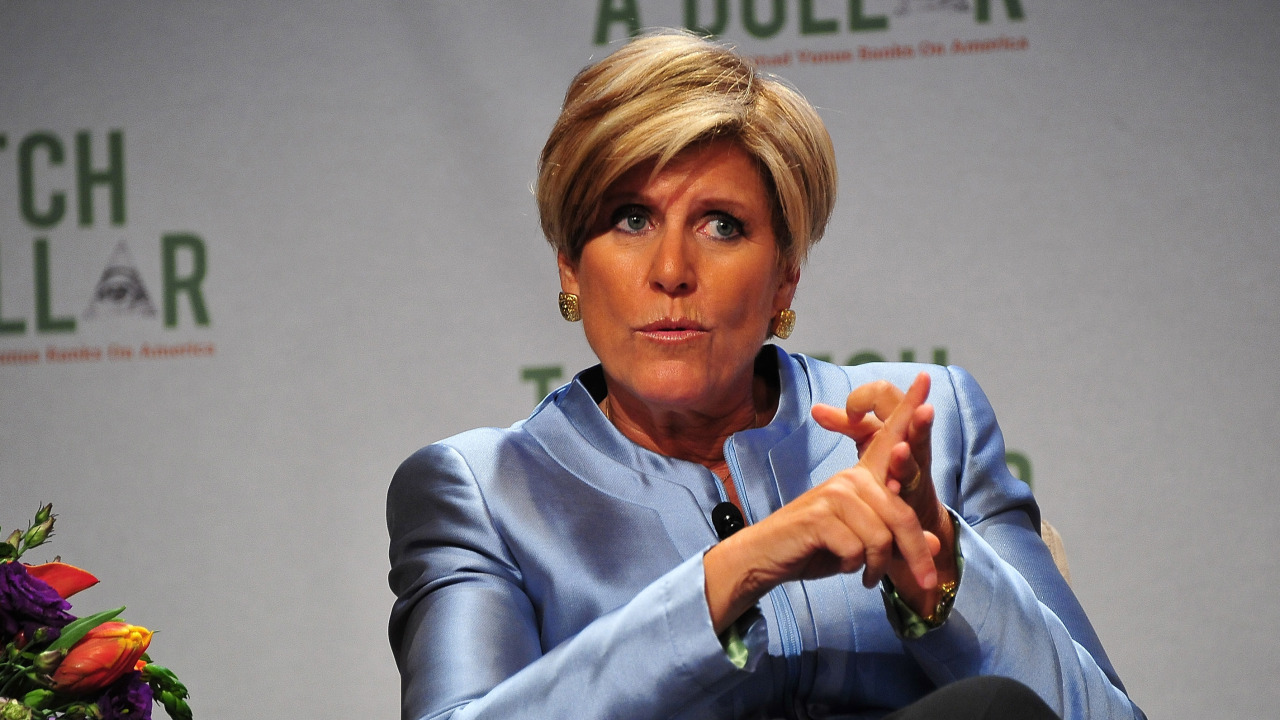
Suze Orman says couples are losing as much as $14,000 in 'free money' by failing to save smart as a team
Images
1 / 4

2 / 4

3 / 4

4 / 4
In the race to build wealth, Suze Orman says many couples are falling behind — not because they're failing to save, but because they're failing to save smartly.

Orman writes in a recent blog post that if you're lucky enough to have a workplace retirement plan with matching contributions, you should always aim to max that out. However, that math gets "trickier" when you're married and both spouses' plans have different formulas.

Jeff Bezos backs a platform that lets anyone invest in rental homes for as little as $100 — 6 ways to build wealth like a landlord without actually being one

Dave Ramsey warns nearly 50% of Americans are making 1 big Social Security mistake. Here's what it is and 3 simple steps to fix it ASAP

Millionaires under 43 hold only 25% of their wealth in stocks. Here's where their money is actually going

For example, Orman says, one plan offers them a dollar-for-dollar match on the first 3% they save, while the other spouse's plan gets a 50-cent match on every dollar they contribute up to 6% of their salary. One of those plans offers the couple better bang for their buck — and failing to factor that in is costing them thousands of dollars in savings.

Citing research from the National Bureau of Economic Research, Orman says one in five couples could increase their annual retirement savings by $757 just by working together. By age 65, this amounts to $14,000 per couple.

"That foregone money isn't because they saved less, it's because they didn't save smart," Orman writes. "They could have boosted their retirement savings without contributing an extra dollar of their own money."

Part of the problem may be how couples are looking at saving for retirement. Orman has some straightforward advice for these couples: "If you and your spouse both have workplace retirement plans, don't think of them as separate accounts. Think of them as part of one household retirement strategy."

Lack of communication can lead to other suboptimal financial decision-making, according to the NBER study. That can lead to not refinancing a fixed-rate mortgage when it's beneficial to do so, or co-holding low-interest liquid savings and high-interest credit card debt at the same time.

Leaving money on the table isn't necessarily about inertia. Rather, "many couples have not considered that there might be gains to coordination," the researchers write.

The simple solution, it turns out, is just sitting down and running the math together — then coordinating your savings from there.

"For instance, if one spouse has a dollar-for-dollar employer match up to a cap, and the other spouse has a 50 cents-on-the-dollar match, then the efficient allocation at the household level is to fully exploit the match offered to the first spouse before making any contribution to the second spouse's account," according to the study.

Orman emphasizes this shouldn't be a "set-it-and-forget-it" strategy. As employers can change their matching formulas at any time, she says it's important to review and compare your plans at least once a year to ensure every dollar you're saving for retirement is working as hard for you as possible.

"A quick annual checkup could help ensure you're not leaving free money on the table," she writes.

These conversations don't have to feel formal and impersonal. Consider having a regular "money date" to discuss your finances as a couple, including reviewing your budget, benefits and future goals. You should aim to have one of these dates at least quarterly or when faced with any major life changes, like getting a new job.

If you don't have access to employer matching, you can aim to save a higher portion of your pre-tax income to boost your retirement savings. While it may seem like a lot of money, you could save money come tax time if you drop into a lower tax bracket. If you don't have a 401(k) plan, consider putting money aside in an IRA.

Read More: Forget Florida — this is why these two unexpected states are the new retirement hot spots

By simply reallocating their existing contributions, couples could "increase their retirement wealth without changing their consumption."

However, coordination isn't enough on its own to prepare for retirement. You should be aiming to save around 15% of your salary for retirement each year, including any employer match, Orman says. Once you've strategized your contributions, she says your next goal should be to gradually increase your contribution rate until you're able to hit that target.

"Capturing the full employer match is the starting point, not the finish line," writes Orman. "Maximizing the match is the first step toward retirement security, not the only step."

While you're reviewing your strategy together, it may be worth looking a little closer at some other details in your plan. For example, you should know when the match is calculated (say, per paycheck or annually). If you max out your 401(k) contributions early in the year but your employer matches contributions per pay period, then you could miss out on matches for the rest of the year. Check if your company offers a "true-up," which means the employer will make up the difference if your contributions were uneven throughout the year.

You should also understand your company's "vesting" schedule, which is a policy employers use to encourage employee retention. This means they provide full ownership of employer contributions only after you stay in your job for a set period of time — say, five years. If you leave early, you might forfeit the employer contributions (although your contributions are yours to keep). If you change jobs frequently, this should be a consideration.

For 2026, the 401(k) contribution limit for employees is $24,500, while the combined employee and employer contribution limit is $72,000. If you're 50 or older, you can make an additional catch-up contribution of up to $8,000; if you're between 60 and 63, you can make a higher catch-up contribution of up to $11,250.

— with files from Sigrid Forberg

The tax breaks in Trump's 'big beautiful bill' expire after 2028 — and experts say most people won't act in time. What to do before the window closes

Here's the average income of Americans by age in 2026. Are you keeping up or falling behind?

This income fund has paid up to 8.4% in historical returns — here are 4 cash strategies so you can earn more in 2026

Here are the 7 top habits of 'quietly wealthy' Americans. How many do you follow?

Join 250,000+ readers and get Moneywise's best stories and exclusive interviews first — clear insights curated and delivered weekly. Subscribe now.

This article originally appeared on Moneywise.com under the title: Suze Orman says couples are losing as much as $14,000 in 'free money' by failing to save smart as a team

This article provides information only and should not be construed as advice. It is provided without warranty of any kind.
Comments
You must be logged in to comment.