yahoo Press
What is a foreclosure?
Images
1 / 4

2 / 4

3 / 4

4 / 4
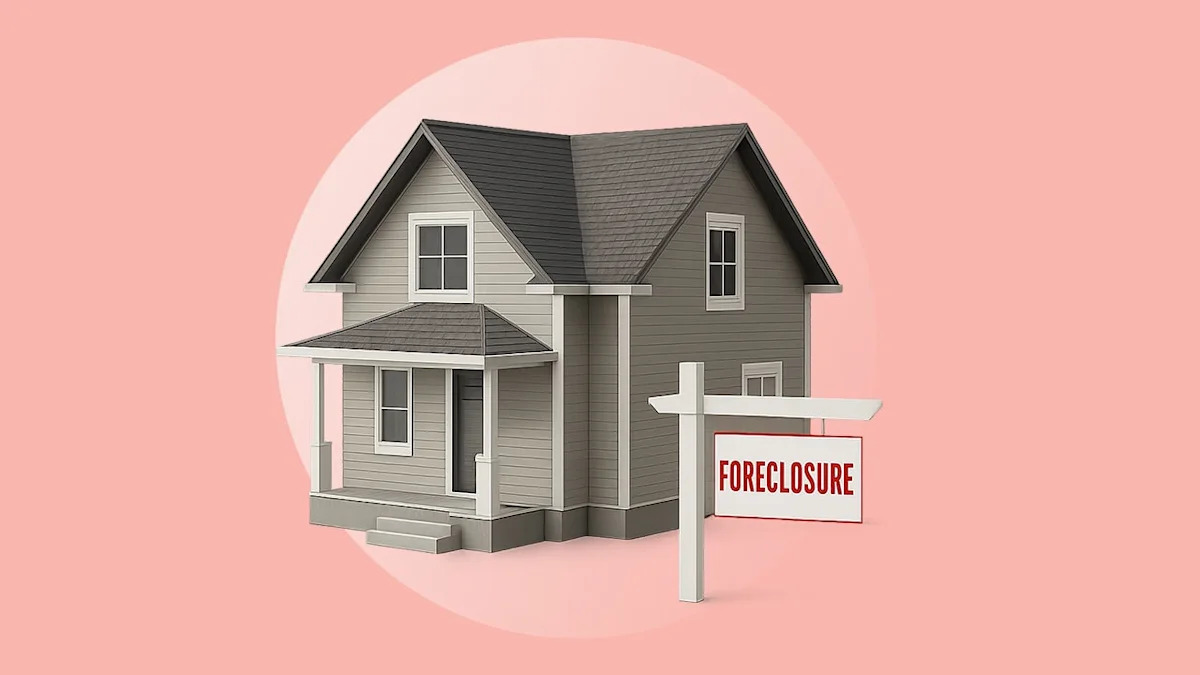
A foreclosure occurs when a lender takes control over a property from a borrower who has failed to make timely payments.

A completed foreclosure will damage your credit score and result in the loss of your home.

As soon as you realize you can't pay your mortgage, reach out to your lender or servicer to learn about mortgage relief options — and ideally avoid foreclosure.

Relief options include forbearance, loan modification, repayment plans and deed-in-lieu of foreclosure. A HUD-approved counselor can walk you through them at no cost.

Falling behind on your mortgage can be one of the most stressful financial situations you face — but foreclosure typically isn't instant, and it isn't the same everywhere. Each state has its own foreclosure laws, timelines and notice requirements, so the process can look different depending on where you live.

While the rules may vary based on location, what's universal is this: The sooner you act after missing a payment, the more options you'll have to avoid losing your home. It helps to understand how foreclosure works, the steps involved and the relief options available if you're struggling to keep up with your mortgage.

Foreclosure happens when the lender takes control of a property after a borrower misses multiple mortgage payments, defaulting on the loan. Under federal rules, the foreclosure process generally can't begin until you're at least 120 days behind on your mortgage — providing a window to catch up or work out a solution with your lender before it escalates.

Once the process starts, it typically moves through a few key stages: The lender files a notice of default, and the home may go through a period called preforeclosure. If the debt remains unresolved, the home is sold — usually at a public auction.

The foreclosure process can take up to several years, and if you're not able to make up the missed payments, it can result in the loss of your home. Properties foreclosed in the first quarter of 2026 spent an average of 577 days in the process, according to property and real estate data firm ATTOM.

Each state has its own laws pertaining to the foreclosure process and foreclosure sales. These laws can govern your mortgage relief options if you're already in foreclosure, how to post a notice of sale, the sale timeline and other parts of the process.

If your mortgage payment is a few days late, you're probably not immediately at risk of foreclosure. Your lender may accept your payment without serious penalties for up to two weeks after the due date.

After the grace period, however, your payment is considered late, and your lender will charge late fees. You might also receive a warning from your lender about a potential foreclosure if you fail to make the payment.

Generally, the foreclosure process can't begin until you're at least 120 days behind on your mortgage, under a federal regulation known as Regulation X.

Depending on your state's laws, your lender may file a notice of default with the local recorder's office after around three to six missed mortgage payments. The lender may also send the notice via certified mail or post it on your front door. This notice specifies how much you owe to bring your mortgage back into good standing.

A notice of default shows up on your credit report and affects your score. This can make it more challenging to get other types of credit or refinance your mortgage.

Preforeclosure is the time between the notice of default and the auction or sale of your home. During this time, you can stop the foreclosure process by paying the amount specified in the notice of default.

If you think you could settle the debt by selling your home, this is likely an option. If your house is worth less than the amount of your mortgage debt, you may be able to sell it through a process called a short sale. In some cases, your lender may forgive the difference between the sale price and your balance.

The exact amount of time preforeclosure lasts depends on your state.

If you aren't able to bring your mortgage into good standing within the allotted timeframe, your lender will file a notice of sale. Your home will be placed up for auction at a specified time and place.

The notice of sale may be published in different ways depending on your state. For example, in North Carolina, the notice must be published in a local newspaper and posted at the local courthouse. In California, it must be posted on the property, as well as a public place in the county, delivered to you via certified mail and published in your local newspaper.

Depending on your state's laws, you might be able to exercise the right of redemption and reclaim your home up until the foreclosure sale, or even after.

Following the auction and sale of your home, you'll have to move out. In some states, you only have a few days to do this, but in others it can be months. If you don't voluntarily move out, law enforcement personnel may be legally allowed to remove you and your belongings from the premises.

While laws and timelines can vary from state to state, here's a general example of a hypothetical post-sale eviction sequence.

Foreclosure sale closes: At this time, the property ownership transfers to the winning bidder, often the lender.

New owner requests legal authority to remove occupants: If the former owner hasn't left voluntarily, the new owner typically can file a court order that requests the occupants be removed.

Notice to vacate is served: The former owner is given a deadline to move out of the home. If they do not comply, the new owner can request that law enforcement officials carry out the eviction.

Physical eviction takes place, if necessary: For this, law enforcement officials remove occupants and belongings; some jurisdictions store belongings for a limited pickup window afterward.

Type

Legal action required?

How it works

Availability

Judicial foreclosure

Yes

Lender sues; you typically have 30 days (varies by state) to catch up before the process proceeds

Available in every state; some states require it exclusively

Power of sale

No

Lender can auction home directly once the you default, per a clause in the mortgage contract

Only in states that permit it, and only if your mortgage includes a power-of-sale clause

Strict foreclosure

Yes

Lender sues; if you don't repay within a court-set window, the lender takes the home outright (no auction)

Only a few states allow it

*In New Mexico, a non-judicial foreclosure process may be used for some post-2006 residential loans, although the state requires judicial foreclosure in most cases.

What are the consequences of foreclosure?

When you go through a foreclosure, you'll lose your home (and any equity you have in it) and your credit will take a hit — with the foreclosure likely remaining on your record for seven years. What's more, you could also owe money if your home sells at the foreclosure auction for less than you owe.

Ultimately, avoiding foreclosure starts by communicating with your mortgage lender or servicer. It's unlikely that your lender will let you off the hook completely for your missed payments, but it can help you take action so you don't lose your home.

Once you've received a notice of default, you need to act swiftly to avoid foreclosure proceedings, says Andy Manthei, change cultivator with GreenPath, a nonprofit that specializes in financial and housing counseling "Do not let this sit," he says.

You have a number of options to consider, and more than one could help you keep your home or minimize damage to your credit.

Option

What it involves

Contact a housing counselor

A HUD-approved counselor walks you through your options. Reach one via a local HUD housing counselor or the HOPE hotline at 888-995-4673, available 24/7. "As certified counselors, we walk homeowners through every single option available based on their situation," Manthei says.

Take advantage of forbearance

This temporarily pauses your payment obligation. Make sure you have a plan for when the forbearance period ends.

Adjust your loan terms

Ask your lender about a loan modification — potentially a longer term and lower monthly payment.

Set up a repayment plan

Contact your lender as soon as you know you'll miss a payment. They may offer more frequent, smaller payments or a short deferral.

Get a deed-in-lieu of foreclosure

Turn the home over to your lender voluntarily, avoiding foreclosure. You won't owe the mortgage, but you may still owe the difference between the home's value and the balance, depending on your state.

"Know you're not alone," Manthei says, adding that foreclosure can be a scary experience, but there are steps you can take to get help.

What should I do if I receive a Notice of Default?

"The first thing you need to do after receiving a notice of default is contact your servicer," Manthei says. It's in a lender's best interest to work with borrowers to help them stay in their homes and catch up on payments. "If you're afraid to contact your lender, contact a certified housing counselor that can help you make that introduction."

Where can I find help for a foreclosure proceeding?

The U.S. Department of Justice provides a list on its website of legal assistance providers that are either free or low-cost. If you've reached this stage in the foreclosure process, it's also important to think about whether defending the foreclosure to keep your home is the best choice for you financially.

What happens to my personal belongings if my home goes into foreclosure?

Your personal belongings could be impounded if your property is foreclosed on, you get evicted, and you don't leave before law enforcement comes.

This is how it works: After foreclosure, your lender or a new owner may file for eviction if you're still on the property. Like foreclosure, the eviction process varies by state and location, but in general, the court must order evictions. If the court orders the eviction, you'll receive an eviction notice. From that point, you have a certain amount of time to pack your belongings and leave the property. For instance, in Michigan, that period is 10 days, but you might be able to negotiate more time.

Can I buy a home after going through foreclosure?

You can buy a home after foreclosure, but getting a mortgage will be more difficult. In general, you'll need to wait anywhere from two to seven years after foreclosure before being eligible for another mortgage, depending on the loan type. You'll also need to improve your credit score and prove you have enough income to afford the new mortgage.
Comments
You must be logged in to comment.