yahoo Press
'I don’t need a 200-foot yacht': Boat baron gives up $400 million payday to pledge all profits to charity instead
Images
1 / 4
2 / 4

3 / 4

4 / 4
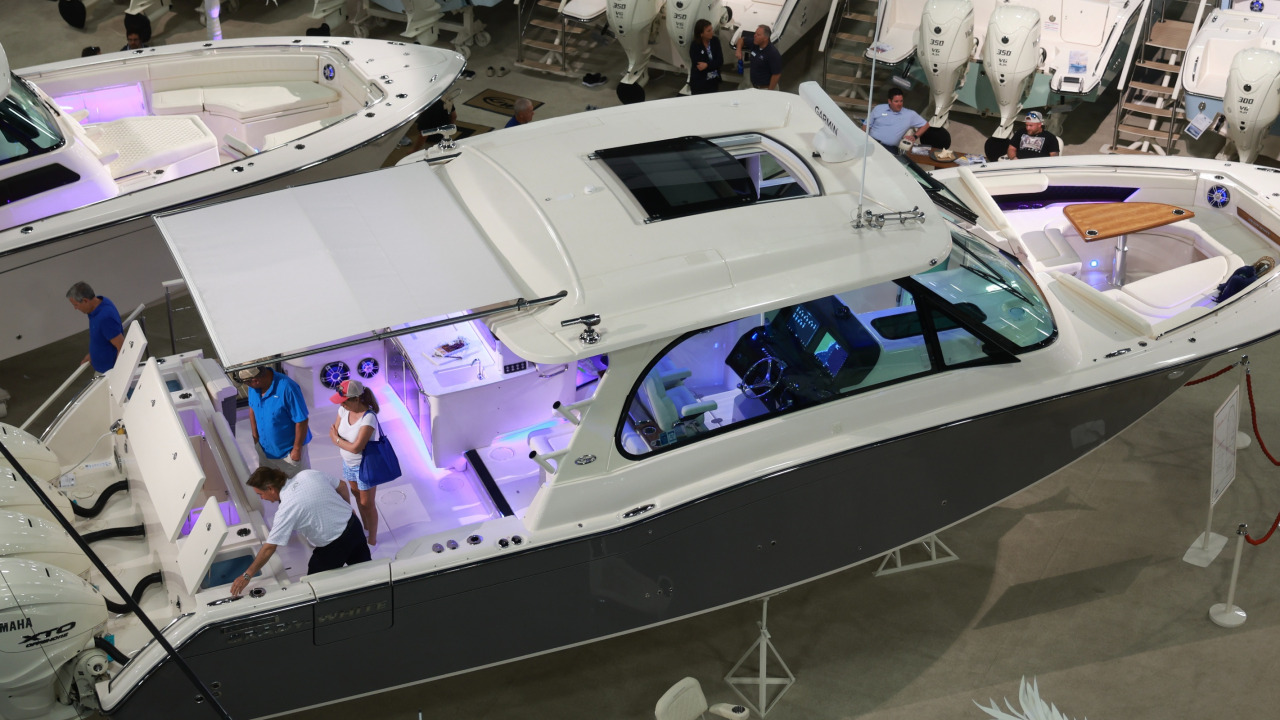
A wealthy boat builder has declined to sell his company for $400 million — not so he can keep the cash rolling in, but to funnel its profits to charity instead.

"I don't need a 200-foot yacht or to spend the winters in the Mediterranean," says Eddie Smith Jr., CEO of Grady-White Boats, in an interview with the New York Times. "I'm really happy here in eastern North Carolina."

Jeff Bezos backs a platform that lets anyone invest in rental homes for as little as $100 — 6 ways to build wealth like a landlord without actually being one

Dave Ramsey warns nearly 50% of Americans are making 1 big Social Security mistake. Here's what it is and 3 simple steps to fix it ASAP

The tax breaks in Trump's 'big beautiful bill' expire after 2028 — and experts say most people won't act in time. What to do before the window closes

The 83-year-old multimillionaire was ready to step down from his active role at the company. He considered selling it — and got to the point of receiving offers — but was worried any new owner would strip back his employees' generous benefits. "I had no confidence that a new owner would keep that culture going," said Smith. "This company had a soul, and I didn't want to lose that."

Instead of selling, he decided to set up a rare type of trust that would allow his company to still function to his wishes, even after he stepped away as CEO. All profits will go toward healthcare, conservation and education causes he cares about.

A purpose trust is a form of steward ownership — a setup where a company's voting rights are separated from its money.

Today, just 81 companies have transferred their ownership to purpose trusts, up from five in 2018, according to the consultancy Purpose Owned.

Purpose trusts have no beneficiaries; they're overseen by committees, which appoint trustees to manage them. Both are expected to operate according to the former owner's wishes, and as such are generally people the previous owner trusted. The trust also generally has an enforcer who ensures it's run correctly.

At least some of their rise in popularity can be attributed to Patagonia publicly announcing its own purpose trust in 2022.

"Earth is now our only shareholder," said Patagonia founder Yvon Chouinard in a press release for the company. "Instead of 'going public,' you could say we're 'going purpose.'"

Read More: Forget Florida — this is why these two unexpected states are the new retirement hot spots

Notably, a purpose trust is a non-charitable trust. Charitable trusts are generally overseen by the government through state attorneys' general offices — non-charitable trusts don't have that same requirement.

While Smith gave all of the company's voting stock to his purpose trust, he opened a separate nonprofit to hold all of the nonvoting stock. That will allow him to dodge much of the tax bill when setting things up; since a purpose trust is non-charitable, a big enough gift of stock to it qualifies for a gift tax.

Chouinard did the same when he put all of the company's voting stock into the Patagonia Purpose Trust and all of the nonvoting stock into the nonprofit Holdfast Collective. Even so, Chouinard reportedly had to pay $17.5 million for the stock gifted to the Patagonia Purpose Trust.

Any company profits that are funnelled into the nonprofit are tax-exempt as well.

Smith clarified he will not run on any committees or boards and isn't getting any kind of personal benefit from the arrangement. He will however take an annual salary as a "non-operational chief executive emeritus."

"I'm giving away a vast majority of my net worth," Smith told the New York Times.

According to Purpose Owned, the new Grady-White Perpetual Purpose Trust, along with its affiliated nonprofit, make up the largest purpose trust in the U.S. since Patagonia's.

"It shows that all types of founders and companies are embracing the purpose trust model to protect what they have built," says Purpose Owned.

"Interest in purpose trust ownership across the US is growing — especially among profitable, debt-averse companies with strong brands, deep customer loyalty and values-driven owners."

Millionaires under 43 hold only 25% of their wealth in stocks. Here's where their money is actually going

Here are the 7 top habits of 'quietly wealthy' Americans. How many do you follow?

Is your cash earning enough? This fund has paid up to 8.4% in historical returns — that's 22x the average savings account interest rate

Here's the average income of Americans by age in 2026. Are you keeping up or falling behind?

Join 250,000+ readers and get Moneywise's best stories and exclusive interviews first — clear insights curated and delivered weekly. Subscribe now.

This article originally appeared on Moneywise.com under the title: 'I don't need a 200-foot yacht': Boat baron gives up $400 million payday to pledge all profits to charity instead

This article provides information only and should not be construed as advice. It is provided without warranty of any kind.
Comments
You must be logged in to comment.