yahoo Press
He bought a fitness supplement online to bulk up, but ended up losing his mind
Images
1 / 8

2 / 8

3 / 8

4 / 8
5 / 8
6 / 8

7 / 8

8 / 8
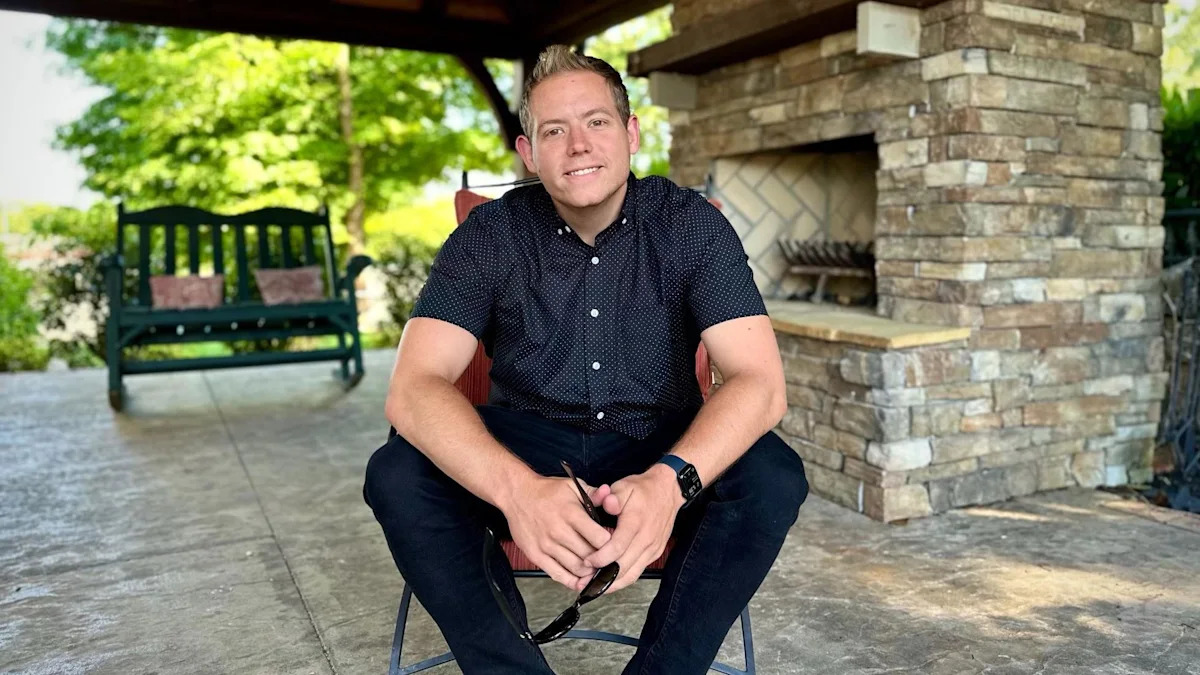
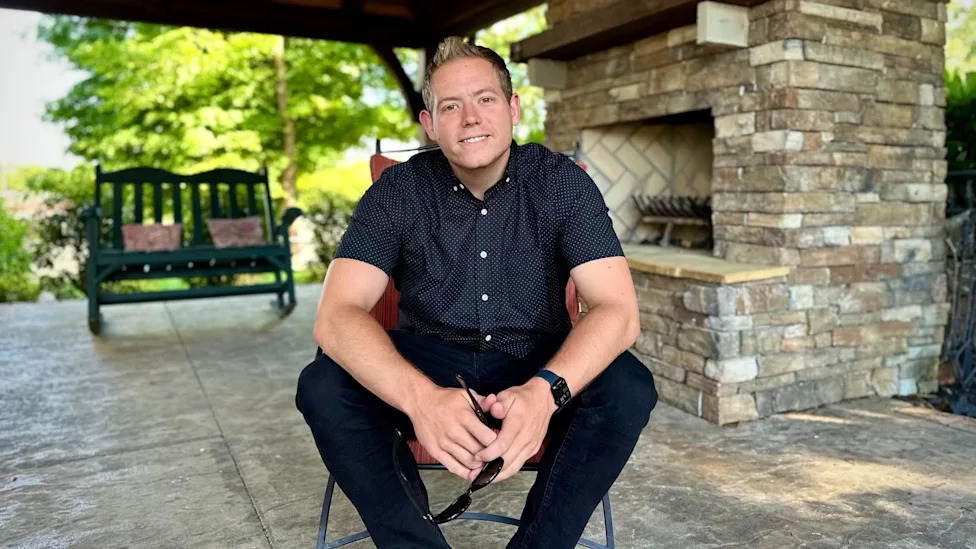
Daniel Murphy thought he was taking a safe and tested dietary supplement that would help him put on muscle in the gym.

But over the following two years, his mental health spiralled to such a degree he ended up in a state of psychosis in which he believed his wife was trying to steal his business and his mother-in-law was going to kill him.

Unknown to Daniel, the daily pills he had been taking had been mixed with testosterone.

The 32-year-old is one of 54,000 consumers listed in a case against a multimillion-pound peptide company based in the US, which sold its products around the world.

The owner of Paradigm Peptides, Matthew Kawa, was jailed for five years and 10 months on Thursday after he admitted deliberately selling unapproved medicines, trying to deceive people about what they were and illegally bringing the products into the country.

His sister, Jennifer Stechkober, who also pleaded guilty to selling unapproved medicines, was sent to prison for a year and four months.

Both admitted they had lied about where the pills were sourced, their purity and their company's testing procedures. Despite claiming the supplements were manufactured in the US, they were actually imported from China, India and several other countries. The pair also faked certificates of analysis, the documents that prove the safety and quality of a product.

Paradigm Peptides' website had stated it "stringently" tested all their products to ensure "efficacy, purity and potency", but the pair admitted not testing or analysing any of the products they sold, so they had not been aware they had been mixed with testosterone.

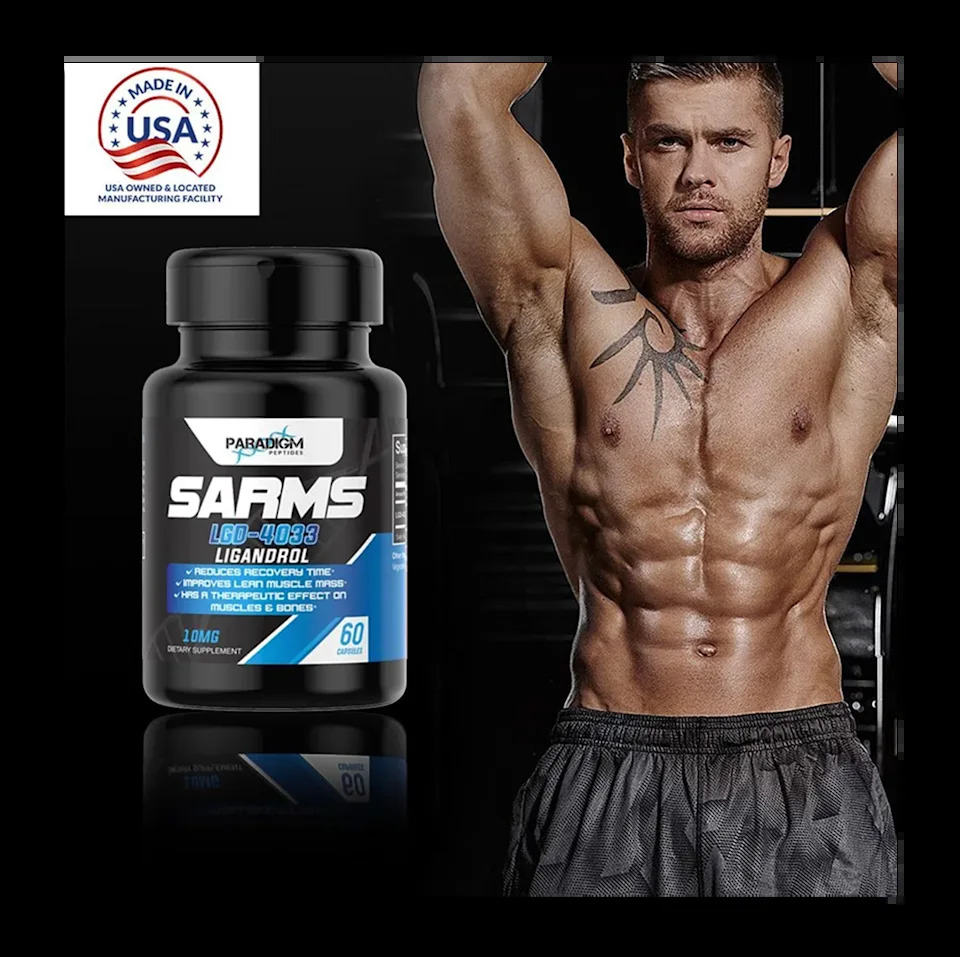
Advertisments for Paradigm Peptides's SARMs claimed the supplements were made in the US [BBC]

Testosterone is a steroid hormone, which the body naturally produces. It drives physical development, builds muscle, and controls sex drive, primarily in males, but it also supports health in females.

There is a synthetic version which doctors can prescribe, but which can cause liver damage, serious psychiatric effects and heart and respiratory problems if taken without medical oversight. It can also cause infertility in men and increase the risk of testicular cancer.

The Paradigm Peptides case is the biggest to rock the industry, an unregulated market which has exploded into the mainstream over the past 18 months.

Peptides are short chains of amino acids that our bodies produce and have long been used to treat medical conditions, including diabetes. More recently, they are being used in weight-loss drugs - GLP-1s.

Another type of drug sold by Paradigm Peptides was SARMs - Selective Androgen Receptor Modulators - which target specific tissues to increase muscle and bone mass.

Both these types of unregulated injectable drugs have become increasingly popular in the online wellness community - including among many young influencers.

Social media is inundated with people extolling the virtues of various substances - such as BPC-157, GHK-CU and TB 500 - all of which purport to help build muscle mass, help with tissue recovery, or improve skin health. They are not licensed, can only be sold for testing purposes and are not suitable for human consumption.

US health panel loosens restrictions for controversial peptides popular online

Wellness peptide craze: Why people are injecting drugs 'not for human consumption'

Three years ago, Murphy says he was in a good place. He was married to Laura, and they had built a "very stable, consistent, beautiful life" in the Smoky mountains in Knoxville, Tennessee.

Murphy had lost 130 pounds (59kg) and had "completed a major health transformation" through diet and exercise.

"I wasn't into gym culture - I wasn't a big gym bro or anything," he explains. "But after I had lost all that weight, I wanted to start building muscle and these supplements seemed like a safe way of doing that."

Murphy thought he was taking a daily dose of SARMs. Like peptides, they are not approved for human use and are seen as experimental drugs with a risk of serious liver damage, thrombosis and heart problems.

Murphy says he felt safe taking them because they were clearly labelled a "dietary supplement" and Paradigm claimed it had a contract with the US Food and Drug Administration (FDA) on various blogs, but this was not true.

"Like other victims, I trusted that the products were safe," he says. "They presented everything as research backed with claims of 99% purity - it was all a lie."

Murphy started taking Paradigm's SARMs in January 2023. During the first few months, he says they seemed to be having a positive effect: he was able to do longer workouts and had more energy. Encouraged by fake research articles he had read on Paradigm Peptides's website, he then started taking other products too.

Insomnia and mania began to set in - and that triggered him, he says, to "burn down" everything he had built - his marriage, his friendships, and his business.

During the court proceedings, consultant psychiatrist and pharmacologist, Dr Erik Messamore, gave evidence to confirm that he believed Murphy had been suffering from a steroid-induced psychosis.

As Murphy's life spun out of control, unknown to him, the FDA was already investigating Paradigm Peptides. It had been sending warning letters to the company since 2020 telling it to stop selling unapproved drugs. By September 2023, the FDA had seized SARMs products from Paradigm to carry out tests on them. It turned out, all the supplements had been mixed with testosterone.

But it would take another six months before the FDA closed the business down.

In the UK, Adam Taylor, professor of anatomy at Lancaster University, has been watching cases like this closely, as the scientific community continues to raise the alarm on this market which operates in a legal and regulatory middle zone. The products are not illegal to buy or own, but they are not approved for human use and so are not subject to the quality controls that govern pharmaceutical manufacturing.

"This might have happened in the US," Taylor says. "But consumers are at risk here in the UK, this is a global industry."

He says a case like this demonstrates the magnitude of the risk, when "people think they are taking one product but it's actually something completely different".

"So, they may also be getting additional side effects or different results that they can't explain."

Murphy's wife Laura says her husband changed overnight. He had gone from a "loving partner" to a man who believed that she was "plotting" to take over his successful consulting business.

"One minute he would be crying and asking what was wrong with him, the next he would talk about wanting to take over Los Angeles," she says. "We had no history of mental illness in our family, Dan was so calm and stable before this happened.

"We did not know what to do."

Life began to unravel. Murphy had an affair, was drinking copious amounts of alcohol, and felt his friends and family were out to get him - he even thought his mother-in-law wanted to murder him.

"I was in a full-blown psychosis - I believed that my loved ones were trying to hurt me and kill me," he recalls. "At this point, I've lost the plot. I'm not able to make any connection to the supplements, to anything that's happening."

Then in December 2024, Murphy ran out of his supply of Paradigm Peptides supplements. It was then, he says, he felt his condition began to improve.

Murphy and his family had no idea the FDA had been investigating the company, and it was not until February 2025 that he was told that the drugs he had been taking had been mixed with steroids.

"If only I had known, if the FDA had been more public, or even just put a notice on the Paradigm Peptides website. But instead, I'm taking this product and they know it's been cut with steroids," he says.

So far, he says he seems to have made a full recovery. He is one of 167 of the victims who have come forward and sought a total of $78,317 (£58,169) compensation for the damage caused. Others had suffered blood clots, heart issues, anxiety and depression, the Department of Justice confirmed.

Murphy says he realises now he was playing "Russian roulette" with his health and no longer takes supplements.

"Never again," he says, "and I'm speaking out now because I don't want people falling into the trap I fell into - that all supplements are safe.

"I was gambling my health, my family and, in many respects, my life."

Our skin is falling off and no-one can tell us why

Hundreds contact BBC about mystery skin condition 'hell' - but doctors can't agree it exists
Comments
You must be logged in to comment.