huffpost Press
Why The Embattled DNC Chair Probably Isn’t Going Anywhere
Images
1 / 8

2 / 8

3 / 8
4 / 8

5 / 8

6 / 8

7 / 8

8 / 8
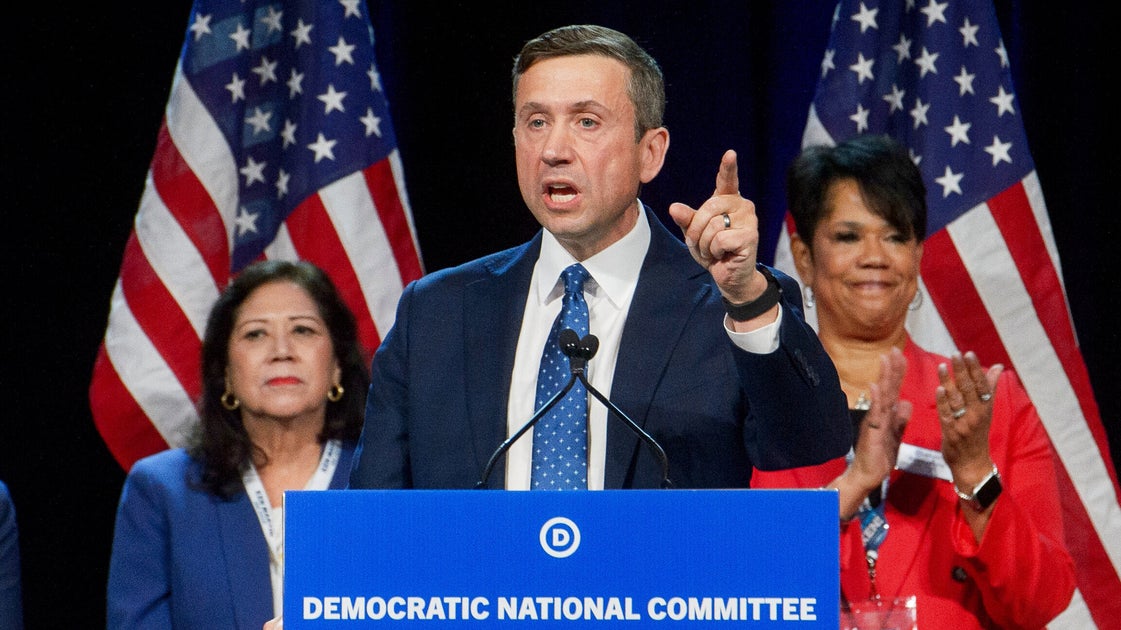
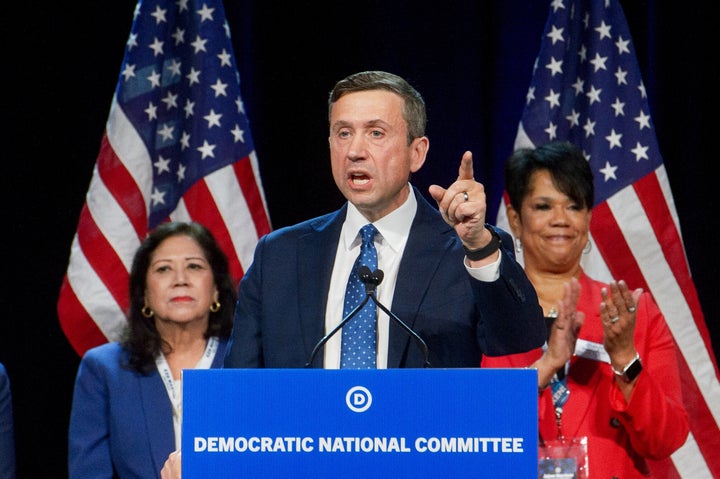
Democratic National Committee Chair Ken Martin has alienated much of the Democratic Party: Candidates in key races, potential 2028 presidential candidates, operatives on both sides of the party’s ideological split, and members of Congress are all enormously frustrated with the party apparatus’s incredibly weak fundraising, which has left the committee more than $2 million in debt.

And the list of embarrassing revelations just keeps growing: A scammer stole $29,000 from the committee. The DNC has listed its Capitol Hill headquarters as collateral on a loan. A frazzled and paranoid Martin reportedly threw a phone at the desk of a junior aide, resulting in a human resources complaint. He accused the party’s finance chair of fomenting a coup against him. And the party’s much-anticipated autopsy of the 2024 election turned into an unfinished fiasco.

But Martin will likely stay in his job for two reasons: The list of people he has alienated notably does not include the DNC’s actual voting membership, and the people who are powerful enough to turn his ouster into reality don’t think it’s worth the effort and subsequent hullabaloo. Influential players have already written off the possibility of a useful DNC for the 2026 midterm cycle.

“There’s fewer than 100 days before the midterms, and we’re going to oust the chair of the DNC, pick a new person to lead it and make the committee functional before people start casting ballots?” said one Democratic strategist close to party leaders, who requested anonymity to speak frankly. “It would be a fool’s errand.”

In particular, the strategist said, the possible spectacle of a contested race to replace Martin would protect him for now: “No candidate in a swing seat wants to answer questions about what someone running for DNC chair said at a debate.”

Democrats working on major midterm races adjusted to the lack of direct financial help from the DNC months ago and are no longer counting on its support.

The DNC, for instance, usually contributes millions to the Democratic Senatorial Campaign Committee to help pay for the coordinated field operations in key states. This year, no such transfer has arrived. The DSCC on Tuesday rolled out a $40 million program to help state parties anyway.

At the same time, the DNC met last week to approve a new slate of early states for the 2028 presidential primaries — electing to have South Carolina start off the process, followed by Nevada, New Hampshire, New Mexico, Michigan and Virginia. Martin took a hands-off approach to shaping the lineup, and the result seems to have mostly mollified the party’s various ideological, regional and identity groups. (New Hampshire’s Democratic elected officials, angry over the new lineup’s failure to recognize their state law-mandated first in the nation status, are a notable exception.)

While party operatives still question whether Martin has the gravitas and sway necessary to handle tough questions about debate lineups and other 2028 problems almost certain to crop up, he is not messing anything up for the presidential nominating process right now.

All of this makes it so the very limited list of people who could theoretically lead a charge to oust Martin — essentially limited to true party heavyweights like Senate Minority Leader Chuck Schumer, House Minority Leader Hakeem Jeffries, former House Speaker Nancy Pelosi and former President Barack Obama — have very little incentive to do so. (Schumer, Jeffries and Pelosi all previously backed Martin’s main rival for the chairmanship, former Wisconsin Democratic Party Chair Ben Wikler.)

“The chairman has my full support,” Jeffries told reporters in Pennsylvania earlier this week. “We look forward to our continued partnership.”

The other group of people with the power to oust Martin are basically the only Democrats in America happy with his performance. The voting membership of the DNC, which includes all 50 state party chairs, are happy the money that is coming in is going quickly out the door to state parties, which they argue is a major reason Democrats have been on a winning streak in special elections.

“A lot of it has been because of the massive and historic investments that Ken has made into state parties,” said Maria Cardona, a Democratic strategist who is a member of the committee. “He is helping them shore up their infrastructure so that they can win their elections. Of course they’re going to support him.”

Many of the operatives and donors who oppose Martin’s leadership take a much more skeptical look at his funding of state parties, which they view as often ineffective, broadly arguing grassroots organizing should be secondary to paid media campaigns. In turn, many Martin allies will speak dismissively of media consultants as greedy.

Even Martin’s supporters, however, acknowledge he needs to build better relationships with big donors, many of whom have said they have never heard from Martin since he assumed the chairmanship in 2025. “He’s got to get better at that,” Cardona said.

Martin was elected in 2025 for a four-year term and won’t have to run for reelection after the midterms. His allies think anticipated Democratic victories, which will have much more to do with President Donald Trump’s unpopularity and the efforts of individual candidates rather than anything the DNC does, will protect him. “If we have massive wins in November, I think he’s totally safe,” Cardona said.

For the anti-Martin people in the party, that’s the risk: If midterm wins quiet his critics, he’ll be able to stay on at least until the party selects a new presidential candidate for the crucial 2028 election.

“Having a person with the authority to run the primary is really, really important,” the strategist said. “And I don’t know anyone who thinks Martin is it.”

By entering your email and clicking Sign Up, you're agreeing to let us send you customized marketing messages about us and our advertising partners. You are also agreeing to our Terms of Service and Privacy Policy.
Comments
You must be logged in to comment.