yahoo Press
The Bond Market is Ringing a Silent Alarm
Images
1 / 4
2 / 4

3 / 4

4 / 4
Our analysts just identified a stock with the potential to be the next Nvidia. Tell us how you invest and we'll show you why it's our #1 pick. Tap here.

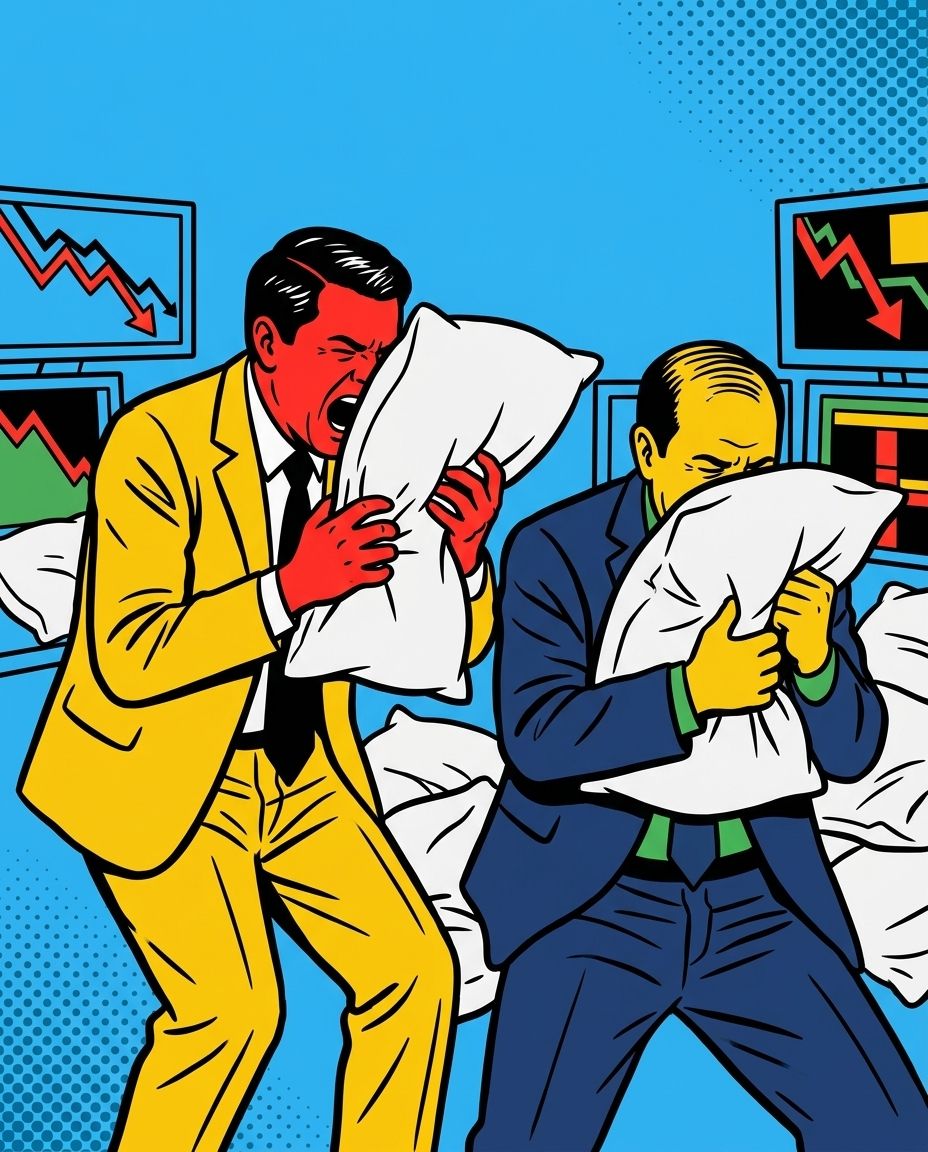
Somewhere underneath the AI trade and the record highs, the most boring corner of the entire market has been screaming into a pillow for two and a half weeks. Almost nobody's listening, because nobody ever listens to the bond market until it's too late to pretend you didn't hear it. That said, cup your ear for a minute.

The 30-year Treasury yield closed above 5% for twelve straight trading days now, running from July 7 through today's close around 5.14%, without a single dip back under. That's the longest such streak since 2007.

Yes, that 2007. The one they made all those finance movies about.

Bond nerds love bringing this up, and honestly, so do we, because the setup has an almost, well, cinematic tidiness to it. Subprime was "contained," everyone said so on television, and Bear Stearns's own hedge funds still managed to implode that summer in front of a market that shrugged and went back to lunch. About a year later, the entire financial system needed a defibrillator, a bailout, and eventually an Adam McKay screenplay to explain it to people using Jenga blocks and a bathtub. If you're the kind of person who reads bond charts for fun, watching the 30-year camp out above 5% again is the equivalent of hearing the Jaws theme start up faintly while you're still standing waist deep in water at the public beach.

To be clear, we are not saying it's 2008 again. But we are saying the bond market has a sense of humor about reruns, and right now it's doing a bit.

Here's the part that should worry you more than the nostalgia: the actual mechanics this time are different, and arguably worse. In 2007, long rates were high because growth was genuinely hot and nobody had checked what was rotting inside mortgage securitizations. This time, growth isn't the excuse. The problem now is doubt, and anyone raised Catholic can tell you that doubt doesn't respond to a press release the way a subprime CDO eventually did to a spreadsheet.

We're seeing doubt that Washington's deficit math still works. Doubt that new Fed chair Kevin Warsh, installed by Trump with an explicit mandate to bring rates down, can actually deliver that with crude sitting near $90 and gas back over $4 a gallon as things are now deteriorating faster and scarier in Iran. We're also seeing doubt that anyone in the building has a plan beyond hoping foreign buyers keep showing up to Treasury auctions out of habit rather than conviction.

One stock. Nvidia-level potential. 30M+ investors trust Moby to find it first. Get the pick. Tap here.

That's where this stops being a fun history lesson and starts being genuinely scary, because bond markets don't punish doubt gradually. They punish it all at once, with all the patience of a bouncer who's already decided you've had enough.

Just ask the United Kingdom. In the fall of 2022, a government perceived as fiscally reckless discovered its own bond market could seize up in days, not months, forcing the Bank of England into an emergency intervention and costing Liz Truss her job in under seven weeks, still the shortest tenure of any prime minister in British history and a genuinely impressive way to be remembered mostly for being unfavorably compared to lettuce. That was the same mechanism running underneath: a term premium drifting higher, mostly ignored, until it wasn't, and then it moved violently enough to break something in real time.

Sure, the U.S. has more runway than the U.K. did, but it also carries a much bigger deficit, a Fed under open political pressure, and a president who seems to enjoy lighting fires without ever having handled a fire extinguisher, and has never once hidden his preference for a central bank that simply agrees with him over literal data.

The quiet version of this story is the one we already sketched: mortgage rates stay elevated, corporate refinancing gets pricier, federal interest expense keeps eating a bigger slice of the budget every year. That version doesn't need a crisis. It just needs patience, and time is the one thing compound interest never runs short of.

The louder version has a few obvious triggers: a weak 30-year auction that tails badly, a headline suggesting Japan or China are quietly rotating out of U.S. debt, or Warsh cutting into an inflation print that refuses to cooperate, only to watch the long end rise anyway and punish him for it in real time. There's also a purely mechanical version that needs no villain at all: higher yields mean higher interest costs, which mean bigger deficits, which the market demands even more compensation to finance. A loop that runs on arithmetic, not villainy.

None of that is guaranteed. We're not predicting a crash on a specific Tuesday. We're saying the ingredients are sitting out on the counter, and somebody's left the stove on low. Stocks are still near highs. Credit spreads are still calm. Nobody's panicking, which, as always, is exactly the moment worth panicking a little.

The bond market doesn't hold press conferences. It just sits there at 5.14%, making it crystal clear that it does not like what it sees.
Comments
You must be logged in to comment.