yahoo Press
VC's liquidity squeeze favors incumbents
Images

1 / 6
2 / 6

3 / 6

4 / 6

5 / 6

6 / 6
The first half of the year has been record-breaking for US venture capital on several fronts, according to the Q2 2026 PitchBook-NVCA Venture Monitor report, but the persistent lack of distributions to LPs has continued to squeeze smaller and less established venture firms.

The market's ability to foster and support new and small fund managers is crucial to sustaining the VC ecosystem. Many specialize in pre-seed and seed investing, providing nascent startups with the capital to get off the ground. Newer managers also sow the industry with new generations of venture investors, alternative approaches and fresh talent, as it strives to keep up with dramatic technological advancements.

"With a lack of liquidity, LPs need to shift how they allocate to VC," said Kyle Stanford, PitchBook's director of US VC research. "They can't keep putting money in without money coming out to balance their exposure. This makes LPs of all sizes cut parts of their exposure, or consolidate their fund exposure, which is going to bias money toward established firms with a track record (no one gets fired for allocating to Sequoia), and makes the cost of diligencing new managers and putting money in unproven firms higher."

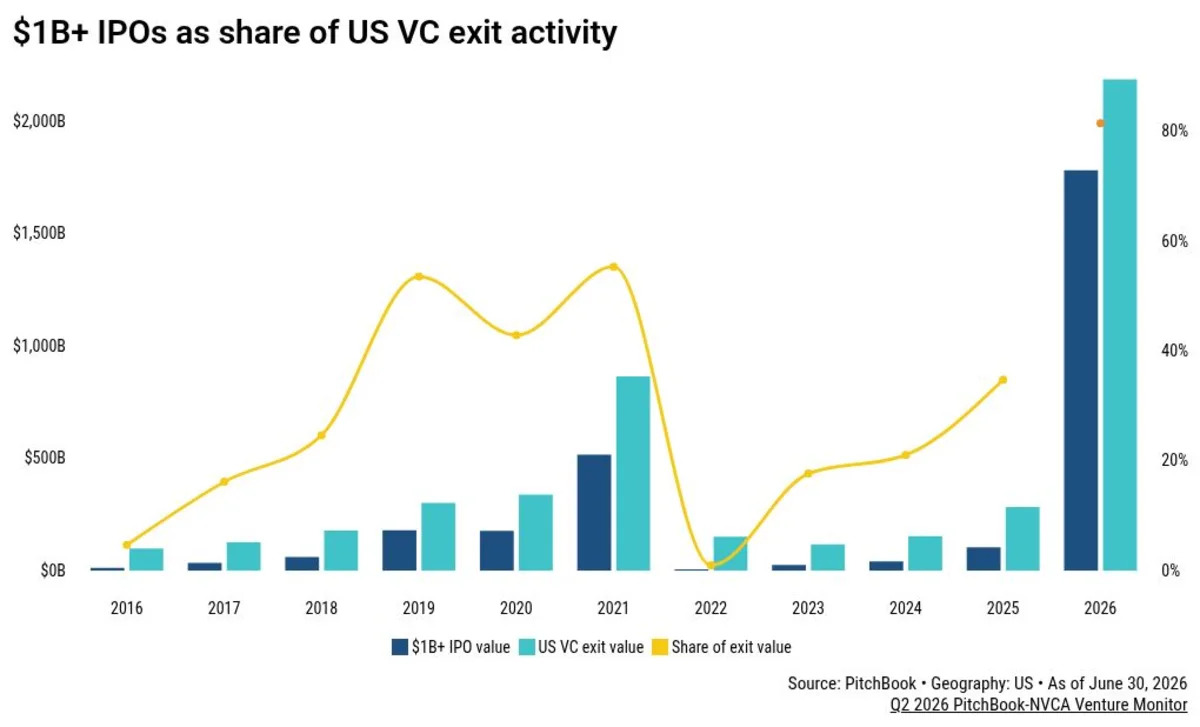
Venture exits in H1 hit $2.19 trillion in total value—more than all exits of the past decade combined. But much of that value has been concentrated among a small number of companies: 81.2% of VC exit value went to 16 IPOs with valuations of at least $1 billion (out of 755 total VC exits recorded). And much of that came from SpaceX.

But that liquidity has yet to make its way back to limited partners thanks to SpaceX's small IPO float and lock-up schedule. While other exits have generated some distributions, that volume pales in comparison.

With less cash coming back, LPs are getting choosier about their new commitments. Experienced firms raised more capital in H1 than in all of 2025, raking in a record 89% of all VC fund commitments. By fund count, they also made up a record 62.2% of all funds closed so far this year. Not surprisingly, funds of at least $1 billion are having a banner year in fundraising.

One caveat, of course, is that not all emerging managers are created equal. Some have established track records at prior firms or as operators, which helps facilitate fundraising.

"But as a whole, poor market conditions are going to bias fundraising toward long-term managers that have shown returns in the past, which will be that established manager bucket," Stanford said.

This article originally appeared on PitchBook News
Comments
You must be logged in to comment.