yahoo Press
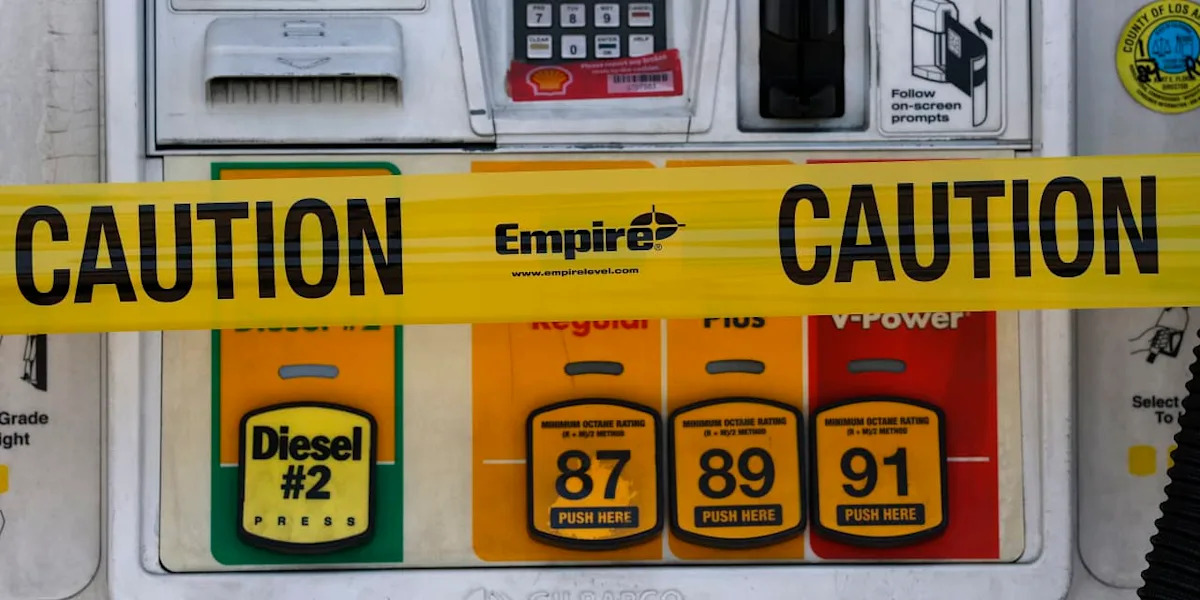
Higher gas prices aren’t the only way rising tensions with Iran will hit home
Images

1 / 4
2 / 4

3 / 4

4 / 4
The above button links to Coinbase. Yahoo Finance is not a broker-dealer or investment adviser and does not offer securities or cryptocurrencies for sale or facilitate trading. Coinbase pays us for certain activity generated through this link. Prices displayed are informational.

While higher gas prices may be the primary concern of consumers as rising Middle East tensions trigger a surge in oil prices, Wall Street is worried that renewed hostilities could have an even bigger impact elsewhere.

President Donald Trump helped stoke those worries Wednesday by suggesting the U.S.-Iran cease-fire deal had ended. Although Trump softened his stance by later saying he doesn't think a full-scale war will resume, he threatened Iran with military strikes — which were carried out later in the day.

Schwab strategists warn of a major market shift: The era of easy index gains is officially over

'I get $1,460 in Social Security': My millionaire ex-husband, 74, refuses to pay alimony. What can I do?

Meet the new group of stocks powering the S&P 500 higher

"This is the most noticeable escalation of Iran tensions since the cease-fire took hold almost one month ago, and the typical market playbook has commenced," which includes rising oil prices and Treasury yields, wrote Robert Edwards, CIO at Edwards Asset Management, in emailed comments to MarketWatch.

Futures for U.S. benchmark West Texas Intermediate crude CL.1 CL00 climbed 4.5% in recent afternoon trading, while gasoline futures RBQ26 RB00 hiked up 5.3%. Oil companies were certainly seen benefiting from the rally, as the State Street Energy Select Sector SPDR ETF XLE rose 1.4%, while the broader stock market fell DJIA SPX COMP.

But the gain in energy stocks appeared relatively muted when compared with moves seen in other sectors that investors believed could suffer collateral damage.

Higher oil prices means higher fuel prices for airlines, which Wall Street seems to believe will lead to reduced demand as ticket prices rise. The U.S. Global Jets ETF JETS dropped 2.2% Wednesday, and has fallen 5% in two days since closing at a eight-year high on July 6.

Shares of the largest U.S. airlines declined more than the energy sector was rising, with American Airlines Group's stock AAL down 3.9%, United Airlines Holdings shares UAL off by 1.6% and Delta Air Lines's stock DAL down 1.5%.

Investors feared that lower demand for travel would also hurt online travel agencies. Priceline and Kayak parent Booking Holdings' shares BKNG sank 4.2% and Expedia Group's stock EXPE slid 3.5%.

And less flying means less of a need for new planes and for service on already owned plains, as jet maker Boeing's stock BA was down 2.9% and shares of jet-engine maker GE Aerospace GE gave up 3%.

But it's not just about fuel prices. As Edwards noted, the yield on benchmark 10-year Treasury note BX:TMUBMUSD10Y rose 3 basis points (0.03 percentage points) to 4.58%, to put it on track for its highest close since the postwar peak yield of 4.66% was reached on May 19, according to FactSet data. The 10-year yield is used to set rates on consumer loans such as mortgages.

Read: Fed rate hikes seem likely this year: What does that mean for mortgage rates?

As a result, shares of home builders were getting hit hard Wednesday, amid concerns higher mortgage rates would make new homes less affordable to potential buyers. The iShares U.S. Home Construction ETF ITB sank 4%, with 42 of 44 of its equity components losing ground.

And with fewer people buying homes, Wall Street assumes there will be less need for home-improvement projects, so shares of Home Depot HD were down 2.6% and those of Lowe's Companies LOW were losing 3.6%.

While one might think renewed hostilities — plus Trump's push for European countries to spend more on defense — would boost defense stocks, Wall Street wasn't seeing it that way. The iShares U.S. Aerospace & Defense ETF ITA had lost ground in the months after the Iran war started and only started rallying after a cease-fire was agreed, as investors were more concerned about disruptions in the shipping of defense products than about the benefits of increased defense spending. On Wednesday, the ETF slumped 2.5%, with 41 of 49 components losing ground.

Meanwhile, those shipping disruptions were also lifting fertilizer prices, amid concerns that the supply of key ingredients would be disrupted. That, in turn, was giving a boost to fertilizer makers, with shares of CF Industries Holdings CF up 1.8%, CVR Partners LP shares UAN rising 2.6% and Nutrien's stock NTR gaining 2.2%.

As RBC Capital has noted, the percentage of the world's urea fertilizer that is exported out of the Middle East — around 35% to 40% prewar — was higher than the percentage of the world's oil that the region exports.

How parents can take advantage of the 'best summer-camp tax break in years'

Home prices hit new all-time high, deepening affordability woes

'I've no idea how they got her number': My student-loan servicer called a friend after I missed a payment. Is that legal?
Comments
You must be logged in to comment.