yahoo Press
GM lays off over 1,000 workers at Detroit plant, adds 50 robots: ‘We are in a fight for humanity.’ Progress or betrayal?
Images
1 / 6
2 / 6

3 / 6

4 / 6

5 / 6

6 / 6
The above button links to Coinbase. Yahoo Finance is not a broker-dealer or investment adviser and does not offer securities or cryptocurrencies for sale or facilitate trading. Coinbase pays us for certain activity generated through this link. Prices displayed are informational.

Moneywise and Yahoo Finance LLC may earn commission or revenue through links in the content below.

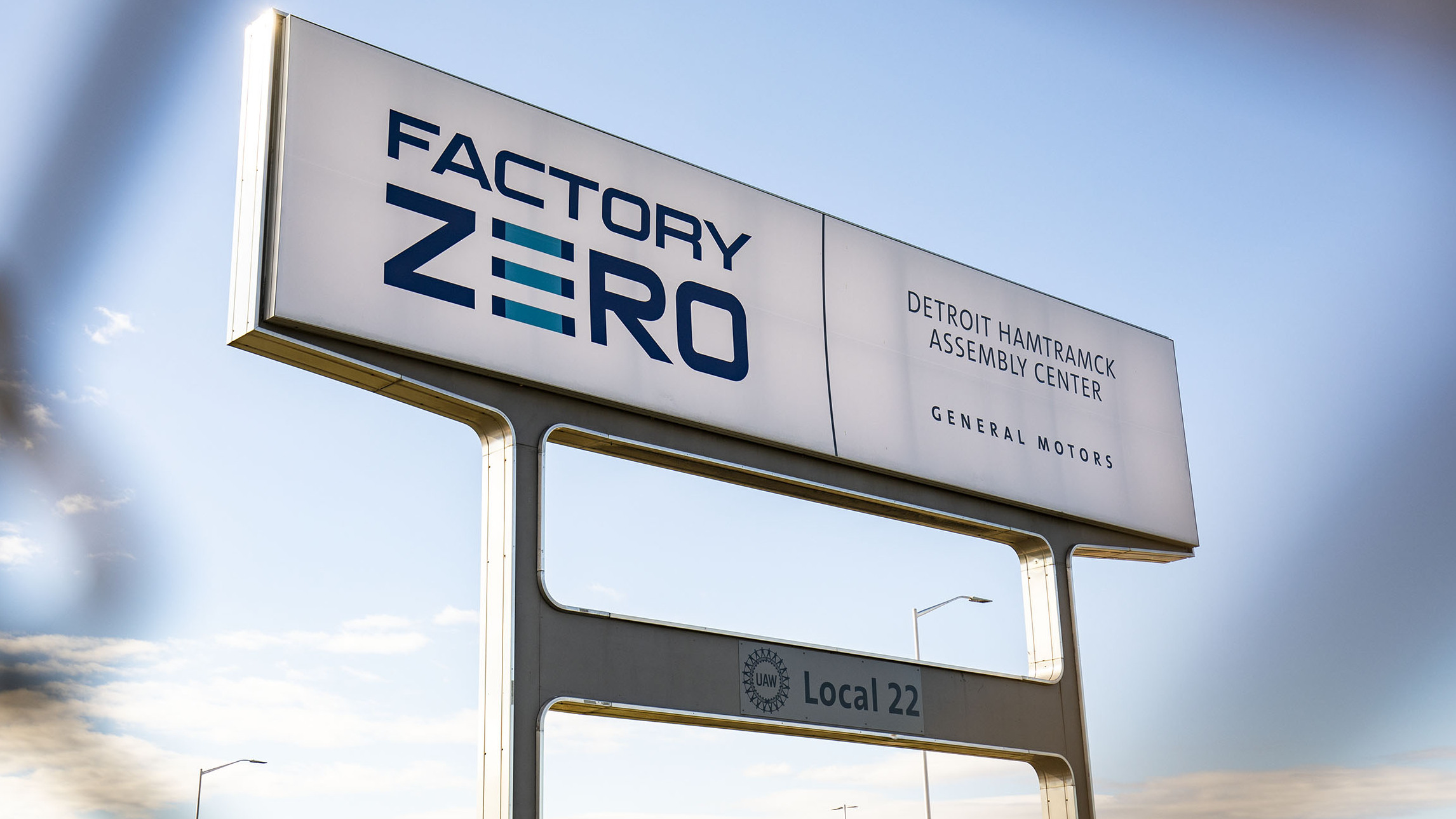
General Motors has laid off (1) more than 1,000 workers at its Factory ZERO assembly plant in Detroit while simultaneously introducing 50 AI-powered collaborative robots to the production line.

The new machines, known as "cobots (2)," are designed to work alongside human employees rather than replace them outright. But the timing of the rollout has drawn criticism from the United Auto Workers, which argues the move highlights the growing human cost of automation.

Dave Ramsey warns nearly 50% of Americans are making 1 big Social Security mistake — here's what it is and 3 simple steps to fix it ASAP

JP Morgan sees gold hitting $6,000/oz before 2027 — and a Gold IRA lets you hold the physical metal while deferring the tax bill. Get your free guide from Priority Gold

Jeff Bezos backs a platform that lets anyone invest in rental homes for as little as $100 — 6 ways to build wealth like a landlord without actually being one

"Our manpower is being taken away from us," UAW Local 22 President James Cotton told Crain's Detroit Business (3).

At the union's 39th Constitutional Convention (4) in Detroit, UAW President Shawn Fain warned, "We are in a fight for humanity."

Fain argued AI should improve jobs and productivity rather than leave workers behind.

GM, meanwhile, says the layoffs are temporary and unrelated to the addition of the robots.

"We've been installing cobots across our manufacturing footprint as part of a broader push to bring more advanced technology into our operations," GM spokesperson Kevin Kelly said in a statement. "At Factory ZERO, we are implementing them alongside our team, helping improve safety and ergonomics, while keeping our operations flexible and competitive."

GM has spent months expanding its investment in artificial intelligence and factory automation.

The company's Autonomous Robotics Center in Warren, Michigan, is developing AI-powered robotic systems trained on decades of production data. According to GM, the machines can learn over time, anticipate maintenance needs, inspect welds and paint finishes for defects. They can also identify production issues before they become larger quality problems.

The automaker says the goal is to make manufacturing "smarter, safer and more efficient" while reducing repetitive physical tasks for employees. To that end, GM has extended its collaboration with NVIDIA (5).

But whether AI alone can consistently deliver those quality improvements remains an open question.

Just days earlier, rival automaker Ford Motor Company made headlines after rehiring roughly 350 veteran employees following reports that AI-driven quality control efforts had failed to meet expectations. The experienced workers were brought back to help further train Ford's AI, along with identifying manufacturing defects and improving vehicle quality.

Whether GM's bet on automation pays off won't be known for years. For workers — and investors — that uncertainty is a reminder that betting too heavily on any single thing can carry real risks.

Read More: Millionaires under 43 hold only 25% of their wealth in stocks. Here's where their money is actually going

The rapid adoption of AI has created enormous opportunities, but stories like GM's robot rollout show that the technology's long-term impacts remain uncertain.

Rather than trying to predict which jobs, companies or industries will emerge as winners, many financial professionals recommend building a diversified portfolio and financial plan that can weather life's abrupt changes. But picking through the news, not to mention quarterly reporting from key players in the publicly traded tech race, is practically a full-time job.

That's where Advisor.com can come in. The platform connects you with an expert near you for free.

Advisor.com does the heavy lifting for you, vetting advisors based on track record, client ratios and regulatory background. Plus, their network comprises fiduciaries, who are legally required to act in your best interests, so you know your money is in safe hands when times are tough.

Just enter a few details about your finances and goals, and Advisor.com's matching tool will connect you with a qualified expert best suited for your needs based on your unique financial goals and preferences.

Finding the right advisor isn't always easy — there's no one-size-fits-all solution. That's why Advisor.com lets you set up a free initial consultation, with no obligation to hire, to see if they're the right fit for you.

Once you've got the right financial advisor in your corner, the next step is getting a clear picture of where your money's actually going, so you can keep more of it in your pocket.

It's worthwhile to keep your pocket cash in an account that earns more than a traditional checking account. That way, you can rest assured that your money is always working for you in times of an emergency. For example, if you were one of the thousand-plus workers laid off by GM, having money in the bank could be the difference between having to draw down on your retirement savings or holding fast.

That's why many financial advisors recommend having between three and six months of savings stashed away.

A high-yield account like a Wealthfront Cash Account can be a great place to grow your uninvested cash, offering both competitive interest rates and easy access to your money when you need it.

A Wealthfront Cash Account currently offers a base APY of 3.30% through program banks, and new clients can get an extra 0.75% boost during their first three months on up to $150,000 for a total variable APY of 4.05%.

That's ten times the national deposit savings rate, according to the FDIC's May report.

Additionally, Wealthfront is offering new clients who enable direct deposit ($1,000/mo minimum) to their Cash Account and open and fund a new investment account an additional 0.25% APY increase with no expiration date or balance limit, meaning your APY could be as high as 4.30%.

With no minimum balances or account fees, as well as 24/7 withdrawals and free domestic wire transfers, your funds remain accessible at all times. Plus, you get access to up to $8M FDIC Insurance eligibility through program banks.

As automation and AI shift the landscape of the traditional workforce, many are finding that relying solely on a single income stream or volatile equity market can leave their personal finances vulnerable to unexpected changes.

During times of economic uncertainty, assets that generate consistent, passive cash flow can provide a crucial hedge. Real estate has long been a proven source of this stability, often accounting for nearly 25% of the typical family office portfolio. Historically, the capital requirements and the time-intensive nature of property management kept individual investors on the sidelines.

That's where mogul comes in. This real estate investment platform offers fractional ownership in blue-chip rental properties, which provides investors with monthly rental income, real-time appreciation, and tax benefits — without the need for a hefty down payment or 3 a.m. tenant calls.

Founded by former Goldman Sachs real estate investors, the mogul team handpicks the top 1% of single-family rental homes nationwide for you. Simply put, you can invest in institutional-quality offerings for a fraction of the usual cost.

Each property undergoes a vetting process, requiring a minimum 12% return even in downside scenarios. Across the board, the platform features an average annual IRR of 18.8%. Their cash-on-cash yields, meanwhile, average between 10% to 12% annually. Offerings often sell out in under three hours, with investments typically ranging between $15,000 and $40,000 per property.

Getting started is quick and easy. You can sign up for an account and then browse available properties. Once you verify your information with their team, you can invest like a mogul in just a few clicks.

While real estate is ideal for generating passive income, you may also want to diversify by protecting your wealth against broader market instability. Gold, while not an income-generating asset, has long been a go-to store of value during periods of economic uncertainty, high inflation, and geopolitical volatility.

If you're considering adding precious metals to your inflation-hedging strategy, a gold IRA from Goldco allows you to hold physical gold and other metals while retaining the tax advantages of an IRA.

Goldco is widely considered a leader in the industry, holding a 4.8/5 rating on Trustpilot and an A+ from the Better Business Bureau. They also provide a guaranteed buyback program, meaning they will repurchase your metals at the "highest price" according to market value should you choose to sell.

If you want to explore whether precious metals could be a helpful hedge for your portfolio, you can download Goldco's free gold and silver guide to see if it's a good fit for you.

'I was wrong': Robert Kiyosaki makes rare confession as gold crashes — but doubles down on his $35K prediction. Why he says the rich are buying now

The new tax breaks in Trump's 'big beautiful bill' expire after 2028 — and financial experts say most people won't act in time. Here's what to do before the window closes

When he dies, Warren Buffett said 90% of his wife's inheritance will go into a single investment. Here's why (and how you can do it too)

I'm 49 years old and have nothing saved for retirement. What do I do? Don't panic. Here are 10 ways to catch up fast

Join 250,000+ readers and get Moneywise's best stories and exclusive interviews first — clear insights curated and delivered weekly. Subscribe now.

We rely only on vetted sources and credible third-party reporting. For details, see our ethics and guidelines.

News Nation (1); GM Authority (2), (5); Crain's Detroit Business (3); UAW/ YouTube (4)

This article provides information only and should not be construed as advice. It is provided without warranty of any kind.
Comments
You must be logged in to comment.