bbc Press
Teachers in England to get 3.5% pay rise
Images

1 / 20

2 / 20
3 / 20

4 / 20

5 / 20

6 / 20

7 / 20
8 / 20

9 / 20

10 / 20

11 / 20

12 / 20

13 / 20

14 / 20

15 / 20

16 / 20

17 / 20

18 / 20

19 / 20

20 / 20
Teachers in England will get a 3.5% pay rise from September and 3% the following year, the government has said.

The Department for Education (DfE) announced £1.8bn in additional funding but  said schools would have to fund the first 1% of each rise from existing budgets.

It also announced it was curbing pay of top leaders in academy trusts.

The National Education Union (NEU), the largest teaching union in England, said it was "considering all options" including a formal ballot on strike action.

Education Secretary Bridget Phillipson said the offer demonstrated the "immense value we place in our teachers".

She added that teachers should not be "seeing executive pay rise faster than their own" and "tighter controls will mean unjustifiable exec salaries become a thing of the past".

The changes mean that from September, trusts will need the government to approve any jobs advertised with salaries of more than £174,000, and executives will not be able to receive higher pay rises than classroom teachers.

The NEU said in May that it would hold a formal ballot for industrial action over pay in the autumn if the government's offer was "unacceptable".

Asked whether this would still go ahead, a spokesperson said: "We are considering all options."

The union's general secretary Daniel Kebede said the government had been "forced" to go beyond its original offer but it was "not the decisive shift needed to reverse real-terms pay cuts since 2010 or restore the competitiveness of teacher pay".

"A partially funded settlement still means cuts to education," he said, since schools will have to find money for it from existing budgets. "The NEU will never accept that."

He added that the curb on executive pay was "a start" but noted it would not be retrospective.

Teachers in England to vote on striking over pay

What is happening to UK prices?

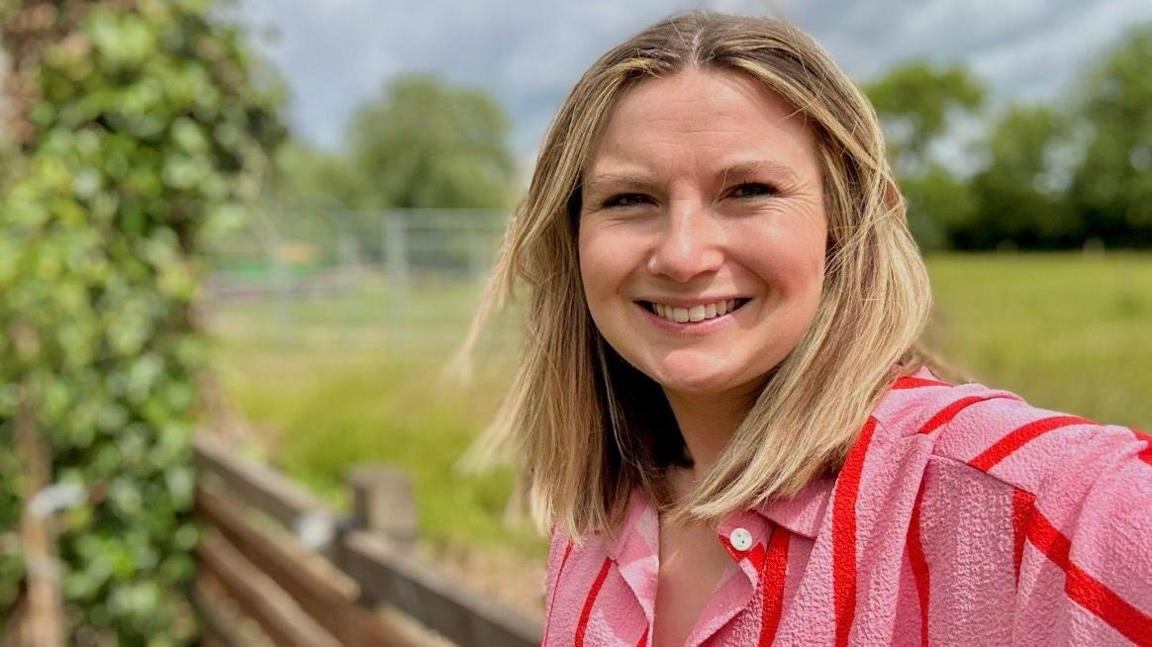
Jessica Featonby, who left her job as a primary school teacher to found an education technology company, said higher salaries would get more people into teaching but the "core problem" was "wellbeing".

Jessica Featonby founded Teacher Tonic, which offers training with a focus on addressing workload and retention issues

She said she worked early mornings, evenings, weekends, and during school holidays when she was teaching - well beyond the hours she was paid for.

"The demand within that time was huge, so realistically, you didn't get your work done in that time," she said.

"If I came at 8:30am [and] left at 3:30pm, there would be so much question around my commitment to the job."

Inflation in the UK was 2.8% in the year to May. That was lower than experts had forecast given the impact of the war in the Middle East on prices, but it is still expected to rise further.

Paul Whiteman, general secretary at school leaders' union NAHT, said the offer itself was "another step in the right direction so long as we don't see a big spike in inflation", but the partial funding "will mean more pressure on already stretched [school] budgets".

Pepe Di'Iasio, general secretary of the Association of School and College Leaders, welcomed the pay awards but said the implications for budgets would vary.

"It will be very challenging for many schools to find money from their existing budgets in the way that is required," he said.

Leora Cruddas, the chief executive of the Confederation of School Trusts, called new rules for trusts "the latest example of micromanagement from Whitehall".

"The government appears to have rushed into these changes without consulting with school trusts to understand their impact," she said.

The DfE also said it was giving colleges an additional £485m over two years.

David Hughes, chief executive of the Association of Colleges, called it a "very positive announcement" but noted that "college pay still lags a long way behind schools and industry".

Each year, the independent School Teachers Review Body receives submissions about pay from the government, unions and others. It then makes recommendations to ministers, who ultimately decide how much to award.

The latest DfE submission proposed a 6.5% pay award over 2026-27, 2027-28 and 2028-29.

The DfE also said that, at a national level, there would be around £250m available in existing school budgets to fund some of the rise in 2026-27 and around £750m in  2027-28 - making the first year "considerably more challenging in financial terms" for schools.

In May, the NEU said 6.5% over three years was unlikely to match inflation and called the proposal an "insult".

An informal indicative ballot held already this year, with a turnout of 48.6%, suggested 90.5% of teachers who are members of the NEU would be prepared to take industrial action.

NEU members went on strike over pay in the first half of 2023, forcing many schools to close for eight days of action.

The NEU called off further action after the government revised its 2023 offer to 6.5%.

Teachers were then given a 5.5% rise in 2024 and a 4% rise in 2025.

Meanwhile, the DfE has defended spending more than £700,000 on "influencer marketing" over the past two financial years.

In an interview with Tes magazine, Laura Trott, Conservative shadow education secretary, said the spending showed Phillipson's priorities were "all wrong".

But the DfE said it "allows us to reach audiences where they are" and was "much more cost-effective" than traditional marketing.

Additional reporting by Emily Holt
Comments
You must be logged in to comment.