bbc Press
Plea for households to read energy meter as prices rise
Images
1 / 20
2 / 20
3 / 20
4 / 20

5 / 20

6 / 20

7 / 20

8 / 20

9 / 20

10 / 20
11 / 20

12 / 20

13 / 20

14 / 20

15 / 20
16 / 20

17 / 20

18 / 20

19 / 20
20 / 20
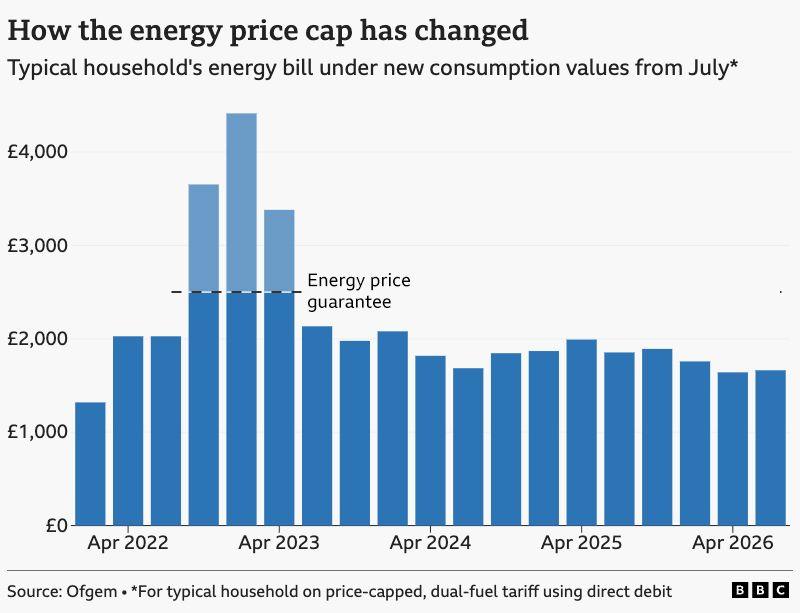
Bill payers are being urged to submit a meter reading as household energy prices rise by 13% for millions of people in England, Scotland and Wales on Wednesday.

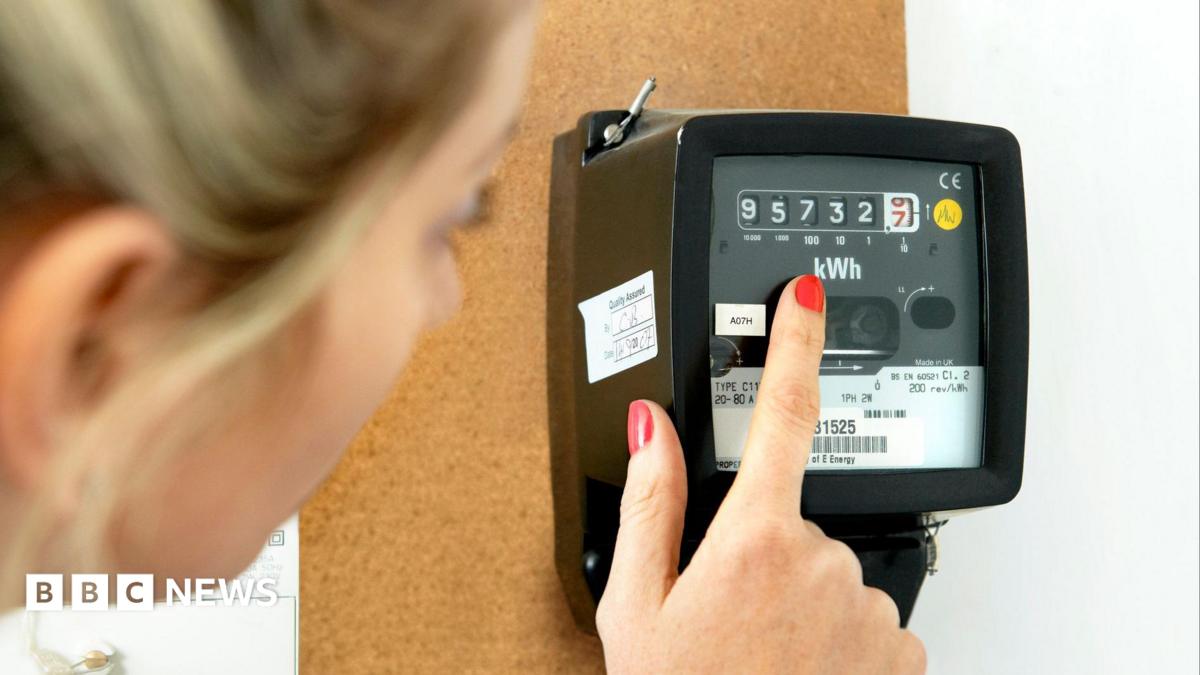
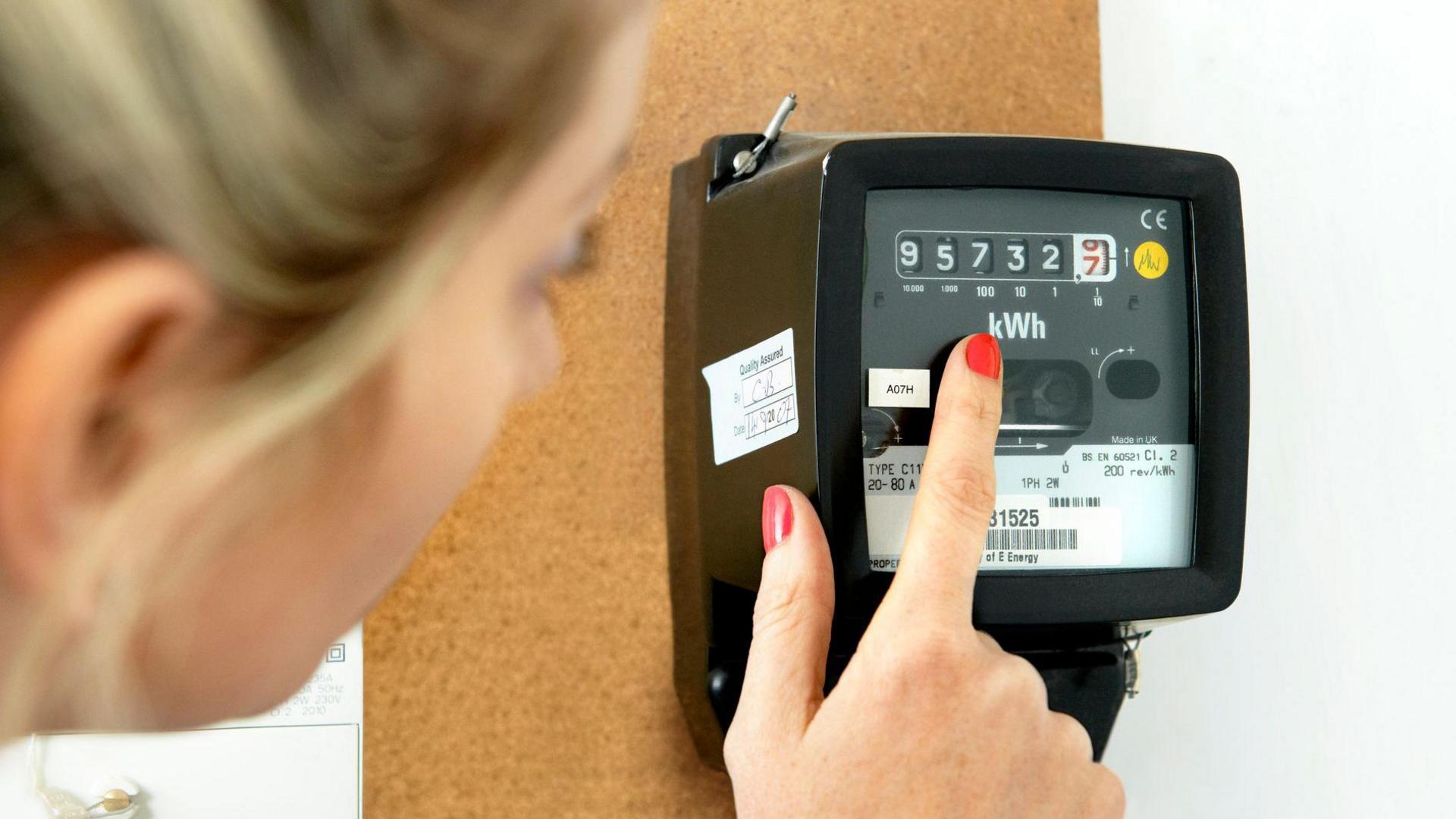
Anyone whose tariff is affected by regulator Ofgem's price cap and does not have a smart meter should take a reading to avoid previous usage being charged at the new, higher rate.

Price rises, driven by the higher cost of gas, may have a relatively limited impact owing to warm weather and lower energy use during the summer months.

But higher energy prices caused by the fall-out of the US-Israeli war with Iran are likely to persist into the winter, according to analysts at the consultancy Cornwall Insight.

It has predicted a very slight 0.5% dip in Ofgem's price cap in October, adding renewed pressure on the government to step in to help those in need.

Ministers point to reforms to cut bills earlier this year. Chancellor Rachel Reeves had also indicated some targeted support could be provided in the autumn, although she may be replaced in the job under new Labour leadership, and prices have not risen as high as feared before the US-Iran truce.

"The Iran ceasefire gave the markets some breathing room, but this is a pause, not a resolution to the conflict. What comes out of the final agreement, if there is one, will matter enormously for energy prices," said Craig Lowrey, principal consultant at Cornwall Insight.

"Even in the best-case scenario, the enduring effects from the conflict will be with us for a while."

The jump in bills under Ofgem's new price cap equates to a rise of £18 a month for a household using a typical amount of electricity and gas, with households seeing an increase of 24% on their gas bills and 5% on their electricity bills. Standing charges are almost unchanged.

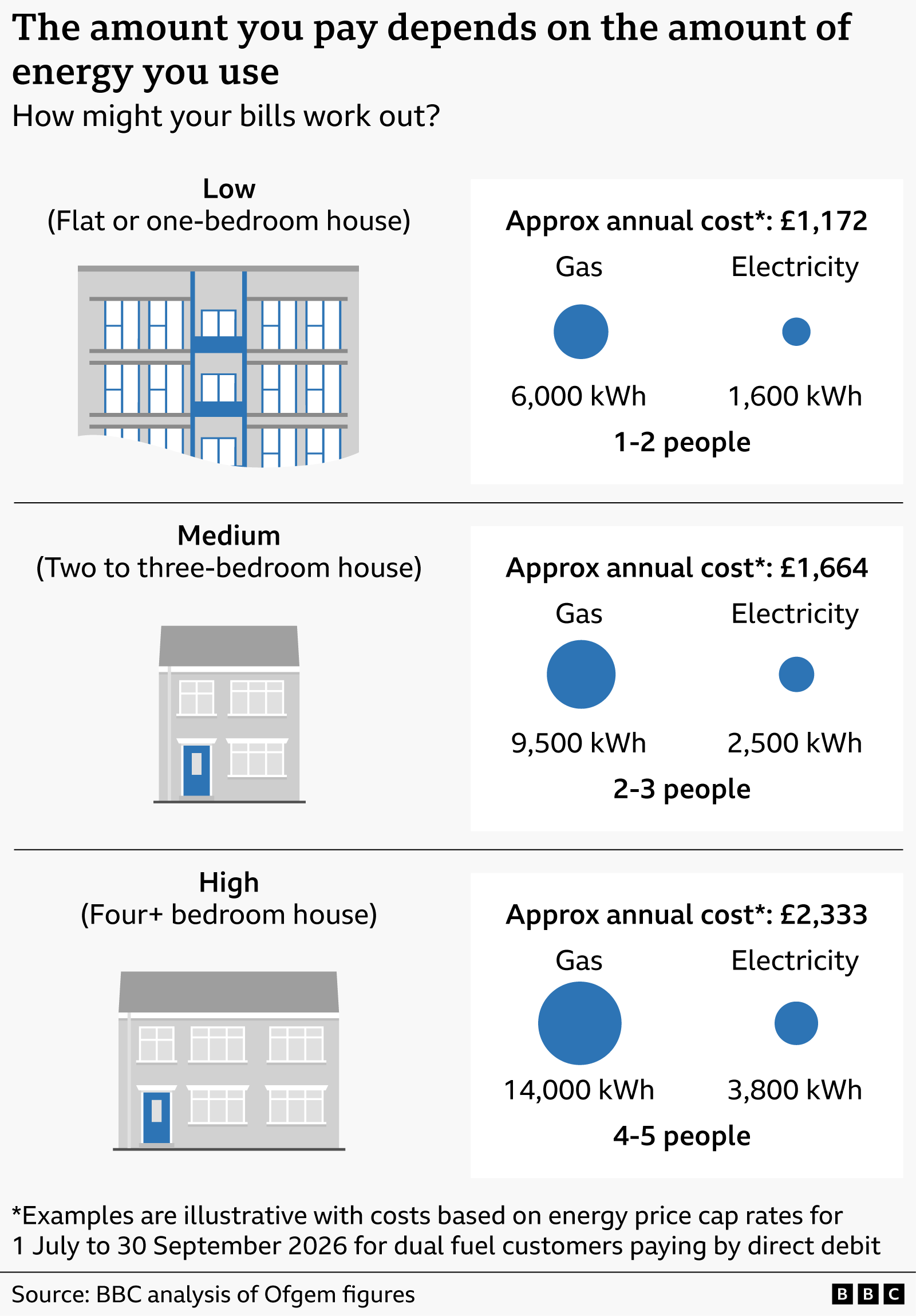
Ofgem has decided to reduce what it believes to be a "typical" level of energy use, because many households have cut back owing to high prices of recent years, and energy efficiency has improved. Its new estimate is 9,500 kWh of gas and 2,500 kWh of electricity a year.

The energy cap covers 33 million households in England, Wales and Scotland. Regulation and bills are different in Northern Ireland.

Anyone on fixed tariffs will not see any change to the price of each unit of energy until their deal expires. About 40% of bill payers have fixed tariffs.

Others on variable deals, who have a standard meter, should submit readings immediately to ensure they do not pay at the new, more expensive rate, according to price comparison website Uswitch.

As prices rise, the Trades Union Congress (TUC) has called for the introduction of a social tariff to reduce the burden of energy bills on most households.

Social tariffs are discounted deals often reserved for those on certain benefits. They are available to some broadband and water customers, but not on energy bills.

In general, the cost is covered by higher bills for everyone else or higher taxation. The TUC said a higher tax on the profits of banks should fund energy social tariffs.

The amount of money owed to energy suppliers by customers in England, Scotland and Wales rose in the first three months of the year to a new record high of £4.79bn, an increase of 15% in a year.

Fuel poverty National Energy Action said even the recent heatwave highlighted the need for debt relief and upgrading properties.

"Energy inefficient homes take lives in winter and will increasingly threaten the most vulnerable in summer," said Adam Scorer, its chief executive.

Suppliers offer a host of support schemes to anyone struggling to pay, or who is likely to find it difficult.

The trade body for the sector, Energy UK, has a list of these schemes, external. But it stresses that companies can often only help if you get in touch with your supplier to tell them you are unable to pay.

How you can save money on your energy bill as debts rise

What will the energy cap changes mean for my bills?

The energy price rise comes as a new report suggests that people are exposed to price rises of essentials and need a further three years to recover from the effects of the cost-of-living pressures of recent years.

Pensions and investment company Royal London suggested 30% of UK adults were financially fragile, with low savings and limited capacity to cope with financial shocks.

"We are starting to see some signs of improvement in people's finances," said its consumer finance specialist, Sarah Pennells.

"[But] the reality is that millions of people are still living very close to the edge and may be only one bill shock away from financial crisis."
Comments
You must be logged in to comment.