huffpost Press
MAGA Just Gave Abigail Adams A Yassified AI Glow-Up — And The Reason Is Telling
Images
1 / 8

2 / 8
3 / 8
4 / 8

5 / 8

6 / 8
7 / 8

8 / 8
As Americans prepare for the 250th birthday festivities for the United States this week, numerous celebrations and historical tributes are launching around the country to take part.

Recently, however, AI-generated photos associated with the MAGA-affiliated Freedom 250 website have caught a very different kind of attention from historians — and have raised some questions about how we can truly observe, understand and honor the history of the American Revolutionary War.

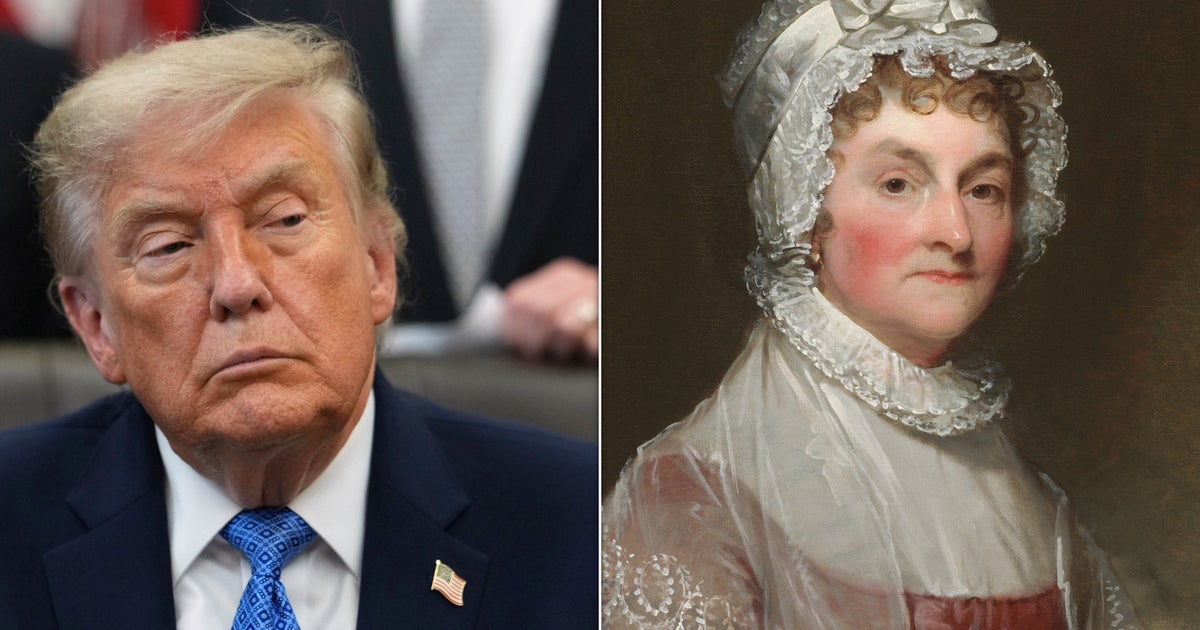
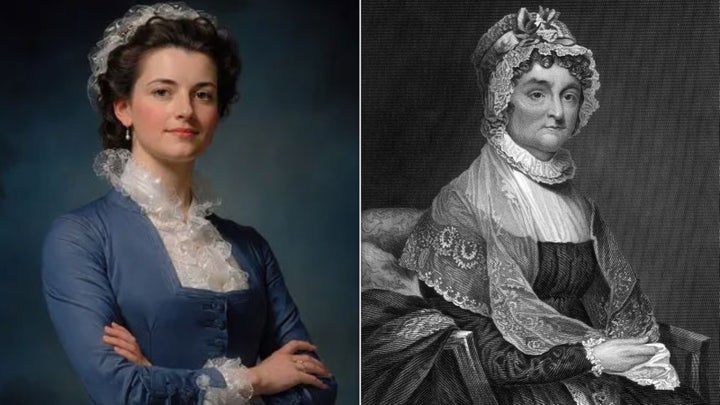
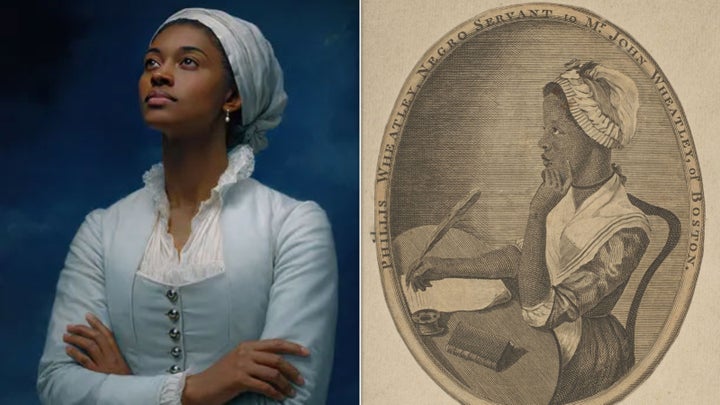
The photos posted on the “history” page of the Freedom 250 website feature a series of portraits of historical figures associated with the time. The problem? It seems artificial intelligence has filtered them to high hell. They’re more than a little homogenous, with each figure sporting near-identical (if less-than-historical accurate) blue garb, strikingly similar (again, to the point of inaccuracy) faces that look more like one another than the surviving portraits we have of these real people, and a stunningly small (just four) selection of women noted as “the ladies of the revolution.”

This is not Abigail Adams. This is an AI generated image that looks nothing like the portraits of her that exist and were painted from life. It’s from the White House’s Freedom 250 web site. pic.twitter.com/sBcKZueiVG

“This is not Abigail Adams,” one user @guttersniper, wrote on X. “This is an AI generated image that looks nothing like the portraits of her that exist and were painted from life. It’s from the White House’s Freedom 250 web site.”

“OMG they yassified her,” user @OlympicChenpion wrote, invoking the term used to describe a photo that has way too many beauty filters applied to a human face.

The commenters went on to note that the face made Adams into a “Disney princess,” adding that they felt the “laughable attempt at 18th century dress” was giving “community theatre production of 1776.”

“The faces of the women are obvious products of AI created for purposes of beautification rather than information. They function to reinforce the administration’s misogynistic ideology,” Kari Winter, professor of global gender and sexuality studies at the University of Buffalo, told HuffPost.

The so-called yassification we’re seeing on these historical women sets a really troubling standard: “If women’s value is defined by their appearance, all historically significant women must have been beautiful in a cookie-cutter way unmarked by the passage of time and the struggles of existence.”

Except the men aren’t even granted relief from this same standard, too.

“At the same time, it is worth noting that many of the men’s faces are identical: a cut-and-paste hatchet job,” Winter said. “They are not beautiful, but they are interchangeable, as if real historical people in their gritty specificity do not matter.”

In history, the details we are able to access and verify really matter. These details — from their unique faces to their style of dress to the ways they lived their lives day-to-day — are key in understanding the real individuals who contributed to the moments that we study in history.

Skimping on them — or making unnecessary tweaks — can very easily lead to major context being lost and misinformation spreading.

Winter notes that from these portraits, “one might be led to believe that everyone in the Revolutionary Age dressed in blue with white frills, an uncommonly odd notion that serves no discernible purpose except to impose conformity on the images and to suggest that all of the founders were wealthy gentry.”

This misinformation can add up when you also consider the ways women and other marginalized people have historically been sidelined and erased from historical narratives, as Isabel Roughol, host of Broad History, a podcast focusing on the often under-heard and under-acknowledged stories of women in history, told HuffPost.

“A lot of work has been done in the last half century to resurface the stories of women,” Roughol explained. “It’s more of a problem of wars because we think of wars as such a male event. Despite women being impacted and involved in all eras of history, it’s always much easier to name the men involved.”

That emphasis on men is hard to avoid and part of “the reality we’re all dealing with,” Roughol notes, but adds that with a little reframing and a willingness to ask “who are we forgetting?” can go a long way — especially given efforts to resurface and cover these narratives in recent decades.

One such narrative that Roughol cites, as seen in Carole Berkin’s “Revolutionary Mothers: Women in the Struggle for America’s Independence,” is the role of revolution-era women in leading the boycotts of tea and linens, and the everyday social pressure and activism that women spearheaded.

“That’s a story we can tell,” Roughol said. “The thing with the Freedom 250 site, they didn’t think very far.”

And part of curating good, engaging and accurate history education for the public involves thinking that far — and even further.

“As long as we think about history as just great matter of state, writing laws and ruling countries, it’s always going to be male history — because that’s the world we live in,” Roughol said. “We need to think much more broadly about history.”

The nature of these portraits, to Winter, can’t be divorced from the people who created them, however.

“This set of portraits is an outrageous travesty of history but a logical outgrowth of an administration devoted to generating a post-truth world order,” she said. “AI-generated propaganda is indiscriminately mixed with elements of actual historical portraits.”

Roughal also told HuffPost that the photos clearly demonstrated why she has a policy against using AI portraiture in her own work.

“There has already been plenty of conversation about the issue of representation of people and especially of women and minorities by AI,” Roughal explained, due to “the datasets it’s being trained on” which are often modern images.

“If you prompt AI to just picture a woman, it will give you thin, young, white, wealthy women,” she added. “It just doesn’t stray from that image unless you specifically prompt it to.”

And the specificity of prompting requirements to get a historically accurate image of an American Revolution-era woman would have to be pretty involved.

“AI is not trained on the images that would result in an accurate image,” Roughal said. “It’s not trained to tell the difference between a dress from 1770 and a dress from 1790 — let alone 1890, which is what a lot of [the Freedom 250] costumes look like. They look right off the set of ‘Gilded Age.’”

Part of the problem, too, is how these photos are represented as something that they are not.

“It is presented as something that is scholarly and accurate,” Roughol said. “That’s what bothers me the most.”

“I don’t mind historical entertainment,” she continued, citing shows like “Bridgerton” that might play fast and loose with historical accuracy for the sake of some romantic eye candy — with one major caveat.

Viewers of that kind of show tend to “know its a lavish entertainment, but it’s not a history lesson,” she said.

Likewise, she points to the existing scholarship and efforts from historians and everyday nerds as a more reliable source.

“There are so many people working in public history to levels of accuracy and scholarship, who are also incredible storytellers, working really hard as reenactors, making accurate costumes,” Roughol said. ”Teachers, museum volunteers, artists, there are so many people who make history really interesting.”

“The idea that you need AI to be people’s entry into history, I think, is just a fallacy,” she said. “If someone wants to show me a responsible and accurate use of AI within public history, I’d like to see it. I just haven’t seen it yet.”

And, ultimately, she adds: We just do not need these images to exist to engage with this part of history in an exciting, visual way.

“In these cases, we have real historical portraits of all these women! So why?!!”

“The narrative presented by Freedom 250 is entirely propagandistic: a cesspool of disinformation, misinformation and fakery,” Winter said. “Rather than trying to unpack it, readers would make better use of their time by turning to real historical sources.”

However, both our experts did have ample recommendations for further reading that might give you a more accurate understanding of founding fathers, mothers and everyone in between.

“Ken Burns’s PBS series, ‘The American Revolution’ (2026), provides an excellent introductory overview of people, issues and events,” Winter said.

Both Roughol and Winter recommended a few books to continue your American Revolution studies:

“Once readers begin to delve into the era, they may develop a lifelong passion,” Winter said. “I could place dozens of other books at the top of my list.”

By entering your email and clicking Sign Up, you're agreeing to let us send you customized marketing messages about us and our advertising partners. You are also agreeing to our Terms of Service and Privacy Policy.
Comments
You must be logged in to comment.