yahoo Press
Cleveland Fed president says AI spending is fueling inflation
Images
1 / 5
2 / 5

3 / 5
4 / 5

5 / 5
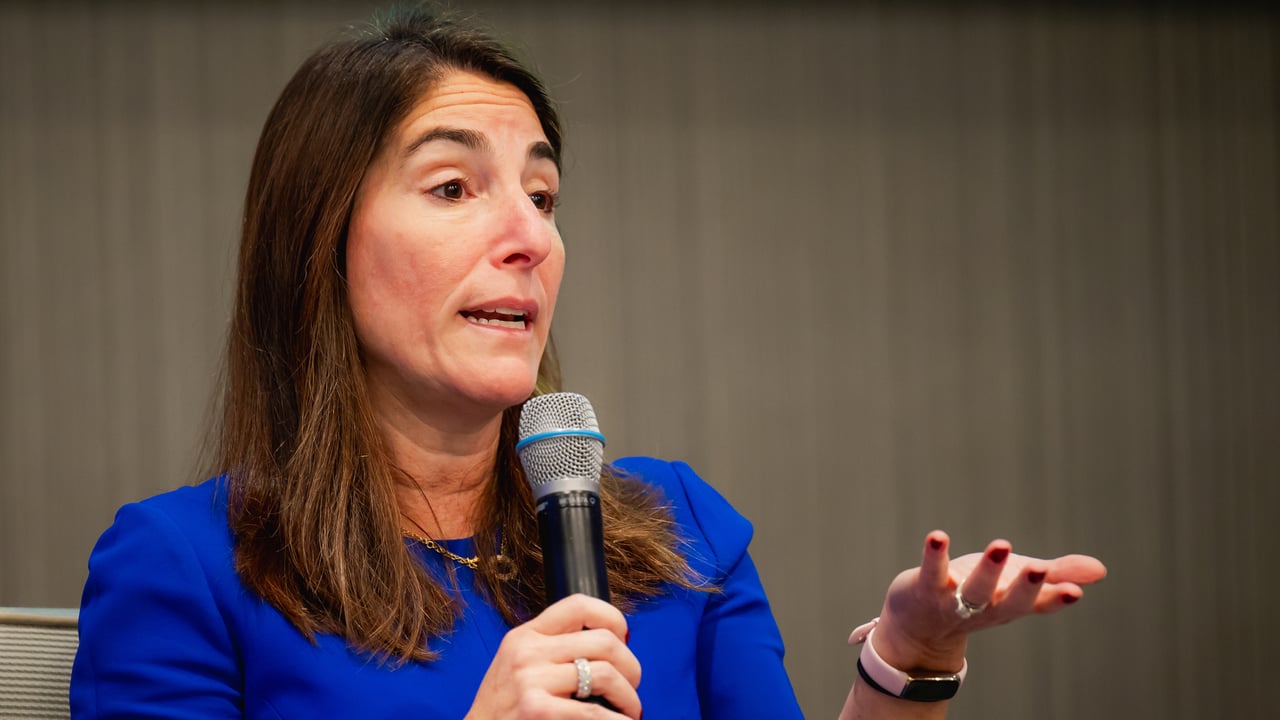
Cleveland Federal Reserve President Beth Hammack warned Tuesday that demand for artificial intelligence infrastructure is contributing to inflation and that interest rate increases could be necessary if inflationary pressures persist.

Speaking to CNBC at the European Central Bank Conference in Sintra, Portugal, Hammack said, "We've got inflation that's too high, and it's been too high for the past five years. When I look at policy, if that continues, it may mean that we need higher interest rates to bring inflation back down to target."

Hammack pointed to a manufacturer in her district that produces electric switching for data centers as an example of AI-driven price pressure. "What they say is that the demand is insatiable, that these companies — these hyper scalers — will pay almost any price for those inputs, and they need things built yesterday," she told CNBC. Hammack went on to say that large companies show little sign of pulling back, and that neither borrowing costs nor tighter credit conditions appear to be discouraging business investment.

"If inflation continues to persist at these elevated levels and I don't see any restraint from policy, we may need to raise rates to bring that policy restraint in and to bring inflation back down," Hammack said.

That view clashes with a position staked out by Federal Reserve Chairman Kevin Warsh, who contends that AI-driven efficiency will lower labor costs and act as a disinflationary force over time. Warsh made the case for that outlook at his first press conference as Fed chair, though he and Hammack share a stated goal of getting inflation back to 2%.

As a voting member of the Federal Open Market Committee this year, Hammack has a direct say in rate decisions. At its most recent meeting, the committee left borrowing costs unchanged while signaling that one quarter-point rate increase remains on the table for 2026.

Minneapolis Federal Reserve President Neel Kashkari has similarly shifted toward expecting a rate hike by year-end, reversing an earlier forecast for a cut. Kashkari also flagged AI data center construction — alongside tariff-driven goods inflation and Strait of Hormuz disruptions to fertilizer markets — as a factor pushing prices higher in parts of the economy. "Anything that touches those sectors, the prices are skyrocketing on those parts of the economy," he said.

The Fed's preferred inflation measure, the PCE price index, ran at 4.1% year-over-year through May, its highest reading since April 2023, with core PCE at 3.4%. Inflation has remained above the Fed's 2% target for more than five years.
Comments
You must be logged in to comment.